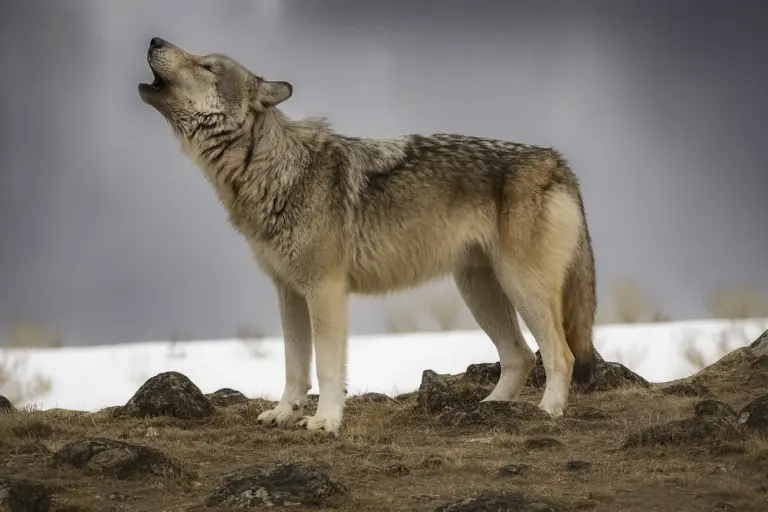
For centuries, human coexistence with the gray wolf (Canis lupus) has been defined by fear, folklore, and firepower. Steeped in the villainous caricatures of fairy tales like Little Red Riding Hood, generations of farmers, ranchers, and homesteaders operated under a simple, lethal mandate: See one, shoot it.
Today, a quiet revolution is unfolding across the rugged backcountry of Yellowstone National Park and beyond. It is bridging the improbable worlds of Silicon Valley software engineering, advanced bioacoustics, evolutionary neuroscience, and deep-woods field observation. At the vanguard of this movement is Jeff Reed, a Ph.D. linguist, former tech executive, and self-trained naturalist whose life was upended five years ago when he lowered his rifle barrel upon locking eyes with a wild gray wolf on his Montana farm.
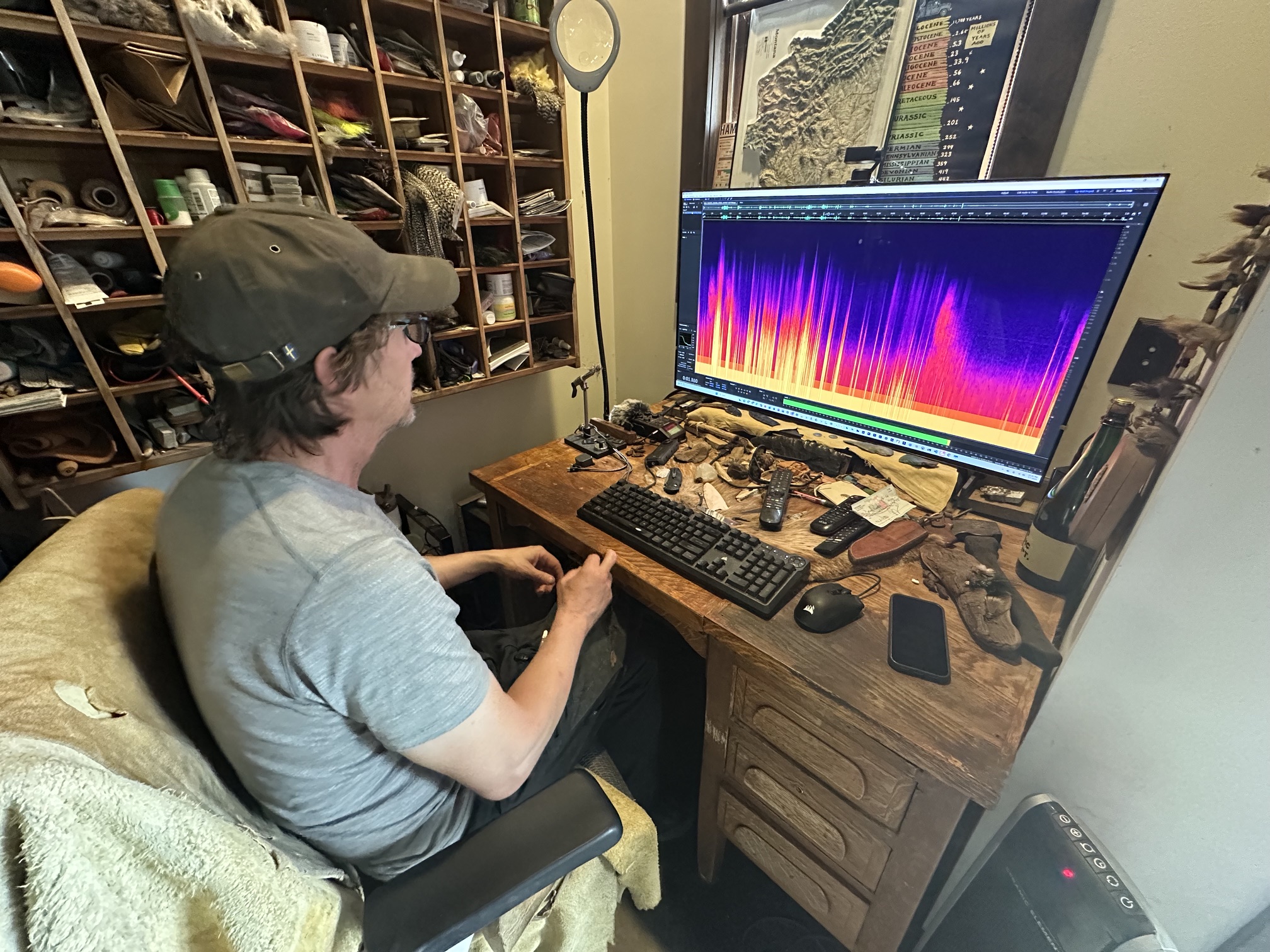
Partnering with the acclaimed Yellowstone Wolf Project—the world’s longest-running and most comprehensive study of wild wolves—Reed co-launched the Cry Wolf Project in 2023. By deploying dozens of custom-built autonomous recording units (ARUs), known as "GrizCams," across the Yellowstone landscape, Reed and his team capture a staggering 500,000 hours of ambient soundscapes annually. Utilizing advanced artificial intelligence and machine learning models, Reed sifts through this massive auditory trove to isolate continuous wolf vocalizations.
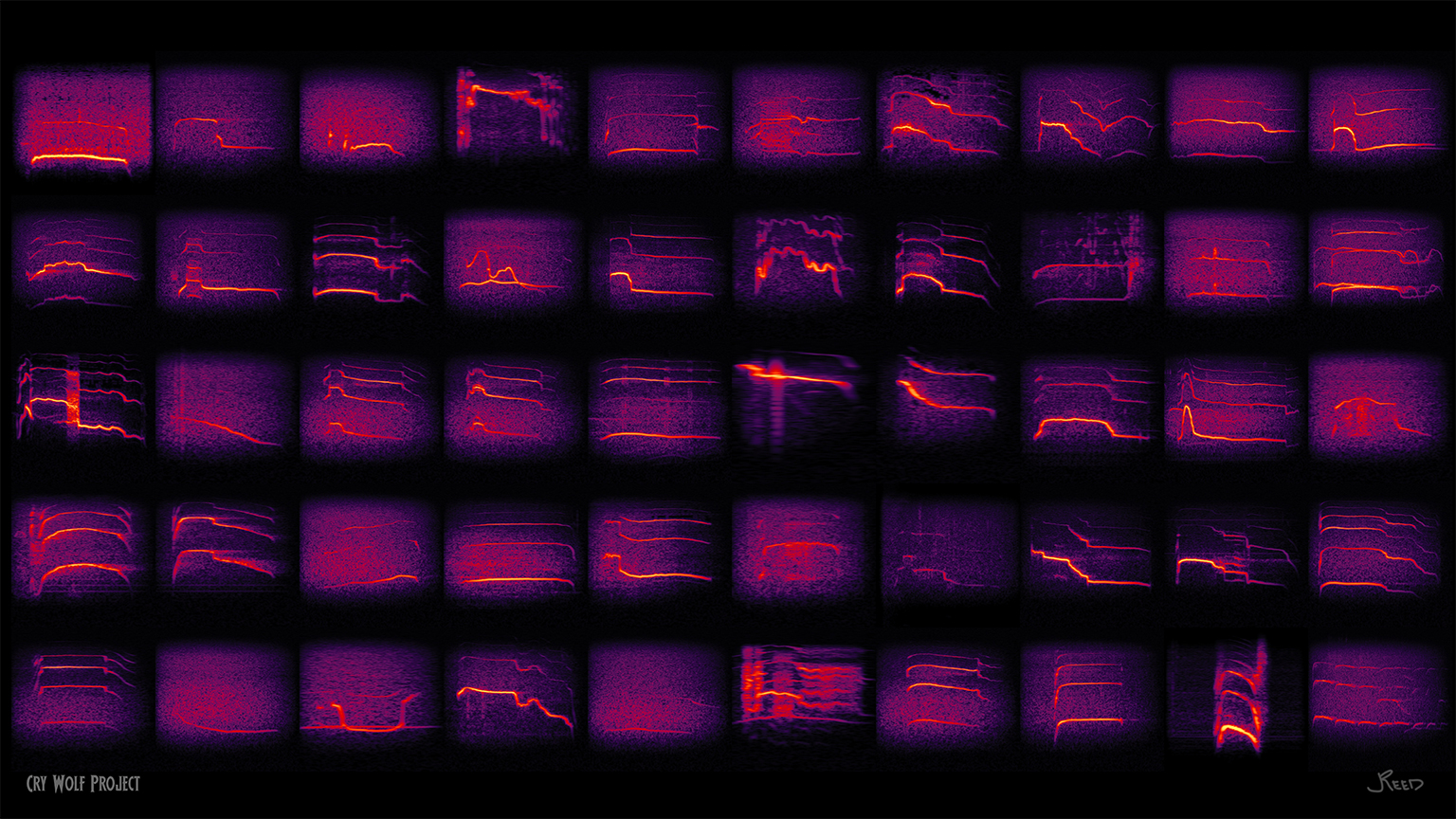
The result is the largest database of its kind in existence: more than 8,000 hours of continuous wolf audio, transformed into colorful spectrograms that chart the jagged frequencies of "wolfish." Far from attempting to translate animal sounds into human English, Reed’s work aims to "narrate the howl"—pairing audio data with direct behavioral observation to understand the complex social dynamics of apex predators. By combining technological precision with a philosophy of conservation through empathy, this groundbreaking initiative is proving that the key to protecting wolves is not eradicating them, but finally learning how to listen.
Detailed Chronology: From Silicon Valley to the Yellowstone Backcountry
Jeff Reed’s journey to becoming a pioneer in animal bioacoustics was neither linear nor planned. Raised with a standard cultural conditioning regarding predators, Reed initially viewed wolves through a lens of suspicion. That perspective shattered one fateful night roughly five years ago on his rural property just north of Yellowstone.
Standing broadside in the headlights of his pickup truck, a magnificent gray wolf held Reed’s gaze just ten yards away.
"I thought it was a large coyote," Reed recalls. "It was standing broadside… and he’s just looking at me. I open the door, grab my rifle, and he’s standing there… I’m pointing my barrel, looking at it. Then all of a sudden — you can call it an Apostle Paul sees Jesus for the first time and goes blind moment — and I just go, ‘What the hell am I doing? Why am I doing this?’ So I shot over its back, like way high. It didn’t bolt. It just trotted right beside me… and kept going."
That transformative moment catalyzed an obsession. Reed channeled his deep background in linguistics—the study of the origin, structure, and evolution of human language—and his decades of elite software engineering experience in Silicon Valley toward a radically different application: decoding the acoustic ecology of canines.
By 2023, Reed had formally integrated his startup, Grizzly Systems, with the framework of the Yellowstone Wolf Project, establishing the Cry Wolf Project just 30-some miles south of his Emigrant, Montana home.
The integration of Reed’s technology into Yellowstone’s institutional research marks a profound shift in wildlife monitoring. For nearly three decades, the Yellowstone Wolf Project—managed by chief wildlife biologist Dan Stahler—relied primarily on rigorous, invasive field methods. Established in 1995 following the historic reintroduction of wolves after a nearly 70-year absence, the project tracked wolf populations through darting, capturing, and collaring animals from helicopters. While scientifically invaluable, these methods are expensive, inherently risky for both researchers and animals, and logistically demanding.
Recognizing the need for innovation, Stahler challenged his team years ago to explore less invasive, technology-driven approaches. Reed’s GrizCams provided the answer: a noninvasive, AI-driven bioacoustic surveillance network that methodically captures 24/7 ambient audio while acting as a geolocator to remotely track wolf-pack ranges, den activities, and episodic vocalizations.
Supporting Context & Metrics: The Scale of Acoustic Ecology
To comprehend the magnitude of the Cry Wolf Project, one must examine the raw metrics governing its operations:
Audio Data Collected: Approximately 500,000 hours of raw soundscape data are harvested annually from roughly 50 automated recording units (ARUs) scattered throughout the Yellowstone backcountry.
Isolated Wolf Audio: AI models trained by Reed have successfully combed through the acoustic noise to isolate more than 8,000 hours of continuous wolf vocalizations.
Vocal Repertoire: Wolves possess an extraordinarily diverse communicative toolkit featuring over 20 distinct call types, including barks, whimpers, whines, woahs, howls, yelps, yips, moans, and physical teeth-clacking.
The Chorus Howl: Wolves are among the rare mammalian species that engage in synchronous "chorus howls," where an entire family pack harmonizes skyward in unison.
Annotation Progress: Reed personally oversees the grueling manual annotation process required to train AI algorithms, noting that he is currently 20.2% through annotating every individual howl within the 8,000-hour database—a dataset that, if played continuously without pause, would run for 333 straight days.
The Ecosystemic Backstory
The urgency of understanding and protecting wolves is rooted in the stark lessons of conservation history. Between 1918 and 1926, predatory eradication programs entirely purged gray wolves from Yellowstone National Park, driven by rancher anxieties and enduring myths. Without their primary apex predator, elk, deer, and bighorn sheep populations ballooned unchecked. Overgrazing devastated riparian willow and aspen saplings, destabilized stream banks, displaced beaver colonies, and fundamentally fractured the park’s ecological equilibrium.
The 1995 reintroduction of wolves served as a masterclass in trophic cascades, restoring balance to the landscape. Today, programs like the Yellowstone Wolf Project monitor roughly 84 wolves across eight distinct packs. Yet, despite their ecological necessity, wolves remain polarizing figures when their territories overlap with livestock grazing operations outside park boundaries.
Official Statements and Expert Perspectives
The intersection of artificial intelligence, linguistics, and field biology has drawn acclaim from prominent figures across academic and conservation spheres.
Dan Stahler, Manager of the Yellowstone Wolf Project:
"Our program relies on collaring wolves, and we do that every year… We use helicopters, we dart wolves, we collar them. It’s expensive, it’s risky, but it is invaluable in answering the questions we’re pursuing. As scientists, we’re always trying to do things better, to take advantage of new technology. So, I challenged our team several years ago to think about less invasive ways to monitor our wolf population… Jeff is a visionary and a big thinker. His technology has given us a great new prong of Yellowstone research."
Dr. Mark Hebblewhite, Conservation Ecologist at the University of Montana:
"Universities are great at many things, but we’re really slow and a bit stodgy. Jeff’s got these crazy ideas, but then he can deliver on hardware and software that, quite frankly, would take us way too long at a university to do in any sort of competitive or productive way. It is a model public-private partnership."
Dr. Erin Hecht, Evolutionary Neuroscientist at Harvard University:
"Many people in this field have a sneaking suspicion that animal communication is much more complex than we ever suspected, maybe partly because we just couldn’t analyze it, and probably also because we just don’t know what boxes to put it into. But where machine learning can outshine human minds is where it can pick up on patterns that we just don’t see. Our minds are built to process our vocal communication; they’re not built to process wolf vocal communication, or ape vocal communication, or bird vocal communication."
Future Outlook: Global Expansion and Conservation by Empathy
As the Cry Wolf Project continues to mature, its implications extend far beyond the borders of Yellowstone National Park. The technological architecture developed by Reed and Cody Goldhahn at Grizzly Systems is designed for global scalability.
In northern Italy, conservation groups like Osservatorio Lupi (Wolf Observatory) are already adopting this technology. Paolo Mainardi, a retired mechanical engineer leading a team of citizen scientists in Fidenza, utilizes a dozen ARUs provided by Reed to monitor Apennine wolves navigating human-dominated landscapes in the Po Valley. By deploying bioacoustic early-detection systems, Mainardi aims to build a nonlethal buffer that alerts farmers when wolves approach livestock, protecting both agricultural livelihoods and the carnivores themselves.
Furthermore, Reed is finalizing a comprehensive book on wolf communication slated for publication by the Hachette Book Group in 2027. He envisions a future where property owners worldwide can download open-source acoustic tools to detect, deter, and manage wildlife encounters without resorting to firearms. Other researchers are already eyeing GrizCams to study grizzly bears, landscape-level biodiversity, and wildlife corridor crossings.
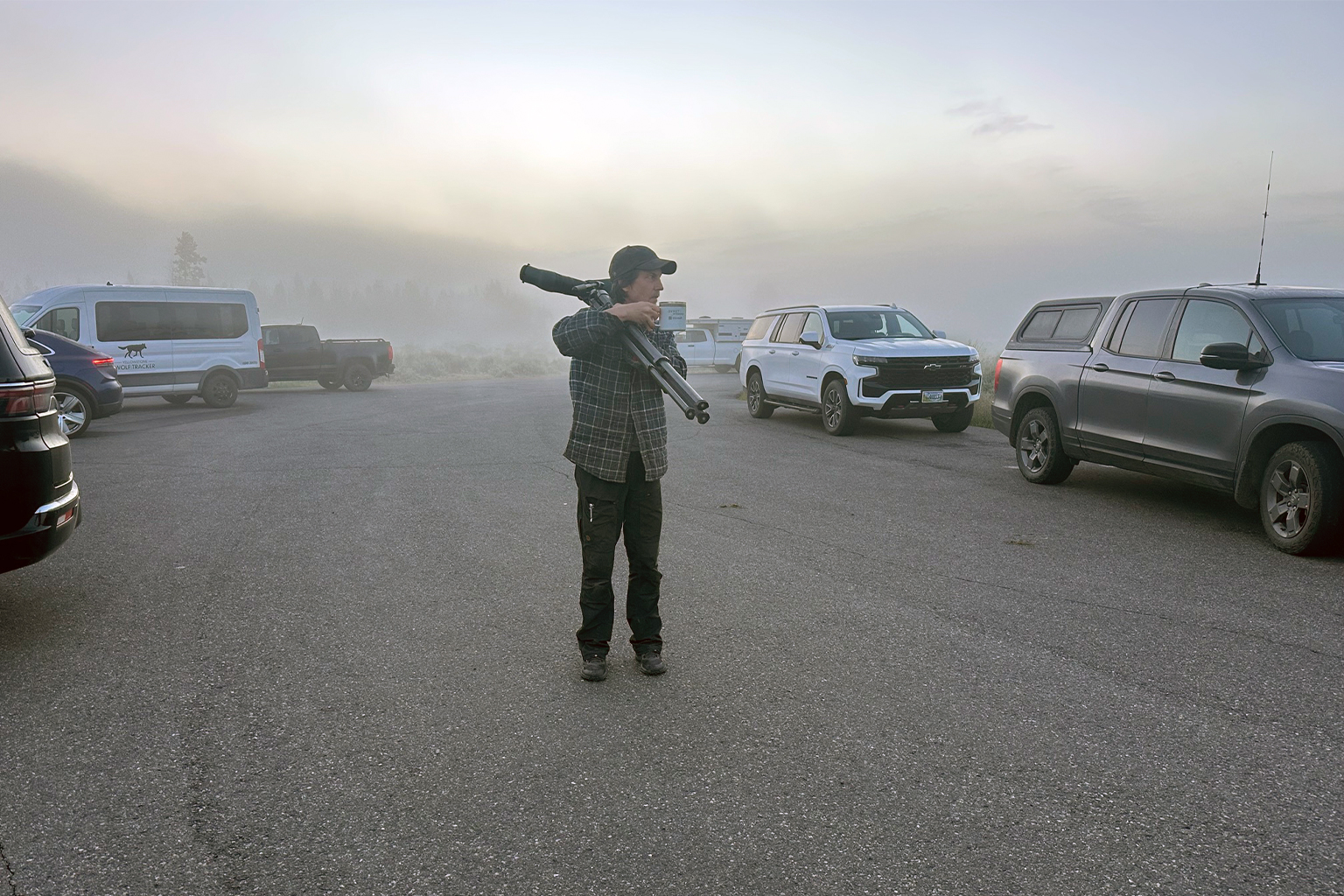
Back on the Blacktail Deer Plateau in Yellowstone—where a dawn spotting of the 23-member Rescue Creek Pack reveals romping pups and seasoned adults—Reed reflects on the ultimate objective of his life’s work. Rejecting the notion that he is attempting a literal dictionary translation of animal speech, he emphasizes the art of storytelling:
"This pack is just like your family. They live together. They hunt together. They take care of their long periods of time. When you start to understand that, your entire frame of reference changes. You’re not going to kill them. What is going to drive conservation is telling the story of these animals… If you can talk with a wolf, you identify with a wolf, you relate to a wolf, and maybe you don’t turn them into Little Red Riding Hood, right? If you get enough of those people listening, then you have an army of humans who can help with wolves."