

Executive Overview
In the rolling valleys and coastal plains of Ventura County, California—a region renowned globally for its agricultural abundance yet historically burdened by intensive chemical use—a quiet revolution is taking root. In April 2026, the global conversation around sustainable land management reached a critical juncture when the Rodale Institute announced a landmark $1.55 million, three-year grant renewal from the Holdfast Collective, the nonprofit shareholder of outdoor apparel giant Patagonia.
This substantial injection of capital breathes fresh life into the ambitious Regenerate Ventura project, a systemic endeavor designed to pivot one of America’s most pesticide-intensive farming regions away from conventional, chemical-dependent models and toward certified organic and regenerative organic agriculture.
The stakes could not be higher. Ventura County represents a microcosm of modern industrial agriculture: intensely productive, economically vital, yet environmentally fragile. For decades, conventional farming practices have relied heavily on synthetic fertilizers, pesticides, and intensive tillage, yielding high short-term output at the expense of long-term soil vitality, watershed health, and farmworker safety.
By marrying grassroots, boots-on-the-ground agronomy with corporate-backed philanthropic muscle, the Regenerate Ventura initiative is attempting something unprecedented: a county-wide agricultural transformation. Following a successful inaugural phase launched in 2024, this newly funded three-year phase aims to scale operations dramatically, laying the groundwork for a broader vision that requires a total investment of $10 million.
Ultimately, this initiative is not merely about changing how crops are grown in Southern California. It serves as a real-world stress test for a replicable, scalable economic and ecological model that could reshape how agricultural communities across the United States adapt to climate change, secure food systems, and restore the biological health of our soils.
Detailed Chronology: From Concept to County-Wide Transformation
To understand the weight of the 2026 funding renewal, one must examine the meticulous trajectory of the Regenerate Ventura project, tracing its roots from visionary concept to a rapidly expanding operational reality.
Phase I: Planting the Seeds (2024)
The initiative officially broke ground in 2024, catalyzed by an initial $1 million investment from the Holdfast Collective. At its inception, Rodale Institute leadership recognized that traditional agricultural extension programs—often tethered to bureaucratic university frameworks or generalized state guidelines—frequently failed to address the localized, granular hurdles faced by working farmers.
Rather than imposing top-down mandates, Rodale’s agronomists deployed a hyper-localized, farmer-first strategy. They met growers on their land, assessed soil health profiles, and evaluated economic feasibility. Crucially, the project recognized that transitioning from conventional to organic farming is a high-stakes financial tightrope walk. Farmers face a mandatory three-year transition period during which they must adhere to strict organic practices while often receiving conventional (non-premium) prices for their yields.
To mitigate this economic vulnerability, the initial phase focused on building trust, establishing baseline metrics, and constructing a comprehensive support infrastructure. This early work yielded immediate, tangible metrics: engagement quickly soared, particularly among historically underserved demographics. Notably, the program achieved nearly 39% engagement among Black, Indigenous, and People of Color (BIPOC) farmers—a vital demographic often excluded from mainstream agricultural funding and technical assistance programs.
The Milestones of Progress
By the close of Year One and heading into early 2026, the initiative had expanded its footprint to encompass more than 10,000 acres in active transition toward an ultimate county-wide target of 316,000 acres. A robust pipeline of 57 farms was established in active transition. Within this cohort, 12 farms successfully advanced to the official organic certification application stage, while an additional 40 farms committed firmly to initiating their transition within an 18-month window.
Phase II: The 2026 Renewal and Scaling Up
Building upon this proven foundation, the April 2026 announcement of the $1.55 million grant renewal marks the official transition of Regenerate Ventura from a pilot project into a scalable regional framework.
According to Rodale Institute leadership, this funding will not merely subsidize operational costs; it will underwrite a systematic overhaul of regional agricultural supply chains. The project is actively forging strategic partnerships with regional catalysts such as the Leap Lab, Project MILPA, the Saticoy Food Hub, and various county institutions. These alliances ensure that as crops are harvested under new regenerative parameters, local distribution channels, institutional buyers, and conscious consumers are primed to purchase them at fair market values.
Supporting Context & Metrics: The Anatomy of a Regenerative Shift
To fully grasp the significance of Regenerate Ventura, one must examine the environmental and socioeconomic baseline of Ventura County and the unique methodologies deployed by the Rodale Institute to disrupt it.
The Challenge of Conventional Intensity
Ventura County is an agricultural powerhouse, producing hundreds of millions of dollars in strawberries, lemons, celery, raspberries, and nursery stock annually. However, this productivity has historically exacted a heavy ecological toll. Intensive chemical farming relies on synthetic inputs that disrupt soil microbial webs, degrade watershed quality through agricultural runoff, and contribute to greenhouse gas emissions via excessive tillage and synthetic nitrogen fertilizers.
Furthermore, conventional farming has left many small- and mid-sized family farms financially precarious, vulnerable to fluctuating global commodity prices, escalating input costs (such as synthetic fertilizers derived from fossil fuels), and tightening regulatory frameworks regarding pesticide drift and water usage.
The Rodale Institute Methodology: Beyond Basic Organic
The Rodale Institute does not merely advocate for the cessation of synthetic chemicals; it champions regenerative organic agriculture. This holistic approach integrates organic crop production with explicit practices designed to rebuild soil organic matter, enhance biodiversity, sequester atmospheric carbon, and restore the water-holding capacity of the earth.
What sets the Regenerate Ventura initiative apart is its comprehensive, "wraparound" support model. Historically, agricultural extension offices have focused narrowly on agronomic advice—such as pest management or irrigation scheduling—while ignoring the complex business realities farmers face. Rodale’s team fills this critical void by providing direct assistance in:
- Agronomic Consulting: Tailored guidance on crop selection, crop rotation, cover cropping, and no-till or low-till mechanics.
- Business Planning: Financial modeling to help farms navigate the three-year organic transition period without facing insolvency.
- Equipment Stipends: Direct financial aid to help cash-strapped farms acquire specialized machinery (such as mechanical weeders or no-till drills) necessary for organic management.
- Legal & Certification Guidance: Step-by-step navigation of the complex USDA organic certification paperwork, audits, and regulatory compliance.
- Market Access & Supply Chain Integration: Connecting newly transitioned growers with local food hubs, institutional buyers, and values-aligned corporate partners.
Quantifying the Impact
The metrics generated by Regenerate Ventura thus far demonstrate the viability of this model:
- Financial Injection: $2.55 million in cumulative philanthropic investment ($1M initially + $1.55M renewal) deployed directly into regional agricultural transformation.
- Acreage Footprint: Over 10,000 acres currently in transition toward a 316,000-acre master vision.
- Farm Pipeline: 57 total farms actively engaged in the transition pipeline.
- Certification Milestone: 12 farms actively undergoing organic certification review.
- Commitment Rate: 40 additional farms locked into transition commitments within an 18-month timeline.
- Demographic Reach: Nearly 39% BIPOC farmer engagement, ensuring that agricultural modernization fosters equity and inclusion.
Official Statements: Voices from the Forefront of Change
The partnership between the Rodale Institute and the Holdfast Collective represents a powerful convergence of rigorous scientific research, environmental activism, and corporate structural innovation. Leaders from both organizations emphasize that this initiative points the way toward a resilient future for global food systems.
Jeff Tkach, CEO of Rodale Institute:
"This renewal reflects what we’ve proven in Year One, that hyperlocal, farmer-first support works. With Holdfast’s partnership, we’re not just funding transition, we’re funding a systems shift. The full vision for county-wide transformation requires $10 million in total investment. We’re calling on others who are committed to this work to join us in making Ventura County a regenerative organic model for the nation."
Greg Curtis, Executive Director of the Holdfast Collective:
"Rodale Institute is filling a void. They’ve shown up with rigor, trust, and results. Their model proves that organic and regenerative organic agriculture is essential to climate resilience and farm viability in our own backyard and beyond."
These statements underscore a shared philosophical alignment. For Patagonia and its nonprofit shareholder, the Holdfast Collective—which owns 100% of the company’s non-voting stock, funneling all profits not reinvested in the business into environmental protection—investing in Ventura County is deeply personal. Patagonia is headquartered in Ventura, California. For the brand and its founders, healing the land in their own backyard is both an environmental imperative and an expression of corporate responsibility.
Future Outlook: A Blueprint for National Agricultural Reform
As the Regenerate Ventura project enters its newly funded three-year chapter, its ambitions stretch far beyond the borders of Southern California. The overarching vision—requiring a projected $10 million total investment—serves as a stress-tested prototype for agricultural reform nationwide.
Overcoming the Funding and Scaling Hurdle
The primary obstacle facing the regenerative agriculture movement has never been a lack of ecological science; rather, it has been the challenge of capital allocation and logistical scaling. Traditional venture capital often seeks rapid, tech-driven returns, while government subsidies have historically favored legacy commodity crops managed through conventional methods.
By utilizing mission-driven philanthropic capital—channeled through structures like the Holdfast Collective—projects like Regenerate Ventura bypass traditional financial bottlenecks. However, scaling a county-wide transition from 10,000 acres to the ultimate 316,000-acre target will require expanding this coalition. Tkach’s public call for a $10 million total investment is an invitation to corporate partners, private foundations, and federal agencies to pool resources into a proven, high-yield ecological asset.
The Macroeconomic and Climatic Imperative
Climate change presents an existential threat to modern agriculture, characterized by prolonged droughts, erratic precipitation, soil erosion, and escalating pest pressures. Conventional agriculture, which relies heavily on fossil-fuel-derived synthetic fertilizers and carbon-releasing tillage practices, is both a contributor to and a victim of these destabilizing climatic trends.
Conversely, regenerative organic agriculture actively reverses these trends. By rebuilding soil organic matter, farms in transition capture and store atmospheric carbon dioxide in the soil profile, enhance water retention (making crops significantly more drought-resistant), and eliminate the need for petroleum-based synthetic inputs.
If Ventura County—long viewed as a bastion of conventional intensity—can successfully pivot its agricultural base toward regenerative organic practices, it shatters the persistent myth that ecological farming cannot scale economically. It provides a living laboratory demonstrating that environmental stewardship and economic profitability are not mutually exclusive, but rather deeply interdependent.
Conclusion: A Legacy in the Soil
The collaboration between the Rodale Institute and the Holdfast Collective in Ventura County is more than a regional conservation project; it is a profound philosophical statement about humanity’s relationship with the earth. By providing farmers with the financial security, technical expertise, and market pathways required to heal their lands, this initiative transforms soil from a depleted medium of chemical extraction into a vibrant, living ecosystem capable of sustaining communities for generations to come.
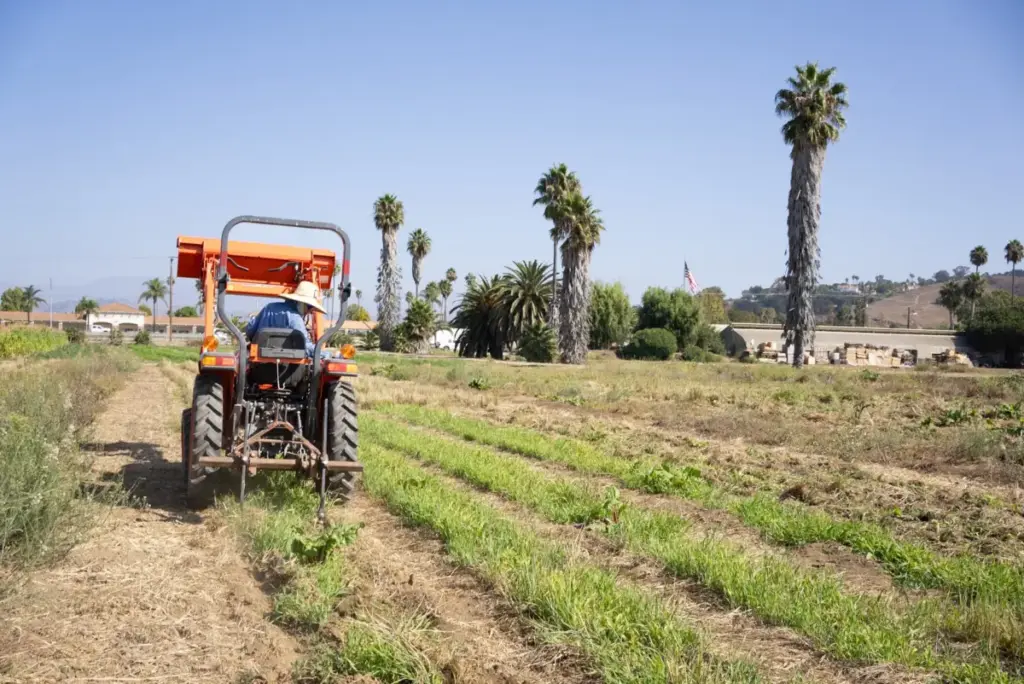
As the tractors roll across the changing acreage of Ventura County, they carry with them the hopes of a national movement. In the fields of California, the future of global agriculture is quietly, deliberately, and successfully taking root.



