

Executive Overview
Electric vehicle (EV) adoption across Southern Europe is shifting from an environmental novelty into a practical, everyday reality. Islands like Sardinia, blessed with abundant renewable energy resources and tight-knit urban centers, serve as the ultimate proving ground for compact battery-electric vehicles. During a recent vacation to the Italian island, a thorough real-world test of the Peugeot E-208 rental vehicle provided a fascinating lens through which to view Europe’s rapidly evolving EV market.
From navigating the winding, sun-drenched backroads of the Mediterranean to confronting the stark realities of regional public charging infrastructure, the Peugeot E-208 proved to be a vehicle of contradictions. It pairs distinct French flair, agile front-wheel-drive (FWD) handling, and an engaging "momentum-car" driving dynamic with the packaging limitations of an internal combustion engine (ICE) platform.
Furthermore, as the European EV market grows increasingly competitive with the influx of advanced, low-cost alternatives from Chinese manufacturers and tech-forward competitors, the E-208’s traditional pricing strategy and legacy architecture face an uphill battle. This comprehensive review breaks down the vehicle’s real-world performance, charging nuances, market positioning, and the strategic lessons Stellantis must heed to maintain its foothold in the electrified era.
Detailed Chronology: From Olbia to Alghero
The Airport Handover and Initial Impressions
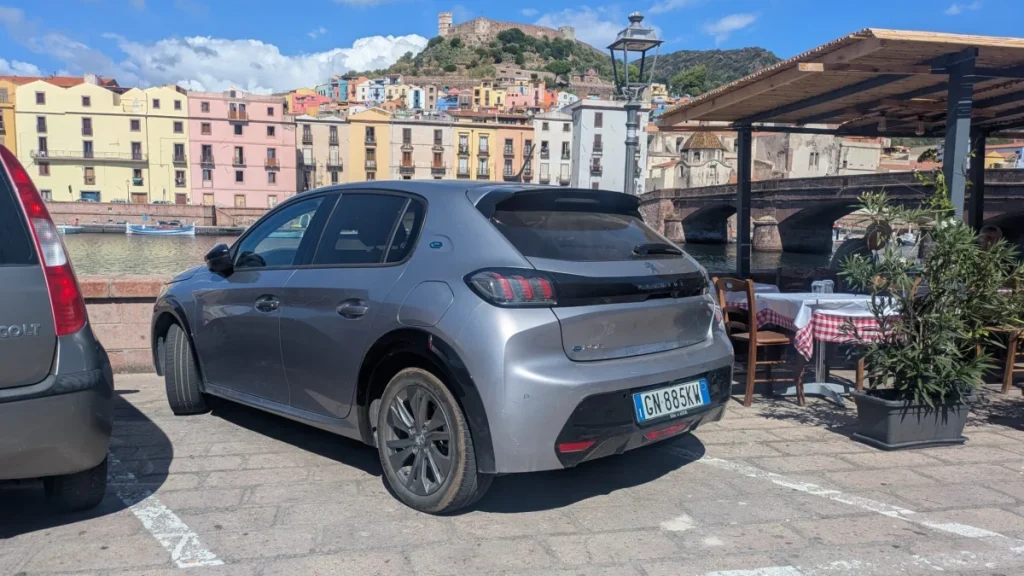
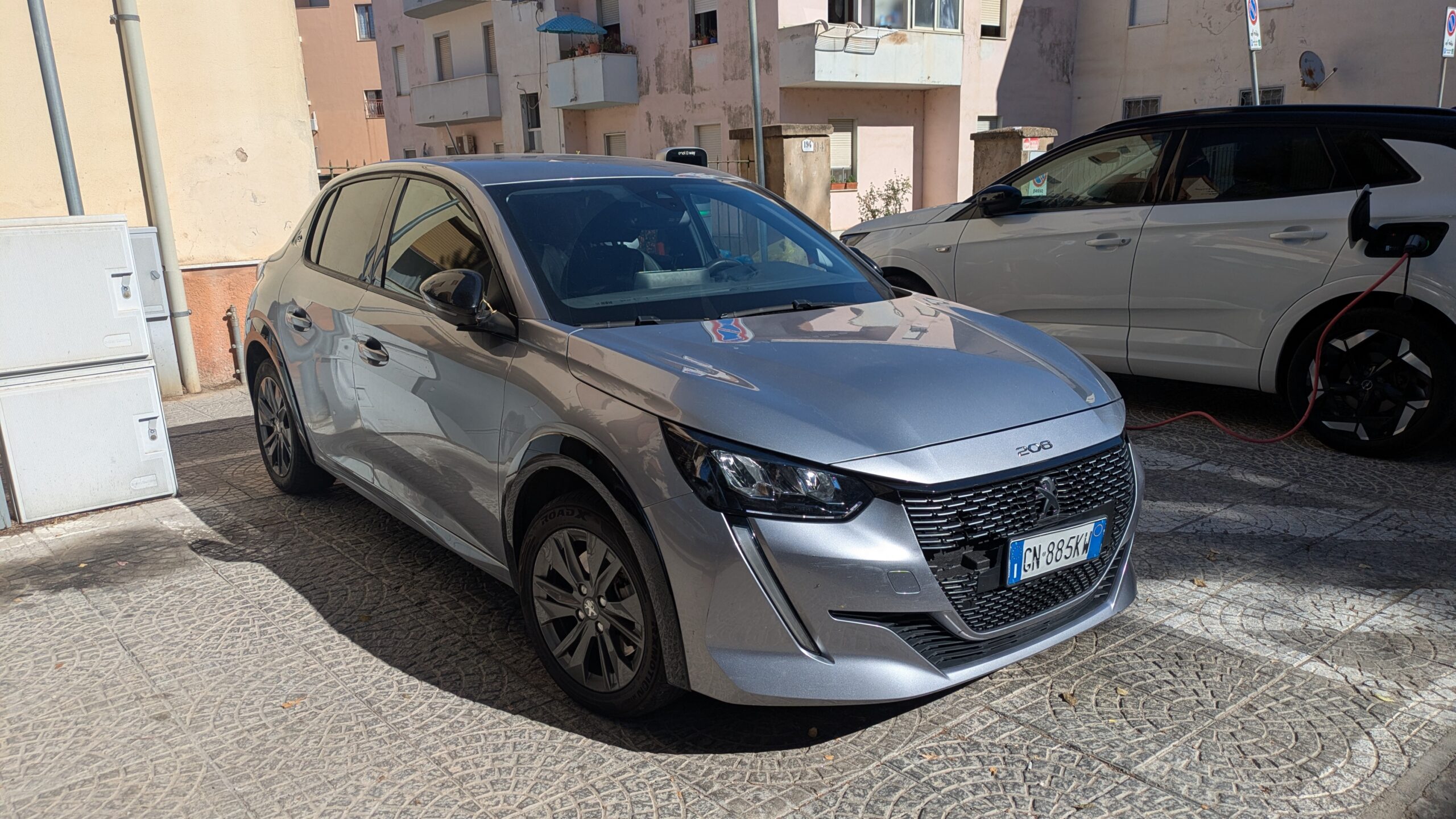
The journey began at Olbia Costa Smeralda Airport, where a reservation with local rental provider Drivalia yielded an entry-level Peugeot E-208. Opting for a local rental agency allowed for a reasonably priced EV experience, though it came with the expected quirks of high-turnover fleet vehicles. The car showed minor cosmetic wear, and the interior windshield bore a mysterious, hazy film—likely spray-on suntan lotion from a previous vacationer—which created dangerous glare under low sun angles and oncoming headlights. A few wet wipes quickly resolved the visibility issue, clearing the path for the island adventure ahead.
Unlocking the car revealed a compact footprint. Measuring 4055 mm in length, the E-208 sits comfortably in the subcompact hatchback segment, slotting neatly between current city-car dimensions and ultra-compact global offerings like the BYD Seagull. Stepping inside required a deliberate duck of the head due to the slightly narrow door openings, but once seated, the cabin accommodations proved surprisingly adequate. The manually adjustable seats offered decent comfort, though the interior materials relied heavily on hard plastics—a direct inheritance of the vehicle’s low-cost, gasoline-powered roots, which start at roughly €18,100 including VAT, compared to the battery-electric variant’s loftier entry point.
Navigating Sardinian Infrastructure: Highs and Lows
Touring Sardinia highlighted the stark contrast between daily driving pleasure and the friction points of public charging infrastructure. With petrol prices hovering well above €2 per liter (roughly $9 per gallon), the economic advantages of driving an EV were immediately apparent. More importantly, the silent, vibration-free operation of the electric powertrain enhanced the serenity of the vacation, allowing passengers to fully immerse themselves in the coastal and rural scenery.
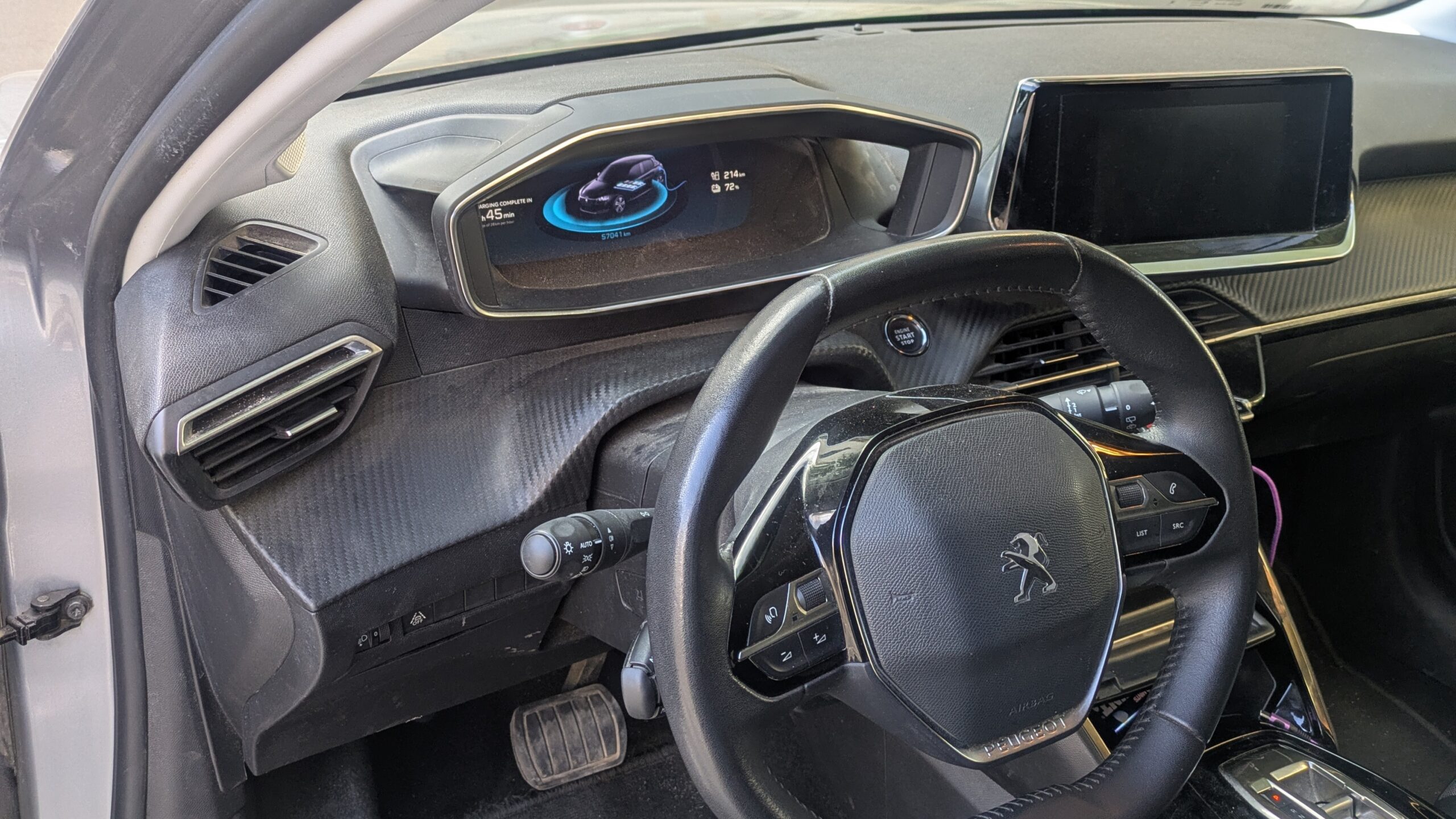
Range anxiety was largely a non-issue during day-to-day exploration. The entry-level powertrain on the rental E-208 is paired with a smaller battery pack, yielding a WLTP-rated range of roughly 363 kilometers (with higher-tier trims pushing up to 433 km). For island driving, an effective daily range of around 300 kilometers proved more than sufficient.
In Alghero, where the travelers stayed for the majority of the trip, charging logistics were remarkably smooth. A multi-stall Level 2 AC charging station was situated just a couple of blocks from the accommodation. The routine quickly became second nature: plug the car in after returning from daytime adventures, enjoy dinner, and retrieve a fully replenished vehicle the following morning.
However, the return journey to Olbia exposed the fragilities of Europe’s public charging network. Attempting to charge at a pre-booked hotel proved futile when an internal combustion engine (ICE) SUV illegally occupied the designated EV parking bay. Subsequent hunts for operational public chargers yielded frustration: three consecutive municipal chargers were completely out of service, while a fourth was blocked by another fossil-fueled vehicle.

Salvation finally came at a charging hub a little over a mile from the hotel. While the station featured a broken touchscreen interface, it fortunately accepted an RFID card to initiate the charging session. For drivers accustomed to the seamless, hyper-reliable Supercharger networks or the prolific, well-maintained charging ecosystems found in markets like China, the European public charging experience still leaves substantial room for improvement.
Supporting Context & Metrics
Powertrain, Performance, and Platform Compromises
The Peugeot E-208 is offered with varying electric motor outputs—typically 100 kW or 115 kW for standard variants, with performance differences between the battery sizes remaining minimal. In Italy, the standard lineup starts at €34,480 (including VAT), while the performance-focused E-208 GTi commands upwards of €43,650, featuring a robust 207-kW motor capable of sprinting from 0 to 100 km/h in a brisk 5.5 seconds.
Because the E-208 is built upon an adapted multi-energy platform (shared with its ICE siblings), it carries distinct engineering trade-offs:

- Absence of a Frunk: Lacking a dedicated skateboard EV architecture, the vehicle misses out on front trunk (frunk) storage or under-floor compartments where an exhaust muffler would traditionally reside.
- Aerodynamic Penalties: The vehicle lacks the specialized, hyper-sleek aerodynamic optimizations seen on ground-up electric vehicles. Consequently, highway efficiency drops noticeably compared to its stellar efficiency on lower-speed backroads.
- Weight Penalties: Tipping the scales at a curb weight of 1,530 kg (3,373 lbs), the E-208 is heavy for a car of its physical footprint—though still lighter than many long-range battery-electric crossovers. By contrast, upcoming dedicated compact models, such as the new-generation BYD Seagull, target a lean curb weight starting at just 1,180 kg.
Cargo Volume and Practicality Debates
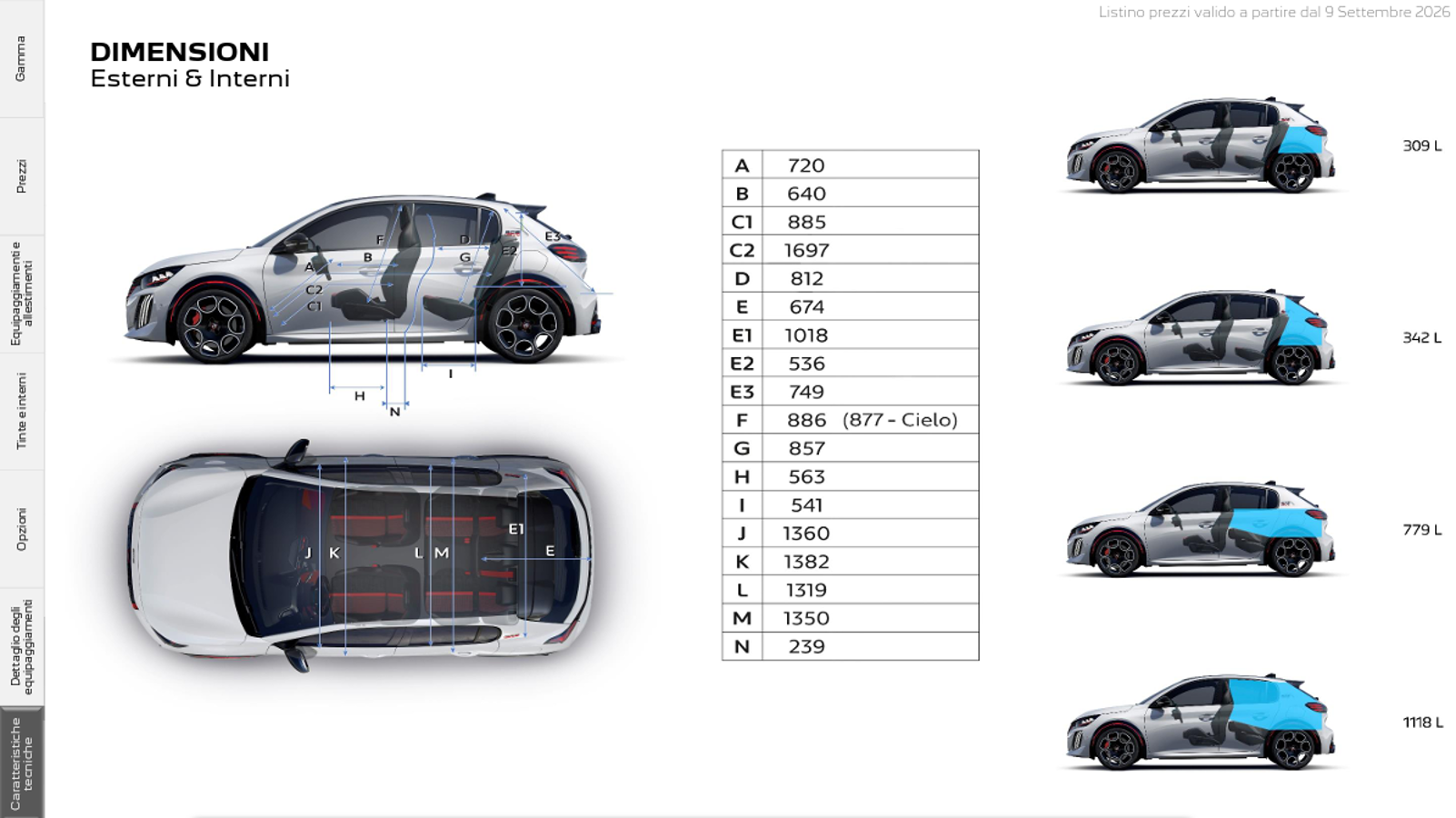
Cargo space within the E-208 is inherently limited by its subcompact hatchback dimensions, requiring occasional use of the rear seats for luggage overflow. However, testing the vehicle provided a refreshing observation regarding automotive marketing metrics.
Peugeot publishes multiple cargo volume calculations in its marketing materials: traditional liquid measurements from the floor to the top of the seatbacks, alongside roof-height liquid measurements. This transparency contrasts sharply with the broader industry trend—popularized heavily by Tesla—where manufacturers invent proprietary, non-standard measurement methods that render comparative data nearly useless. Peugeot’s straightforward approach makes apples-to-apples comparisons genuinely possible.
The "Momentum Car" Driving Dynamic
Despite its weight and ICE-derived platform, the E-208 possesses a distinct personality. With a significant portion of its mass positioned low in the chassis, the vehicle handles with the classic agility of a front-wheel-drive French hatchback.
Faced with limited highway efficiency and tight, winding Sardinian asphalt, the driver naturally gravitated toward scenic backroads. Adopting the driving style of a "momentum car"—similar to tracking a Mazda Miata, albeit at much more moderate speeds—transformed the commute into a masterclass in efficiency. Maintaining momentum through late apexes and smooth steering inputs delivered driving joy without alarming the passenger. It is an experience that suggests a bright future for low-power, high-handling electric momentum cars.
Market Positioning & Competitive Landscape
When evaluated against the broader European automotive landscape, the Peugeot E-208 faces fierce economic and technological pressures:
- The Chinese Value Threat: In Europe, competitors like the BYD Seagull offer expansive onboard technology and high interior build quality for under €20,000. Meanwhile, Stellantis partner Leapmotor offers the B05 starting at €23,900, presenting a far superior economic value proposition, even if its styling tends toward the generic.
- Stiff Competition at Price Parity: With the E-208 GT Exclusive trim climbing to €42,430, the vehicle finds itself competing directly against formidable, ground-up EV alternatives. For example, vehicles like the XPENG L03—starting at €34,990 in Italy—offer rear-wheel drive, greater motor output, extensive range, advanced onboard tech, and far superior interior appointments. A similarly priced Long Range Ultra L03 delivers 480 km of range and advanced intelligent driving systems.
- The US Market Context: If translated to the North American market at roughly €29,000 before VAT ($32,660 USD), the E-208 would position itself directly against legacy veterans like the Chevrolet Bolt, where its charismatic styling might win over domestic buyers. In Europe, however, consumer choice is exploding, making the E-208’s high price-per-kilometer harder to justify purely on paper.
Future Outlook: The Best of Both Worlds
The Peugeot E-208 is a vehicle defined by its emotional appeal. It is undeniably fun, brimming with European styling character, and handles remarkably well on twisty rural tarmac. Yet, its legacy platform, basic interior tech (including persistent smartphone pairing friction), and premium pricing relative to its capabilities reveal the growing pains of traditional automakers transitioning to electrification.

Looking ahead, the path forward for legacy automotive giants lies in strategic cross-pollination. Imagine a vehicle that fuses the world-class EV engineering expertise and production efficiency of companies like Leapmotor with the unmistakable aesthetic flair, interior panache, and chassis tuning of Peugeot.
If Stellantis can successfully merge Chinese manufacturing efficiency and technological depth with French design flavor, the next-generation E-208 won’t just be a charming rental car for island getaways—it will be an undisputed market heavyweight capable of dominating showroom floors across the globe.



