Executive Overview
Thousands of miles away from the jagged peaks and deep river valleys of the Himalayas, the quiet rhythm of a late-August evening in Queens, New York, was shattered by the devastating reality of a climate-induced catastrophe. For 24-year-old computer science student Geeta Tamang, the world tilted on its axis when her aunts walked into her bedroom to deliver news that defied comprehension: a catastrophic Himalayan glacier collapse had triggered an unstoppable torrent of water, mud, and rock, effectively wiping her ancestral home in Rasuwa, near the Nepal-Tibet border, off the map.
Across the vibrant Nepali and Tibetan communities nestled within Jackson Heights—often hailed as the diaspora’s cultural capital in the United States—this disaster has provoked a profound psychological and emotional reckoning. More than 600 people have been confirmed dead, and nearly 3,000 remain missing. Among them are cherished family members, distant relatives, and lifelong friends.
Yet, the grief coursing through the diaspora is inextricably bound to a bitter sense of injustice. Generations of families who contributed negligibly to global greenhouse gas emissions are now forced to bear the catastrophic costs of a warming planet. Compounding this anguish is a fraught geopolitical backdrop: a retreating United States administration slashing foreign aid and stepping back from international climate accords, alongside local humanitarian networks stretched to their absolute limits. From Queens restaurants to university campuses, this article examines how a diasporic community thousands of miles away is navigating profound loss, confronting systemic global inequities, and mobilizing to aid a homeland reeling from disaster.
Detailed Chronology: The Disaster and Its Unfolding
The Collapse at the Roof of the World
The crisis began on a fateful Wednesday when an unstable Himalayan glacier in the Rasuwa district collapsed. The immediate aftermath was swift and catastrophic. A monumental wall of water, combined with liquefied glacial debris, mud, and boulders, surged down the mountain valleys. It tore through downstream villages, overwhelming infrastructure, sweeping away homes, and obliterating major border transit routes.
Chinese rescue teams that eventually reached the border crossing described finding "nothing but ruins," while rescue operations on both the Nepalese and Tibetan sides faced monumental hurdles. Torrential currents destroyed access roads, washed away bridges, and cut off power and communication grids, plunging remote Himalayan communities into total isolation.
Breaking the News from a Queens Bedroom
For Geeta Tamang, the unfolding disaster was experienced in agonizing slow motion. As she prepared for bed, her aunts delivered the initial, terrifying fragments of news. Desperate for verification, Tamang began placing frantic international calls to relatives in the region.
Most calls went straight to voicemail or failed entirely due to severed telecommunication lines. Those few connections she managed to establish revealed a chilling reality: her relatives on the ground were largely unaware of the scale of the disaster that had just swept through their valley. From the safety of her bedroom in Queens, Tamang found herself breaking the news of the catastrophe to her own family, one agonizing phone call at a time.

As the days progressed, the personal toll became agonizingly clear. Among the nearly 3,000 missing individuals is Tamang’s grandaunt—a woman she regarded as a second grandmother. "My grandmother’s sister, she’s really like a grandmother to me," Tamang said, her voice trembling. "I don’t think there’s any chance she survived."
Supporting Context & Metrics: Casualties, Climate, and Geopolitics
The Human Toll and Disputed Figures
The official numbers surrounding the disaster continue to mount, illustrating a tragedy of historic proportions:
- Confirmed Deaths: Over 600 fatalities have been officially documented across the affected zones in Nepal and Tibet.
- Missing Persons: Nearly 3,000 individuals remain unaccounted for, leaving families trapped in agonizing limbo as search-and-rescue efforts crawl forward.
- Tibet Toll Discrepancies: Across the border in Tibet, Chinese authorities initially reported at least seven deaths. However, this official toll has been met with profound skepticism and deep suspicion among Tibetan expatriates. Sonam Tshiring, a 58-year-old Tibetan refugee who has lived in Queens for three decades, voiced a widespread belief within the diaspora that the actual casualty figures in Tibet are drastically higher than the numbers acknowledged by Beijing.
Climate Injustice: The Global North vs. the Global South
Beyond the immediate personal grief, the disaster has catalyzed intense discussions within the New York diaspora regarding climate accountability. Nepal is responsible for only a tiny fraction of global greenhouse gas emissions. Yet, its fragile Himalayan ecosystems are on the absolute front lines of global heating. Rising temperatures are causing Himalayan glaciers to retreat at unprecedented rates, forming unstable glacial lakes that threaten downstream communities with sudden, catastrophic outbursts (known as Glacial Lake Outburst Floods, or GLOFs).
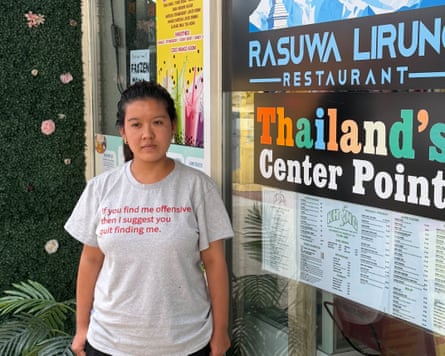
For community leaders and business owners like Tsomo Dasel, 40—owner of Himalayan Yak, the historic first Nepali restaurant on Roosevelt Avenue in Jackson Heights—the crisis is a searing indictment of global apathy. "The world needs to pay attention," Dasel emphasized, pointing out that marginalized populations in the Himalayas are paying with their lives for an ecological crisis engineered primarily by industrialized nations.
Official Statements and Responses: A Diplomatic Insult
The humanitarian crisis has unfolded during a uniquely volatile political moment. The United States government has steadily retreated from its international climate commitments, accompanied by dramatic reductions in foreign aid and humanitarian assistance under the current administration.
When the US Department of State pledged an initial package of just $500,000 in emergency aid to assist Nepal, the response from the diaspora was swift and scathing. Community leaders characterized the figure as an insulting drop in the ocean compared to the massive scale of devastation and the hundreds of lives lost.
"It’s a joke—if you don’t want to do anything, then don’t do it," Tsomo Dasel remarked bitterly, reflecting widespread frustration over Washington’s lukewarm response. For Dasel and others, the meager financial pledge underscores a broader, systemic neglect of vulnerable regions, particularly areas like Tibet, which are frequently sidelined in international media and geopolitical discourse due to political sensitivities.
Furthermore, search-and-rescue operations have been severely hampered by the sheer logistical nightmare of the terrain. Local authorities in Nepal have appealed internationally for specialized equipment to help identify and store bodies recovered from the mud, but the lack of substantial foreign aid and heavy machinery has left local rescue workers struggling to sift through meters of thick, hardened debris by hand.
The Next Generation: Navigating Dual Identities and Helplessness
While older community leaders express fury at geopolitical indifference, a younger generation of Nepali and Tibetan Americans is navigating the disaster through a complex lens of dual identity, anxiety, and a fierce drive to take action.
Ninima Rai: Watching from Afar
Ninima Rai, 19, moved to New York from Nepal when she was 11 years old. Having lived through the harrowing 2015 Nepal earthquake as a child, watching yet another catastrophic event tear through her homeland from thousands of miles away has evoked a haunting sense of déjà vu.
While her immediate relatives in Nepal were verified safe—despite severe communication disruptions—Rai and her peers have thrown themselves into digital organizing. They have spent their days scouring social media for updates, disseminating verified donation links, and coordinating with grassroots organizations on the ground. "It’s hard to see how we can support them from so far away," Rai admitted.
Tashi Sherpa: Living in the In-Between
For 16-year-old Tashi Sherpa, who was born in the United States but spent formative childhood years immersed in Nepalese culture, the disaster has highlighted a profound sense of psychological displacement. Feeling deeply connected to both her American home and her Himalayan heritage, Sherpa describes a pervasive feeling of insecurity.
"As a Nepali American… it’s not just Nepal, but it’s America too," Sherpa noted. "I think it is a very chaotic time for us to feel like there is no safe space… and we feel very easily overwhelmed."
Despite this overwhelming anxiety, both teenagers view community action as a vital antidote to helplessness. Friends in Nepal have worked tirelessly to assemble emergency aid kits, distributing food, clean water, and clothing, while youth groups in New York continue to rally their peers to raise funds.
Future Outlook: Resilience and the Long Road to Recovery
As the initial shockwaves of the disaster give way to the arduous reality of long-term recovery, the Nepali and Tibetan communities in Queens are bracing for a protracted struggle.
In Jackson Heights, solidarity networks are working overtime. Restaurants and cultural centers have transformed into informal hubs for organizing, fundraising, and emotional support. Tsomo Dasel and other diaspora leaders are coordinating with local non-profits to channel resources directly to families who have lost everything, bypassing sluggish bureaucratic channels where possible.
However, formidable challenges remain. With critical infrastructure destroyed and communications lines continuously flickering out, the immediate priority for community elders is to sustain the search for the thousands still missing, even as hope diminishes with each passing hour.
Ultimately, the catastrophe in Rasuwa and across the Himalayas has left an indelible mark on the diaspora. It has served as a painful reminder of the fragility of life in the shadow of the world’s highest mountains, while cementing a collective resolve to fight for climate justice, demand adequate international accountability, and ensure that their ancestral homelands are never forgotten.
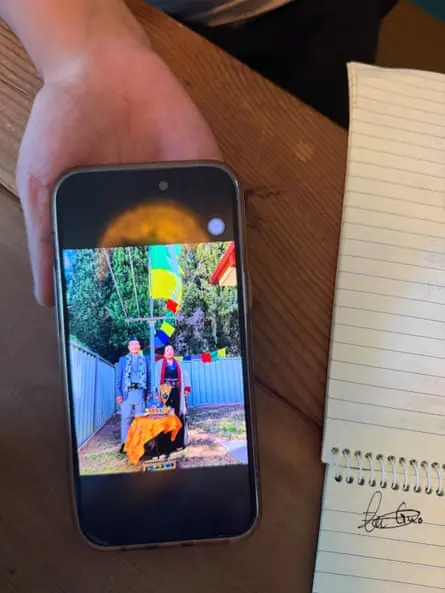
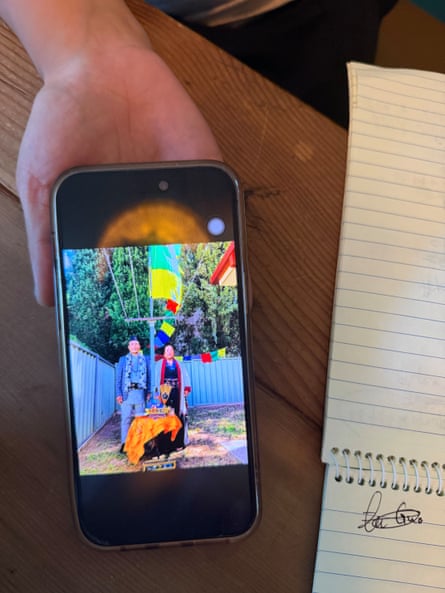
As Geeta Tamang looks out at the bustling streets of Queens, clutching a photograph of her missing grandaunt, her resolve—and that of her community—remains unbroken. "Whatever the team needs," Dasel affirmed, echoing the sentiment of a diaspora standing shoulder-to-shoulder across oceans, ready to rebuild what the floods have tried to wash away.