Across the vast, sprawling savannahs, dense rainforests, and arid wildernesses of Africa, a silent revolution is underway in the fight to protect the continent’s iconic biodiversity. For years, international conservation efforts have poured millions of dollars into high-tech solutions—deploying thermal-imaging cameras, GPS wildlife tracking collars, AI-driven sensor networks, and advanced monitoring software like EarthRanger. Yet, despite these multi-million-dollar infusions of modern gadgetry, a glaring bottleneck has continually undermined success: the acute shortage of trained, localized technical personnel capable of installing, maintaining, troubleshooting, and repairing these sophisticated systems.
When a telemetry relay tower goes offline, a solar panel shorts out, or an elephant casually knocks over a crucial communications pole, highly sophisticated operational units can instantly be reduced to dead weight. Recognizing this systemic vulnerability, the Connected Conservation Foundation (CCF) stepped into the breach, launching a pioneering educational initiative designed to bridge the chasm between cutting-edge technology and boots-on-the-ground reality.
In the biting chill of a Limpopo night at South Africa’s prestigious Lapalala Wilderness nature reserve, this vision crystallised into reality. Here, an elite cohort of sixteen conservation professionals—culled from an initial global applicant pool of nearly 700 candidates hailing from eleven African countries—gathered for an intensive, hands-on practical training camp. Among them is Duncan Kanyakera, a dedicated conservationist from Kenya’s Tsavo landscape. As he watches an instructor deploy a thermal-imaging drone that locates a lone cheetah and her cubs within minutes under the blanket of a moonless sky, Kanyakera envisions the profound implications this technology holds for mitigating human-wildlife conflict back home.
This comprehensive report explores the genesis, execution, and sweeping future implications of the Connected Conservation Foundation’s Protected Area Technician (PAT) training programme. By combining rigorous digital coursework with rigorous, real-world deployment drills, this initiative is rewriting the playbook for modern conservation across Africa, ensuring that the future of wildlife management rests securely in the hands of empowered, tech-literate local experts.
Detailed Chronology: From Concept to Field Deployment
The journey toward establishing Africa’s first comprehensive protected area technician training course was born out of persistent frustration in the field. Since 2015, the CCF has successfully engineered and deployed state-of-the-art technological infrastructures across nearly 10 million hectares (25 million acres) of ecologically sensitive African landscapes. These implementations demonstrably transformed park security, drastically reduced poaching incidents, and fortified ecological resilience. However, project leaders repeatedly ran into an operational wall: the fragility of remote technology.
Identifying the Critical Gap
Carien Soldatos, who oversees the PAT training initiative for the CCF, noted that while tech solutions are undeniably fantastic, their long-term efficacy relies entirely on the presence of skilled technicians on the ground.
"Tech is fantastic, but it all depends on having trained technicians on the ground," Soldatos explains. "Without people who know how to use, repair, and maintain them, the fanciest gizmos in the world aren’t much use."
While select well-funded private reserves or high-profile national parks maintained internal technical talent, the vast majority of protected areas across Sub-Saharan Africa suffered from a critical talent vacuum. Recognizing that no formal, standardized curriculum existed globally to train conservation professionals specifically in environmental hardware, networking, and power systems, the CCF made the bold decision to build one from scratch.
The Digital Foundation: July 2025 Launch
In July 2025, the CCF officially launched a groundbreaking 10-module online training curriculum tailored specifically for protected area technicians. Designed to be modular, accessible, and deeply practical, the digital program cast a wide net across the continent.
The response was overwhelming. In its inaugural year, approximately 680 individuals from diverse corners of the globe completed at least one module of the course. The digital coursework served as a rigorous intellectual crucible. Participants who successfully navigated and completed all 10 demanding modules advanced to a competitive second round involving intensive interviews. From this massive global talent pool, only the top 16 candidates were selected to attend the highly anticipated, all-expenses-paid practical component in person at the Lapalala Wilderness reserve in South Africa.
The Lapalala Practical Workshop
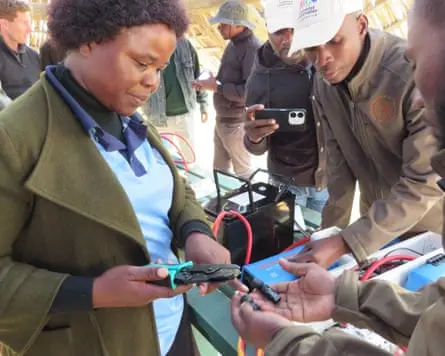
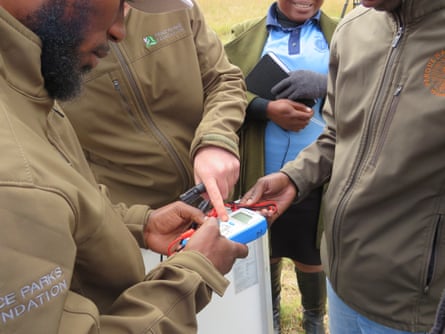
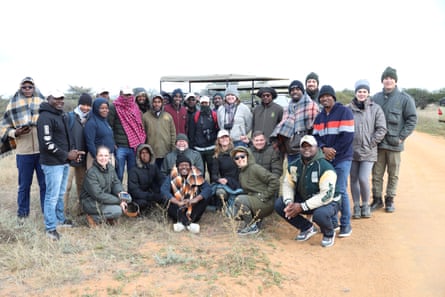
The successful finalists—representing countries as geographically and culturally diverse as Benin, Liberia, the Democratic Republic of the Congo, Madagascar, Zimbabwe, and Kenya—converged on Lapalala for an immersive, sweat-and-circuitry training boot camp. Alongside them were five dedicated staff members from Peace Parks Foundation undergoing specialized institutional training.
The curriculum at Lapalala was meticulously engineered to forge deep mechanical and cognitive "muscle memory." Sophie Maxwell, a leading figure at CCF, detailed the pedagogical philosophy underpinning the training:
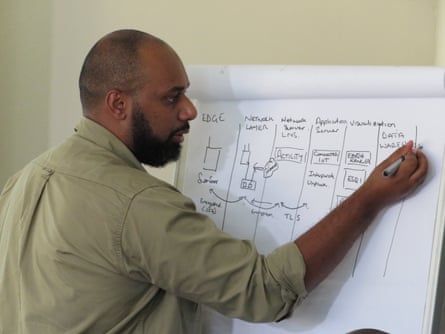
"Each day, they build a new element of the stack, before breaking it down at the end of each day and building it again the next morning to add another layer. It’s all about building muscle memory."
Students engaged in rigorous modules covering connectivity protocols, communication arrays, renewable energy and power systems, monitoring sensors, hardware integration, and Geographic Information System (GIS) visualization tools. Guest lectures and hands-on laboratory sessions led by nine industry-leading experts ensured that the cohort received world-class instruction in solving real-world ecological management hurdles.
Supporting Context & Metrics: The Scale of the Challenge
To fully appreciate the urgency of the CCF’s training intervention, one must examine the logistical and environmental realities facing African protected area managers today. Managing millions of hectares of wilderness with constrained budgets, limited personnel, and vast geographic isolation creates a near-impossible management matrix.
The Technology "Stack" and its Vulnerabilities
Modern conservation infrastructure relies on what experts call a "technology stack"—an interconnected web of hardware and software components designed to provide real-time situational awareness to park wardens. This stack typically includes:
Perimeter and Interior Sensors: Acoustic monitors, seismic ground sensors, and infrared camera traps.
Data Transmission Networks: VHF radios, cellular gateways, and point-to-point microwave internet links.
Central Command Software: Platforms like EarthRanger that aggregate incoming data streams onto interactive maps, allowing rangers to track wildlife movements and intercept poachers dynamically.
Power Infrastructure: Off-grid solar arrays, battery storage banks, and voltage regulators designed to keep remote relay stations operational.
When any single link in this chain fails—such as a solar inverter burning out during the rainy season or a camera trap firmware glitching—blind spots emerge. In high-stakes environments where heavily armed poaching syndicates track endangered rhinos and elephants, a blind spot can translate directly to irreversible wildlife slaughter.
Human-Wildlife Conflict: A Contested Frontier
Beyond anti-poaching operations, protected area technicians play a vital frontline role in mitigating human-wildlife conflict (HWC). For conservationists like Duncan Kanyakera, who works with the Taita Taveta Wildlife Conservancies Association (TTWCA) supporting a network of 35 conservancies and ranches across Kenya’s vast Tsavo landscape, HWC is an everyday crisis.
Tsavo is an expansive, semi-arid ecosystem where large mammals frequently interact with human agrarian communities. During the dry season, the scarcity of water drives elephants and other large herbivores out of park boundaries and into local farming settlements in search of hydration and crops.
"If an elephant gets into a corn field, it causes havoc," Kanyakera explains. "And then you have the problem of humans retaliating."
Historically, responding to such incidents involved a painfully slow analog process: villagers would report a rogue elephant, conservancy managers would attempt to ascertain its geographic coordinates through verbal reports, and rangers would be deployed blindly into the bush—a process that could consume several hours, by which point crops were destroyed and human lives endangered.
The introduction of night-vision thermal drones during the Lapalala practical training offered Kanyakera a revelation. Operating a thermal drone in pitch-dark conditions, instructors located a resting cheetah miles away within minutes, sending precise coordinates directly to field rangers’ devices. Translating this capability to Tsavo means park managers can leverage drone acoustics and rapid aerial reconnaissance to track, intercept, and gently herd elephants away from human settlements long before conflict escalates, all while minimizing human risk.
Official Statements and Perspectives
The success of the inaugural PAT training program has drawn praise from institutional leaders, academic partners, and field technicians alike, each highlighting how localized technical empowerment multiplies the effectiveness of conservation investments.
Institutional Leadership
Reflecting on the overarching philosophy of the initiative, Sophie Maxwell emphasizes the undeniable correlation between integrated technology and park security:
"Parks with tech solutions are safer and more biodiverse and they have better relationships with communities."
Carien Soldatos underscores the pragmatic reality that drives the program’s expansion:
"Tech is fantastic, but it all depends on having trained technicians on the ground. Without people who know how to use, repair and maintain them, the fanciest gizmos in the world aren’t much use."
Voices from the Field: Empowered Trainees
The personal transformations experienced by the cohort members illustrate the profound ripple effects of the curriculum.
Duncan Kanyakera (Kenya): Looking forward to returning to the Tsavo landscape, Kanyakera plans to fundamentally overhaul his organization’s operational methodology.
"As soon as I get home, I’ll reconfigure our camera traps to make the most of AI… In the past, we would just Google and make a decision. Now I know so much more, I can target what I really want. The learnings from this course can make a big difference to the people and animals of Tsavo."
Effort Zivengwa (Zimbabwe Parks and Wildlife Management Authority): Operating out of Harare, Zivengwa oversees technical infrastructure across 11 national parks. The course forced him to critically evaluate his agency’s existing technological footprint.
"We were content with what we were doing. But, after completing this course, I think we have to do more. We are already using EarthRanger and we do have sensors, but they are not integrated… We have park headquarters and lodges that don’t have internet access. Using point-to-point internet can fix that problem easily." Furthermore, modules on solar power shifted his paradigm regarding remote stations: "We have a lot of remote stations. But the sun shines everywhere."
Mabel Nokhuthula Piki (Chinhoyi University of Technology, Zimbabwe): As an educator training the next generation of wildlife monitoring professionals, Piki views the curriculum as a vital bridge between theoretical academia and practical conservation engineering.
"My students didn’t comprehend that tech was important. They couldn’t get the link between saving animals and computers. But now I am going to change their minds… It is impossible to understand the value of tech until you have seen it."
Future Outlook and Next Steps
As the inaugural cohort returns to their respective home countries, the momentum generated by the Lapalala training camp shows no signs of slowing down. The Connected Conservation Foundation has already laid out an ambitious roadmap for the immediate future.
Scaling Up: The 2027 Practical Course
Building upon the immense success of the 2025–2026 pilot cycle, the CCF has confirmed plans to host its second major practical training course for a brand-new batch of online graduates in the first quarter of 2027. The online module portal remains active, continually screening and filtering candidates from across the globe to identify the next generation of tech-savvy conservation leaders.
Targeted Post-Course Support and Hardware Grants
Recognizing that theoretical knowledge and practical skills must be backed by tangible physical resources, Carien Soldatos announced a vital expansion of the program’s support framework:
"We will be supporting five participants from the first course with internships and/or hardware donations."
While the final selection for these high-value grants and internships is still underway, alumni from the inaugural cohort—including Kanyakera, Zivengwa, and Piki—are all strong contenders. The provision of specialized hardware, ranging from point-to-point transmission nodes to thermal drones and advanced sensor arrays, will allow these newly minted technicians to immediately deploy enterprise-grade upgrades within their home reserves.
A New Paradigm for African Conservation
Ultimately, the Connected Conservation Foundation’s training initiative represents a fundamental shift in capacity building across the African continent. For decades, conservation technology has often been imported as a top-down, turnkey solution managed by external consultants—a model prone to unsustainability upon foreign departure.
By systematically identifying, vetting, and training indigenous protected area technicians through a rigorous blend of digital theory and hands-on muscle memory, the CCF is fostering genuine local ownership over conservation technology. As these 16 pioneers return to Kenya, Zimbabwe, Benin, Liberia, the DRC, Madagascar, and beyond, they carry with them not just the tools to monitor wildlife and deter poachers, but the permanent capacity to innovate, repair, and sustain the digital shields guarding Africa’s natural heritage for generations to come.