

Executive Overview
In a landmark legal ruling that has sent shockwaves through the UK utility sector, South West Water (SWW) has been ordered to pay a record-breaking penalty of nearly £8 million following a systematic pattern of illegal sewage discharges. Handed down at Plymouth Magistrates’ Court by District Judge Matson, the £7,867,733 fine—alongside an additional £329,993 in prosecution costs—represents the largest environmental penalty ever issued in the region.
The punitive judgment brings to a close a complex, multi-year investigation spearheaded by the Environment Agency. Investigators exposed a shocking catalog of corporate negligence spanning from January 2016 to July 2021. Across 18 separate charges to which the utility giant pleaded guilty—comprising 17 counts of illegal water discharge activities and one count of failing to take reasonable remedial measures following a catastrophic pumping station failure—prosecutors revealed a culture of systemic mismanagement.
Rather than isolated incidents, the court heard how raw, untreated human waste repeatedly polluted some of the most pristine and ecologically sensitive environments in Cornwall and Devon. From popular tourist bathing beaches and bustling harbors during peak holiday weekends to protected Special Areas of Conservation harboring vulnerable wildlife, SWW’s failures transformed natural beauty spots into biological hazards.
District Judge Matson did not mince words when delivering the verdict, categorizing the violations as "horrendous, very significant incidents of pollution" driven by reckless failures in management systems and a willful disregard for known operational risks. Furthermore, the bench noted that despite entering formal guilty pleas, the utility failed to demonstrate genuine remorse, instead attempting to minimize its institutional culpability.
The ruling arrives at a precarious political and social crossroads for the United Kingdom. Public fury over the state of Britain’s privatized water infrastructure has reached boiling point, fueling intense national debates regarding corporate accountability, executive bonuses, and the merits of public versus private ownership. As government officials pledge sweeping regulatory overhauls and critics demand criminal sanctions for corporate executives, the South West Water scandal serves as a stark indictment of an industry prioritizing profit margins over environmental protection.
Detailed Chronology of Environmental Violations
The prosecution dossier assembled by the Environment Agency painted a damning picture of institutional inertia and delayed operational responses. The timeline of offenses reveals not a sudden infrastructural collapse, but a sustained, multi-year failure to maintain basic environmental standards across critical assets in the South West.
The Polperro Harbor Disaster (August 2019)
One of the most visually and viscerally shocking incidents highlighted during the trial occurred over a sun-drenched August bank holiday weekend in 2019. At Polperro harbor, a picturesque coastal village on the south coast of Cornwall packed with holidaymakers and families, untreated sewage suddenly gushed directly through the historic harbor wall.
The biological waste fouled the waters where children swam and tourists strolled, creating an immediate public health hazard. Yet, despite the obvious severity of the breach during peak tourist season, South West Water’s emergency response was glaringly inadequate. It took the company’s engineers a staggering 10 hours simply to attend the scene. By the time response units arrived, the environmental and economic damage to the local community—reliant heavily on tourism—had already been done.
The Harlyn Bay Persistence (2016–2021)
If Polperro was a sudden shock, the situation at Harlyn Bay on the north coast of Cornwall represented a chronic, long-term assault on the marine ecosystem. Situated just a short distance from the culinary hotspot of Padstow, Harlyn is renowned for its golden sands and surfing culture.
However, between January 2016 and July 2021, the location bore witness to an astonishing 231 illegal sewage discharges. For over five years, local ecosystems and beachgoers were subjected to repeated contamination events. The sheer frequency of the spills demonstrated that Harlyn was not suffering from a freak weather anomaly, but rather a structural systemic failure that the utility company allowed to persist unchecked.
The River Camel and Plymouth Creek Neglect
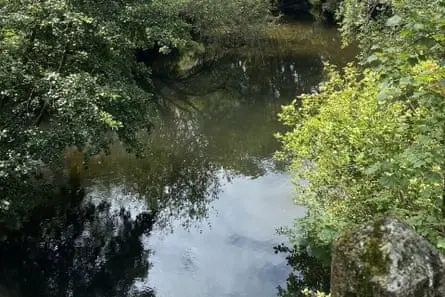
The damage extended far beyond coastal bathing spots into fragile freshwater habitats. SWW repeatedly discharged untreated effluent into the River Camel—a designated Special Area of Conservation and a priority habitat. Famed for its winding wooded valleys, the river serves as a critical sanctuary for otters and Atlantic salmon, while remaining a favorite destination for birdwatchers and sailors alike.
In a separate, equally egregious case within urban Devon, SWW failed to provide a permanent engineering fix for a failing sewer discharging directly into a creek in Plymouth. This inaction persisted despite repeated formal warnings and compliance notices issued by the Environment Agency over several years. The company’s inability—or unwillingness—to implement permanent engineering solutions highlighted what the court ultimately diagnosed as profound structural management failures.
Supporting Context & Metrics: Anatomy of a Regional Crisis
The scale of the £7.8m fine, while historically large for the region, represents only a fraction of the broader systemic challenges facing England’s water sector. To understand the gravity of the South West Water case, one must examine the metrics of regulatory oversight, corporate defense strategies, and the fragile geography of the West Country.
The Ecology at Risk
Cornwall and Devon boast some of the most ecologically diverse and economically vital coastlines in the United Kingdom. Designated bathing waters drive a multi-million-pound tourism economy that relies entirely on clean seas and pristine beaches. When water companies permit raw sewage to flood these areas, the economic fallout hits local hospitality, fisheries, and recreation businesses instantly.
Simultaneously, the ecological toll is heavy. Protected species such as the Atlantic salmon (Salmo salar) and the European otter (Lutra lutra) are acutely sensitive to changes in water quality, chemical pollutants, and biological oxygen demand caused by raw sewage influxes. Eutrophication and bacterial contamination threaten to unravel delicate food webs in these priority habitats.
The Legal and Financial Arguments
During the proceedings at Plymouth Magistrates’ Court, SWW defense teams mounted a familiar corporate defense, characterizing the 18 charges as "historic" and arguing that the vast majority of the infractions stemmed from the routine use of storm overflows during adverse weather conditions.
However, the prosecution successfully dismantled this narrative. The Environment Agency demonstrated that the discharges went far beyond acceptable or legally permitted storm overflow usage. They were the direct result of poorly maintained infrastructure, delayed maintenance schedules, and a failure to invest proactively in pumping station reliability.

District Judge Matson explicitly rejected the company’s attempts to downplay its culpability. Rather than displaying genuine remorse or taking institutional responsibility, SWW’s defense posture sought to compartmentalize systemic failures as isolated administrative oversights—a stance that ultimately influenced the severity of the financial penalty.
Official Statements and Political Fallout
The record-breaking penalty has ignited a fierce national debate, drawing immediate reactions from environmental regulators, government ministers, and local representatives.
Regulatory and Governmental Response
Clarissa Newell, Area Environment Manager at the Environment Agency, underscored the scale of the devastation during her post-trial briefing:
"Hundreds of pollution incidents occurred at some of the most scenic locations in Cornwall and Devon, including bathing waters, a designated special area of conservation and a priority habitat. We hope this record fine will influence a new approach for South West Water."
The judgment landed amid a broader political reckoning over the privatization of the UK’s water utilities, originally enacted under Margaret Thatcher in 1989. Prime Minister Keir Starmer’s administration and leading political figures have increasingly framed privatized water as a symbol of systemic deregulation.
Environment Secretary Angela Eagle did not mince words when addressing the verdict:
"For six years, South West Water repeatedly broke the law. That’s why we’re overhauling the water system to give the public control, with tougher regulation, stronger enforcement and greater accountability, so water companies deliver for customers and the environment."
Local Outrage and Calls for Criminal Accountability
While regulators and government ministers welcomed the court’s decision, local representatives on the frontline of the crisis argued that financial penalties alone remain entirely insufficient to deter corporate recidivism.
Ben Maguire, the Liberal Democrat MP for North Cornwall, voiced deep frustration on behalf of his constituents:
"Yet again, the response is essentially another slap on the wrist fine, which a company of this size can absorb as simply the cost of doing business. The hard-working South West Water technicians and other staff I meet are being completely let down by rotten executives.
I strongly believe we urgently need much tougher penalties for repeat offenders, including prison sentences for those responsible for overseeing serious and illegal sewage dumping."
Maguire’s sentiment highlights a growing consensus among local communities: as long as corporate fines can be absorbed into corporate balance sheets without touching the liberty or personal accountability of senior executives, illegal dumping will likely remain an economically viable risk for utility monopolies.
Future Outlook: Investment Pledges vs. Public Skepticism
In the wake of the judgment, South West Water issued a formal corporate response attempting to pivot toward a narrative of future remediation and modernization. A company spokesperson stated:
"The majority of the charges concerned the use of overflows in storm conditions. We’re investing £760m to tackle storm overflows and have reduced spills by 17% in the last year alone, with spill duration down by 25%. Significant improvements have been made across the sites concerned. We apologise for what happened in the past, and we remain focused on the future as we deliver record levels of investment."
While SWW points to its £760 million investment pipeline and claims measurable progress in reducing spill frequencies and durations over the past year, environmental campaigners and watchdogs remain deeply skeptical. For years, utility companies across England and Wales have promised green revolutions and infrastructure upgrades, only for subsequent investigations to reveal ongoing non-compliance and chronic underinvestment in subterranean networks.
Moving forward, South West Water will remain under intense scrutiny from both the Environment Agency and local communities. The true test of the company’s commitments will not lie in corporate press releases or projected investment figures, but in measurable ecological recovery: clean bathing waters that remain open throughout peak holiday seasons, thriving marine and riverine life in Cornwall and Devon, and an absolute cessation of illegal sewage discharges. Until those tangible benchmarks are met, the shadow of Plymouth Magistrates’ Court will continue to hang heavy over the utility’s operations.



