

Executive Overview
In a dramatic reversal that has sent ripples through the technology and financial sectors, Oura—the prominent Finnish-American maker of biometric-tracking smart rings—has abruptly halted its highly anticipated initial public offering (IPO) on the United States stock market. The move comes just days after the company officially filed paperwork that would have valued the wearable-tech enterprise at an eye-watering $15 billion (£11.3 billion).
The flotation, which had positioned Oura to raise up to $2.2 billion by offering shares on the Nasdaq stock exchange, has been postponed indefinitely. Company executives pointed to escalating turbulence and "uncertainty in the Initial Public Offering (IPO) market" as the primary catalysts for the pullback. Chief Executive Officer Tom Hale sought to project calm in the wake of the decision, maintaining an optimistic posture by emphasizing that going public represents merely a single milestone in the company’s broader trajectory and noting that Oura enjoys "the luxury of choosing our moment."
Oura’s sudden retreat is not an isolated incident; rather, it serves as the latest bellwether of a rapidly cooling and increasingly treacherous landscape for newly public equities. Over the past month, a confluence of macroeconomic head winds—spanning persistent inflation, geopolitical friction, fluctuating energy costs, and soaring benchmark interest rates—has forced several high-profile companies to slam the brakes on their own market debuts. Notably, US nuclear technology firm Holtec International also shelved its flotation plans earlier in the month, explicitly citing an "unusual confluence of developments that has impaired investor confidence."
Financial analysts and market observers suggest that Oura’s stalled debut underscores a broader, structural recalibration across global equity capital markets. As the yield on 10-year US Treasury debt climbs to heights unseen since 2007, institutional investors are adopting a sharply risk-averse posture. While Oura boasts impressive recent financial metrics—including a sharp acceleration in profitability and revenues surpassing the billion-dollar threshold—even fundamentally robust consumer tech firms are finding it exceedingly difficult to navigate the current climate.
Furthermore, the postponement unfolds against a backdrop of emerging regulatory and legal scrutiny. Oura currently faces a class-action lawsuit filed by the Clarkson Law Firm, which challenges the scientific validity of the ring’s sleep-tracking capabilities. Although sources close to the company insist that the legal challenge played no role in the decision to halt the IPO, the convergence of macroeconomic instability and external scrutiny highlights the complex tightrope high-growth technology companies must walk when entering the public sphere.
Detailed Chronology of the Stalled Flotation
The unfolding saga of Oura’s aborted market debut is best understood through a precise examination of the timeline that led to its sudden eleventh-hour suspension.
The Buildup and Filing Phase
Just over a week prior to its abrupt cancellation, Oura’s leadership and its roster of underwriters submitted official registration documents to US regulatory bodies, setting the stage for what was projected to be one of the autumn’s marquee technology IPOs. The company outlined a strategy to sell shares priced within an ambitious range of $40 to $44 on the Nasdaq stock market index. At the midpoint of this range, the offering would have successfully secured up to $2.2 billion in fresh capital, pegging the firm’s total implied market value at $15 billion.
The filing was heralded by market analysts as a major test of consumer hardware appetite on public exchanges, a sector that had experienced a prolonged drought following the post-pandemic market corrections. Oura’s roadshow preparations were reportedly well underway, with institutional investors lining up for initial briefings.
The Macroeconomic Reality Check
However, as the calendar turned through mid-September and October, the broader macroeconomic climate deteriorated at a pace that caught many underwriters flat-footed. Fixed-income markets experienced acute sell-offs, driving the yield on 10-year US government debt to levels not recorded since 2007. Central banks, led by the US Federal Reserve, continued to signal a "higher-for-longer" interest rate paradigm designed to combat sticky inflationary pressures.
The tremors were felt well beyond the bond market. Earlier in the month, Holtec International became an early casualty of the shifting sentiment, postponing its multi-million-dollar flotation and pointing directly to a toxic mix of rising energy costs, ongoing military conflicts, and renewed global trade tensions.
The Abrupt Pullback
Sensing a hostile reception that threatened to undervalue the enterprise or result in a lackluster post-listing performance, Oura’s board of directors made the executive decision to halt the process. Rather than pushing forward into a volatile trading environment—a strategy that has historically resulted in "broken" IPOs where stocks trade below their offer prices—Oura pulled its plan entirely.
By postponing the flotation without providing a definitive timeline for a future attempt, the company opted for capital preservation and strategic patience, shielding its existing shareholders and balance sheet from the vagaries of an unpredictable market.
Supporting Context, Financial Metrics & Market Analysis
To fully comprehend the significance of Oura’s decision, one must analyze the robust financial health of the company against the deteriorating health of the broader IPO ecosystem.
Oura’s Financial Performance
Despite the macroeconomic headwinds that forced its retreat, Oura’s underlying financial statements reveal a rapidly scaling and highly profitable enterprise. Far from being a cash-burning startup reliant on speculative valuations, the smart ring pioneer has transitioned into a formidable commercial operation.
According to the company’s regulatory filings:
- Fiscal Year 2025 (Ending September 30, 2025): Oura posted a pre-tax profit of $23.5 million on total sales of $907.8 million. This represented a substantial leap from the previous fiscal year, during which the company recorded a pre-tax profit of $6.2 million.
- Nine-Month Interim Period (Ending June 30, 2026): Momentum accelerated further into the subsequent fiscal year. Oura reported pre-tax income of $70 million on revenues of $1.2 billion for the nine-month period ending mid-2026.
These figures illustrate a business experiencing robust top-line growth coupled with expanding profit margins—metrics that would typically command immense enthusiasm from institutional investors under normal market conditions.
The Macroeconomic Chill
The disconnect between Oura’s strong financials and its inability to successfully float points to systemic issues within the equity capital markets. Samuel Kerr, global head of equity capital markets at Mergermarket, captured the sentiment succinctly:
"What is now clear is we are in a very different IPO market to the one we envisaged just a few weeks ago."
The shifting tides are largely driven by the cost of capital. With benchmark interest rates elevated, institutional investors—such as pension funds, mutual funds, and sovereign wealth entities—are demanding higher risk premiums. Equities, particularly growth-oriented technology stocks, are facing severe valuation compression. When fixed-income instruments offer safe, attractive guaranteed yields reminiscent of pre-2008 levels, the incentive for institutional allocators to absorb the execution and market risks of a newly minted IPO diminishes significantly.
Official Statements and Corporate Posture
In the wake of the postponement, Oura’s leadership moved quickly to frame the decision as a strategic luxury rather than a tactical retreat driven out of desperation.
Chief Executive Officer Tom Hale emphasized the company’s financial independence and long-term vision. In a statement addressing the suspension, Hale remarked:
"An IPO is just one step in our journey… we have the luxury of choosing our moment."
This perspective is underscored by the company’s strong interim earnings, which demonstrate that Oura does not require immediate public market capital to fund its day-to-day operations or research and development initiatives. By retaining its private status, the firm avoids the immediate pressures of quarterly earnings scrutiny while navigating external economic uncertainties.
Meanwhile, market strategists have praised the pragmatism of management’s approach. Underwriting desks note that forcing an IPO during a period of acute market dislocation often leads to discounted valuations and distressed secondary trading, damaging a company’s brand and shareholder value for years to come. By stepping back, Oura preserves its pristine market narrative for a future window when institutional appetite stabilizes.
Regulatory Headwinds and the Legal Landscape
While macroeconomic factors officially drove the postponement of the IPO, Oura’s journey to the public markets has not been entirely free of friction. The company currently finds itself navigating a significant legal challenge that has drawn considerable attention from consumer advocacy groups and legal watchdogs.
The Clarkson Law Firm Class Action
In August, the Clarkson Law Firm filed a high-profile class-action lawsuit against Oura. The legal action alleges that the company engaged in false advertising by marketing its smart rings as devices capable of accurately tracking and measuring a user’s sleep activity and physiological sleep cycles.
The core of the plaintiffs’ legal argument rests on a biological distinction regarding how sleep is monitored. The lawsuit asserts:
"Oura rings cannot measure one’s sleep or cycles. That’s because sleep happens in the brain, not on one’s finger."
The complaint challenges the fundamental marketing premise of the entire consumer sleep-tracking wearable industry, arguing that peripheral biometric measurements—such as pulse and skin temperature—are insufficient proxies for true neurological sleep architecture.
Oura’s Defense and Scientific Standing
Oura has mounted a robust defense against the allegations, categorically rejecting the premise of the lawsuit and vigorously defending the scientific integrity of its products.
Sources close to the company have maintained that the decision to delay the IPO had no connection whatsoever to the pending litigation, pointing out that public companies frequently manage and resolve legal disputes without derailing capital-raising activities.
In an official corporate statement, an Oura spokesperson forcefully defended the company’s technology:
"We stand behind our science, research and accuracy claims."
The statement went on to contextualize how the Oura Ring operates within the broader landscape of consumer health technology:
"Like other consumer sleep wearables, Oura Ring estimates sleep stages using multiple physiological signals, including heart rate, heart rate variability, movement, breathing patterns, and temperature."
Industry experts note that while class-action lawsuits are a common hazard for consumer-facing technology companies operating in the health and wellness space, the outcome of the Clarkson lawsuit could set a precedent for how biometric claims are substantiated and regulated in the future.
Company Background and Future Outlook
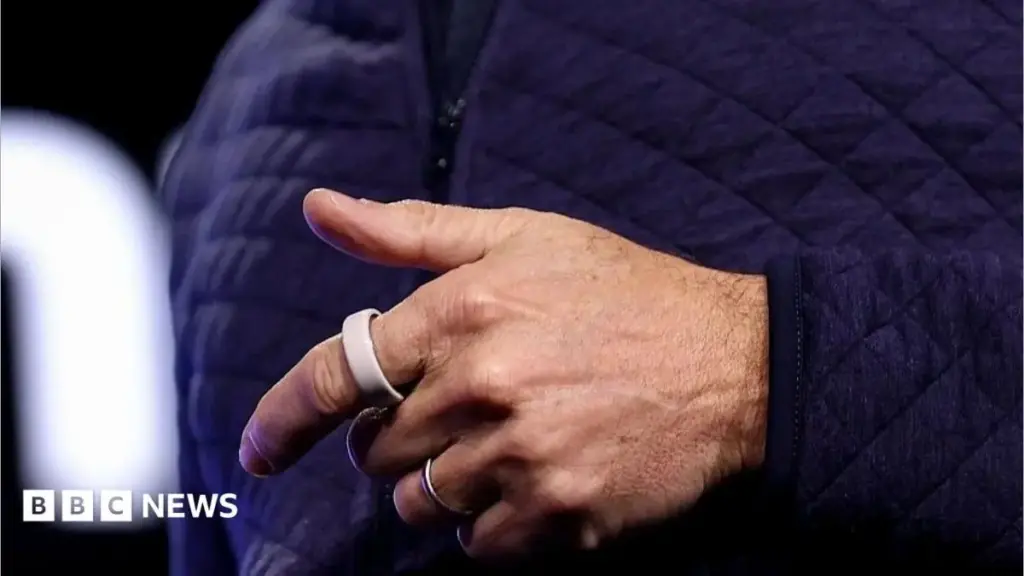
Founded in Finland in 2013 and maintaining its global headquarters in San Francisco, Oura has grown from an ambitious Nordic startup into the undisputed category leader in the smart ring market. Retailing upwards of $300, the Oura Ring has become a ubiquitous accessory among tech executives, athletes, and health-conscious consumers alike. By discreetly monitoring intricate physiological data—including heartbeat, sleep stages, body temperature, and respiratory metrics—and synchronizing those data points with a comprehensive companion smartphone application, the device helped pioneer the shift toward proactive, preventative personal health management.
Looking Ahead
As Oura regroups following its aborted Nasdaq debut, the immediate path forward involves maintaining operational momentum while keeping a watchful eye on global macroeconomic indicators.
The company’s exceptional revenue growth—breaking past the $1 billion threshold in its recent interim reporting period—proves that consumer demand for discreet, high-utility wearable technology remains resilient, even in the face of broader economic pressures. Whether Oura attempts to revisit the US stock market in late 2026 or chooses to wait until macroeconomic stability returns in earnest will largely depend on the trajectory of global inflation, central bank monetary policy, and the stabilization of the broader IPO window.
For now, Oura remains sheltered within the private markets, backed by robust profitability, a loyal consumer base, and the strategic patience of leadership that refuses to rush onto a volatile public stage.



