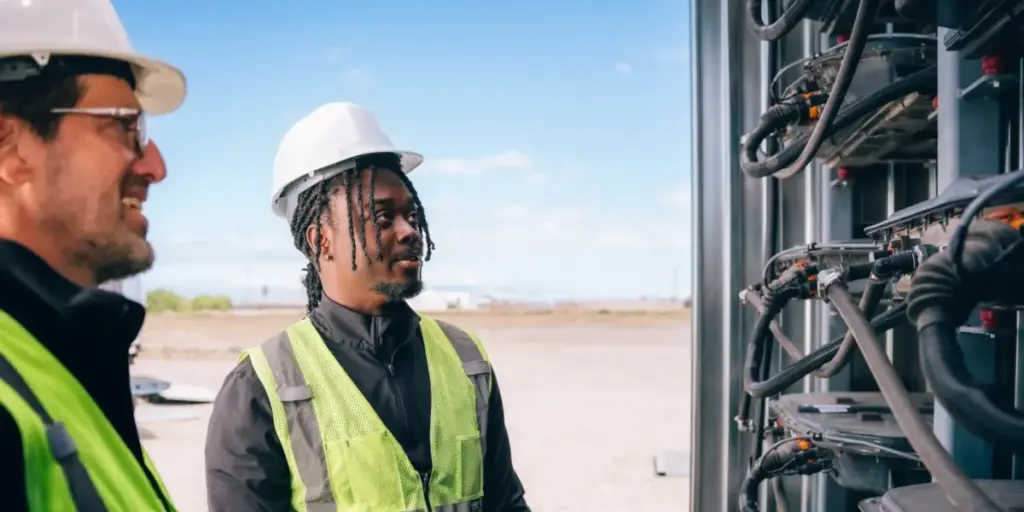
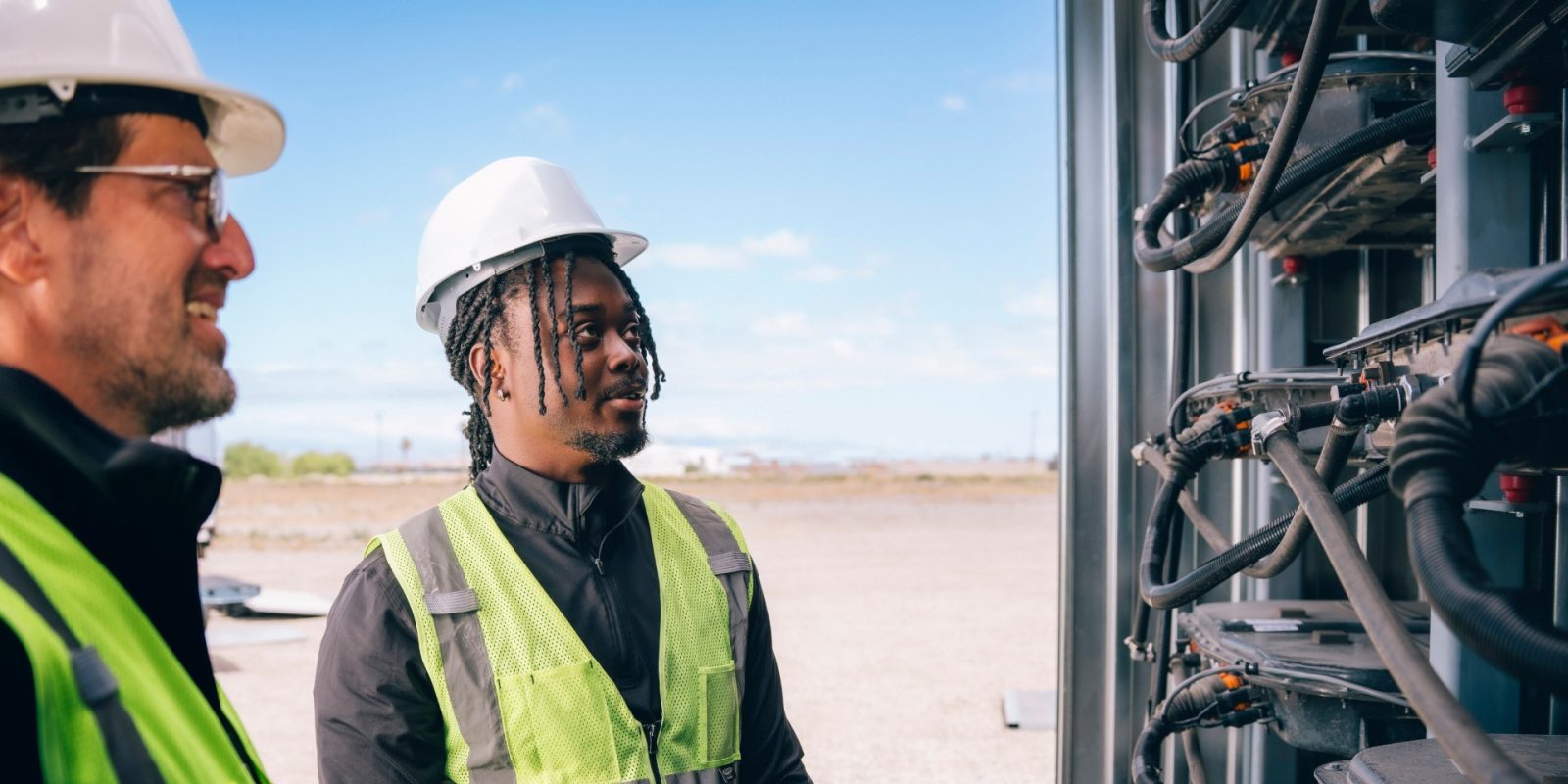
In a landmark strategic partnership that bridges the autonomous vehicle and clean energy sectors, autonomous driving pioneer Waymo has joined forces with battery repurposing specialist B2U Storage Solutions. Under this new initiative, retired lithium-ion battery packs harvested from Waymo’s sprawling fleet of electric robotaxis will bypass immediate recycling streams to serve a vital new purpose: bolstering stationary energy storage on the power grids of California and Texas.
Rather than sending heavily degraded, yet still functional, battery packs straight to shredders and smelters, this collaboration establishes a robust, circular secondary market. The retired units will be integrated into grid-connected energy storage systems (ESS). During periods of low electricity demand, these systems will capture excess renewable generation—such as wind and solar—and discharge it back into the local infrastructure during peak hours.
This alliance arrives at a critical juncture for the North American energy landscape. As the electrification of transportation accelerates and commercial fleets scale rapidly, the automotive industry faces an impending wave of retired battery inventory. Simultaneously, grid operators in heavy-load states like California and Texas grapple with escalating energy demands, grid congestion, and the intermittency challenges of high renewable penetration. By deploying these second-life assets, Waymo and B2U are offering a dual-benefit solution: mitigating the environmental and economic hurdles of early battery recycling while delivering cost-effective, localized grid stabilization.
Detailed Chronology: Forging the Path from Asphalt to the Power Grid
The journey of an electric vehicle battery does not end the moment it can no longer meet the stringent, high-discharge demands of continuous autonomous urban navigation. While Waymo’s fleet vehicles operate under grueling conditions—frequently enduring stop-and-go city traffic, rapid acceleration profiles, and thermal variations—their battery packs retain a significant percentage of their original nameplate capacity upon retirement. Typically, an EV battery is considered "retired" from automotive service when its total storage capacity dips below 70% to 80%. However, this residual capacity represents hundreds of kilowatt-hours of usable energy storage capability, which remains more than adequate for stationary applications where weight, volume, and rapid C-rate performance are secondary to reliability and cost-efficiency.
Recognizing this latent potential, engineering and sustainability teams at Waymo began exploring pathways to maximize the life cycle of their fleet assets. The collaboration with B2U Storage Solutions represents the culmination of these evaluations. B2U, known for its proprietary approach to managing and operating retired EV batteries in stationary environments without requiring costly and energy-intensive teardowns, emerged as an ideal partner.
The operational framework of the partnership is structured to deploy these second-life packs directly into established energy markets where Waymo already maintains a heavy operational footprint: California and Texas. In these regions, the integration process involves rigorous diagnostic testing of incoming packs, modular assembly into B2U’s proprietary storage infrastructure, and regulatory interconnection with local grid operators. This localized deployment model reduces logistical overhead, ensures that the economic and environmental benefits remain tied to the communities where Waymo vehicles operate, and sets a scalable precedent for other commercial fleet operators facing similar end-of-life management challenges.
Supporting Context & Metrics: The Mechanics and Economics of Second-Life Storage
To understand the profound impact of the Waymo-B2U partnership, it is essential to examine the broader dynamics of lithium-ion battery lifecycles, grid economics, and the mechanics of stationary energy storage.
The Science of Residual Capacity
Modern electric vehicles utilize sophisticated Battery Management Systems (BMS) that monitor health, cell degradation, and thermal performance down to the micro-level. When a robotaxi reaches its automotive retirement threshold, the battery cells have generally experienced thousands of charge-discharge cycles. Yet, chemistry-dependent degradation does not mean the cells are inert. Lithium iron phosphate (LFP) and nickel-manganese-cobalt (NMC) chemistries—commonly found in modern EV fleets—still possess robust structural integrity.
When transitioned to stationary storage, these packs operate under much more forgiving conditions. Unlike an electric vehicle that demands sudden bursts of high-current power for acceleration, a grid-tied storage system typically operates at slower, more uniform charge and discharge rates (lower C-rates). This gentle operational profile significantly slows down further degradation, allowing the retired packs to safely deliver stable performance for several additional years before final recycling becomes necessary.
Economic and Environmental Arbitrage
Building new, grid-scale energy storage systems from freshly minted battery cells involves substantial capital expenditure and places heavy demand on global supply chains for critical minerals like lithium, cobalt, nickel, and manganese. By utilizing repurposed automotive batteries, companies like B2U can significantly undercut the capital costs associated with new stationary storage installations.
Capital Expenditure Reduction: Repurposed packs bypass the primary manufacturing and material-refining stages, offering a discounted input cost for energy storage developers.
Emissions Deferred: Every year that a battery’s life is extended in a stationary application delays the carbon-intensive pyro-metallurgical or hydro-metallurgical recycling processes, flattening the lifecycle carbon footprint of the technology.
Circular Economy Realization: The partnership directly supports closed-loop sustainability targets, aligning with corporate ESG (Environmental, Social, and Governance) mandates that increasingly govern large technology and transportation enterprises.
Grid Stability in California and Texas
Both California and Texas represent unique testing grounds for energy storage innovation. California operates under aggressive mandates to decarbonize its grid, leading to massive solar overgeneration during midday hours—a phenomenon famously visualized by the California Independent System Operator’s (CAISO) "duck curve." Energy storage is vital to absorb this midday solar surplus and dispatch it during the evening ramp when demand spikes.
Conversely, Texas, managed by the Electric Reliability Council of Texas (ERCOT), operates an energy-only market characterized by extreme weather volatility and rapid load growth driven by industrial expansion, population influx, and data center proliferation. In both markets, decentralized, fast-responding storage assets derived from second-life EV batteries can provide crucial ancillary services, frequency regulation, and peak-shaving capabilities, directly relieving stress on transmission lines.
Official Statements and Industry Perspectives
The announcement has drawn praise from executive leadership at both companies, underscoring a shared commitment to sustainable infrastructure and resource optimization.
Freeman Hall, CEO of B2U Storage Solutions, emphasized the dual economic and operational value unlocked by the agreement:
"By extending the use of these batteries as grid storage, we are monetizing the full potential of EV batteries, now providing crucial stability to the power grid as energy demand continues to grow."
Hall’s remarks highlight the evolving mindset within the energy storage sector: viewing used EV batteries not as waste liabilities, but as valuable, modular building blocks for the future smart grid.
Echoing this sentiment, Adam Lenz, Head of Sustainability and Environment at Waymo, pointed to the long-term community benefits of the initiative:
"Through this partnership, we can repurpose our batteries for local grid storage and ensure our batteries continue to provide economic and environmental value to the community long after they’ve retired from the road."
Lenz’s statement reinforces Waymo’s broader corporate responsibility strategy, proving that autonomous mobility companies can scale their operations while actively minimizing their ecological footprint and contributing to local energy resilience.
Future Outlook: Scaling the Second-Life Paradigm
As Waymo continues to expand its autonomous ride-hailing footprint across major metropolitan areas in the United States, the volume of retiring battery packs will inevitably grow. The success of the initial deployments in California and Texas will serve as a vital blueprint for future expansion.
Looking ahead, industry analysts project that the global market for second-life EV batteries could grow exponentially over the next decade, potentially reaching tens of gigawatt-hours of cumulative capacity by the early 2030s. As more automakers and commercial fleet operators witness the viability of partnerships like the one between Waymo and B2U, standardizing battery design for disassembly and second-life integration may become an industry-wide best practice.
Furthermore, advancements in artificial intelligence and predictive analytics are expected to optimize how B2U and other storage providers monitor retired packs. Machine learning algorithms can dynamically balance loads across heterogeneous packs of varying ages and health states, maximizing the aggregate lifespan of the storage installation.
In conclusion, the Waymo-B2U partnership transcends a simple corporate recycling agreement. It represents a foundational shift in how modern society manages high-tech resources—closing the loop between autonomous transportation and clean energy infrastructure. By transforming yesterday’s robotaxi batteries into tomorrow’s grid guardians, Waymo and B2U are demonstrating that the transition to a sustainable energy future can be both economically advantageous and environmentally transformative.