The pursuit of a resilient, decarbonized energy economy relies not merely on macro-level policy shifts or multi-billion-dollar infrastructure bills, but on the stubborn, microscopic ingenuity of early-stage innovators. To bridge the notoriously treacherous chasm known as the "Valley of Death"—where promising lab-scale technologies routinely fail to achieve commercial viability—the U.S. Department of Energy’s (DOE) Lab-Embedded Entrepreneurship Program (LEEP) continues to serve as an indispensable catalyst.
Through its regional node at the National Laboratory of the Rockies (NLR), the LEEP West Gate program has officially welcomed its newest cohort of seven elite fellows for a rigorous two-year residency. Designed to equip visionary startup founders with world-class laboratory infrastructure, deep technical expertise, and commercialization pathways, this latest group is tackling some of the most intractable bottlenecks in the clean technology landscape.
Part one of this exclusive two-part series profiles four pioneering entrepreneurs within the 2026 cohort whose work spans critical mineral independence, next-generation geothermal energy extraction, and radical battery architecture. By reimagining how America sources magnesium, generates subsurface hydrogen, eliminates "inactive" battery weight, and accelerates sodium-ion material discovery, these innovators are setting a new standard for domestic technological sovereignty.
Detailed Chronology & Startup Profiles
The path from a university beaker or garage workshop to a fully realized commercial enterprise is rarely linear. For the four West Gate fellows featured here, the journey involves overcoming decades-old industrial paradigms, weathering intense capital and operational anxieties, and leveraging the unparalleled testing environments provided by NLR.
Big Blue Technologies Inc.: Resurrecting Domestic Magnesium Production
For more than three years, the United States has lacked a domestic primary producer of magnesium metal. Widely classified as a high-risk critical mineral due to extreme supply chain vulnerability, magnesium is fundamental to modern advanced manufacturing. It is an essential alloying element for aluminum—ubiquitous in everything from beverage cans to aerospace components—and a crucial structural material for lightweighting electric vehicles, consumer electronics, and robotics. Despite holding ample domestic raw material reserves, the U.S. has remained entirely dependent on foreign imports, exposing its industrial base to severe geopolitical and economic shocks.
Enter Boris Chubukov, Chief Technology Officer of Big Blue Technologies Inc. The company’s origins trace back to a Ph.D. project where their inaugural reactor—fittingly blue—earned the moniker "Big Blue 1." Today, Chubukov is developing Big Blue 6. While no longer blue in color, the name persists as a testament to the team’s grueling evolutionary trajectory.
[Traditional Pidgeon Process] -> High Labor, Slow, Energy-Intensive -> Imported Dependency
[Big Blue Electrified Smelting] -> Automated, Low-Cost, Domestic -> 10% U.S. Demand Met
In the past two decades, approximately a dozen magnesium production ventures have attempted to establish a foothold in North America; some even constructed physical plants, yet none remain operational today. The primary culprit has been the conventional Pidgeon process—a method notoriously slow, labor-intensive, and thermally inefficient. To break this cycle, Chubukov and his team designed an automated, electrified smelting process utilizing an innovative aluminothermic chemistry. This system drastically cuts material, energy, and labor overhead, positioning the startup to compete on a global scale.
Critically, the Big Blue process yields a valuable cement byproduct, which NLR researchers are assisting in refining into a marketable consumer product for hardware distribution. The ultimate objective is the construction of a full-scale domestic plant capable of fulfilling roughly 10% of the entire United States’ magnesium requirements, thereby mitigating national security risks. Reflecting on the tumultuous development process, Chubukov likens his technology to Gandalf: “He falls to his doom wrestling a beast in the mines of Moria and is later resurrected as Gandalf the White.” Their initial smelting concept was theoretically sound but operationally nightmarish; the pivot to advanced aluminothermic chemistry provided the pathway to commercial viability.
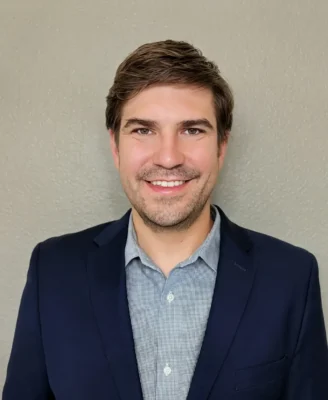
GeoKiln: Engineering the Earth’s Geology for Affordable Hydrogen
As global energy demand surges—accelerated by the explosive power requirements of artificial intelligence data centers and modern industrial manufacturing—the search for clean, scalable, and dispatchable energy has grown increasingly urgent. While green hydrogen offers immense promise as a zero-emission fuel, conventional production techniques remain prohibitively expensive, energy-intensive, and geographically constrained.
Alexei Tcherniak, Founder and CEO of GeoKiln, has chosen to bypass traditional surface-level processing entirely by handing production over to the Earth itself. The company’s name reflects its core premise: turning the Earth’s native geology (geo) into an underground kiln (kiln) capable of transforming raw subterranean stone into a clean fuel source.
GeoKiln repurposes existing oil and gas infrastructure to thermally stimulate naturally occurring, iron-rich rock formations deep underground. By converting these geological layers into subterranean reactors, the technology generates hydrogen with minimal energy input and zero water injection—a stark contrast to traditional water-heavy electrolysis. Known as manufactured subsurface hydrogen, this method aims to slash production costs to the point where clean hydrogen can compete globally without government subsidies.
Traditional Electrolysis:  High Water + High Electricity Demand = High Cost
GeoKiln Subsurface Method: Zero Water + Repurposed Oil/Gas Wells = Market-Rate Hydrogen
During their two-year residency at NLR, Tcherniak and his team will rigorously validate their subsurface engineering models, stress-test the operational mechanics, and prepare the technology for widespread industrial adoption. For Tcherniak, whose engineering philosophy is heavily inspired by the grit and vision of fictional engineer Tony Stark, success means fundamentally altering how humanity views the subsurface—shifting the paradigm from mere resource extraction to active subterranean engineering.

Last Wave Energy: Eliminating Inactive Weight in Ultralight Batteries
Lithium-ion batteries have fundamentally transformed consumer electronics and transportation, yet their internal architecture remains fundamentally encumbered. A standard battery cell contains a vast proportion of "inactive stuff"—the structural binders, foils, and conductive additives required merely to hold the cell together and guide electron flow. None of these inert materials contribute directly to the battery’s primary function: energy storage.
Ryan Brow, founder of Last Wave Energy, stumbled upon a counterintuitive revelation while using a laser to study lithium ion mobility within a test cell. To get a clear view of the migrating ions, Brow’s team stripped away nearly all the surrounding inactive matter. To their astonishment, the mutilated battery continued to function efficiently.
“We kind of just thought, ‘Why don’t we just always do this when we’re making batteries?’” Brow recalls.
This observation birthed Last Wave Energy, a startup whose proprietary battery architecture eliminates up to 95% of inactive material. The resulting ultralight batteries offer extended operational ranges for uncrewed aerial vehicles (drones), reduced structural manufacturing costs for electric vehicles, and—most importantly—a viable pathway toward electrified aviation.
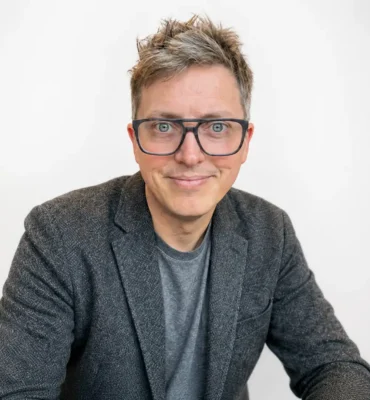
Standard Li-Ion Battery:  [ Active Material ] + [ 50%+ Inactive Binders/Foils ] = Heavy
Last Wave Energy Cell:    [ Active Material ] + [ <5% Inactive Structural Mass ] = Ultralight
Crucially, Last Wave Energy’s design is chemistry-agnostic. Rather than locking manufacturers into a specific proprietary chemical formula, the technology functions as an architectural framework that can seamlessly integrate legacy lithium chemistries or upcoming advanced anodes and cathodes. Through the West Gate program, Brow will utilize NLR’s specialized testing facilities to evaluate mass-production protocols, tackling his primary daily motivation: an intense, driving impatience to bring a lighter, safer, and cheaper battery supply chain entirely to American soil.
Orva Energy: Machine Learning and Sodium-Ion Integration
While lithium-ion batteries dominate the current energy storage landscape, their heavy reliance on critical minerals subject to international supply bottlenecks limits their deployment in stationary grid storage and high-reliability power infrastructure. To overcome these constraints, researchers have increasingly turned their attention to sodium-ion batteries. Utilizing sodium—an element roughly 500 times more abundant than lithium and easily harvested via seawater evaporation—these cells offer cheap, reliable storage without the geopolitical vulnerabilities of critical mineral supply chains.
Evan Flitz, Founder and Principal Materials Engineer at Orva Energy, recognized a critical structural deficiency in the domestic advanced battery ecosystem: “Even though we have raw elemental abundance of all of the things we need here in the U.S., and we have folks looking to deploy these solutions at scale, we don’t have anyone in the middle.”
Orva Energy bridges this missing middle by deploying advanced machine learning and artificial intelligence algorithms to rapidly identify, simulate, and troubleshoot novel battery materials. By optimizing sodium-ion and other lithium-free chemistries, Orva can match the energy performance of conventional batteries at a fraction of the cost. Furthermore, by strategically co-locating material processing facilities adjacent to both raw mineral sources and battery gigafactories, the company minimizes transit logistics and supply chain latency.

At NLR—widely regarded as a premier national institution for thermal modeling and safety evaluation—Flitz and his team will subject their novel materials to punishing real-world simulation scenarios. Reflecting on the complex balancing act of matching material science to commercial utility, Flitz likens his technology’s guiding ethos to Obi-Wan Kenobi: a master architect navigating strict physical constraints to bring sustainable power systems to life.
Supporting Context & Metrics
The challenges faced by the 2026 West Gate cohort highlight macro-level vulnerabilities within the broader U.S. clean technology sector. The table below outlines the core industrial bottlenecks these startups are engineered to resolve:
| Startup Company | Targeted Vulnerability | Proposed Technical Solution | NLR / LEEP Resource Integration |
|---|---|---|---|
| Big Blue Technologies Inc. | 100% foreign dependency for primary magnesium metal. | Automated, electrified aluminothermic smelting process. | Full-scale reactor testing and cement byproduct valorization. |
| GeoKiln | High cost and water intensity of traditional green hydrogen. | Manufactured subsurface hydrogen via thermally stimulated rock. | Geological simulation, oversight verification, and scaling audits. |
| Last Wave Energy | Excessive inactive mass restricting electric aviation and range. | Chemistry-agnostic structural removal of up to 95% inert materials. | Mass-production feasibility testing and mechanical stress evaluation. |
| Orva Energy | Supply chain bottlenecks and high costs in stationary storage. | AI-driven discovery and localization of sodium-ion materials. | Thermal modeling, safety profiling, and real-world stress testing. |
Official Statements & Industry Perspectives
The integration of these four startups into the National Laboratory of the Rockies underscores the strategic importance of public-private technical partnerships in securing America’s industrial future.
- Boris Chubukov (Big Blue Technologies): "We are developing and building a process that the world will hopefully run for the next 100 years. I need to ensure the process is not only safe today but inherently safe for any operators in the future… Magnesium is a problem that needs to be solved, and it’s a tough problem."
- Alexei Tcherniak (GeoKiln): "As industries and countries look for reliable, affordable sources of hydrogen, we believe the world is ready for a new approach… Success would mean that manufactured subsurface hydrogen is recognized as a proven, scalable technology, and that GeoKiln helped change the way the world thinks about the subsurface."
- Ryan Brow (Last Wave Energy): "Batteries are really the limiting factor for electric aviation. They’re heavy… The more I look into this idea, the more possible it seems. So, for right now, I’m just anxious to get going."
- Evan Flitz (Orva Energy): "The challenge is not just building the highest-performing material in isolation; it is building something that works across use cases… With NLR’s support, we hope to grow our technology from a lab-scale success into something we feel really confident about putting into the marketplace."
Future Outlook
Over the next twenty-four months, the seven entrepreneurs of the 2026 West Gate cohort will embed themselves within the specialized facilities of the National Laboratory of the Rockies. For Big Blue, GeoKiln, Last Wave Energy, and Orva Energy, this fellowship represents the definitive crucible.

If successful, these four ventures will dismantle foundational barriers in the U.S. clean energy economy—ranging from the localized, affordable production of critical minerals and zero-water hydrogen to the deployment of ultralight, non-lithium energy storage systems. By turning academic breakthroughs into commercially hardened industrial assets, these innovators are not merely navigating the clean energy transition; they are engineering its bedrock.
Stay tuned for part two of this series, featuring profiles of the remaining three West Gate fellows and their groundbreaking contributions to industrial efficiency and advanced microbiology.