Every six to seven years, the global climate science community undertakes a fundamental recalibration of its predictive architecture. Under the banner of the Coupled Model Intercomparison Project (CMIP), international modeling groups run coordinated Earth-system simulations to project how human activities will alter the planet’s atmosphere, oceans, and biosphere. These projections serve as the primary scientific foundation for the Intergovernmental Panel on Climate Change (IPCC) assessment reports, shaping global climate policy, economic risk assessments, and international diplomatic negotiations.
The release of the scenario architecture for the seventh phase of the project (CMIP7) marks a pivotal paradigm shift. Published in Geoscientific Model Development (GMD) with underlying emissions datasets made publicly accessible, this new generation of pathways formally replaces the "Shared Socioeconomic Pathways" (SSPs) that underpinned CMIP6 and the IPCC’s Sixth Assessment Report (AR6).
The CMIP7 scenarios overhaul how future climate risk is modeled, communicated, and evaluated across several core dimensions:
Elimination of "No-Climate-Policy" Baselines: Climate modeling will no longer rely on hypothetical counterfactual worlds operating without any climate policies. Instead, pathways originate from real-world policy implementations as of 2025, charting futures where policies are strengthened, maintained, or rolled back.
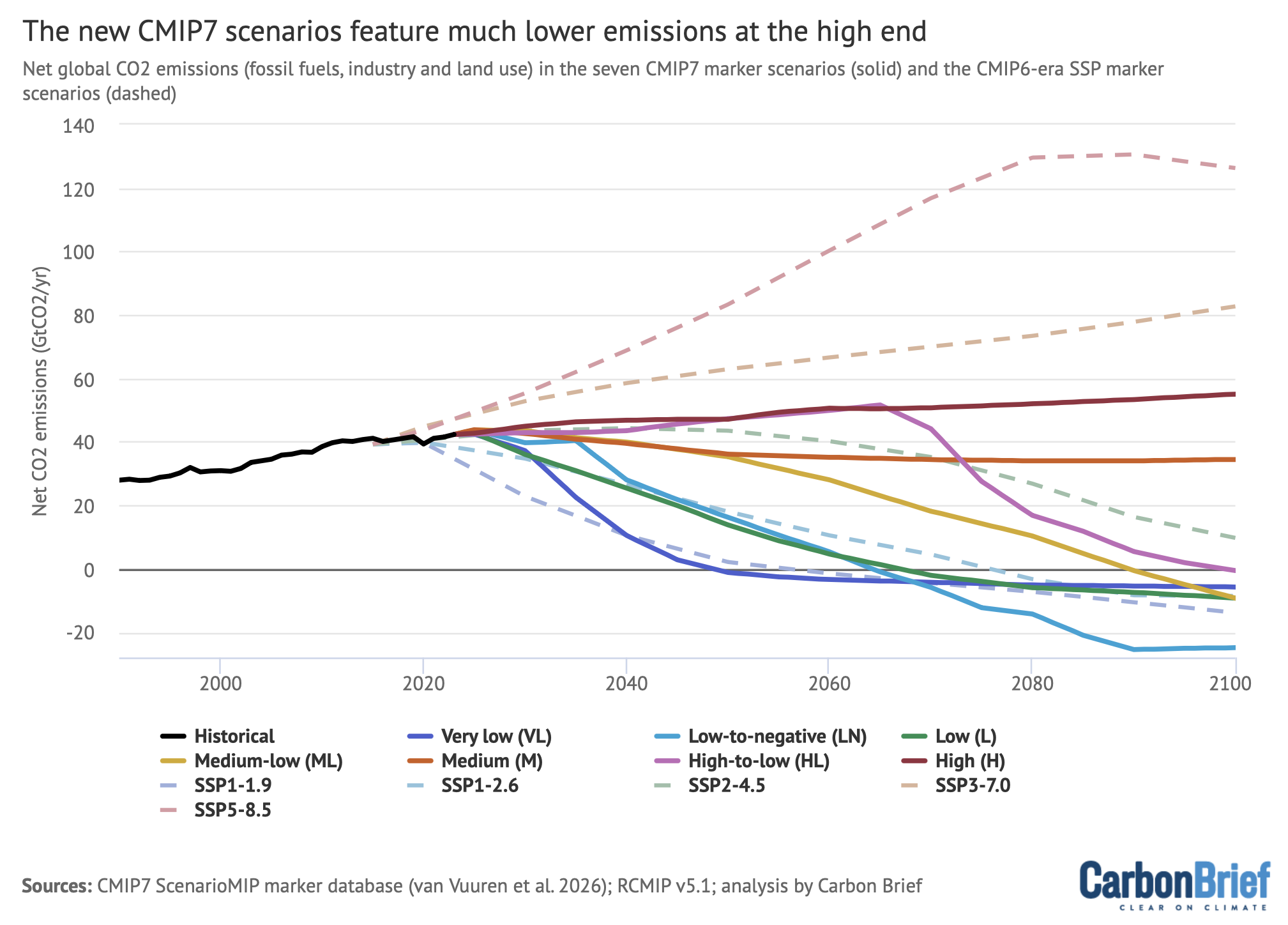
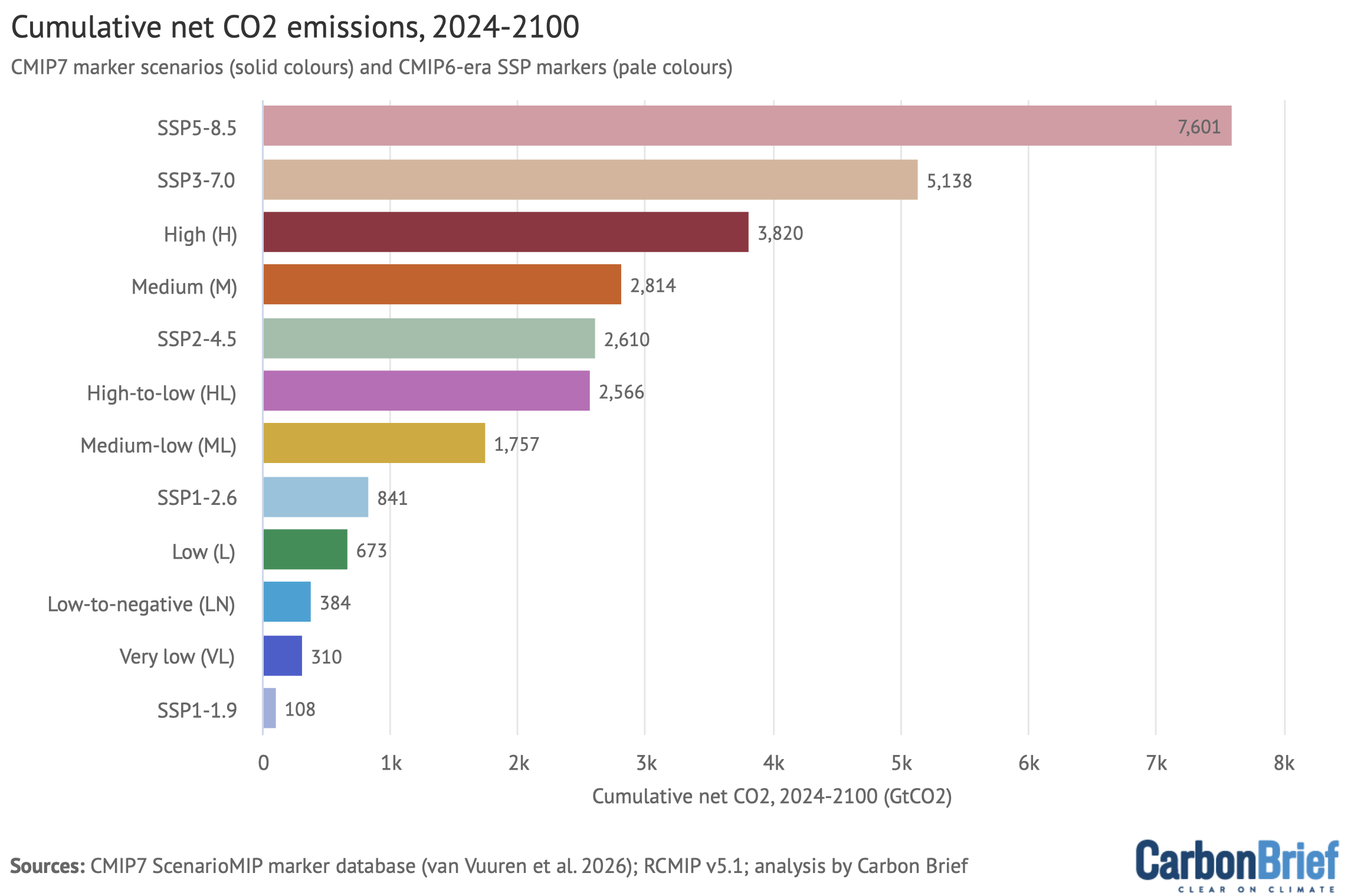
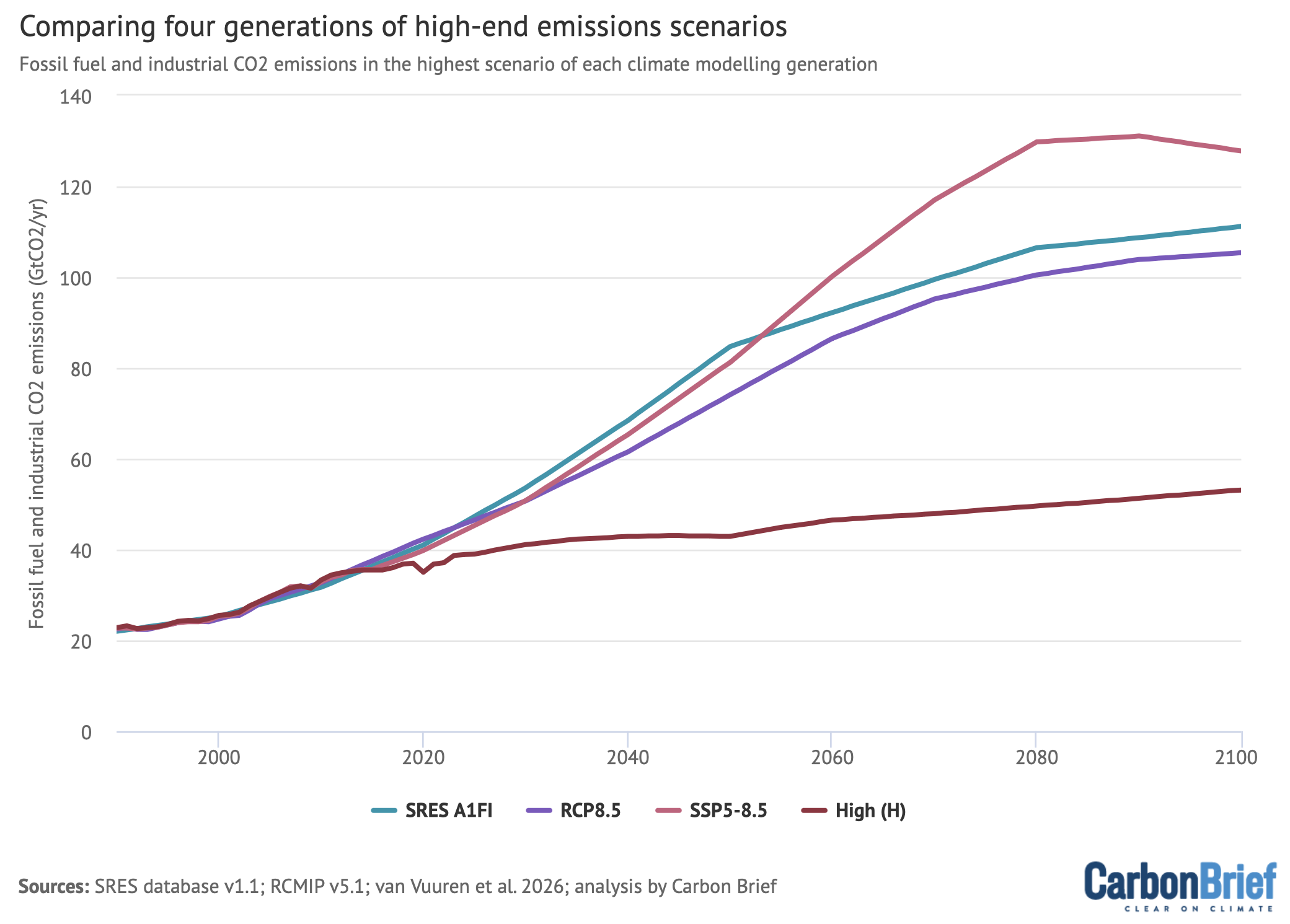
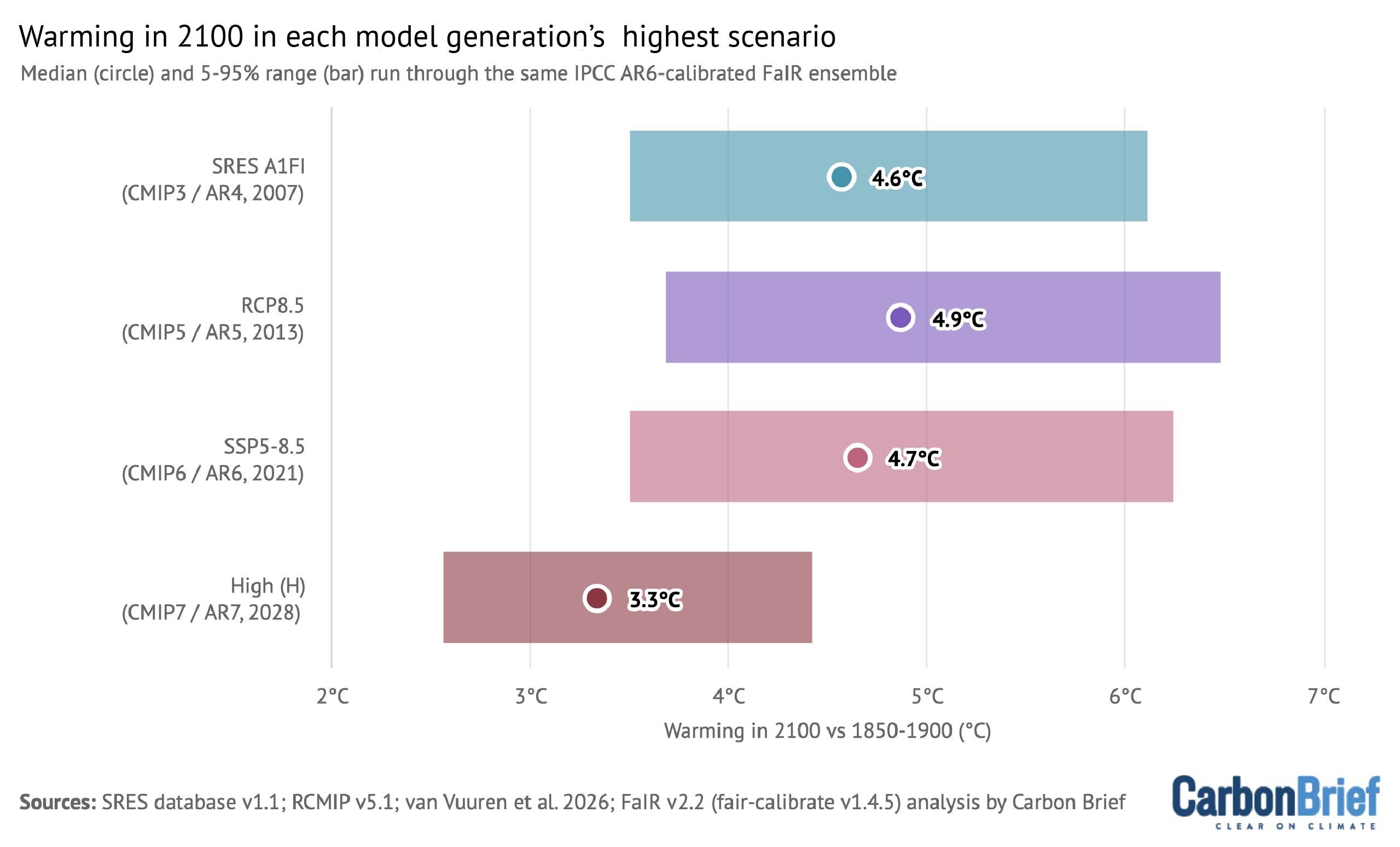
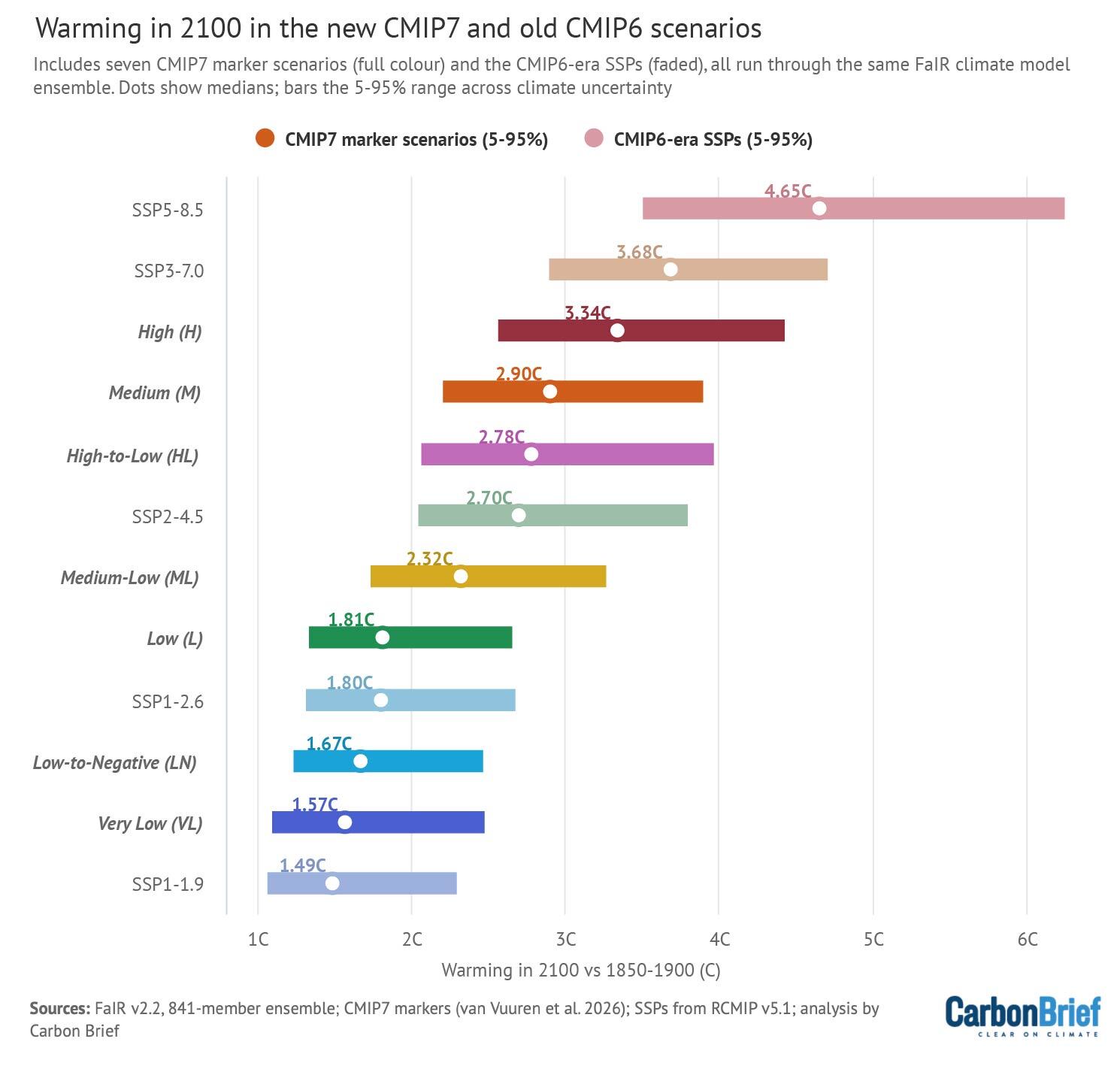
Downward Revision of High-End Extreme Emissions: The infamous high-emissions scenarios of previous cycles—such as RCP8.5 and SSP5-8.5, which assumed a massive 21st-century expansion of coal—have been retired as implausible. The new upper-bound scenario ("High") projects 2100 warming of 3.3°C (range: 2.6°C–4.4°C), significantly lower than the ~4.6°C to 4.9°C projected by previous worst-case scenarios.
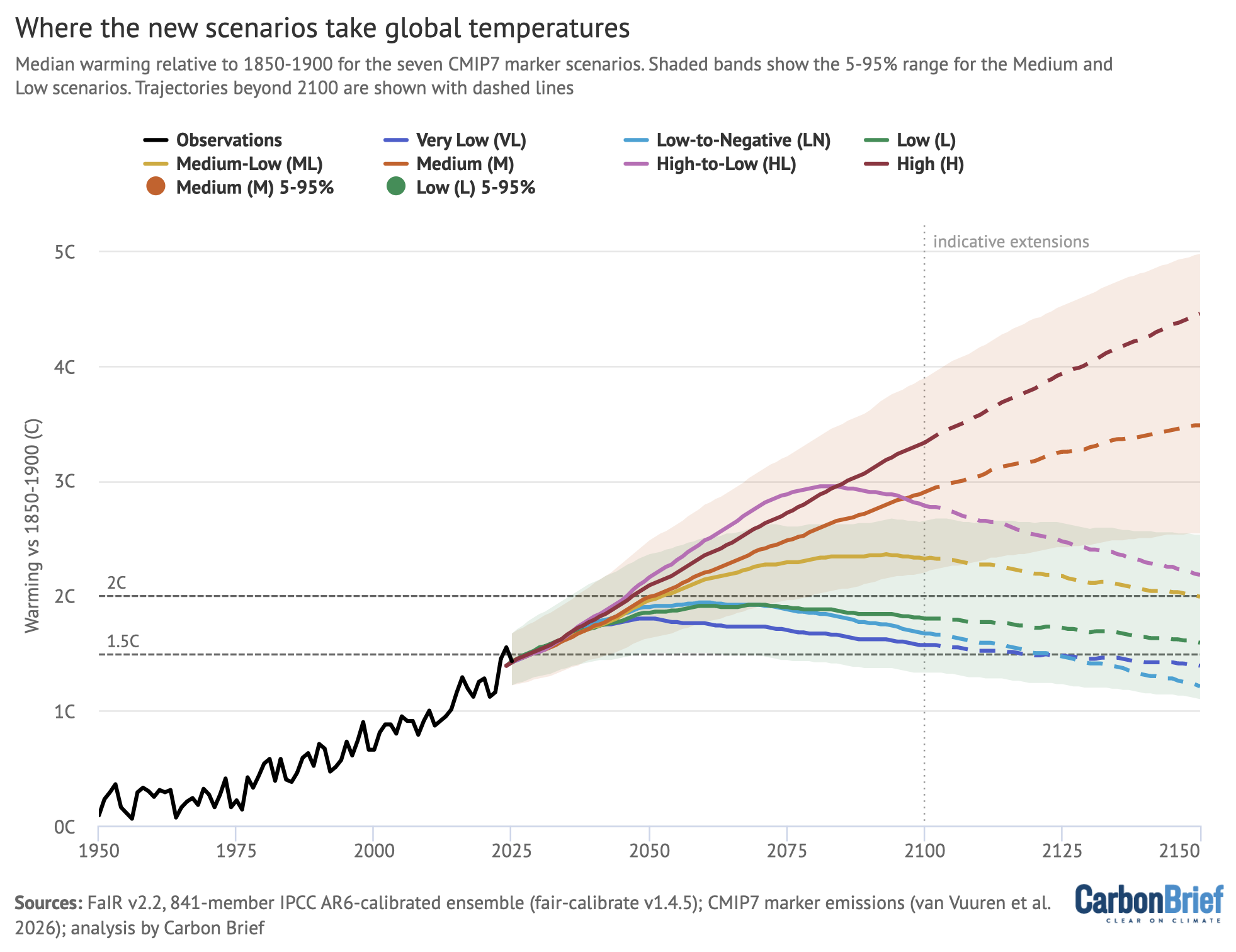
Upward Adjustment of Low-End Targets and Acknowledgment of Overshoot: The lowest emissions pathways have been recalibrated to reflect real-world emissions trajectories through 2023. Consequently, temporary "overshoot" of the Paris Agreement’s 1.5°C threshold is now treated as virtually unavoidable in all low-emissions scenarios.
Shift to Emissions-Driven CO2 Modeling: CMIP7 shifts from prescribed atmospheric greenhouse gas concentrations to fully interactive, "emissions-driven" CO2 modeling. This allows climate models to dynamically calculate atmospheric concentrations, incorporating critical carbon-cycle feedbacks into warming uncertainties.
Extended Temporal Horizons: Model runs have been extended from the traditional 2100 horizon to 2150, with long-term extensions reaching 2500 to better capture long-tail Earth system impacts such as ice-sheet dynamics and sea-level rise.
Detailed Chronology: The Evolution of Global Scenario Architecture
To understand the significance of the CMIP7 framework, one must examine the evolution of scenario design across four generations of climate assessment.
The Special Report on Emissions Scenarios (SRES), published in 2000, established early standardized modeling pathways based on distinct economic and demographic futures. SRES scenarios (such as A1FI, which projected rapid economic growth powered heavily by fossil fuels) formed the backbone of the IPCC Third and Fourth Assessment Reports.
By the early 2010s, modellers transitioned to Representative Concentration Pathways (RCPs) for CMIP5 and the IPCC Fifth Assessment Report (AR5). RCPs decoupled socioeconomic assumptions from atmospheric physics, defining pathways purely by their radiative forcing targets in 2100 (e.g., RCP8.5 representing 8.5 Watts per square meter of forcing).
The SSP Era and Growing Divergence (2015–2021)
For CMIP6 and the Sixth Assessment Report (AR6), researchers integrated socioeconomics back into the physical models via Shared Socioeconomic Pathways (SSPs). These pathways paired five socioeconomic storylines (SSP1 "Sustainability" through SSP5 "Fossil-fueled Development") with target forcing levels, yielding identifiers like SSP5-8.5 and SSP1-2.6.
However, by the time AR6 concluded in 2021, the SSPs—developed between 2015 and 2017 using baseline historical data ending in 2015—were increasingly disconnected from real-world trends. Rapid declines in renewable energy costs, global plateaus in coal consumption, accelerating electric vehicle adoption, and widespread enactment of national net-zero targets rendered high-end scenarios like SSP5-8.5 detached from plausible economic futures.
The CMIP7 Rollout (2024–2026)
Recognizing these limitations, the Scenario Model Intercomparison Project (ScenarioMIP) team initiated an update process:
2024: Updated socioeconomic driver data (population and GDP projections) released across all SSP storylines.
April 2026: High-level scenario design and theoretical architecture published in Geoscientific Model Development (van Vuuren et al.).
September 1, 2026: Harmonized emissions input files officially released into the public domain, enabling modeling centers worldwide to launch full Earth-system model runs for the IPCC AR7 cycle.
Supporting Context & Key Metrics
The CMIP7 suite consists of seven marker scenarios, each produced by a specific Integrated Assessment Model (IAM). These pathways explore a balanced range of future emissions, removing cryptic forcing numbers in favor of explicit descriptive titles.
Note: Warming estimates are derived from an 841-member FaIR v2.2 simple climate model ensemble calibrated to IPCC AR6 assessed climate sensitivities.
Socioeconomic Shifts: Demographic and Economic Re-Calibrations
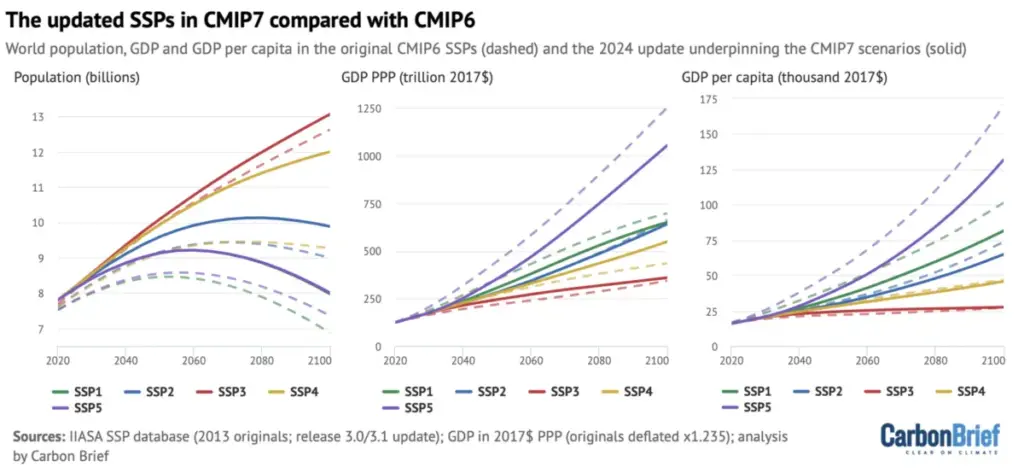
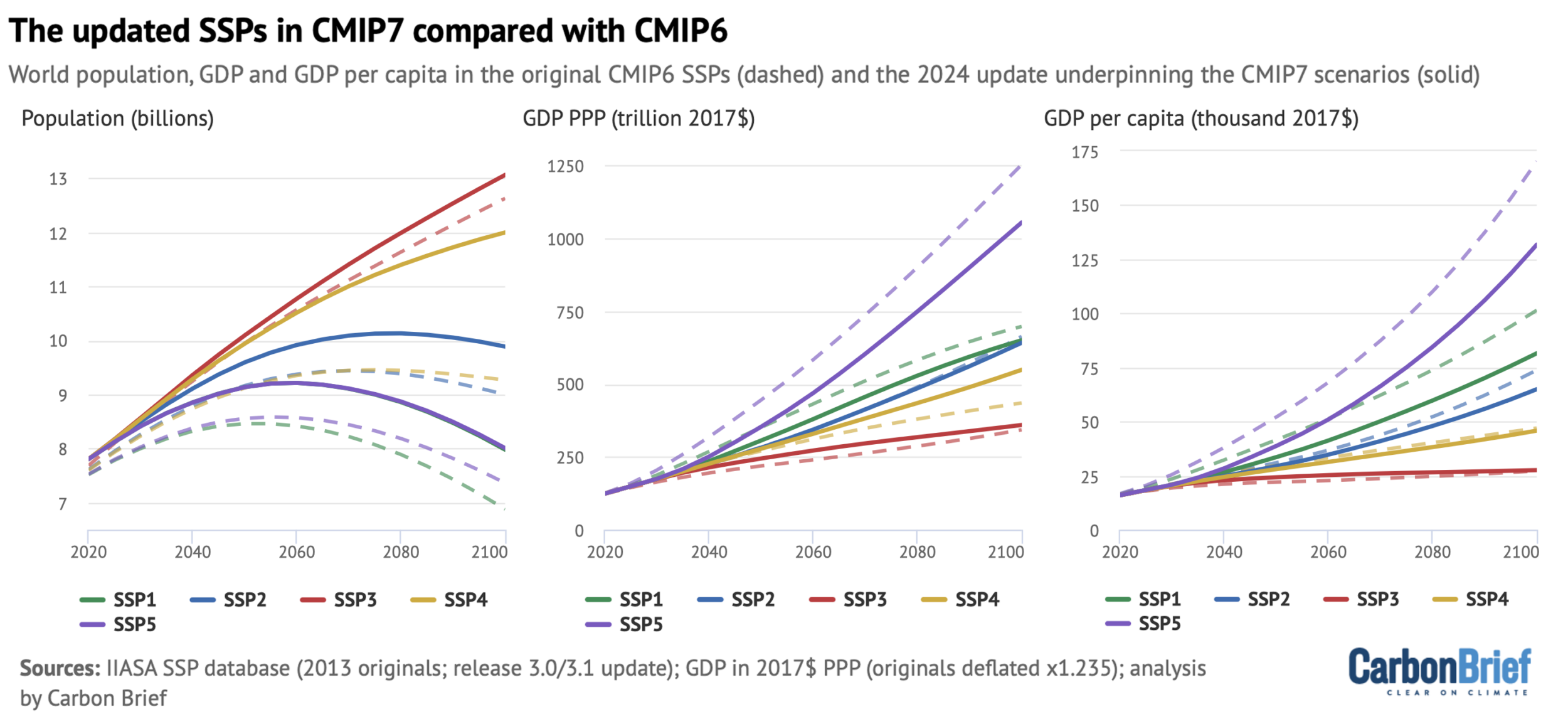
The 2024 socioeconomic updates underlying CMIP7 alter key inputs across the Shared Socioeconomic Pathways:
Demographics: Global population estimates have been revised upward across almost all scenarios. Under the central SSP2 pathway, the 2100 population is now projected at 9.9 billion—an increase of approximately 1 billion people compared to the 2013-era SSP database.
Economic Output: GDP projections for high-growth scenarios (SSP1 and SSP5) have been revised downward, while regional rivalry scenarios (SSP3) saw minor upward shifts.
Per Capita Income: The combination of higher demographic estimates and moderated GDP growth reduces projected per capita income by 10% to 25% across most scenarios by 2100. The underlying world envisioned for CMIP7 is generally more populous and less wealthy per capita than previously modeled.
Furthermore, the socioeconomic baseline for the extreme upper-bound scenario was shifted from SSP5 ("Fossil-fueled Development") to SSP3 ("Regional Rivalry"). Scenario developers noted that integrated assessment modeling showed SSP3 and SSP5 producing comparable emissions under unconstrained policy conditions. However, the fragmented, security-focused world of SSP3—plagued by severe barriers to adaptation—presents a more realistic framework for evaluating high-end climate vulnerability.
Deconstructing the High-End Emissions Revision
The most structural change in CMIP7 is the reduction of upper-bound emissions projections. For more than two decades, worst-case scenarios projected 2100 warming near or exceeding 4.5°C.
The reduction of the high-end baseline from ~4.6°C to 3.3°C in CMIP7 is driven by two main factors:
Real-World Energy Transition (~0.7°C Reduction): More than $2 trillion per year in global clean energy investment, steep cost reductions in solar, wind, and battery technologies, and a structural plateau in global coal demand have rendered high-coal scenarios implausible.
Methodological Correction of Scenario Baselines (~1.0°C Reduction): Previous high-end scenarios were constructed as "no-policy" counterfactuals, assuming an expansion of coal capacity unconstrained by economic or environmental limits. CMIP7 replaces these counterfactuals with plausible policy environments, treating the "High" scenario as a deliberate rollback of existing mitigation measures rather than an unconstrained baseline.
Temperature Outcomes and Threshold Crossings
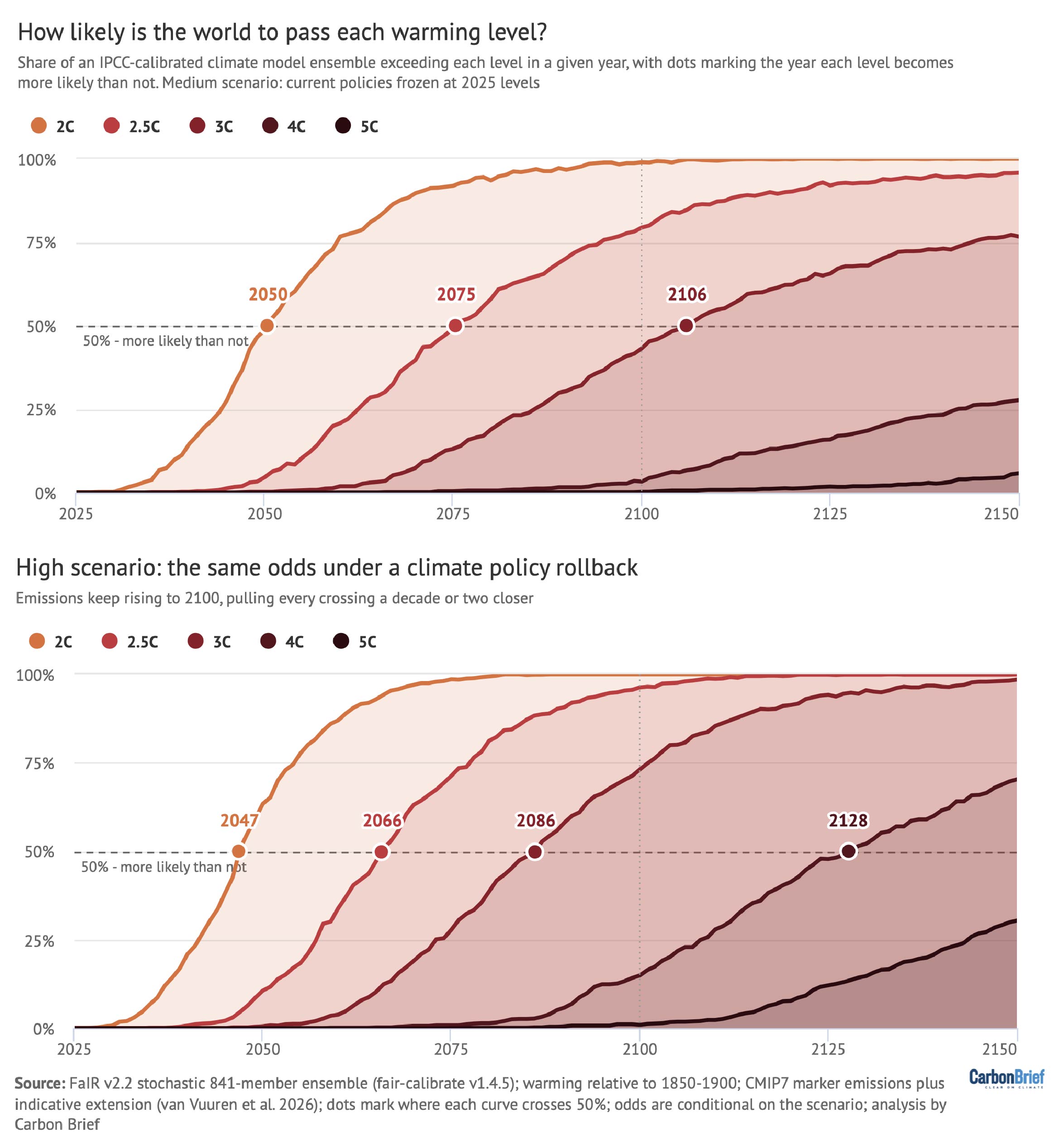
Using the IPCC-calibrated FaIR v2.2 simple climate model ensemble, the CMIP7 scenarios reveal distinct timelines for crossing major temperature thresholds (evaluated using 20-year averages):
                       CROSSING YEARS FOR WARMING THRESHOLDS
+-------------------+--------------------+--------------------+--------------------+
| Scenario          | 1.5°C Threshold    | 2.0°C Threshold    | 3.0°C Threshold    |
+-------------------+--------------------+--------------------+--------------------+
| Medium (Current)  | Late 2020s / 2030s | ~2050              | ~2110              |
| High (Rollback)   | Late 2020s         | 2040s              | 2080s              |
| Very-Low / Low-Neg| Late 2020s (Overshoot) Peak ~1.6°C-1.7°C   | Avoided            |
+-------------------+--------------------+--------------------+--------------------+
Medium Scenario (Current Policies Preserved): Passing 1.5°C is virtually locked in by the early 2030s. The 2°C limit is breached around 2050, and 3°C warming is reached by ~2110. The risk of exceeding 4°C sits at roughly 25% by 2150.
High Scenario (Policy Rollback): The world crosses 2°C in the 2040s and 3°C in the 2080s. By 2150, the probability of exceeding 4°C rises to ~60%, with a 20% chance of reaching 5°C.
Low & Very-Low Scenarios: While 1.5°C overshoot occurs in ~90% of model runs due to historical emissions, warming peaks mid-century before gradually declining. The risk of exceeding 2°C is restricted to ~30% in the Very-Low scenario.
Reliance on Carbon Dioxide Removal (CDR)
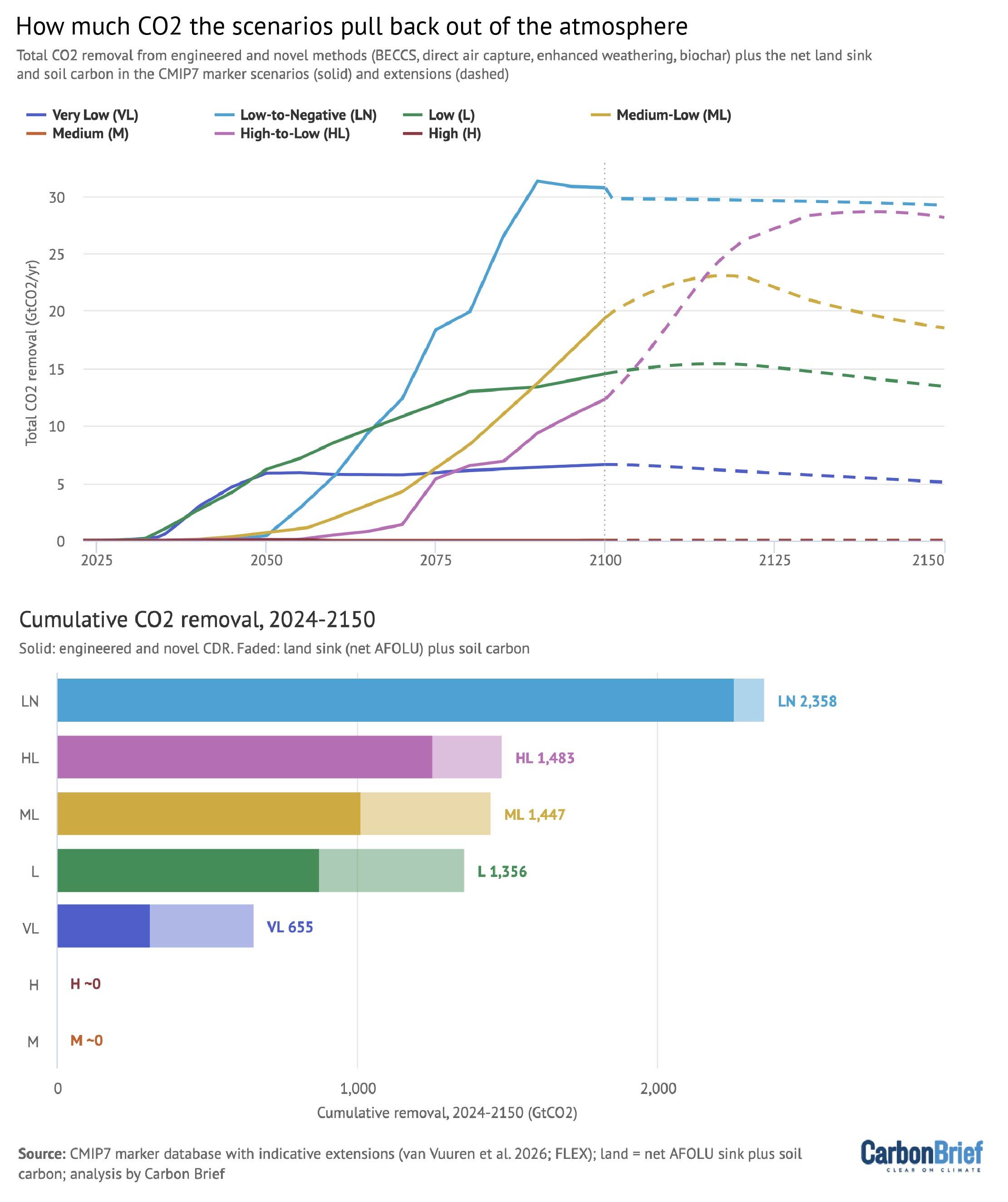
All CMIP7 scenarios that stabilize or reverse global warming depend heavily on Carbon Dioxide Removal (CDR). Because cuts to aerosol pollution remove their temporary cooling effect, CDR represents one of the primary mechanisms to lower global temperatures late in the century.
The scale of reliance on CDR introduces major technical and economic considerations:
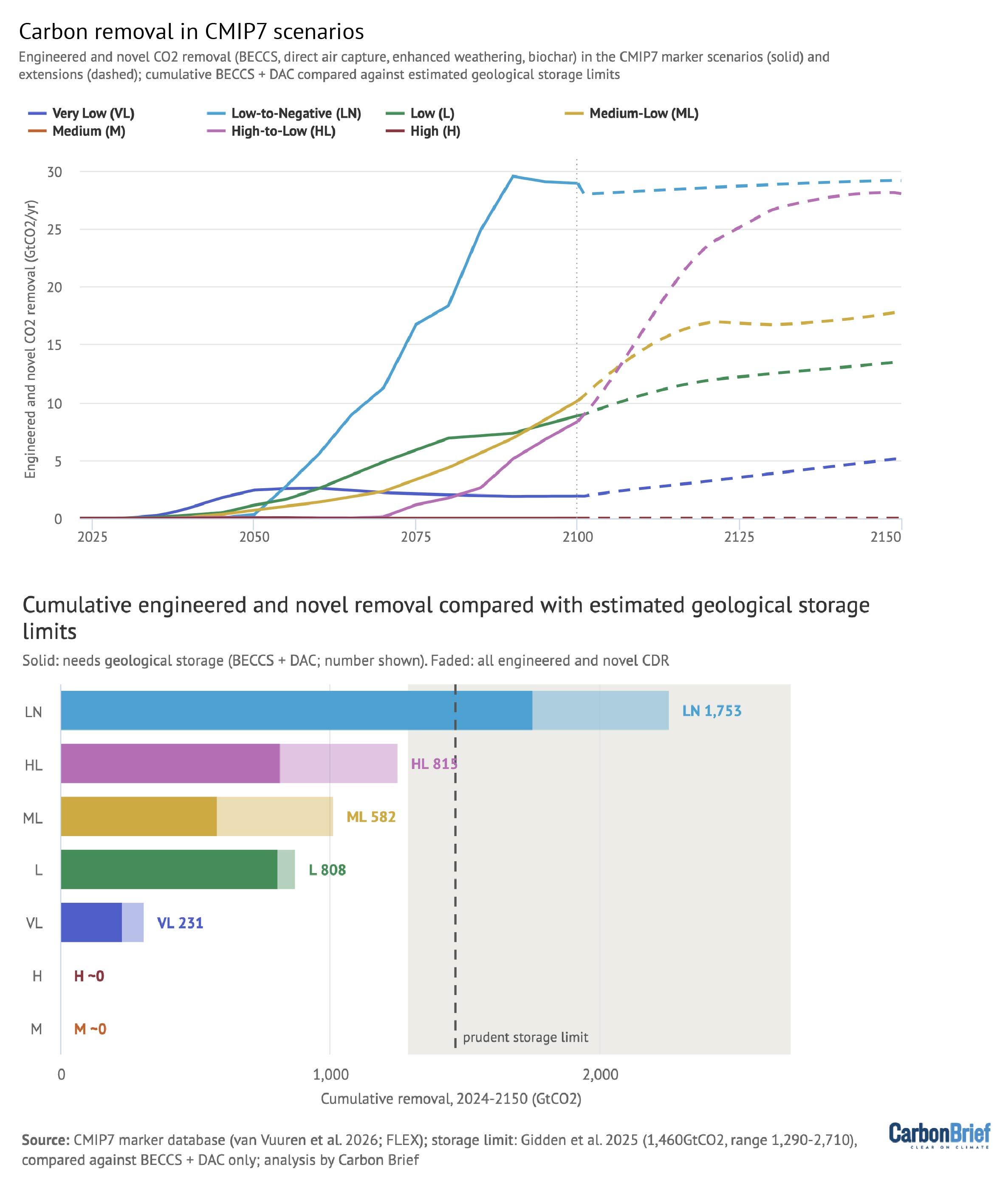
Geological Storage Demands: The Low-to-Negative (LN) pathway projects injecting ~1,750 GtCO2 underground via Bioenergy with Carbon Capture and Storage (BECCS) and Direct Air Capture (DAC) by 2150. This exceeds estimated "prudent" geological storage thresholds (~1,460 GtCO2), requiring a CO2 storage and transport infrastructure larger than today’s global oil industry.
Non-Geological Alternatives: To offset storage constraints, models increasingly incorporate alternative methods, including enhanced rock weathering, biochar, soil carbon management, and ocean alkalinity enhancement.
Scale and Costs: Implementing CDR at the multi-gigaton scale modeled in these pathways would require planetary-scale engineering costing trillions of dollars annually, relying on technologies that have yet to be deployed at commercial scale.
Official Statements & Expert Perspectives
In the theoretical foundation published in Geoscientific Model Development, the ScenarioMIP author team—led by Prof. Detlef van Vuuren—emphasized the need to align modeling pathways with real-world energy dynamics:
"The high-emission levels of CMIP6 have become implausible based on trends in the costs of renewables, the emergence of climate policy, and recent emission trends… At this point in time, some overshoot of the 1.5°C target seems unavoidable."
Addressing how the updated pathways should be interpreted, the authors noted:
"The medium scenario should not be considered a ‘most likely’ scenario, but rather a benchmark against which the effect of future policy strengthening or weakening can be measured."
Climate scientists emphasize that the downward revision of high-end scenarios reflects both actual progress in energy transitions and a correction in scenario communication. About 0.7°C of the drop between SSP5-8.5 and current trajectories stems from real-world emissions reductions, while the remainder resolves previous overstated assumptions regarding coal expansion.
Crucially, experts note that shifting to emissions-driven CO2 modeling marks an important technical advance. By allowing carbon cycle feedbacks (such as permafrost thaw or reduced land-sink efficiency) to alter atmospheric concentrations directly, CMIP7 models will capture Earth-system uncertainties more accurately than prior concentration-prescribed iterations.
Future Outlook and Policy Implications
As modeling centers run the CMIP7 pathways through full Earth-system models, the results will fundamentally shape the IPCC Seventh Assessment Report (AR7) and global climate policy.
+-----------------------------------------------------------------------------------+
|                        KEY TAKEAWAYS FOR IPCC AR7 & POLICY                        |
+-----------------------------------------------------------------------------------+
| 1. Targeted Risk Assessment: Focus shifts from implausible worst-case coal         |
|    scenarios to high-end policy rollback risks (3.3°C nominal bound).            |
|                                                                                   |
| 2. Overshoot Governance: Policy frameworks must adapt to managing temporary       |
|    exceedance of 1.5°C, emphasizing long-term temperature drawdown strategies.    |
|                                                                                   |
| 3. Expanded Timelines: Running models to 2150 and 2500 enables better evaluation  |
|    of slow-onset climate impacts, such as ice-sheet collapse and sea-level rise.  |
|                                                                                   |
| 4. Carbon Cycle Integration: Fully emissions-driven CO2 models will integrate    |
|    land and ocean feedback uncertainties directly into warming projections.      |
+-----------------------------------------------------------------------------------+
Navigating the 1.5°C Overshoot Era
With 1.5°C overshoot embedded in all low-emissions pathways, international policy will need to pivot toward overshoot governance. This involves managing severe near-term climate risks while scaling negative-emissions technologies capable of pulling hundreds of gigatons of CO2 out of the atmosphere in the late 21st and early 22nd centuries.
Long-Term Climate Feedbacks (2150–2500)
Extending model simulations out to 2150 and 2500 addresses a longstanding limitation of climate impact assessments. While surface temperatures may stabilize if net-zero emissions are achieved, slow-responding components of the Earth system—such as deep ocean warming, ice sheet dynamics, and thermal expansion—will continue for centuries. The extended timelines will help researchers assess the long-term reversibility of climate impacts.
Policy Choice Drives the Pathway
The retirement of extreme high-emissions scenarios provides clear evidence that policy interventions and technological progress have successfully altered the world’s climate trajectory away from worst-case outcomes. However, the CMIP7 medium scenario demonstrates that maintaining current policies still leaves the planet on track for roughly 2.9°C of warming by 2100—a level that carries severe risks for human and natural systems.
Ultimately, the CMIP7 framework demonstrates that future warming remains an open variable: whether the planet tracks toward the policy rollback high scenario (3.3°C), stabilizes near the medium path (2.9°C), or drives toward deep mitigation pathways depends entirely on decisions made by governments, industries, and society in the coming decade.