

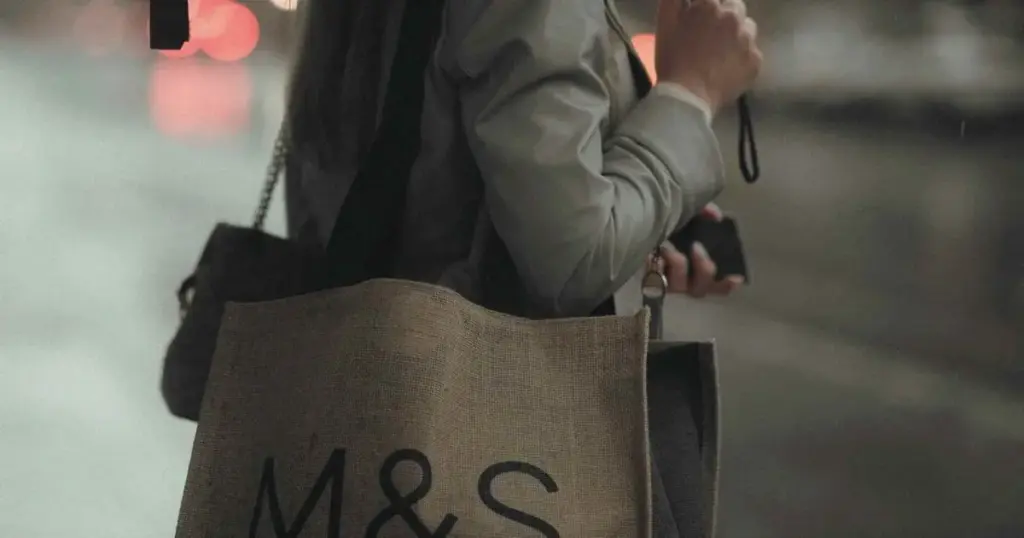
As the heritage British retailer Marks & Spencer (M&S) makes its highly anticipated debut at London Fashion Week with a rapid-fire "see now, buy now" runway format, a pressing question looms for conscientious consumers: How sustainable are the brand’s actual practices behind the polished marketing?
According to sustainability rating platform Good On You, Marks & Spencer currently receives a middling "It’s a Start" score. While the 140-year-old staple has made measurable strides in supply chain transparency, material innovation, and carbon reduction, its foundational business model relies on mass production. This systemic volume—compounded by aggressive new moves into fast-fashion cycles and a persistent failure to guarantee living wages across its supply chain—keeps the brand anchored in the middle of the ethical pack.
This exhaustive investigation explores M&S’s environmental footprint, labor practices, and animal welfare standards. By analyzing corporate disclosures, independent third-party reporting, and modern fast-fashion strategies, we unpack the dichotomy between M&S’s iconic cultural reputation and its true sustainability performance.
Detailed Chronology: From 19th-Century Heritage to 2026 Runways
To understand M&S’s current standing, it is necessary to examine how a company founded on Victorian-era principles of reliability evolved into a modern high-street leviathan—and why its 2026 trajectory has alarmed sustainability advocates.
- 1884: Michael Marks opens a Penny Bazaar in Leeds, eventually partnering with Tom Spencer in 1894. The business grows into a foundational pillar of British retail, famed for food, clothing, and household goods.
- 2007: M&S launches "Plan A," an ambitious, multi-pronged eco-and-ethical program aimed at making the business sustainable. While pioneering for its era, many initial targets face dilution or readjustment over the following decade.
- Early 2020s: The retailer partners with organizations like Sedex and the Open Supply Hub, successfully mapping and publicly disclosing its Tier 1 fashion manufacturing facilities—a major win for transparency.
- May 2026: Good On You publishes its updated sustainability assessment of Marks & Spencer, maintaining the "It’s a Start" rating due to stagnant progress on living wages and rising production outputs.
- Mid-2026: M&S introduces "Love That Drop," a trend-led capsule program designed to accelerate production cycles from design to store shelves in as little as two weeks, mirroring fast-fashion mechanics.
- September 2026: In a strategic pivot to capture younger demographics, M&S hosts its debut runway show at London Fashion Week, showcasing a "see now, buy now" model that bypasses the traditional six-month trade-to-shelf calendar.
Environmental Impact: Progress Counterbalanced by Mass Volume
Marks & Spencer earns an "It’s a Start" rating for its environmental performance, a grade that captures a frustrating paradox: commendable technical initiatives undermined by an inherently resource-intensive business model.
Material Sourcing and the Polyester Dilemma
On the positive side, M&S has made tangible progress in shifting away from virgin materials. The company utilizes a range of lower-impact alternatives and remains on track to completely replace virgin polyester with recycled polyester in its clothing lines.
However, environmental scientists point out a critical blind spot. Polyester—recycled or virgin—remains a fossil-fuel-derived synthetic fiber that sheds millions of microscopic plastic particles into water systems during every wash cycle. Because polyester is M&S’s second most-utilized material, critics argue that the brand should focus on phasing out synthetic reliance entirely rather than simply swapping virgin inputs for recycled ones.
Greenhouse Gas Emissions and Supply Chain Realities
M&S has established science-based targets aimed at slashing greenhouse gas emissions across its direct operations and complex supply chains. Collaboration with Open Supply Hub allows consumers and watchdogs to view Tier 1 suppliers, offering a clear window into where assembly takes place.
Yet, waste management remains a severe vulnerability. Investigative reports by organizations like the Changing Markets Foundation and Greenpeace have repeatedly identified UK fast-fashion and high-street cast-offs—including items linked to major British brands—choking textile waste dumps and protected wetlands in the Global South, such as in Kenya and Ghana. While M&S maintains strict policies against exporting excess inventory, the staggering volume of garments produced globally means that post-consumer waste inevitably accumulates at an unsustainable rate.
To combat this, the brand has instituted several circularity initiatives, including:
- An in-store take-back scheme operated in partnership with Oxfam.
- Dedicated garment repair services to extend product lifecycles.
- A bold one-year guarantee on all children’s clothing, marketed under the slogan "Made Well, Made Last."
Despite these efforts, analysts emphasize that recycling programs and guarantees cannot offset the environmental toll of manufacturing millions of items under a linear "take-make-waste" framework.
Labour Rights: Transparency Without Living Wage Guarantees
In the realm of social responsibility, M&S also captures a middle-of-the-road "It’s a Start" evaluation. The brand’s performance here is characterized by robust operational transparency contrasted with a glaring omission regarding workers’ financial well-being.
Auditing and Long-Term Relationships
Over half of M&S’s final-stage production facilities are certified by the Sedex Members Ethical Trade Audit (SMETA) Best Practice Guidance, setting a high compliance baseline for high-street retail. Furthermore, the company successfully weathered supply chain shocks during the COVID-19 pandemic by relying on long-standing relationships with core manufacturing partners, allowing for quick deployment of worker-protection protocols.
The brand also runs targeted social initiatives aimed at uplifting vulnerable women and girls within its manufacturing regions.
The Living Wage Deficit
Despite these commendable structures, M&S falls short on the single most critical metric of labor justice: ensuring that every worker throughout its supply chain receives a living wage.
Good On You analysts note that there is no evidence indicating M&S guarantees living wages, nor has the brand formally adopted a recognized living wage benchmark across its manufacturing network. Given the massive scale of M&S’s clothing production, thousands of garment workers are likely trapped in cycles of low pay that fail to cover basic costs of living, rendering its social compliance programs incomplete.
Animal Welfare: Strong Policies, High Volumes
M&S achieves a third "It’s a Start" score in animal welfare, reflecting a dichotomy between progressive sourcing policies and high absolute consumption of animal-derived materials.
- Policy Alignment: The brand maintains a formal animal welfare policy aligned with the internationally recognized Five Domains of Animal Welfare.
- Specific Sourcing Standards: M&S sources 100% of its wool from non-mulesed sheep and procures all of its leather exclusively from tanneries certified by the Leather Working Group (LWG). Furthermore, the brand has committed to sourcing all wool from "preferred" standards—such as the Responsible Wool Standard (RWS) and Global Recycled Standard (GRS)—by 2030.
However, the core issue is structural. M&S remains heavily reliant on leather, shearling, down, alpaca, and wool—particularly through its winter collections featuring cashmere and wool sweaters. Animal advocates argue that while certified standards minimize cruelty, true sustainability requires reducing overall reliance on animal inputs and investing heavily in innovative, non-plastic biomaterials.
Official Shifts: Acceleration Toward Fast Fashion
The most alarming development in M&S’s recent corporate history is its strategic pivot toward acceleration. In 2026, the company introduced "Love That Drop," a monthly capsule program designed to push trend-led items from design table to retail rack in a mere two weeks.
This model directly emulates the hyper-fast-fashion cycle pioneered by online giants, encouraging continuous overconsumption and placing undue pressure on manufacturing partners. This trajectory was visually cemented by M&S’s September 2026 London Fashion Week debut. By utilizing a "see now, buy now" format—where runway items go on sale instantly, bypassing the traditional six-month preview window—M&S signaled a deeper embrace of immediate gratification over sustainable pacing.
Future Outlook: Path to "Good" and "Great" Ratings
To elevate its standing from a middling "It’s a Start" to a leading "Good" or "Great" rating, Marks & Spencer must execute several fundamental operational shifts:
- Curb Production Volumes: Shift away from accelerated production models like "Love That Drop" and downscale total garment output to combat overconsumption.
- Commit to Living Wages: Implement a verified living wage benchmark across all tiers of the manufacturing supply chain, ensuring garment workers share equitably in the brand’s profitability.
- Deepen Traceability: Extend public supplier disclosures beyond Tier 1 factories down to raw material producers.
- Reduce Animal and Synthetic Reliance: Scale down the production of resource-heavy animal fibers and fossil-fuel synthetics in favor of truly regenerative, closed-loop material innovations.
Curated Sustainable Alternatives
For shoppers seeking pieces from brands achieving top-tier "Good" or "Great" ratings on the Good On You platform, consider exploring these vetted alternatives:
- Toad&Co: A US-based brand crafting versatile, socially and environmentally responsible outdoor and casual menswear and womenswear (Sizes XS–2XL).
- Harvest & Mill: Specializing in US-grown, milled, and sewn organic cotton basics that are unbleached and undyed to preserve ecosystem biodiversity and conserve water (Sizes S–XL).
- Colorful Standard: A Danish label focused on organic, timeless essentials designed to bypass seasonal trends and combat overconsumption (Sizes XS–2XL).
- Sheep Inc: A carbon-negative knitwear brand prioritizing regenerative merino wool, radical supply chain traceability, and strict animal welfare (Sizes XS–2XL).
- SeamsFriendly: Known for crafting zero-inventory, made-to-order natural fiber clothing customized to exact body measurements for women, men, and children. (Use code SF-GY10 for 10% off).
- Printfresh: A majority woman-owned US brand creating vibrant sleepwear and apparel inspired by nature, available in an inclusive size range (Sizes 2XS–6XL).
- Oobi: An Australian children’s fashion brand utilizing low-impact non-toxic dyes, zero animal products, and sea freight logistics to lower its carbon footprint. (Use code OOBIGOODONYOU for 25% off full-priced items).
- Disruptor London: A PETA-approved vegan beauty label centered on ingredient transparency, waterless formulas, and plastic-free packaging.



