

Executive Overview
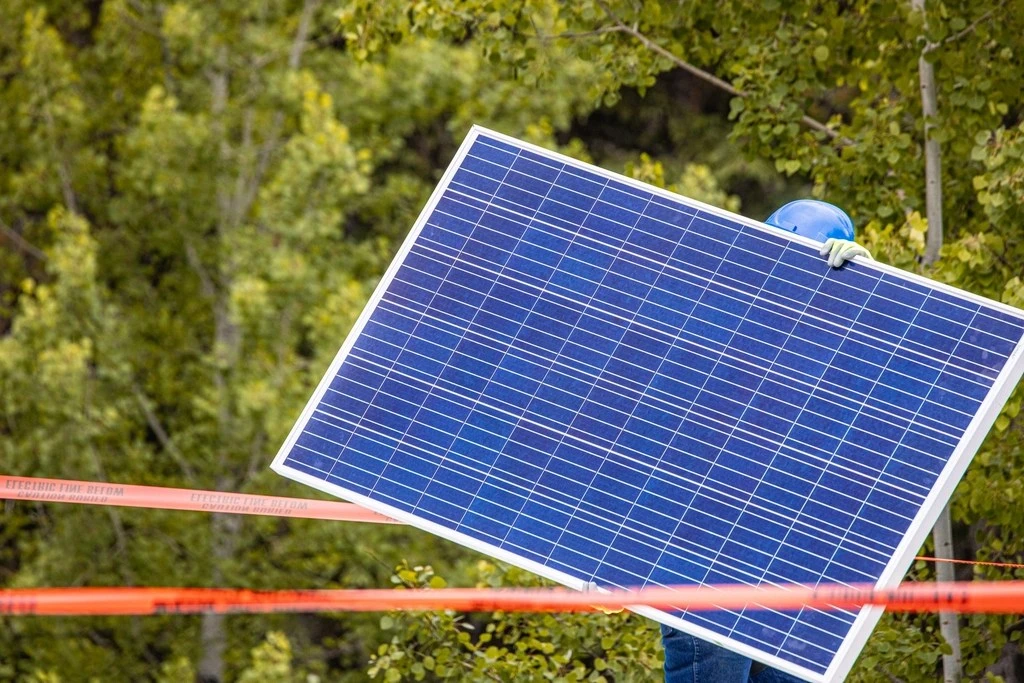
In an extraordinary shift driven by intense geopolitical turbulence and volatile fossil fuel markets, China’s clean technology exports achieved monumental, record-breaking figures in March. Newly released data analyzed by energy think tank Ember reveals that China exported a staggering 68 gigawatts (GW) of solar energy hardware in a single month. This unprecedented volume represents a 100% surge over February’s totals and eclipses the previous all-time high set in August 2025 by a massive 49%. To grasp the sheer scale of this deployment, March’s export volume alone is roughly equivalent to the entire installed solar capacity of Spain.
This historic acceleration is not occurring in a vacuum. It is the direct reaction of a global economy rattled by the ongoing US–Israel conflict with Iran, which has sent crude oil and natural gas prices soaring. As traditional fossil fuels become increasingly volatile, expensive, and politically precarious, nations across the globe are scrambling to pivot toward resilient, domestic energy alternatives. Solar power, energy storage, and electric vehicles (EVs) have moved from being viewed strictly as long-term climate solutions to becoming frontline instruments of immediate economic self-defense and national security.
The ripple effects are visible across every continent. In March, 50 countries established all-time records for Chinese solar imports, while another 60 markets hit six-month highs. Developing regions most exposed to fossil fuel price shocks—specifically Africa and Asia—led the charge, accounting for roughly three-quarters of the total export increase. Simultaneously, a structural shift is taking place within global trade: nations are increasingly moving away from importing finished solar panels toward acquiring raw solar cells and wafers for domestic assembly. Combined with concurrent spikes in battery and EV shipments, this unprecedented wave of clean tech adoption indicates that the global energy transition has entered a fast-tracked, high-stakes era.
Detailed Chronology: The Anatomy of a March Surge
The trajectory leading to March’s staggering export numbers began to take shape late last year, fueled by shifting industrial strategies and mounting international tensions. Understanding the timeline of this historic pivot reveals how quickly global energy priorities can change under duress.
Late 2025: The Shift to Components
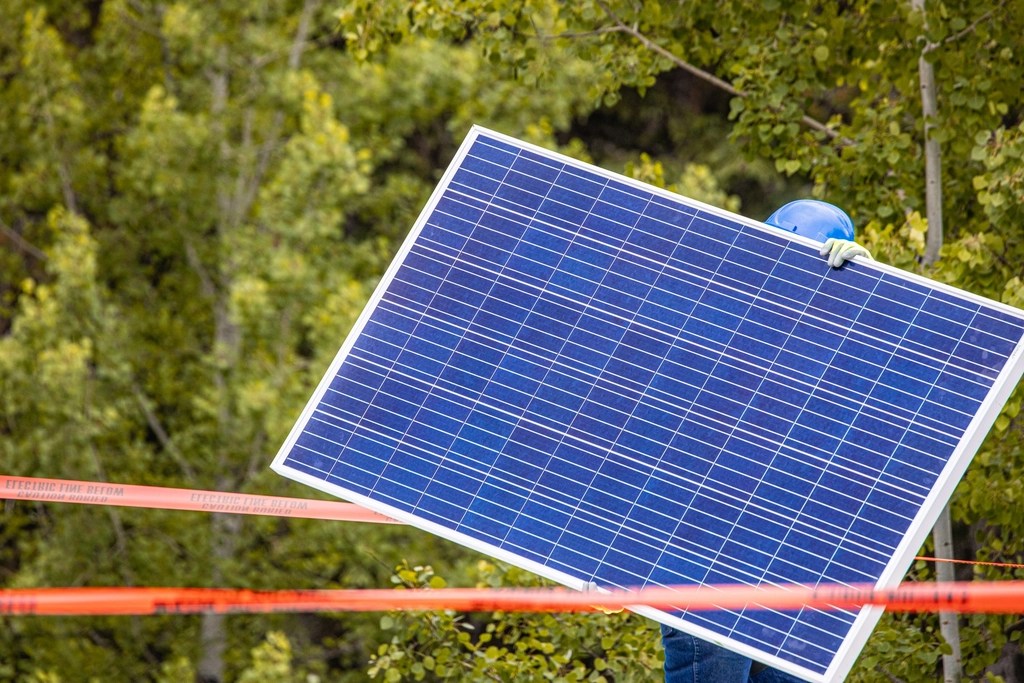
By the final quarter of 2025, global supply chains began noticing a distinct structural evolution. Rather than relying solely on finished solar panels manufactured entirely overseas, importing nations began prioritizing local manufacturing capacity. This strategy aimed to capture domestic economic value while hedging against international logistics risks. Consequently, China’s exports of upstream components—specifically solar cells and wafers—overtook finished panel exports for the first time in October 2025. This set the stage for an industrial ecosystem hungry for raw and semi-processed photovoltaic materials rather than plug-and-play modules.
Early 2026: Geopolitical Pressures Mount
As the calendar turned to 2026, brewing geopolitical conflicts in the Middle East—specifically the escalating tensions culminating in the US–Israel war with Iran—began sending shockwaves through international commodity markets. Crude oil and natural gas futures spiked, threatening energy security across import-dependent nations. February saw steady baseline demand, but underlying anxieties were already forcing energy ministries worldwide to reassess their short-term procurement strategies.
March 2026: The Explosive Peak
March 2026 will be recorded as a watershed moment in the history of renewable energy adoption. Propelled by mounting fossil fuel costs and an impending policy shift in Beijing—where regulators announced an adjustment to export tax rebates effective April 1—international buyers rushed to secure hardware. The tax adjustment effectively added a 9% cost increase to solar panels, triggering a frantic, short-term buying frenzy.
The resulting numbers were historic. China exported 68 GW of solar technology in March alone. A closer look at the breakdown shows a profound evolution in what was being bought:
- Finished Solar Panels: Rose 91% month-over-month, reaching 32 GW.
- Solar Cells and Wafers: Climbed 108% month-over-month, reaching 36 GW.
This unprecedented volume highlights a dual motivation: an immediate, emergency-driven deployment of finished goods alongside a long-term commitment to establishing domestic green manufacturing hubs.
Supporting Context & Metrics: Data Behind the Cleantech Boom
The comprehensive data compiled by Ember in its China Cleantech Exports Data Explorer and the Global Electricity Review 2026 paints a vivid picture of an economic transformation occurring at breakneck speed.

Regional Breakdowns and Record Breakers
The geographical distribution of March’s imports underscores which parts of the world felt the fossil fuel price shocks most acutely:
- Asia: Doubled its solar imports month-over-month, hitting an astonishing 39 GW. Standout national spikes included India, where imports surged by 141% (+6.6 GW); Malaysia, which saw an incredible 384% increase (+1.8 GW); and Lao PDR, climbing 108% (+2.3 GW).
- Africa: Experienced a 176% month-over-month surge, reaching 10 GW. For the first time in history, several African nations imported more than 1 GW of solar hardware in a single month—predominantly in the form of solar cells for local assembly. Nigeria led the pack with a 519% jump, followed by Ethiopia (+391%) and Kenya (+207%).
- Traditional Markets: Advanced economies heavily reliant on energy imports, including Japan, Australia, and European Union member states, also established new import records.
- The Middle East Exception: Interestingly, the Middle East stood out as an anomaly. While the region is ground zero for fossil fuel volatility, solar imports were suppressed due to regional disruptions, most notably the closure of the Strait of Hormuz, which severely hampered maritime trade and logistics flows.
Batteries and EVs: Cushioning the Fossil Shock
Solar panels were only part of the equation. The broader clean technology ecosystem—encompassing advanced battery storage systems and electric vehicles—experienced parallel exponential growth. Combined exports across solar, batteries, and EVs jumped 70% year-over-year in March 2026, and 38% compared to February.
Battery exports alone reached a monumental valuation of $10 billion in March—a 44% increase from the previous month. This was driven by massive demand from the EU, Australia, and India, all of which are aggressively expanding their grid-scale energy storage pipelines to manage intermittent renewable generation.
According to Ember’s Global Electricity Review, this cleantech wave is already providing measurable macroeconomic cushioning:
- Displaced Gas: Record solar installations deployed globally in 2025 successfully displaced an amount of gas-fired power equivalent to all Liquefied Natural Gas (LNG) shipments that transited the strategic Strait of Hormuz throughout that entire year.
- Reduced Oil Demand: The rapidly expanding global EV fleet slashed global oil demand by 1.8 million barrels per day in 2025—an amount roughly equal to 13% of total US crude oil production.
Official Statements and Industry Analysis
The implications of March’s record-shattering data have drawn sharp commentary from energy analysts and market economists, who view the shift not merely as a milestone for environmentalism, but as a structural restructuring of global trade and energy security.

Euan Graham, a senior analyst at Ember, emphasized the reactive nature of the current surge during a briefing on the data:
"Fossil price spikes are accelerating the shift. Countries are importing solar at record levels while also building out their own manufacturing to keep up with surging domestic demand. We are witnessing the moment clean energy transitions from a policy choice into an economic survival mechanism."
Industry economists have echoed this sentiment, pointing out that the speed of the pivot demonstrates the vulnerability of centralized, fossil-fuel-dependent grids. When geopolitical chokepoints like the Strait of Hormuz face threats of closure, the traditional energy market’s fragility is exposed.
Furthermore, trade policy experts have highlighted the significance of the April 1 Chinese export tax rebate adjustment. While the looming 9% cost increase certainly accelerated March purchases, analysts note that the underlying structural demand remains robust. Nations are no longer asking if they should electrify their grids and transport sectors, but how fast they can secure the hardware to do so. The conscious transition toward importing upstream components—wafers and cells—signals that governments are determined to avoid future supply chain monopolies by fostering domestic green industrial bases.
Future Outlook: The New Paradigm of Energy Security
As the global community digests the data from the first quarter of 2026, the trajectory of the energy transition has fundamentally changed. The events of March have provided a clear preview of how the world will manage future fossil fuel crises: through rapid, decentralized electrification.

The Decentralization Imperative
The vulnerability exposed by maritime disruptions in the Middle East has cemented a new consensus among energy planners: centralized fossil fuel supply lines carry unacceptable geopolitical risks. Sunshine, wind, and locally stored battery power cannot be blockaded in a strait or embargoed by a cartel. Consequently, nations that historically dragged their feet on climate commitments are now fast-tracking renewable deployment under the banner of national security.
Industrial Policy and Local Manufacturing
Looking ahead, the trend toward local assembly of solar cells and wafers is expected to accelerate. Developing economies in Africa and Asia are positioning themselves not just as passive consumers of Chinese manufacturing, but as active participants in the renewable value chain. By investing in regional assembly plants, these nations can insulate themselves against sudden trade policy shifts, reduce shipping bottlenecks, and create high-tech domestic manufacturing jobs.
The Road Ahead for Clean Tech
The convergence of record-high solar installations, surging battery storage investments, and booming EV adoption points to a resilient global economic future. While the catalyst for March’s historic numbers was rooted in geopolitical crisis, the lasting legacy will be an entrenched, diversified global energy infrastructure. Clean technology has officially graduated from a niche environmental crusade to the indispensable foundation of modern geopolitical stability and economic resilience.



