For over half a century, visual documentation has served as one of the most potent weapons in the environmental movement’s arsenal. By bearing witness to ecological destruction and capturing the raw, resilient spirit of grassroots resistance, imagery transcends language barriers to hold corporate and political power accountable.
This week, Greenpeace’s global network deployed this legacy of photo activism across multiple continents, chronicling a synchronized wave of environmental defense. From the vulnerable waters of the Black Sea and the contested depths of American Samoa to community-led solar installations in Jakarta and legal battlegrounds in the Netherlands, activists and local communities are actively redrawing the boundaries of environmental justice.
This report provides a comprehensive, investigative look at the diverse fronts of this global struggle. It details the corporate exploitation driving ecological degradation, highlights frontline community empowerment, and examines the strategic interventions deployed by activists to defend our climate, oceans, and public health.
Detailed Chronology of Global Actions
1. Bulgaria: Exposing the Reality of Fossil Gas in the Black Sea
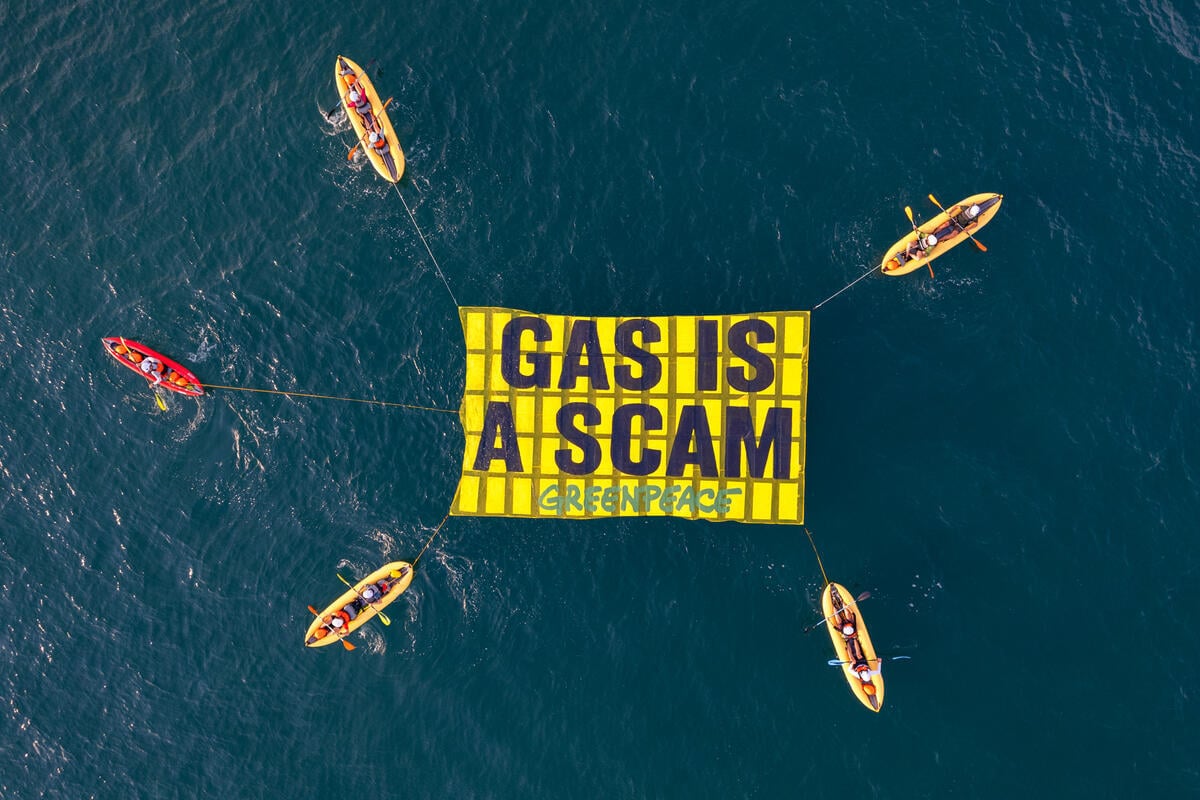
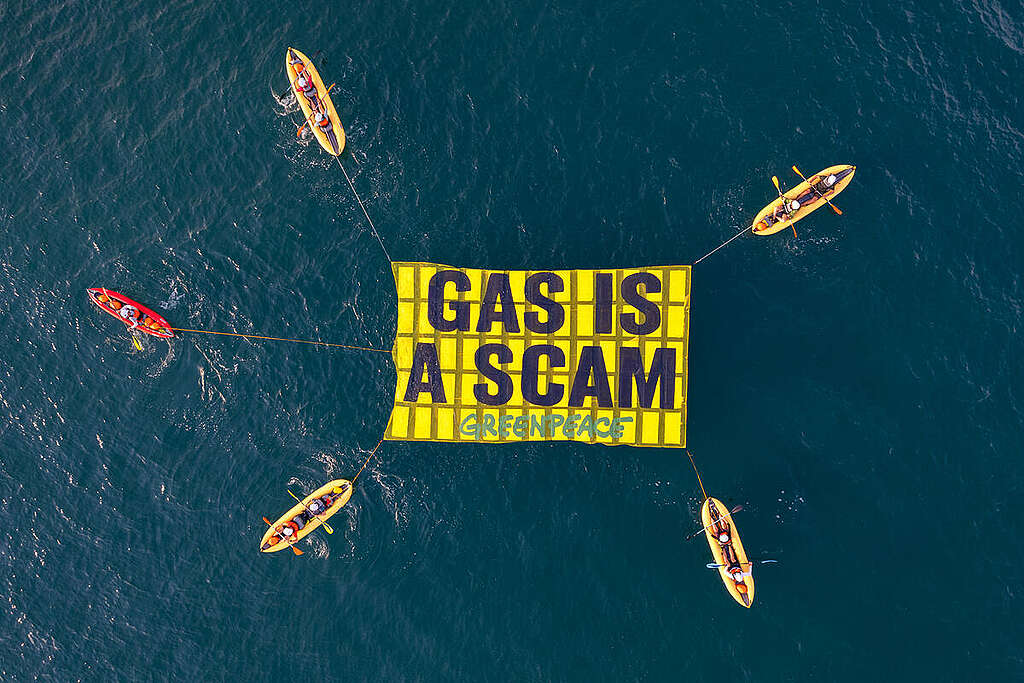
Operating against the backdrop of an upcoming oil and gas exploration project within the Khan Tervel block—located squarely inside Bulgaria’s exclusive economic zone—Greenpeace activists staged a high-visibility, peaceful protest in Bulgarian waters. Accompanied by the iconic Greenpeace vessel Arctic Sunrise, activists deployed kayaks to unfurl a massive banner bearing the unmistakable message: “GAS IS A SCAM.”
The demonstration targeted the operations of major international energy corporations, specifically naming Shell and OMV-Petrom. Environmental advocates emphasize that these exploration projects lock nations into long-term fossil fuel dependencies, directly contradicting global climate targets. Furthermore, the drilling operations pose an immediate and severe threat to fragile marine ecosystems, endangering marine life such as Black Sea dolphins and accelerating the broader climate crisis under the guise of transitional energy solutions.
2. Kenya: Launching the Next Generation of Environmental Leaders in Nairobi
Shifting from direct confrontation to community empowerment, Nairobi, Kenya, played host to a vibrant celebration marking the launch of a new phase of the Ubunifu Hub Youth Program, backed by the Greenpeace Environmental Foundation.
The event convened young leaders, grassroots partners, and key stakeholders to inaugurate a dynamic space dedicated to youth-led climate action. The Ubunifu Hub is designed to cultivate ecological literacy, foster creative problem-solving, and provide a collaborative platform where young Africans can connect, mobilize, and spearhead localized sustainability initiatives.
3. American Samoa: Defending the "Moana" Against Deep-Sea Mining
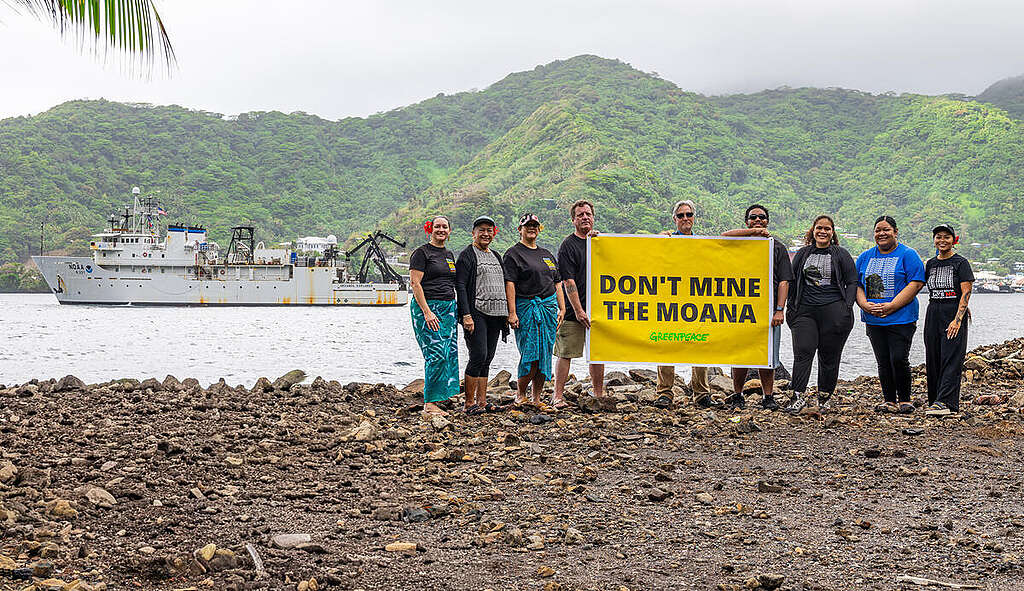
In the Pacific, the fight to protect fragile marine domains reached a critical flashpoint in Pago Pago Harbor, American Samoa. Activists from local groups like Finafinau, alongside Greenpeace USA and members of the broader American Samoan public, mobilized to confront the NOAA research vessel Okeanos Explorer during its crew-change operations.
The vessel’s expedition—tasked with mapping and quantifying deep-sea minerals—coincided with a controversial U.S. Interior Department Marine Minerals Administration proposed lease sale. Encompassing approximately 31.4 million acres (roughly 48,000 to 50,000+ square miles) of offshore waters, the lease sale was scheduled for November 19, 2026. If executed, it would represent the first lease of its kind in U.S. domestic waters, potentially serving as the proving ground for the world’s first commercial deep-sea mining operation. Banners reading “Don’t Mine the Moana,” “Stop Deep Sea Mining,” and “Protect the Pacific” sent a resolute message that the ocean floor is not a corporate resource extraction zone.
4. Indonesia: Powering Urban Communities Through Rooftop Solar in Jakarta
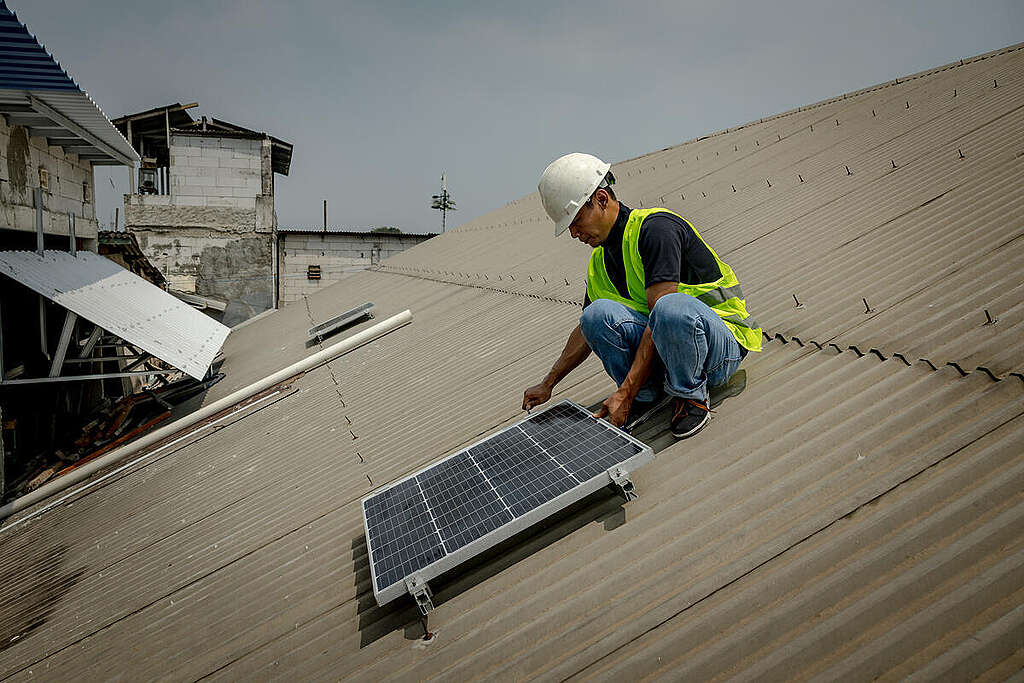
In an effort to decentralize energy production and combat urban energy poverty, Greenpeace Indonesia partnered with Jaringan Rakyat Miskin Kota (JRMK) and the Urban Poor Consortium (UPC) to install community-scale rooftop solar panels in the Kampung Muka neighborhood of North Jakarta.
This grassroots initiative accelerates Indonesia’s transition away from fossil-fuel-heavy grids toward accessible, decentralized renewable energy. By bringing clean power directly to marginalized urban neighborhoods, the project demonstrates that climate solutions can simultaneously address socio-economic inequalities.
5. Germany: Launching "Crowd Research" Against Nitrate Water Pollution
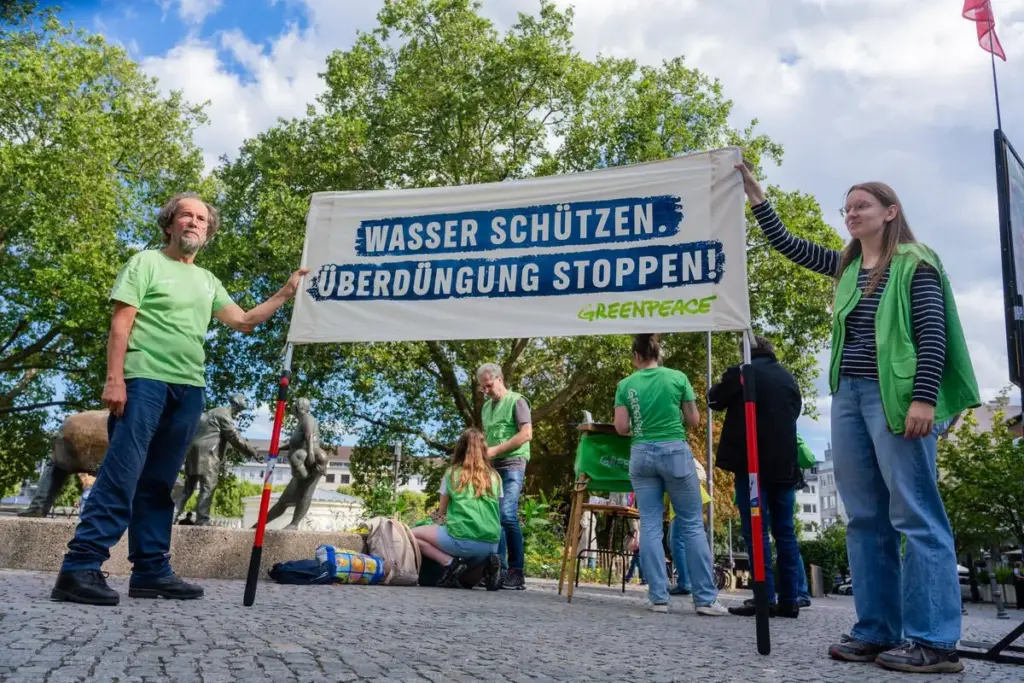
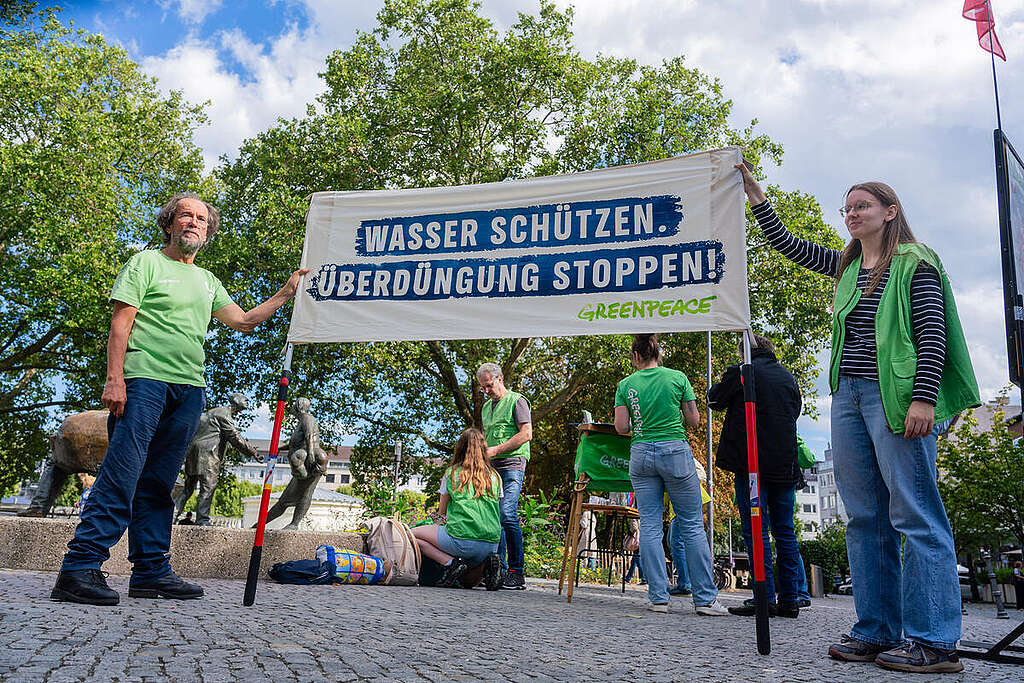
Across Germany, Greenpeace local groups—exemplified by a high-profile action day in Aachen—drew urgent public attention to the systemic pollution of rivers, lakes, and drinking water caused by agricultural over-fertilization.
At a symbolic drink station featuring an interactive wheel of fortune, activists educated the public on the pervasive threat of nitrate contamination in water supplies. To empower citizens directly, the organization kicked off a nationwide "crowd research" initiative, distributing water test kits and demonstrating how residents can measure nitrate levels in private wells, streams, and local rivers over the coming months.
6. Cameroon: Eco-Jogging and Plastic Waste Resistance in Yaoundé
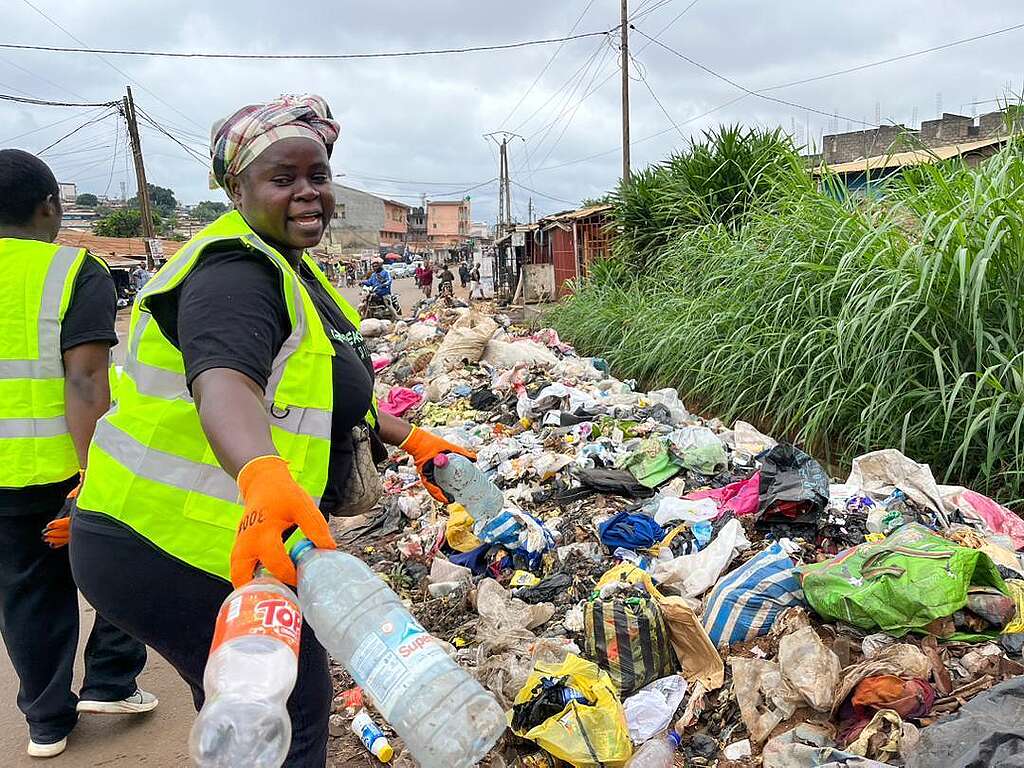
In Central Africa, environmental activism took an active, health-conscious turn. Fifteen dedicated volunteers in Yaoundé, Cameroon, teamed up with the CNEDD association to stage an ecological march and clean-up drive.
Dubbed "eco-jogging," the event combined physical fitness with civic duty as participants collected discarded plastic waste from the urban landscape. The march concluded with a public forum, where volunteers and community members debated the compounding crises of plastic pollution and waste mismanagement in the region.
7. Palau: Demanding Climate Justice at the Pacific Islands Forum
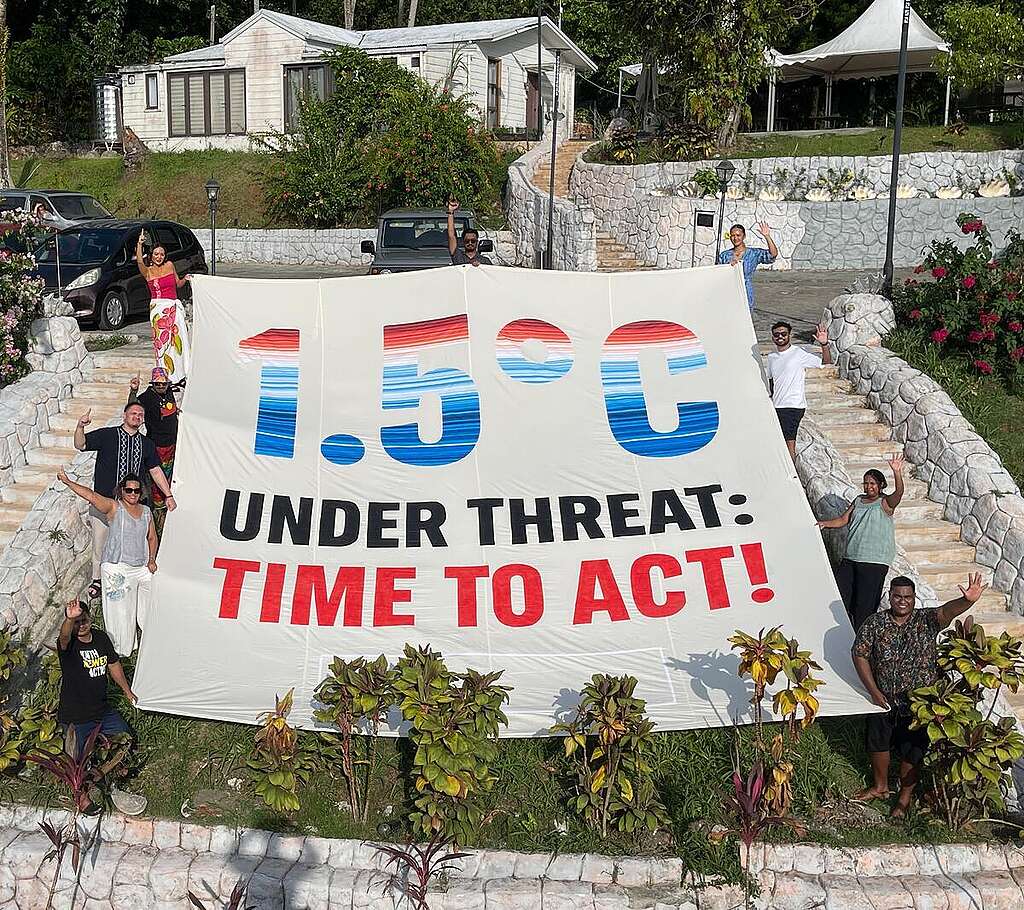
As world leaders gathered in Koror, Palau, for the Pacific Islands Forum (PIF), civil society organizations projected an unyielding stance from the frontlines of the climate crisis.
Through large-scale aerial banners and advocacy campaigns, activists demanded that Pacific priorities—specifically climate survival and ocean preservation—remain at the absolute center of diplomatic negotiations. The coalition underscored a critical legal and moral reality: keeping global warming below the 1.5°C threshold is not merely a political aspiration, but an explicit legal obligation reinforced by the International Court of Justice.
8. The Netherlands: Legal Action Against Chemours Over PFAS Discharges
In Europe, Greenpeace Netherlands escalated its legal pressure on chemical manufacturing giant Chemours, filing a formal enforcement request over ongoing, illegal PFAS discharges.
Perpetual chemicals like PFAS and TFA (trifluoroacetic acid) bioaccumulate aggressively in the environment and human bodies, having been detected in everyday samples ranging from agricultural eggs to human breast milk. Because Chemours has actively attempted to legalize toxic TFA through new administrative permits—and because the Dutch government has largely failed to intervene—Greenpeace, alongside local residents and prominent environmental lawyer Benedicte Ficq, is leveraging the courts and environmental authorities. By conducting independent water, air, and soil testing, the organization aims to permanently halt industrial poisoning.
Supporting Context & Metrics
The disparate actions captured this week share a common thread: they represent a direct response to systemic regulatory failures and unchecked corporate exploitation. Understanding the scope of these crises requires examining the underlying data:
Fossil Fuel Expansion: The Khan Tervel block exploration in Bulgaria highlights how fossil fuel interests continue to secure offshore concessions despite international commitments to phase out hydrocarbons. Marine biologists warn that seismic airgun blasting used in exploration permanently damages cetacean communication systems and disrupts fish spawning.
Deep-Sea Mining Threats: The proposed 31.4-million-acre lease sale in American Samoan waters threatens fragile benthic ecosystems that remain largely unmapped and poorly understood by science. Disturbing these abyssal plains could release sequestered carbon and permanently destroy unique deep-water habitats.
Chemical Contamination: In the Netherlands and across the European Union, the persistence of PFAS represents a generational public health crisis. Studies show that these synthetic compounds do not break down naturally, leading to universal human exposure and mounting healthcare burdens.
Agricultural Runoff: In Germany, intensive livestock farming and excessive fertilizer application have pushed numerous water basins past legal nitrate limits, forcing municipalities to invest heavily in advanced water treatment facilities—costs ultimately borne by taxpayers rather than polluting agricultural conglomerates.
Official Statements
"We are witnessing a coordinated corporate push to extract resources from our most vulnerable ecosystems—whether it is drilling the Black Sea, mining the deep-sea floor of the Pacific, or poisoning our waterways with PFAS and agricultural nitrates. Yet, from Jakarta to Yaoundé, communities are proving that another future is not only possible, it is already being built."
— Greenpeace International Coordination Desk
"Keeping global warming below 1.5 degrees Celsius is not a flexible policy choice; it is an existential mandate. As leaders negotiate at the Pacific Islands Forum, the international community must recognize that ocean protection and climate stability are inextricably linked."
— Civil Society Coalition Statement, Koror, Palau
"When governments fail to regulate corporate polluters like Chemours, citizens and civil society have no choice but to step into the courtroom and onto the frontlines. We will not stand by while our environment and our children’s bodies are treated as industrial dumping grounds."
— Legal Advocacy Team, Greenpeace Netherlands
Future Outlook
The breadth of this week’s actions—spanning legal challenges in European courts, grassroots renewable energy installations in Indonesian neighborhoods, youth empowerment in Kenya, and high-seas confrontations in the Pacific—demonstrates the multi-layered strategy required to tackle contemporary environmental crises.
Looking ahead, several critical milestones will test global resolve. The fallout from the proposed U.S. deep-sea mining lease sales in American Samoa will set a dangerous or cautionary global precedent for ocean governance. Simultaneously, ongoing legal battles against chemical conglomerates in Europe will determine whether polluters can successfully redefine toxic waste as permissible discharge.
Despite these formidable challenges, the resilience displayed by local communities, youth activists, and international coalitions offers a clear path forward. Through rigorous independent research, strategic legal action, and relentless public mobilization, Greenpeace and its global allies continue to prove that bearing witness is only the first step toward systemic transformation.
To explore more photo and video documentation from Greenpeace’s global actions, visit the official Greenpeace Media Library.