

Executive Overview
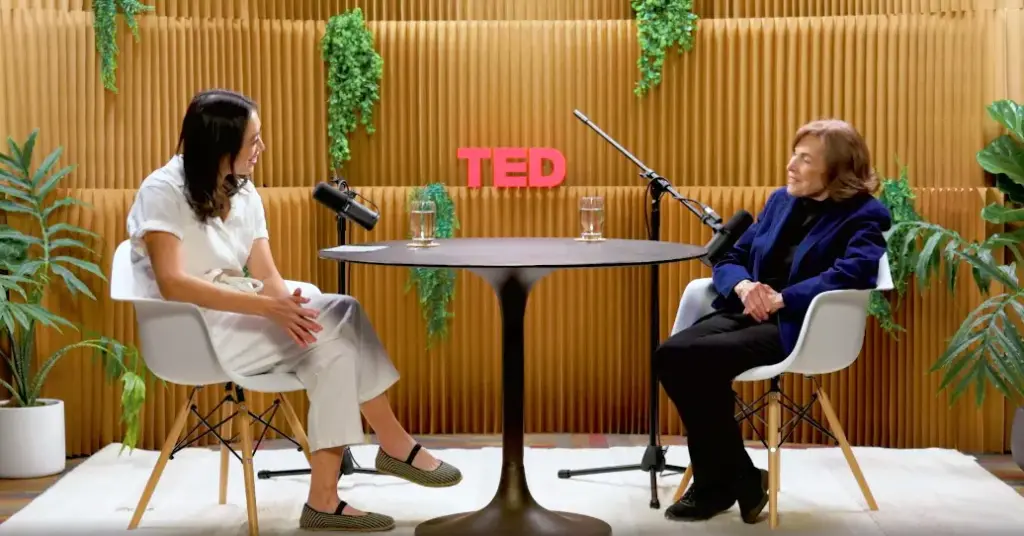
Following her landmark address at TED2026, legendary oceanographer, explorer, and Mission Blue founder Dr. Sylvia A. Earle sat down with Elise Hu, host of the acclaimed TED Talks Daily podcast, for an expansive, deeply personal conversation on the majesty and ecological necessity of the deep sea. Against the backdrop of escalating global climate disruption and biodiversity loss, Earle’s message is both an urgent warning and a profound meditation on the resilience of the blue planet.
Drawing from decades of pioneering submersibles descents, underwater habitat living, and global marine advocacy, Earle articulated a core philosophy that underpins her life’s work: humanity’s survival is inextricably linked to the health of the global ocean. Her central thesis—often referred to by colleagues as "Earle’s Bet"—posits that if every human being could personally witness the ethereal beauty, complex architectures, and vital life-support systems of the deep sea, a universal awakening would occur, instantly dissolving apathy and galvanizing a planetary movement for marine protection.
This article provides a rigorous investigative examination of Dr. Earle’s latest public discourse, tracing her lifelong contributions to marine science, analyzing the fragile state of deep-sea ecosystems under modern anthropogenic pressures, and evaluating the policy frameworks required to safeguard the high seas. Through detailed chronologies, empirical metrics, expert testimonies, and forward-looking projections, we explore why the midnight zone of our oceans remains humanity’s greatest frontier—and its final chance for ecological salvation.
Detailed Chronology: From the Continental Shelf to the Global Stage
To understand the weight of Dr. Sylvia Earle’s insights at TED2026, one must trace a career that has spanned over seven decades of continuous oceanographic discovery, breaking glass ceilings in a historically male-dominated scientific discipline.
The Formative Decades (1950s–1970s)
Long before the advent of modern deep-sea submersibles, a young Sylvia Earle cultivated an intimate fascination with the coastal waters of the Gulf of Mexico. By her early twenties, she had logged hundreds of hours underwater, utilizing early self-contained underwater breathing apparatus (SCUBA) technology.
- 1970: Earle achieved international renown by leading the Tektite II project, serving as the captain of an all-female team of aquanauts who lived and worked for two weeks in a saturation habitat fifty feet beneath the surface of the U.S. Virgin Islands. This milestone proved conclusively that women could lead complex, high-pressure saturation diving missions with the same technical prowess as their male counterparts.
- 1979: Earle shattered depth records by walking untethered on the seafloor off the coast of Oahu, Hawaii, at a staggering depth of 1,250 feet (381 meters) using an experimental JIM atmospheric diving suit. This feat opened the door for direct human observation of bathypelagic zones previously reachable only via uncrewed dredges or acoustic instruments.
Institutional Leadership and Scientific Advocacy (1980s–1990s)
As commercial exploitation of marine resources intensified through industrial fishing and offshore oil drilling, Earle transitioned from pure research to high-level policy and public advocacy.
- 1990–1992: She served as the Chief Scientist of the National Oceanic and Atmospheric Administration (NOAA), becoming the first woman to hold the prestigious post. During her tenure, she became an outspoken critic of the government’s response to the 1989 Exxon Valdez oil spill, demonstrating an unwavering commitment to environmental truth over political expediency.
- 1992: Following her departure from NOAA, she founded Deep Ocean Exploration and Research (DOER Marine), a company dedicated to designing and building advanced marine engineering systems, submersibles, and robotic tools capable of operating in extreme deep-sea environments.
The Mission Blue Era and TED2026 (2009–Present)
- 2009: Earle established Mission Blue (the Sylvia Earle Alliance), an initiative designed to ignite public support for a global network of marine protected areas known as "Hope Spots."
- TED2026: Returning to the TED stage, Earle delivered a masterclass on planetary interconnectedness. In her subsequent conversation with Elise Hu on TED Talks Daily, she bridged the gap between academic marine biology and public consciousness, framing the deep sea not as a distant, alien wasteland, but as the beating heart of Earth’s climate regulation engine.
Supporting Context & Metrics: The State of the Deep Sea
While popular imagination often paints the deep ocean—the pelagic and benthic zones lying below 200 meters—as a silent, barren expanse of perpetual darkness, modern oceanography reveals it to be one of the most dynamic, biologically rich, and functionally vital biomes on Earth.
The Metrics of the Abyss
- Volume and Habitability: The oceans cover approximately 71% of the Earth’s surface, and the deep sea accounts for over 95% of the planet’s habitable biosphere by volume.
- Carbon Sequestration: The ocean has absorbed more than 90% of the excess heat generated by anthropogenic climate change and roughly 25% to 30% of all human-emitted carbon dioxide since the industrial revolution. The deep sea acts as the ultimate carbon sink, sequestering organic carbon via the "biological pump"—the descent of marine snow, fecal pellets, and sinking biomass from surface waters to abyssal plains.
- Biodiversity: Contrary to historical assumptions, deep-sea hydrothermal vents, cold seeps, seamounts, and abyssal plains support thousands of endemic species. These organisms have evolved extraordinary metabolic adaptations, such as chemosynthesis (deriving energy from chemical compounds rather than sunlight) and bioluminescence.
+--------------------------------------------------------------------------+
|                  THE OCEAN'S CRITICAL LIFE-SUPPORT METRICS               |
+--------------------------+-----------------------------------------------+
| Metric                   | Scientific Value / Status                     |
+--------------------------+-----------------------------------------------+
| Surface Area Coverage    | ~71% of Earth                                 |
| Habitable Biosphere      | >95% (by volume, residing in the deep sea)    |
| Anthropogenic Heat Sink  | >90% of excess global heat absorbed           |
| Anthropogenic CO2 Sink   | 25% – 30% of total carbon emissions absorbed  |
| Explored Seafloor Area   | <20% mapped with high-resolution sonar        |
+--------------------------+-----------------------------------------------+
Emerging Anthropogenic Threats
Despite its extreme depth and remoteness, the deep sea is no longer insulated from human impacts. Dr. Earle’s dialogue with Elise Hu highlighted several immediate, existential threats facing abyssal ecosystems:
- Deep-Sea Mining: International consortia and mining corporations are aggressively eyeing the Clarion-Clipperton Zone in the Pacific Ocean and other abyssal regions for polymetallic nodules rich in nickel, cobalt, copper, and manganese. Environmental scientists warn that dredging these plains will destroy fragile, slow-growing benthic communities, stir up toxic sediment plumes, and disrupt millennia-old carbon sequestration cycles.
- Industrial Bottom Trawling: Commercial fishing fleets continue to drag heavy nets across seamounts and continental slopes, obliterating centuries-old cold-water coral reefs and resuspending tons of trapped carbon into the water column.
- Ocean Acidification and Warming: As the ocean absorbs excess carbon dioxide, its pH drops, making it increasingly difficult for calcifying organisms—from microscopic plankton to deep-sea corals—to build and maintain their calcium carbonate skeletons. Concurrently, deep-water warming alters ocean currents, starving mid-water ecosystems of vital oxygen and nutrients.
Official Statements and Dialogue Analysis
The conversation between Dr. Sylvia A. Earle and Elise Hu on TED Talks Daily offered profound insights into the psychological and systemic barriers hindering effective ocean conservation. Below are thematic extractions and expert analyses of their dialogue.
On the Illusion of Ocean Inexhaustibility
"For generations, humanity operated under the arrogant assumption that the ocean was simply too big to fail, too vast to be harmed by anything we could possibly extract or dump into it," Earle noted during the broadcast.
Elise Hu probed deeper into this psychological disconnect, asking why society struggles to prioritize marine conservation compared to terrestrial deforestation. Earle attributed this to "out of sight, out of mind" syndrome. Because the average citizen cannot walk through a pelagic forest or witness the destruction of a hydrothermal vent ecosystem firsthand, the degradation of the deep sea lacks the visceral urgency of a burning rainforest or a receding glacier.
The Power of "Earle’s Bet"
A central highlight of the interview was Earle’s articulation of experiential empathy:
"My bet is simple: If every world leader, every industrialist, and every child could descend into the deep sea just once—to witness the pulsing light of a comb jelly, the silent majesty of a passing shark, or the alien architecture of a vent field—our priorities would shift overnight. We would stop treating the ocean as a garbage disposal and start treating it as our life-support system."
Policy analysts listening to the broadcast have pointed out that while direct submersible access is financially prohibitive for the masses, immersive technologies such as high-definition underwater telemetry, virtual reality (VR) deep-sea expeditions, and continuous live-streaming from exploration vessels (such as those operated by the Schmidt Ocean Institute and NOAA Ocean Exploration) are successfully democratizing access to the abyss, slowly bridging the empathy gap that Earle describes.
Future Outlook: A Roadmap for Ocean Recovery
As we look toward the latter half of the 2020s and beyond, Dr. Sylvia Earle’s vision provides a clear, actionable roadmap for policymakers, scientists, and global citizens committed to reversing marine degradation. Achieving a sustainable future requires coordinated multi-lateral action across three key pillars:
1. Scaling the "Hope Spots" Initiative
Mission Blue’s signature strategy involves identifying and officially designating "Hope Spots"—special places that are scientifically identified as critical to the health of the ocean.
- Current Status: Mission Blue has championed over 150 Hope Spots worldwide, ranging from pristine coral atolls to heavily impacted coastal zones awaiting restoration.
- The 2030 Goal: Conservation biologists emphasize the necessity of scaling these regional protections to meet the global "30×30" target—protecting at least 30% of the Earth’s lands and oceans by 2030. Achieving this requires international treaty enforcement under the United Nations Biodiversity Beyond National Jurisdiction (BBNJ) Agreement (the High Seas Treaty).
2. Imposing a Precautionary Moratorium on Deep-Sea Mining
In alignment with warnings issued by marine scientists, governments, and financial institutions worldwide, the international community must enforce a strict, precautionary moratorium on commercial deep-sea mining. Rushing into mineral extraction before understanding the irreversible ecological consequences of disrupting benthic ecosystems is a gamble humanity cannot afford to lose. Research must pivot toward closed-loop recycling of terrestrial minerals and technological innovations that reduce reliance on virgin deep-sea ores.
3. Democratizing Ocean Literacy and Education
Earle’s philosophy underscores that legislation alone cannot save the seas; cultural transformation is required. Educational curricula across primary, secondary, and tertiary institutions must integrate ocean literacy as a core competency. Understanding that every second breath we take originates from marine phytoplankton is not merely a biological trivia fact—it is a fundamental existential reality that must guide human economic and social systems.
Conclusion
Dr. Sylvia A. Earle’s post-TED2026 dialogue with Elise Hu serves as both a sobering reminder of the ecological crises unfolding in Earth’s deepest waters and an inspiring call to action. The deep sea is not a remote frontier divorced from human survival; it is the master regulator of our climate, the guardian of our atmosphere, and the cradle of planetary biodiversity.
As Earle eloquently reminds us, we are living at the most critical juncture in human history: the time when we still have the knowledge, the technology, and the moral imperative to choose ocean recovery over ocean collapse. To watch or listen to her latest discourse is to understand that protecting the blue heart of our planet is not just an environmental option—it is the ultimate prerequisite for human survival.
To experience the full conversation, readers can stream the episode online via the TED Talks Daily platform.



