

Executive Overview
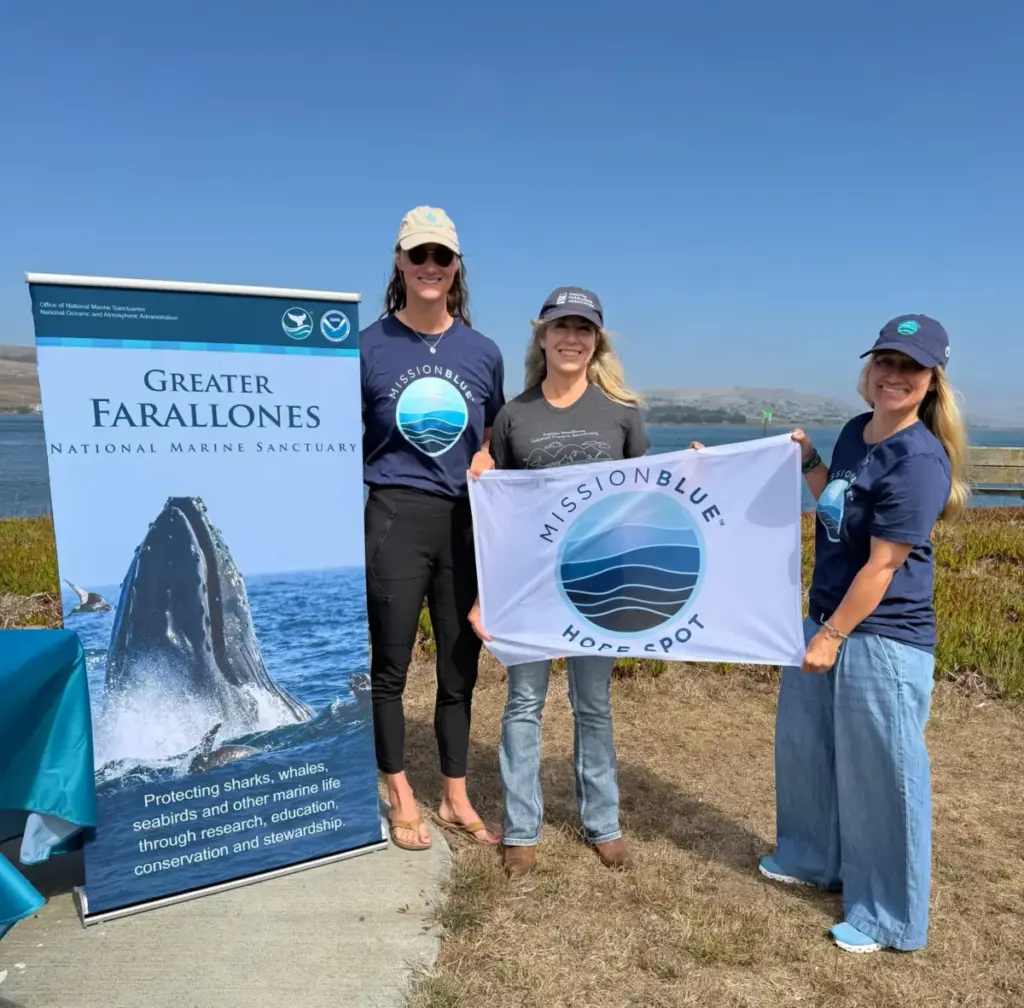
The pristine, wind-swept waters of Bodega Bay have long served as a dramatic backdrop for the intersection of human coastal communities and the vast, unpredictable Pacific Ocean. Recently, this northern California marine hub found itself at the center of a statewide conservation spotlight, thanks to a powerful convergence of elite endurance athleticism and grassroots marine advocacy. Shannon McIntyre Rake, a prominent voice for the global ocean conservation organization Mission Blue, recently appeared on KTVU to articulate the urgent necessity of marine protection in Bodega Bay and beyond.
Rake’s media appearance followed a high-profile visit from Bay Area native and ultra-marathon open-water swimmer Catherine Breed. Breed is currently undertaking a monumental, historic 900-mile swim spanning the entire length of the California coastline, from the Oregon border down to the Mexican boundary. Her expedition is far more than a physical test of human endurance; it is a floating symposium on marine health. As Breed navigates the frigid, treacherous waters of the Pacific, she is intentionally stopping in vulnerable coastal communities to elevate the profiles of the unsung heroes, grassroots organizations, and marine scientists working tirelessly to safeguard marine life.
This article provides an in-depth examination of the convergence between Breed’s epic aquatic journey and Mission Blue’s institutional conservation frameworks in Bodega Bay. By analyzing the ecological stakes, the physiological and logistical realities of the swim, the structural threats facing Northern California’s marine ecosystems, and the actionable pathways forward, this report outlines a comprehensive portrait of modern marine conservation along the Golden State’s magnificent shores.
Detailed Chronology: The 900-Mile Odyssey and the Bodega Bay Stopover
The Genesis of a Historic Swim
The conceptualization of Catherine Breed’s 900-mile coastal swim was born out of a deep-seated reverence for the ocean and a growing alarm regarding the degradation of marine habitats. Breed, a decorated open-water swimmer with a deep connection to the San Francisco Bay Area, spent months preparing both mentally and physically for an undertaking that very few human beings have ever attempted. The Pacific coast of California is notoriously unforgiving, characterized by sub-surface upwellings, powerful rip currents, unpredictable weather patterns, shifting winds, and a robust apex predator population, including great white sharks.
Rather than treating the journey purely as an athletic accolade, Breed conceptualized the swim as a mobile platform for advocacy. Partnering loosely with conservation networks, her objective was to bridge the gap between isolated coastal towns and the broader political machinery governing marine protection. Every nautical mile logged represents a physical connection forged between distinct marine habitats—from the kelp forests of the far north to the urbanized runoff zones of the southern bays.
The Bodega Bay Leg and Community Engagement
As Breed’s support vessel navigated the treacherous waters off Sonoma County, her arrival in Bodega Bay marked a critical milestone in the expedition. Bodega Bay is historically and ecologically significant; it is a vital migratory resting point, a productive upwelling zone, and home to a delicate balance of commercial fisheries, marine laboratories, and wild coastal habitats.
Upon landing in Bodega Bay, Breed was greeted by local environmental advocates, marine researchers, and community members who have dedicated their lives to preserving the local ecosystem. Her stopover was structured around community forums, educational outreach, and collaborative discussions regarding local conservation pressures. It was during this phase of the journey that the synergy between Breed’s physical endeavor and Mission Blue’s organizational mission became glaringly apparent.
The public attention generated by the swim allowed local conservationists to bring pressing regional issues—such as shoreline erosion, local water quality, and the protection of local marine protected areas (MPAs)—to the forefront of public consciousness. This grassroots momentum culminated in Shannon McIntyre Rake’s invitation to the KTVU news desk, where the narrative expanded from a localized sporting event to a systemic discussion on marine stewardship.
Supporting Context & Metrics: The Ecological Significance of Bodega Bay and California’s Coast
Bodega Bay: An Ecological Crucible
To understand why Shannon McIntyre Rake and Mission Blue place such high priority on Bodega Bay, one must examine the unique oceanographic properties of the region. Bodega Bay is heavily influenced by the California Current, a cold-water southward-flowing current that drives massive nutrient upwellings from the ocean depths. These nutrients fuel dense phytoplankton blooms, which form the base of a remarkably rich marine food web.
- Marine Biodiversity: The waters surrounding Bodega Bay support dense populations of marine mammals, including harbor seals, California sea lions, migrating humpback whales, and the occasional transient pod of killer whales.
- Avian Flyways: The bay and its surrounding wetlands are a critical stopover along the Pacific Flyway, providing feeding and breeding grounds for hundreds of species of shorebirds and waterfowl.
- Kelp Forest Ecosystems: Subtidal rocky reefs host extensive bull kelp forests, which act as critical nurseries for juvenile rockfish, abalone, and invertebrates.
The Macro Threat Matrix Facing California’s Marine Environments
Despite their apparent resilience, the ecosystems champion-focused by Mission Blue and highlighted by Breed’s swim face an unprecedented array of anthropogenic stressors:
- Ocean Warming and Marine Heatwaves: Prolonged marine heatwaves, colloquially known as "the Blob," have severely disrupted the ecological balance of Northern California’s waters. These thermal anomalies have decimated up to 90% of Northern California’s bull kelp forests since 2014, replaced largely by destructive purple sea urchin barrens.
- Ocean Acidification: As carbon dioxide emissions increase, the global ocean absorbs a significant fraction, lowering pH levels. This acidification makes it increasingly difficult for calcifying organisms—such as Dungeness crabs, oysters, and microscopic pteropods—to build and maintain their shells.
- Anthropogenic Pollution and Runoff: Agricultural runoff from the Central Valley and local watersheds introduces excess nitrogen and phosphorus, leading to harmful algal blooms (HABs) that deplete dissolved oxygen and produce neurotoxins lethal to marine life. Additionally, microplastics permeate the water column, entering the food web from zooplankton up to apex predators.
- Overfishing and Habitat Degradation: Historical overfishing, combined with poorly managed coastal development, has strained the resilience of native species, making them more vulnerable to climate-induced stresses.
Official Statements and Institutional Perspectives: Mission Blue’s Vision
During her comprehensive interview with KTVU, Shannon McIntyre Rake articulated the core philosophy of Mission Blue, an international marine conservation initiative founded by legendary oceanographer Dr. Sylvia Earle. The organization focuses on establishing a global network of marine protected areas—dubbed "Hope Spots"—that are scientifically identified as critical to the health of the ocean.
The Power of Amplifying Local Voices
Rake emphasized that while organizations like Mission Blue operate on a global macro-scale, the true efficacy of conservation relies entirely on hyper-local engagement. During the KTVU segment, she noted:
"When someone like Catherine Breed takes on a historic 900-mile physical journey down our coast, she isn’t just swimming through water; she is swimming through communities. She acts as a conduit, drawing national attention to the quiet, unyielding work being done by local organizations, tribal nations, and marine scientists in places like Bodega Bay who are on the front lines of ocean defense."
Hope Spots and Regulatory Safeguards
Rake elaborated on the concept of Hope Spots, explaining that while California has made commendable strides through its network of Marine Protected Areas (MPAs), continuous vigilance is mandatory. Protection on paper must translate to active enforcement, community stewardship, and ecological monitoring.
Furthermore, Mission Blue highlights the interconnectedness of the Pacific ecosystem. Rake pointed out that an environmental degradation event in Bodega Bay does not stay isolated; it ripples up and down the California Current, impacting migratory species that traverse the entire span of the Pacific Rim. The organization utilizes media platforms, educational campaigns, and policy advocacy to ensure that regional strongholds like Bodega Bay receive the institutional backing required to withstand future ecological shocks.
Future Outlook: The Road Ahead for California Marine Conservation
As Catherine Breed continues the southern leg of her historic 900-mile odyssey, and as organizations like Mission Blue process the heightened public interest generated by media engagements on networks like KTVU, the trajectory of California’s marine conservation enters a critical juncture. The convergence of endurance athletics and environmental activism has proven to be a potent formula for public mobilization.
Strategic Priorities for the Coming Decade
To secure the ecological integrity of Bodega Bay and the broader California coastline, conservationists, policymakers, and local stakeholders must align around several key strategic initiatives:
- Climate-Resilient Restoration: Efforts must scale up rapidly to restore degraded kelp forest ecosystems. This includes active culling of invasive purple sea urchin barrens and experimenting with heat-resistant kelp strains capable of surviving rising ocean temperatures.
- Enhanced MPA Enforcement and Expansion: Existing Marine Protected Areas must be rigorously monitored using advanced technologies—such as satellite vessel tracking, autonomous underwater vehicles (AUVs), and acoustic monitoring—to prevent illegal extraction and poaching.
- Integrated Watershed Management: Protecting the marine environment requires upstream accountability. Municipalities, agricultural entities, and regulatory bodies must collaborate to drastically reduce nutrient runoff, pesticide infiltration, and plastic pollution before they reach coastal estuaries.
- Empowering Grassroots Coalitions: Institutional funding and media amplification must continue to flow directly to grassroots organizations operating at the community level. As Shannon McIntyre Rake highlighted, the most resilient conservation victories are those rooted in local community ownership and indigenous ecological knowledge.
Conclusion
The pairing of Catherine Breed’s epic 900-mile coastal swim with Mission Blue’s strategic advocacy in Bodega Bay serves as a powerful reminder of what can be achieved when human passion meets ecological science. While the threats facing the Pacific Ocean are formidable—ranging from climate disruption to systemic pollution—the tireless dedication of local guardians and international coalitions offers a profound beacon of hope. Through sustained public engagement, rigorous scientific monitoring, and uncompromising policy protection, the vital marine habitats of Bodega Bay and the wider California coast can be preserved for generations yet unborn.



