

Executive Overview
Along the picturesque, wave-lapped coastline of Dorset, a quiet and significant ecological recovery is underway. For decades, the delicate seagrass meadows of Studland Bay—a vital marine ecosystem and one of the last remaining strongholds for rare and protected British seahorses—bore the physical scars of human recreation. Heavy boat anchors, dropped indiscriminately onto the seabed, dragged across the floor, tearing up the intricate root systems of the seagrass and leaving barren, sandy craters in their wake.
However, a groundbreaking scientific study has now confirmed what conservationists have long hoped for but scarcely dared to expect: the marine environment can heal itself remarkably quickly if given the right tools and protection.
Following the 2021 intervention by the Studland Bay Marine Partnership, which began replacing traditional, destructive heavy-chain moorings with advanced "eco-moorings," new research reveals a staggering reversal of environmental damage. Over a four-year monitoring period, some anchor scars within the bay have shrunk by more than 90%. Utilizing a combination of sonar mapping, historical satellite imagery, and rigorous marine monitoring, researchers have provided the first definitive empirical evidence that eco-moorings not only halt the destruction of seagrass meadows but actively facilitate their rapid regeneration.
This success story arrives at a critical juncture for global marine conservation. Seagrass meadows are globally recognized as powerhouse ecosystems; they sequester carbon at rates vastly superior to tropical rainforests, buffer vulnerable coastlines against the rising fury of storm surges, and provide essential nurseries for a vast array of marine biodiversity. Yet, despite their immense value, these habitats have faced relentless decline due to coastal development, industrial pollution, anthropogenic disturbance, and the escalating impacts of climate change.
The triumphs observed in Studland Bay offer a beacon of hope—a replicable blueprint demonstrating that collaborative, science-led conservation initiatives can successfully reverse ecological degradation and restore health to damaged coastal waters.
Detailed Chronology: A Timeline of Restoration
The remarkable turnaround in Studland Bay is not a matter of chance; it is the culmination of years of targeted advocacy, cross-sector collaboration, and proactive conservation management. To understand how the seabed began to heal, it is essential to trace the chronology of events that transformed Studland Bay from a site of ongoing environmental degradation into a celebrated model of marine restoration.
Pre-2019: Mounting Pressures on a Fragile Ecosystem
For generations, Studland Bay has served as a premier destination for boat owners, sailors, and holidaymakers drawn to Dorset’s scenic coastline. Unfortunately, the very features that made the bay attractive to mariners—its sheltered waters and sandy bottoms—also made it an ideal habitat for Zostera seagrass.
Traditional boating practices relied on heavy metal anchors and sweeping chain loops that rested on the seafloor. As boats shifted with the tides and winds, these heavy chains dragged across the sediment in a wide arc, a phenomenon known as "anchor scour." This continuous mechanical abrasion acted like a plow, repeatedly clearing away shoots, rhizomes, and the underlying sediment, transforming dense, life-sustaining seagrass meadows into fragmented, barren patches of sand.
2019: Official Recognition and Protection
Recognizing the ecological significance of the bay—particularly as a sanctuary for the vulnerable spiny seahorse (Hippocampus guttulatus) and short-snouted seahorse (Hippocampus hippocampus)—authorities designated Studland Bay as a Marine Conservation Zone (MCZ) in 2019. This statutory designation provided a crucial legal framework for safeguarding the area, though it did not immediately resolve the physical damage caused by anchoring vessels.
2021: The Birth of the Partnership and the Voluntary No-Anchor Zone
Realizing that statutory protection alone could not physically prevent anchor damage, a diverse coalition of conservation charities, boating organizations, academic institutions, statutory bodies, and local businesses united to form the Studland Bay Marine Partnership (SBMP).
Key organizations—including the Dorset Wildlife Trust, Natural England, the National Trust, the Seahorse Trust, and the University of Southampton—pooled their resources and expertise. In 2021, the coalition implemented a voluntary no-anchor zone across the most sensitive sectors of the bay. Simultaneously, the partnership took a pioneering step: they began installing the first wave of advanced eco-moorings. Unlike traditional setups that rely on heavy chains resting on the seabed, eco-moorings utilize sophisticated helical screws drilled deep into the seabed, paired with mid-water tether systems that ensure no hardware drags across the benthic flora.
2021–2023: The Transition Phase and Data Collection
As the first trial eco-moorings were put into service, researchers and conservationists initiated a comprehensive monitoring regime. This period saw the establishment of baseline data utilizing high-resolution sonar surveys and historical satellite imagery. Crucially, a second study area within the bay retained traditional chain moorings until 2023, providing a natural control group that allowed scientists to directly compare the recovery rates of seagrass under eco-moorings versus traditional infrastructure.
2025: Groundbreaking Scientific Vindication
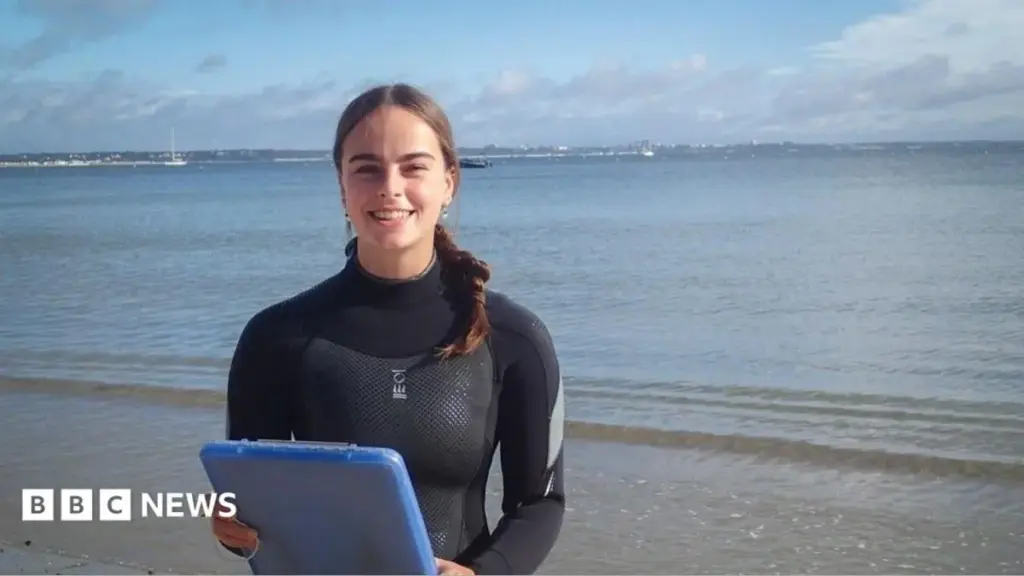
The culmination of this multi-year effort arrived with a landmark scientific study conducted by Kira Dunn as part of her Master of Science degree in Marine Biology with Oceanography at the University of Southampton. Analyzing five years of continuous monitoring data, Dunn’s research provided the global conservation community with the first concrete, empirical proof that eco-moorings catalyze rapid seagrass recovery, sparking widespread acclaim from environmentalists and marine biologists alike.
Supporting Context & Metrics: The Science of Seabed Regeneration
To fully appreciate the significance of the Studland Bay findings, one must examine the hard data uncovered by the University of Southampton study. The research tracked recovery across 39 distinct damaged areas of the seabed, yielding precise, quantifiable metrics that validate the effectiveness of the eco-mooring intervention.
Quantifying the Recovery
The study evaluated two distinct management zones within the bay, offering a clear comparative analysis of seabed healing:
- The Primary Eco-Mooring Trial Area (Installed 2021): In the zone where the initial ten trial eco-moorings were deployed, the size of the bare, anchor-scoured patches in the seagrass decreased by an astounding average of 93.6% between 2021 and 2025. In spatial terms, these scars shrank at a rate of approximately 57 square meters each year.
- The Secondary Comparison Area (Traditional Moorings until 2023): In the area where traditional heavy-chain moorings remained operational for a longer duration before being phased out, scars still showed a reduction of 65.4% (shrinking by roughly 15.9 square meters a year). While natural recovery does occur slowly in protected waters, the stark contrast between the two zones highlights how removing destructive hardware drastically accelerates the healing process.
Why Seagrass Matters: An Ecological Powerhouse
Seagrass meadows are frequently described by marine scientists as the "lungs of the sea" and the ultimate unsung heroes of climate mitigation. Though they cover a tiny fraction of the global ocean floor, their ecological contributions are disproportionately massive:
- Carbon Sequestration ("Blue Carbon"): Seagrasses capture carbon dioxide up to 35 times faster than tropical rainforests. The carbon is stored not just in the living plant biomass, but securely locked away in the thick, anaerobic soils beneath the meadows for millennia—provided the sediment remains undisturbed.
- Coastal Protection: The dense mats of vegetation attenuate wave energy, significantly reducing coastal erosion and protecting vulnerable shorelines from storm surges and rising sea levels.
- Biodiversity and Fisheries: Seagrass meadows act as complex underwater forests, offering shelter, feeding grounds, and nursery habitats for thousands of species of fish, crustaceans, and iconic marine life, including the UK’s native seahorses.
The Vulnerability of Seahorses
Studland Bay is one of the premier breeding sites in the British Isles for two species of seahorse: the spiny seahorse and the short-snouted seahorse. These charismatic fish rely heavily on the complex physical structure of seagrass blades to anchor their tails while hunting for microscopic prey and evading predators. When anchor chains rip through the meadows, they destroy this vital habitat, fragmenting populations and leaving seahorses exposed. The healing of these scars directly translates to expanded sanctuary space for these protected creatures, giving local populations a fighting chance to thrive.
Official Statements and Expert Perspectives
The success at Studland Bay has drawn praise from academic leaders, conservation practitioners, and environmental policymakers across the United Kingdom.
David Brown, Chair of the Studland Bay Marine Partnership Steering Group and Lead Ecologist for the National Trust, expressed profound admiration for the outcomes:
"These results are incredibly exciting, and a huge encouragement to all the organisations and individuals who have given so much time and support to the partnership. The impact has been beyond our expectations, and thanks to robust monitoring and research, we have the science to prove how the eco-moorings benefit seagrass and all the species that rely on it."
Brown’s sentiments underscore the collaborative spirit that drove the initiative. By bridging the gap between recreational users—who naturally want access to the water—and environmental stewards, the partnership proved that conservation and recreation do not have to be mutually exclusive.
Dr. Ken Collins of the University of Southampton, who supervised the master’s research project, emphasized the broader implications of the findings for global marine management:
"Studland Bay is becoming a powerful example of how practical conservation measures can reverse habitat damage and deliver measurable environmental improvements."
Dr. Collins’ assessment elevates the project from a localized environmental win to a globally relevant case study. In an era where environmental news is frequently dominated by stories of loss and degradation, Studland Bay offers a tangible, actionable framework that other coastal communities can emulate.
Kira Dunn, the marine biology graduate whose meticulous research brought the data to light, reflected on the personal and scientific rewards of the project:
"It’s incredibly encouraging to see how quickly this important habitat can regenerate when given the opportunity. The research project has been immensely rewarding and positive, proving that nature is resilient when we simply step back and stop the harm."
Future Outlook: Scaling Success Beyond Dorset
As the data from Studland Bay gains international attention, the Studland Bay Marine Partnership is already looking toward the horizon. The immediate success of the initial eco-mooring installations has laid a robust foundation for expanding the initiative across the entirety of the bay and phasing out legacy anchoring practices entirely.
Broadening Community and Industry Engagement
A key pillar of the partnership’s future strategy involves ongoing education and engagement with the boating community. Rather than imposing blanket bans that alienate maritime enthusiasts, the project has focused on demonstrating the functional benefits of eco-moorings. Modern eco-moorings do not just protect the seabed; many local sailors report that they are easier to secure and provide reliable holding power, creating a win-win scenario for both mariners and marine life.
Replicating the Model Nationwide
The UK coastline features numerous sensitive marine habitats facing similar pressures from recreational boating. Conservation bodies are already looking at how the Studland Bay framework can be adapted for deployment in other Marine Conservation Zones, estuaries, and sheltered bays across England, Scotland, Wales, and Northern Ireland. Securing funding and long-term governmental backing for widespread eco-mooring infrastructure will be the next major hurdle, but the undeniable science generated by the University of Southampton provides a compelling business and ecological case for investment.
A Legacy of Resilience
Ultimately, the story of Studland Bay is a testament to the remarkable resilience of the natural world. For years, the slow accumulation of anchor scars threatened to unravel a delicate web of marine life that had taken millennia to establish. Yet, through the vision of local charities, the dedication of academic researchers, the cooperation of the boating community, and the implementation of smart, science-backed engineering, the tide has turned.
As the seagrass meadows continue to spread across the once-barren seabed—reclaiming square meter after square meter—they carry with them a vital message for conservationists worldwide: with commitment, collaboration, and cutting-edge science, damaged ecosystems can be brought back from the brink.



