

Executive Overview
In an annual celebration of biological success, sheer resilience, and uncompromising ursine indulgence, the wild inhabitants of Alaska’s Katmai National Park have once again captured the global imagination. Fat Bear Week—a viral, tournament-style digital phenomenon hosted by the National Park Service (NPS) and explore.org—has concluded its most fiercely contested bracket in recent memory.
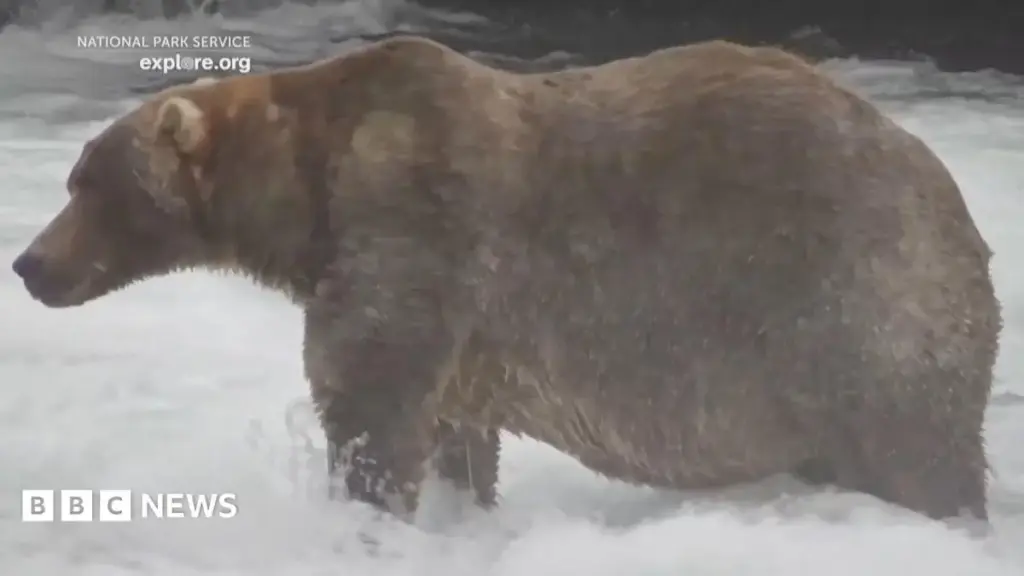
Emerging victorious from a grueling, weeks-long gauntlet of public voting is the formidable ursine known to researchers, rangers, and millions of global fans as Backpack.
The grand finale pitted the reigning heavyweight titan against Bear 910 in a clash of titans that went down to the wire. When the virtual ballot boxes closed, Backpack secured the crown by a razor-thin margin, marshaling 103,344 votes to Bear 910’s commendable 98,253. Described by the National Park Service as a masterclass in "size, skill, snack acquisition, and strategic loafing," Backpack’s journey to the championship reflects not only the individual animal’s exceptional foraging prowess but also the astonishing ecological health of the Bristol Bay watershed.
Beyond the digital spectacle of internet memes, bracket challenges, and passionate fan campaigns, Fat Bear Week serves a profound scientific purpose. It highlights the vital mechanics of brown bear (Ursus arctos horribilis) biology, specifically hyperphagia—the ravenous state of continuous eating that enables these magnificent creatures to pack on the immense fat reserves required to survive months of winter hibernation.
This comprehensive report examines the tactical brilliance of Backpack’s championship run, details the chronologic progression of the 2024 tournament, explores the rigorous ecological metrics underpinning the event, analyzes official statements from wildlife management, and projects what this historic victory means for the future of Katmai National Park and its apex residents.
Detailed Chronology: The Road to the Crown
The path to securing the Fat Bear Week title is neither short nor simple. Long before the first digital ballot was cast, contenders like Backpack were locked in an intense, round-the-clock competition against one another—and against the demanding biological clock of the Alaskan wilderness.
Phase One: Summer Preparation and the Salmon Glut
The genesis of every Fat Bear Week champion begins months before the public ever sees a bracket. As the ice melts across the Brooks River and surrounding ecosystems in Katmai, brown bears emerge from their dens in a state of profound physiological deficit. Having burned virtually all their stored fat over a winter of deep torpor, these animals face a race against time to rebuild their bodies.
For Backpack, the spring and summer of 2024 were characterized by a meticulous, highly calculated approach to resource acquisition. While younger, less experienced bears often wasted precious energy chasing ephemeral food sources, Backpack displayed the strategic patience that would later become a hallmark of the campaign. Operating primarily around the prime fishing real estate of the Brooks Falls, Backpack optimized every calorie expended.
Biologists monitoring the bear noted a distinct behavioral pattern: an initial phase of rigorous, high-efficiency fishing during the peak of the sockeye salmon (Oncorhynchus nerka) runs, followed by a transition into what rangers affectionately dubbed "strategic loafing." Rather than burning excess energy patrolling vast territories, Backpack mastered the art of stationary ambush—maximizing caloric intake while minimizing caloric expenditure. By late August, this strategy yielded astonishing physical results, transforming a lean spring predator into a colossal, rotund masterpiece of biological engineering.
Phase Two: The Opening Rounds of the Bracket
When the virtual gates opened for the 2024 Fat Bear Week tournament in early October, Backpack entered the 12-bear bracket as an immediate fan favorite, though facing stiff competition from a slate of formidable veterans and aggressive newcomers.
The tournament operates as a single-elimination bracket where voters from across the globe compare "before and after" photographs taken in July versus September. These visual side-by-sides document the dramatic transformation of the bears from lean survivors into massive, insulated giants.
In the opening rounds, Backpack made short work of early-bracket opponents. Voters were immediately drawn to the bear’s impressive visual transformation—highlighted by a broad, massive frame, heavily padded flanks, and an unmistakable air of supreme confidence. Social media platforms erupted with fan art, tactical analyses, and passionate debates over which bear deserved to advance.
Phase Three: The Semifinals and the Clash with Bear 910
As the field narrowed, the competition transformed from a popular showcase into a high-stakes psychological and digital marathon. In the semifinal round, Backpack faced a complex challenger that tested the limits of the bear’s global support network.
However, the true crescendo of the tournament materialized in the championship round against Bear 910. Known for her own impressive girth, tactical foraging acumen, and stubborn resilience, Bear 910 proved to be Backpack’s most formidable rival.
For 24 hours, the lead shifted back and forth as voters from Europe, Asia, the Americas, and beyond logged on to cast their ballots. The digital engagement shattered previous records, with vote counts climbing into the hundreds of thousands. Commentators on the live-streaming webcams provided real-time updates and emotional appeals, turning the contest into a global nail-biter.
When the final tally was verified and certified by park officials, Backpack had triumphed by a mere 5,091 votes—103,344 to 98,253. It was one of the tightest margins in the history of the event, cementing Backpack’s victory not as a landslide, but as a hard-fought, dramatic conquest.
Supporting Context & Metrics: The Science of Fat Bear Week
To fully appreciate Backpack’s victory, one must understand the ecological theater in which it occurred. Katmai National Park and Preserve encompasses more than four million acres of wild public lands in southern Alaska, protecting a landscape of active volcanoes, rugged mountains, pristine lakes, and one of the densest and healthiest brown bear populations on Earth.
The Biology of Hyperphagia
At the heart of Fat Bear Week lies the biological phenomenon known as hyperphagia. As autumn approaches, shortening day lengths and dropping temperatures trigger a hormonal shift in brown bears. Their metabolic systems switch into overdrive, driving an insatiable, obsessive desire to consume calories.
During this period, a mature brown bear like Backpack can consume upwards of 60 to 90 pounds of food per day. At the Brooks River, this caloric bounty is provided almost exclusively by Pacific salmon. Millions of sockeye salmon migrate upstream to spawn, creating an extraordinary buffet for waiting bears.
Bears employ several distinct fishing styles to exploit this resource:
- Waiting/Loafing: Standing patiently at the lip of the waterfall to catch leaping salmon out of the air—a technique Backpack executed with devastating efficiency.
- Diving/Snorkeling: Submerging their heads or entire bodies in the rushing water to locate and seize salmon resting in pools.
- Trolling: Wading through deeper water to intercept migrating fish.
By mastering these techniques, Backpack accumulated the massive subcutaneous and visceral fat reserves necessary to survive up to six months inside a winter den without eating, drinking, or defecating.
Economic and Cultural Impact of the Event
What began in 2014 as a modest, local "Fat Bear Tuesday" social media contest dreamed up by a Katmai park ranger has evolved into a global cultural phenomenon. Fat Bear Week now attracts millions of participants worldwide, generating unprecedented public engagement with America’s National Park system.
The event serves as an invaluable educational vehicle:
- Public Awareness: It introduces millions of laypeople to complex ecological concepts, food webs, and wildlife management principles.
- Conservation Advocacy: By fostering personal emotional connections to individual bears with distinct personalities and life histories, the contest builds a broad constituency of advocates for wildlife and habitat preservation.
- Scientific Literacy: The side-by-side photographic comparisons offer a direct, accessible lesson in how animals adapt to seasonal environmental extremes.
Official Statements
The culmination of the 2024 tournament drew widespread commentary from park rangers, wildlife biologists, and public lands advocates, all emphasizing the deeper significance of Backpack’s coronation.
The National Park Service released a celebratory yet scientifically grounded assessment of the victory:
"The journey from a lean spring survivalist to an absolute unit of autumn preparation is no small feat. Backpack’s victory this year represents the pinnacle of ursine achievement. Through a combination of size, skill, strategic snack acquisition, and master-level loafing, this bear demonstrated precisely what it takes to conquer the challenges of the Alaskan wilderness. More importantly, Backpack’s success is a testament to the thriving, unbroken ecological health of the Bristol Bay watershed, where clean waters and abundant salmon runs make such magnificent physical specimens possible."
A lead interpretive ranger at Katmai National Park elaborated on the unique behavioral traits that carried Backpack to the
"People often look at these bears and see only their immense size, but what they are really witnessing is tactical genius. Backpack does not waste energy running marathons across the tundra. This bear understands the geography of the river, the timing of the runs, and the profound value of conserving energy while letting the calories come to them. That is the definition of strategic loafing, and it is a masterclass in survival."
Wildlife biologists monitoring the Brooks River ecosystem added perspective on the broader implications of the contest:
"While Fat Bear Week is undeniably fun and engaging for the public, it underscores a serious biological truth: fat equals survival. Every pound of fat Backpack gained this summer is a life-insurance policy against the harsh winter months ahead. The fact that our bears can reach such astonishing sizes speaks volumes about the pristine, uncompromised nature of Katmai’s ecosystems."
Future Outlook
As the celebratory dust settles over Katmai National Park, the landscape is already shifting. The crisp air of late autumn has given way to freezing temperatures, and the frantic energy of hyperphagia is rapidly yielding to the quiet stillness of denning season.
For Backpack, the immediate future involves retiring to a carefully selected winter den—likely dug into a hillside or sheltered beneath the root system of an ancient Alaskan spruce—where the monumental fat reserves accumulated over the summer will sustain vital bodily functions through the dark winter months. Park biologists expect that, barring unforeseen circumstances, Backpack will emerge next spring leaner, hungry, and ready to reclaim a place along the rushing waters of the Brooks River.
Looking ahead, the success of the 2024 Fat Bear Week tournament has cemented the event’s status as a permanent fixture in the global digital calendar. Organizers at the National Park Service and explore.org are already looking toward future iterations, exploring ways to expand educational outreach, enhance live-cam infrastructure, and deepen public understanding of the delicate ecological balances that sustain the brown bears of Alaska.
Yet, as conservationists frequently remind the public, these magnificent animals and the wild habitats they depend upon face ongoing, complex challenges. Climate variability, shifting weather patterns affecting salmon runs, and external pressures on wilderness habitats mean that the future of Katmai’s bears is never entirely guaranteed.
For now, however, the crown rests securely on the massive, well-padded head of Backpack. As the reigning champion of Fat Bear Week 2024, Backpack stands not merely as a symbol of internet amusement, but as a majestic ambassador for the wild, untamed resilience of nature—a living monument to the power of adaptation, the abundance of the Alaskan wilderness, and the art of successful, strategic survival.



