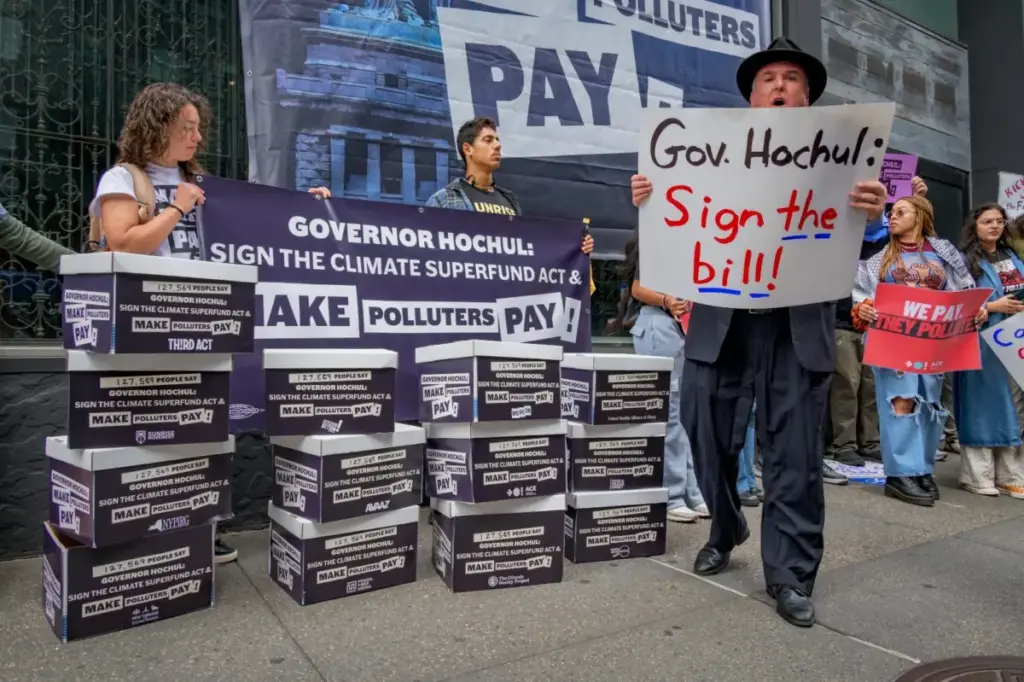
The legislative and legal battlefield over corporate accountability for climate change has reached a critical juncture. Following recent federal court rulings that blocked New York’s ambitious "climate superfund law," proponents of state-led environmental justice initiatives are confronting an existential crisis. Signed into law in 2024, New York’s legislation sought to extract $75 billion from major fossil fuel companies to help finance extreme-weather recovery and adaptive infrastructure projects, such as modernized stormwater management and cooling systems for public buildings.
Modeled loosely after the federal Superfund Act of 1980—which famously held chemical and petroleum corporations financially liable for remediating severely polluted industrial sites—New York’s statute served as a national blueprint. It ignited a wave of legislative copycats across the United States.
However, a tandem of recent federal district court rulings concluded that New York’s law encroaches upon federal jurisdiction, specifically violating the Clean Air Act. While these decisions represent a significant tactical defeat for climate advocates, they have not extinguished the broader movement. Lawmakers across several states, including Connecticut, Rhode Island, New Jersey, and Hawaiʻi, remain determined to advance similar measures.
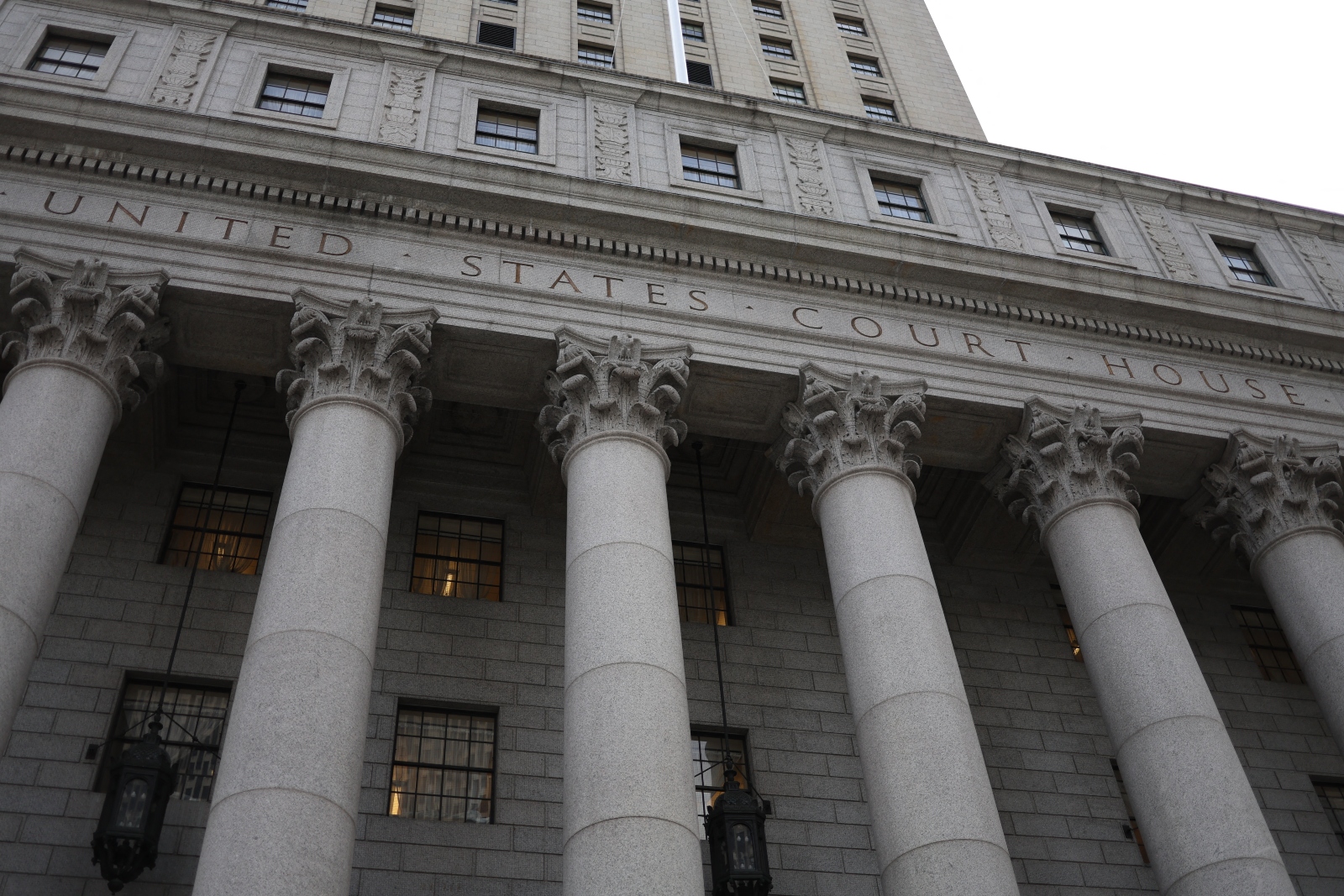
Yet, the true existential threat to this nationwide wave of climate accountability does not lie in the trial courts of New York. Instead, it looms on the steps of the United States Supreme Court. As the high court prepares to hear oral arguments in the landmark case Suncor v. Boulder County, the national legal landscape hangs in the balance. A sweeping adverse ruling from the Supreme Court could effectively preempt all state-level efforts to hold fossil fuel companies financially accountable, potentially short-circuiting billions of dollars in climate recovery funds and leaving vulnerable states without legal recourse.
Detailed Chronology
To understand the current state of climate liability litigation, it is essential to trace the legal and legislative milestones that brought the movement to this high-stakes crossroads.
1980: Congress passes the Comprehensive Environmental Response, Compensation, and Liability Act (CERCLA)—widely known as the federal Superfund Act. The legislation establishes a retroactive liability framework, forcing chemical and petroleum entities to pay for the cleanup of toxic industrial sites nationwide. This model becomes the philosophical template for modern climate superfund proposals.
2018: Boulder County and the City of Boulder, Colorado, file a pioneering lawsuit against fossil fuel giants Suncor and ExxonMobil, seeking damages for local climate-related impacts and demanding that energy companies shoulder a share of infrastructure adaptation costs.
2024: New York State enacts its landmark Climate Change Superfund Act, aiming to secure $75 billion from multinational fossil fuel conglomerates to offset the mounting costs of extreme weather events and infrastructure hardening. The law triggers a wave of legislative ambition in other states seeking to replicate the model.
Early 2026: Legal pressure intensifies. Vermont becomes the only other state to successfully enact a climate superfund law, instantly drawing intense opposition, industry-backed public relations campaigns, and federal lawsuits from fossil fuel interests and conservative attorneys general.
Mid-2026: Federal Judge Brenda Sannes of the U.S. District Court for the Northern District of New York rules against the state’s superfund law, siding with a coalition of 22 red-state attorneys general and major energy companies. A second federal judge subsequently blocks the law on similar preemption grounds.
September 2026: Justice Samuel Alito formally recuses himself from Suncor v. Boulder County. Legal analysts and scholars note the shifting dynamics of the court ahead of oral arguments scheduled for the fall session, with a definitive ruling anticipated by the spring of the following year.
Supporting Context & Metrics
The financial stakes of the climate superfund debate are staggering. As global temperatures rise, local and state governments face unprecedented expenditures to protect civil infrastructure from sea-level rise, intensified hurricanes, prolonged droughts, and historic heatwaves.
New York’s targeted $75 billion recovery fund was calculated based on projected adaptation and remediation expenses over several decades. Proponents argue that fossil fuel companies, which spent decades knowing about the destabilizing climatic impacts of their products while publicly casting doubt on climate science, should internalize these externalities rather than passing the financial burden onto local taxpayers.
However, the opposition is equally well-funded and strategically entrenched. Following the setbacks in New York, opponents of climate liability have mobilized a coordinated counter-offensive. Industry groups, trade associations, and conservative advocacy networks—such as Americans for Prosperity—have unleashed a flurry of briefings, public statements, and legal challenges.
According to legal scholars, the primary legal mechanism used to dismantle these laws is the doctrine of federal preemption. Federal judges, including Judge Sannes in the New York cases, have accepted the argument that regulating greenhouse gas emissions and managing interstate pollution is the exclusive domain of federal statutes, specifically the Clean Air Act, and the federal judiciary. Consequently, state-level attempts to extract penalties or damages for historical emissions are categorized as an unconstitutional intrusion on federal authority.
Official Statements
The friction between state legislative ambition and federal legal constraints has generated sharp commentary from lawmakers, legal scholars, and state attorneys general on both sides of the aisle.
Vermont Law School emeritus professor Pat Parenteau offered a sobering assessment of the worst-case scenario facing the legal community if the Supreme Court rules broadly in favor of the fossil fuel industry:
"Worst case, they rule that federal law — both statutory and constitutional federal law — preempts all of these cases, throws them all out. This could quash not only superfund proposals, but also consumer rights cases, racketeering cases, and antitrust claims, leaving every state in the country with billions and billions of dollars piling up with no recourse."
Despite these warnings, resilient state lawmakers are pressing forward. Outgoing Hawaiʻi Senator Karl Rhoads, who sponsored a superfund bill in his state, expressed unwavering resolve:
"I don’t think it’ll make any difference. There’s no reason for the rest of us not to continue."
Representative Jennifer Boylan of Rhode Island dismissed the chilling effect of the New York decisions, labeling them as a tactical scare tactic:
"I’m full speed ahead. It’s a convenient strategy to try to scare us all."
Conversely, conservative state officials have celebrated the judicial blockades and promised swift legal retaliation against any jurisdiction attempting to implement similar models. West Virginia Attorney General JB McCuskey made his stance unequivocal in statements to Bloomberg Law, warning that if any other state passes a climate superfund policy, his office will sue them "almost instantaneously."
In New Jersey, Republican State Senator Michael Testa echoed this sentiment domestically, dismissing his state’s legislative proposals as "a waste of time and resources," even as progressive Democrats like Senator John McKeon continue to advocate for the bill’s viability within a different federal court circuit.
Future Outlook
All eyes now turn to Washington, D.C., where the Supreme Court’s docket features Suncor v. Boulder County. While the immediate question before the justices is whether Boulder County’s municipal lawsuit belongs in state or federal court, the broader implications are profound.
With Justice Samuel Alito recused, the remaining eight justices hold the power to issue a sweeping precedent. If five or more justices rule that federal clean-air statutes preempt local and state climate liability actions, the decision will effectively neuter climate superfund laws nationwide.
University of Michigan Law School assistant professor Rachel Rothschild voiced deep concern over this trajectory:
"My fear is that this is going to be another notch in a long list of decisions that are threatening to our broader country and democracy, leaving states without the ability to do much on very flimsy and poorly reasoned legal grounds."
Conversely, if the Supreme Court rules in favor of Boulder County—or opts for a narrow, procedural "wait-and-see" approach—state-level accountability measures will receive a vital second wind. A nuanced ruling could provide states with a clear "yardstick," as William and Mary Law School professor Jonathan Adler suggests, defining the constitutional boundaries of what damages can be claimed. Such a framework might clarify whether states can recover costs strictly for localized, intra-state damages or if broad environmental recovery statutes remain entirely off-limits.
Ultimately, whether through state legislative resilience or a favorable pivot from the nation’s highest court, the campaign to make polluters pay for the warming planet remains active. The "lawfare" is far from over, and the outcome will redefine the financial and environmental responsibilities of the fossil fuel industry for generations to come.