

Executive Overview
As global temperatures climb and climate change reshapes the planet’s life-support systems, the world’s oceans have quietly absorbed the overwhelming majority of excess anthropogenic heat. While scientists have long tracked the ecological consequences of these subterranean and surface thermal anomalies—ranging from coral bleaching and massive fish die-offs to disrupted marine food webs—the profound human health toll has remained largely unquantified. Until now.
In a landmark interdisciplinary study published in the Proceedings of the National Academy of Sciences (PNAS), a team of social and marine scientists has uncovered a distressing and previously overlooked nexus: marine heat waves are directly correlated with sharp increases in child mortality, stunting, and wasting in low- and middle-income nations.
Analyzing comprehensive health and environmental data, the researchers discovered that for every standard deviation increase in the frequency of marine heat waves over a 24-month period—roughly translating to three additional heat events—child mortality climbs by 5.4 percent. Concurrently, incidents of child wasting and child stunting, primary clinical indicators of severe malnutrition, rise by 6.5 and 8.8 percent, respectively.
While the study establishes a powerful and alarming correlation, it also opens a critical new frontier in climate research. By demonstrating that the health of land-dwelling human populations is inextricably linked to the thermodynamic stability of the sea, this research challenges traditional public health frameworks and underscores the urgent need to view ocean conservation as an urgent human welfare imperative.
Detailed Chronology
The Genesis of the Research (2024)
The journey toward these sobering findings began in early 2024, when an eclectic team of human geographers, social scientists, and marine researchers convened to investigate the downstream impacts of climate-driven oceanic anomalies. Driven by a hypothesis that the cascading ecological effects of prolonged ocean warming might ripple outward to affect terrestrial human communities, the research team set out to construct a cross-disciplinary data model.
Led by Clark Gray, a human geographer and professor at the University of North Carolina at Chapel Hill, the team initially approached the massive dataset with professional skepticism.
"I was very ready to find nothing," Gray confessed, reflecting on the initial phases of the project, which aimed to rigorously test whether deep-water temperature fluctuations left any measurable footprint on vulnerable human demographics.
Data Synthesis and Global Modeling
To test their hypothesis, the research collective cross-referenced decades of high-resolution marine temperature records with comprehensive demographic and health surveys from dozens of low- and middle-income countries. They focused specifically on the incidence of marine heat waves—prolonged, anomalously warm water events driven by climate change that can span hundreds or thousands of kilometers.
Rather than looking at isolated seasonal spikes, the researchers modeled multi-year exposure windows, tracking how communities fared when subjected to consecutive or intensified periods of oceanic warming over 24-month spans. The resulting data matrix allowed them to control for various confounding socio-economic factors while isolating the statistical variance directly associated with ocean temperatures.
Publication and Global Reception (Recent Months)
The culmination of this rigorous multi-year effort resulted in the report published this month in the Proceedings of the National Academy of Sciences. Upon release, the study immediately drew the attention of the international scientific and humanitarian communities.
The findings transformed theoretical discussions about climate-induced health crises into empirical reality. By quantifying the exact percentage increases in child mortality and malnutrition linked to ocean warming, the study provided policymakers, public health officials, and climate advocates with an undeniable metric of the human cost of marine degradation.
Supporting Context & Metrics
Quantifying the Human Toll
The statistical revelations of the PNAS study paint a grim picture of how warming oceans translate into human suffering on dry land. The core metrics identified by Gray and his colleagues reveal a cascade of deteriorating health indicators among children in vulnerable regions:
- Child Mortality: Increases by 5.4 percent for every standard deviation increase in marine heat waves over a two-year period (representing approximately three additional heat events).
- Child Wasting: (Low weight-for-height, indicating acute undernutrition) rises by 6.5 percent.
- Child Stunting: (Low height-for-age, indicating chronic undernutrition and developmental delays) jumps by 8.8 percent.
The Small-Scale Fishing Vulnerability Divide
To better understand the pathways connecting warm oceans to childhood malnutrition, the researchers segmented the analyzed countries based on their reliance on small-scale, artisanal fishing versus industrial operations. The results confirmed structural disparities in climate resilience:

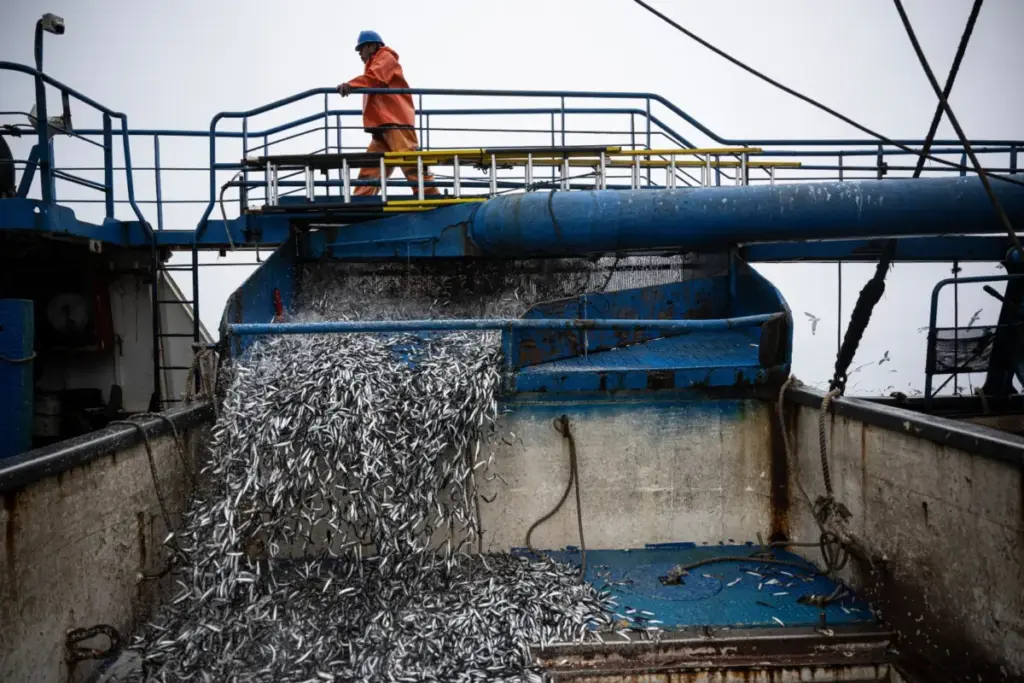
- The Artisanal Impact: Negative health outcomes were heavily concentrated in nations where populations depend on small-scale coastal fishing for sustenance and local commerce.
- Industrial Insulation: Conversely, industrial fishing operations possess the technological mobility and financial capital to evade heat-impacted zones—such as deploying larger vessels capable of moving further offshore or shifting operations to cooler, deeper waters.
The Mechanics of Malnutrition: Direct Catch Loss vs. Economic Shock
While the correlation between marine heat waves and health crises is statistically robust, the exact pathophysiological and socioeconomic pathways remain an active area of investigation. Associate Professor Katy Seto of the University of California, Santa Cruz, points out that the connection is not always a simple matter of direct dietary loss.
Not all countries that rely on small-scale fishing consume their entire harvest locally. Much of the catch is traded within regional or local markets. Consequently, marine heat waves may precipitate an economic collapse for coastal laborers and micro-economies. When fish populations migrate or die off, fishermen lose their livelihoods, destroying household purchasing power and indirectly driving severe malnutrition among children who can no longer afford diverse, nutrient-dense foods.
The Broader Climate and Health Consensus
The study’s outcomes align disturbingly well with a growing body of literature examining the collateral health damage of global warming. Professor Gray noted that his years of research into the social impacts of climate change have yielded a dishearteningly consistent pattern:
"I’ve been doing research on the social impact of climate for a while, and I’m continuously surprised by how consistently negative the warming effect on health is," Gray observed. "It really shows up pretty much everywhere on every outcome."
Official Statements & Expert Perspectives
The complexity and urgency of these findings have drawn commentary from leading minds across climate science, geography, and environmental policy.
Clark Gray (University of North Carolina at Chapel Hill):
As lead author of the study, Gray emphasized both the surprising robustness of the data and the ominous trajectory of oceanic warming. Addressing the current state of marine heat waves, Gray stated bluntly that they are "very bad in this current moment." Looking toward the horizon, he warned that within the broader context of unchecked global warming, these events "are going to get worse."
Katy Seto (University of California, Santa Cruz):
Weighing in on the significance of the paper, environmental studies expert Katy Seto praised the research for establishing a vital baseline in an under-researched field.
"It is definitely like a first pass at understanding for whom this could be a big problem and what the solutions might be," Seto remarked.
She further noted that while scientists understand surface temperature spikes and ocean acidification relatively well, complex three-dimensional marine heat waves have historically received less comprehensive study than atmospheric phenomena, making this paper an essential step forward.
Future Outlook: Navigating Uncharted Waters
As the Earth enters an era of unprecedented ocean temperatures, the PNAS study serves as both a profound warning and a roadmap for future scientific inquiry. The limitations of the current research—specifically its reliance on correlation rather than direct causation, and its focus primarily on low- and middle-income nations—highlight the critical need for continued, granular investigation.
Unanswered Questions and Next Steps
Future research endeavors must bridge the gap between marine ecology and terrestrial public health. Scientists must deploy multi-disciplinary teams to investigate whether the observed health spikes are driven strictly by the collapse of local fisheries, or if they are compounded by overlapping vectors such as terrestrial heat waves, agricultural failures driven by disrupted coastal microclimates, or the expanded geographic spread of mosquito-borne infectious diseases.
Policy Implications for Coastal Communities
For policymakers and international development agencies, the message is clear: climate mitigation and public health interventions can no longer be treated as isolated policy silos. Protecting coastal communities requires a dual approach:
- Aggressive Global Emissions Reductions: Curbing the excess energy trapped by greenhouse gases to stabilize baseline ocean temperatures and curb the frequency of marine heat waves.
- Targeted Adaptation Strategies: Building economic and nutritional safety nets for populations dependent on small-scale fisheries, who bear the brunt of ecological shocks entirely outside of their control.
Ultimately, the study forces a sobering realization: the health of the oceans and the health of humanity are inextricably bound. As the seas warm, the fever spreads to the most vulnerable among us, demanding an immediate and coordinated global response.



