Originally published by WIRED as part of the Climate Desk collaboration. Adapted and expanded for comprehensive global distribution.
Executive Overview
In the rugged, high-altitude terrain along the mountainous border between Nepal and Tibet, a climate-induced disaster of staggering proportions has unfolded. Following a catastrophic flash flood on Wednesday, local authorities and international rescue teams confirm that approximately 160 people have lost their lives, while hundreds more—including a significant number of international tourists trekking through the region—remain unaccounted for.
Heartwrenching footage broadcast across social media platforms captured the sheer terror of the event: frantic residents and travelers fleeing a towering wall of water and debris that rapidly surged down narrow mountain valleys, obliterating buildings, infrastructure, and vehicles in its path.
Initial assessments by Nepalese government officials, paired with high-resolution satellite imagery analyses, point to a terrifying trigger: a colossal section of a high-altitude glacier sheared off, plunging thousands of feet into the valley below. As global greenhouse gas emissions continue to drive up ambient temperatures, the cryosphere of the Hindu Kush-Himalayan region is growing increasingly unstable. Experts warn that this disaster is not an isolated anomaly, but a tragic preview of the systemic risks facing millions of people living downstream in an era of rapid climate change.
Detailed Chronology of the Disaster
The Sudden Strike
The disaster struck mid-week with terrifying speed, catching communities and travelers completely off guard. Witnesses in the border region reported a sudden, deafening roar echoing through the mountains—a sound frequently described by survivors of glacial hazards as resembling a low-flying jet engine or an approaching freight train.
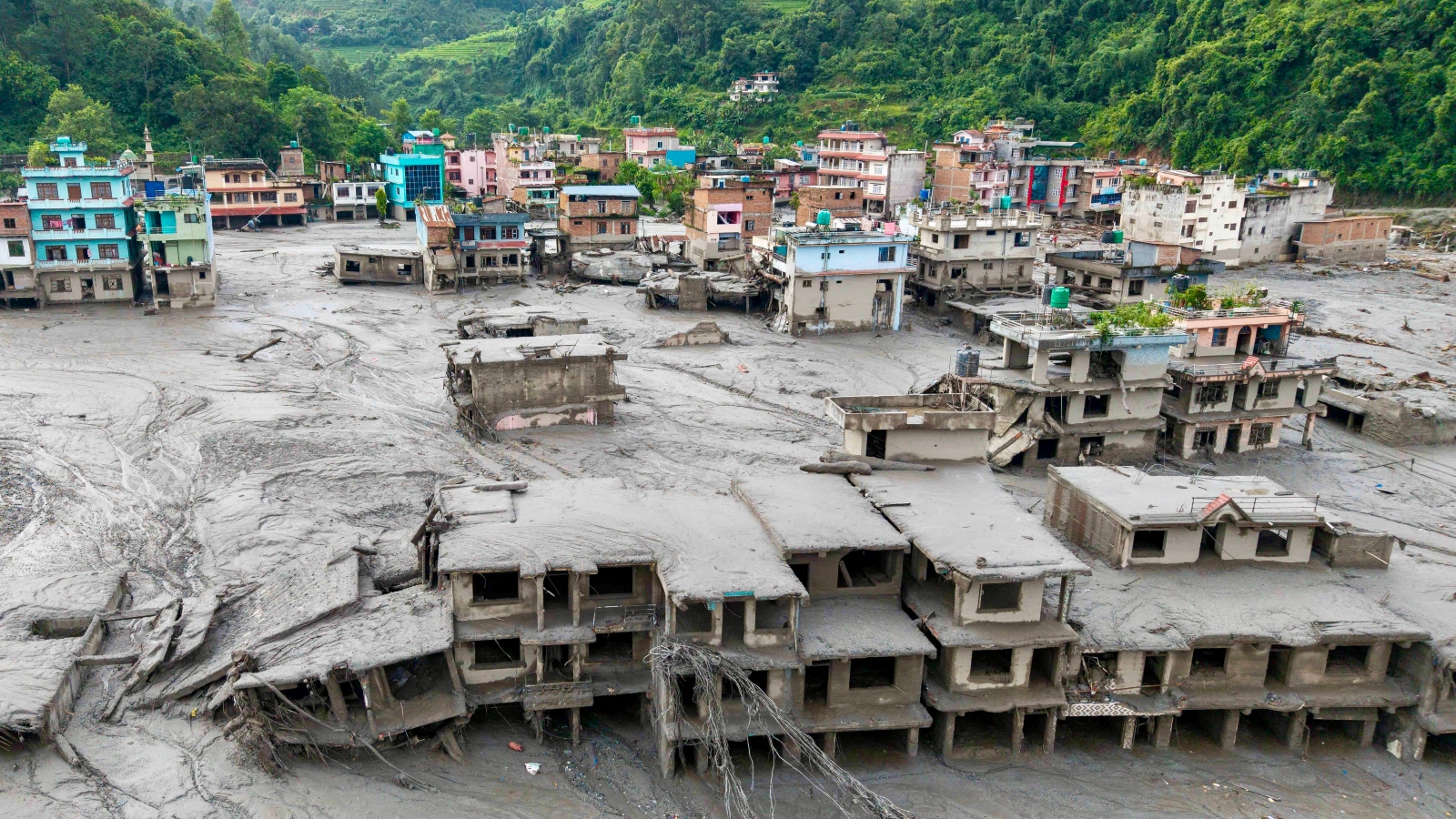
Within minutes, a catastrophic torrent of water, mud, ice, and shattered rock surged through the river valleys. The sheer volume and velocity of the fluid mass gave downstream communities virtually no time to evacuate. Bridges were swept away like twigs, hydroelectric installations were severely damaged, and entire riverside settlements were inundated or entirely washed away.
The Scale of the Aftermath
Rescue operations have been severely hampered by the remote and treacherous nature of the terrain, as well as compromised road networks and communication lines. Search and rescue personnel, backed by military helicopters where weather permits, are scouring the debris-choked riverbanks for survivors.
Among the hundreds missing are dozens of foreign tourists drawn to the region’s breathtaking Himalayan vistas. Embassies and consular offices are scrambling to coordinate with Nepalese authorities to account for missing nationals. Hospitals in regional hubs are overwhelmed with the injured, treating patients for hypothermia, trauma, and injuries sustained from being hurled through debris fields.
The Seismic Signature
The collapse and subsequent debris flow were so massive and energetic that they registered on seismic instruments worldwide. According to the U.S. Geological Survey (USGS), the impact of the falling ice and the resulting mass movement generated a shockwave equivalent to a magnitude 5.2 earthquake. This geological footprint underscores the extraordinary scale of the collapse, transforming a mountain slope failure into a kinetic event of seismic proportions.
Scientific Analysis: Anatomy of a Glacial Collapse
To understand how a solid mountain of ice can transform into a destructive, fluid avalanche, scientists rely on a combination of satellite remote sensing, geological modeling, and field observations.
The Physics of the Fall
Consulting with The New York Times, Dr. Daniel Shugar, a geomorphologist at the University of Calgary in Canada, analyzed early satellite imagery of the disaster zone. His assessment revealed a horrifying sequence of events: a massive slab of ice, estimated to be roughly 2,000 feet wide, broke away from a high-altitude glacier and plummeted nearly 4,000 vertical feet into the valley below.
"The sheer kinetic energy of the fall virtually pulverized the ice into water," Dr. Shugar noted, emphasizing the destructive transformation that occurs when enormous masses of ice fall from extreme heights. While scientists caution that comprehensive field investigations will take months to finalize, preliminary data indicates that unseasonably warm temperatures earlier in the week had likely triggered extensive melting of snowpacks sitting atop the glacier, lubricating the bedrock and precipitating the catastrophic slide.
The Multi-Factor Destabilization of High-Mountain Environments
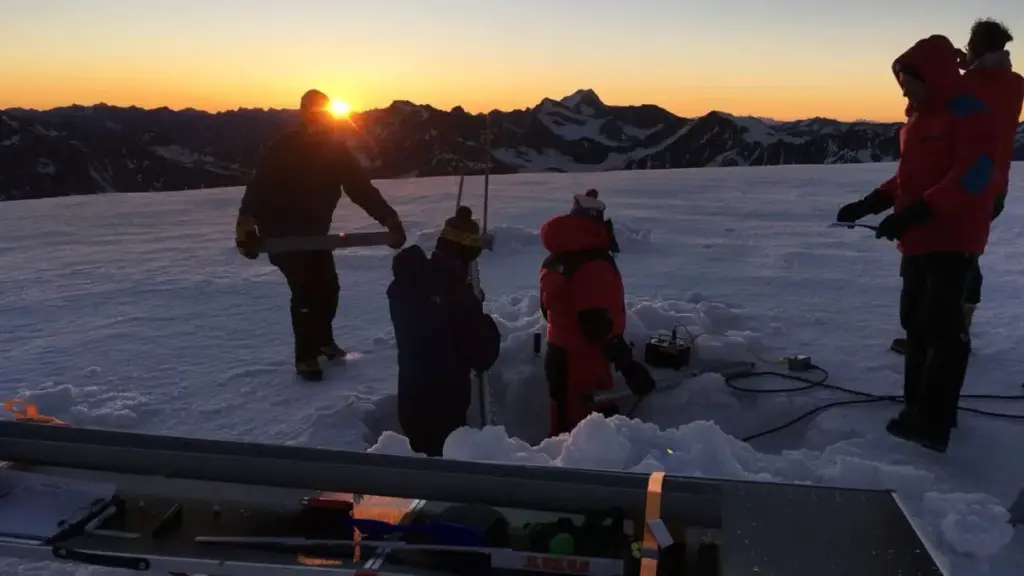
Dr. Joseph Shea, an associate professor of geography at the University of Northern British Columbia who specializes in Himalayan cryosphere dynamics, explains that Wednesday’s disaster is the product of compounding vulnerabilities in a warming climate.
"The glaciers over there are definitely in retreat," Dr. Shea states. "There’s a lot of glacier mass up there, but we’re seeing thinning, we’re seeing retreating."
In a warming world, alpine ecosystems experience several concurrent stressors:
- Permafrost Thaw: Alpine permafrost—ground that has remained frozen for millennia—is warming and thawing. As the ice binding rock faces and moraines melts, massive blocks and chunks of earth and stone that were once locked securely in place suddenly become mobile.
- Meltwater Lubrication: Summertime heating increases surface melt. Copious amounts of water infiltrate cracks and fissures within the glacier, increasing hydrostatic pressure and acting as a lubricant that destabilizes the ice tongue.
- Loss of Buttressing: As glaciers retreat, they leave behind unstable lateral and terminal moraines—piles of loose sediment and rock that the glacier previously supported. Without the ice acting as a buttress, these slopes readily collapse into valleys or adjacent lakes.
Supporting Context & Metrics: The Crisis in the Himalayas
The catastrophe on the Nepal-Tibet border sits within a broader, deeply alarming global trend of glacial retreat and cryospheric destabilization.
Global and Regional Ice Loss
According to comprehensive scientific assessments, the world’s glaciers have lost roughly 5 percent of their total ice mass since the year 2000, with localized regions experiencing far more catastrophic losses.
The Hindu Kush-Himalaya region, often referred to as the "Third Pole" because it holds the largest reserve of ice outside the polar regions, is particularly vulnerable. Data reveals that Nepal’s glaciers lost nearly a quarter of their total surface area between 1970 and 2010 alone. More critically, extensive scientific surveys have documented that over 160 smaller glaciers within Nepal have vanished entirely in recent decades.
The 1.5°C Threshold
The trajectory of these changes is inextricably linked to global greenhouse gas emissions. A landmark scientific study published recently warns that humanity could lose up to 40 percent of the world’s remaining glacial ice if international efforts fail to cap global warming under the 1.5-degree Celsius threshold established by the Paris Agreement. Every fraction of a degree over this limit accelerates the thinning and destabilization of high-mountain ice packs.
Glacial Lake Outburst Floods (GLOFs)
While Wednesday’s event appears to be a direct ice avalanche and collapse, retreating glaciers pose another, equally insidious threat: Glacial Lake Outburst Floods (GLOFs).
As glaciers melt and retreat, they leave behind vast depressions dammed by loose rock and debris known as moraines. These natural dams collect massive volumes of meltwater, forming high-altitude lakes that are inherently unstable.
"If you have a landslide suddenly into a lake, you get an overtopping of the dam, and then the whole thing can collapse catastrophically," Dr. Shea explains.
These outbursts unleash walls of water capable of traveling hundreds of miles downstream, destroying villages, agricultural lands, and critical infrastructure. Research indicates that millions of people currently live in the direct path of potential GLOFs globally. In Nepal alone, multiple GLOF events have struck in recent years, serving as a constant reminder of the volatile hydrology of the region.
Official Statements and International Response
Governments, international bodies, and scientific organizations have mobilized in the wake of the disaster.
The Nepalese government has declared a state of emergency in the affected districts, deploying the national army and specialized disaster response units to lead recovery efforts. Prime ministerial representatives have issued statements expressing profound grief for the loss of life and pledging full support to affected families, alongside calls for international assistance to aid in search, rescue, and humanitarian relief.
Foreign embassies, particularly those representing nations with citizens trekking in the Himalayas, have established crisis response desks to assist families and coordinate with local search teams.
Meanwhile, international scientific bodies, including the International Centre for Integrated Mountain Development (ICIMOD) based in Kathmandu, are calling for an immediate enhancement of early-warning systems across the Himalayan range. Experts emphasize that while halting climate change requires long-term global cooperation, immediate investments in hazard mapping, remote sensor networks, and community-based evacuation protocols are vital to saving lives in the interim.
Future Outlook: Living on Borrowed Time
The tragedy on the Nepal-Tibet border serves as a stark, sobering reminder that the impacts of global climate change are not abstract future projections—they are immediate, violent, and unfolding today in the world’s most fragile ecosystems.
As global temperatures continue to climb, high-mountain communities and downstream populations find themselves living on borrowed time. The physical integrity of the Himalayas is fundamentally changing. Slopes that have remained stable for centuries are giving way, and glacial systems that have supplied freshwater and stability to billions of people across Asia are rapidly vanishing.
Mitigating future disasters requires a dual-track approach: an aggressive, unyielding global commitment to slashing carbon emissions to stabilize global temperatures, paired with robust, localized adaptation strategies. Without enhanced monitoring of unstable glacial masses, resilient infrastructure, and proactive relocation of vulnerable communities, tragedies like the one on the Nepal-Tibet border will transition from rare anomalies to the devastating new normal of a warming world.