

Executive Overview
The numbers are no longer just statistical abstractions; they are flashing red sirens signaling a profound disruption of the Earth’s climatic baseline. Following months of unrelenting scorching temperatures, scientific confirmation has arrived to validate what billions of people across the globe felt in their bones: the meteorological summer spanning from June through August has officially entered the record books as the hottest ever experienced in the contiguous United States. It eclipsed previous historical peaks set in 1936 and 2021 by a staggering margin of 0.4 degrees Fahrenheit, punctuating a multi-decade upward trajectory driven overwhelmingly by anthropogenic climate change.
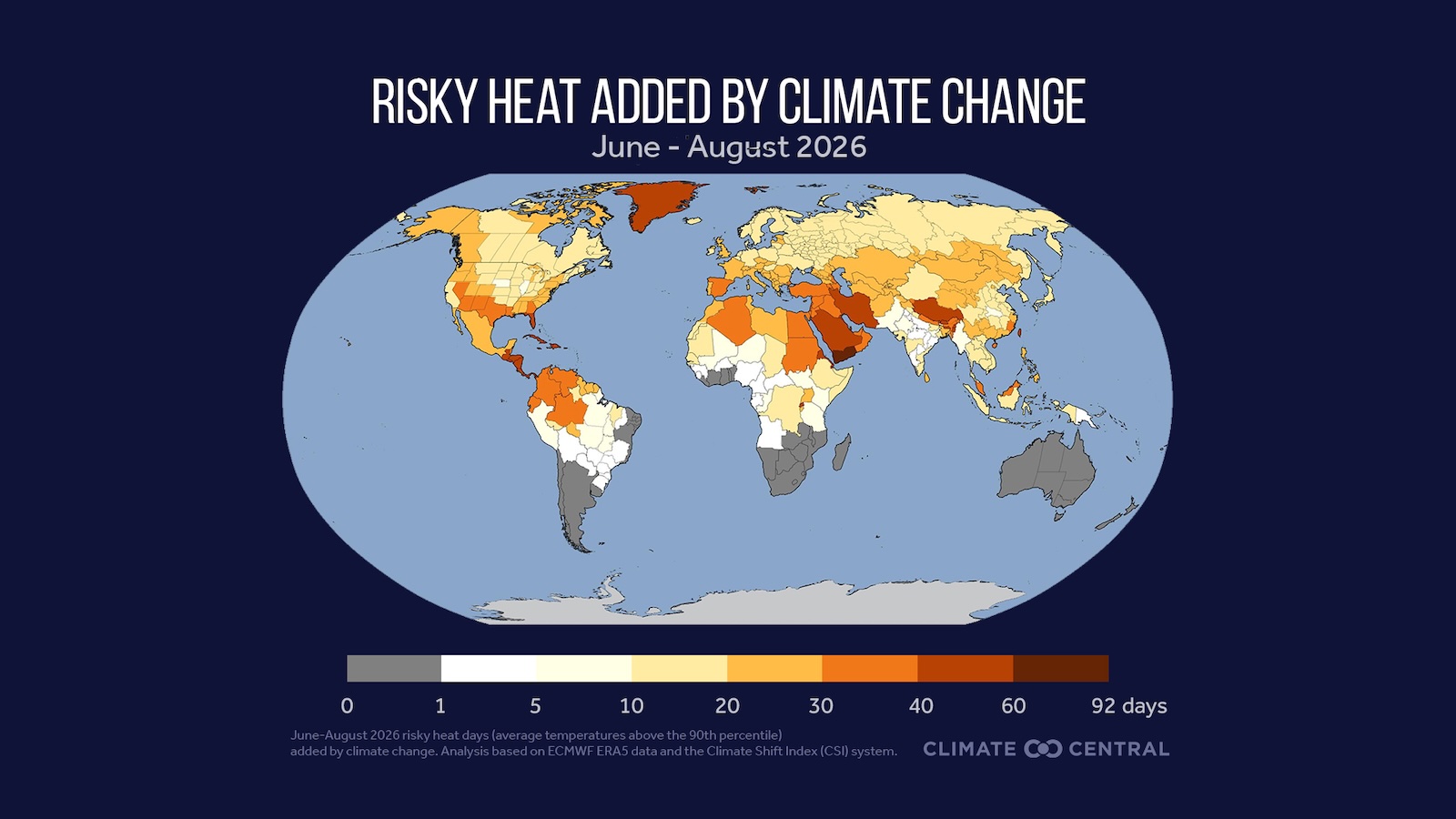
Across the Atlantic, Europe endured a brutal succession of punishing heatwaves that claimed more than 25,000 lives, while vast swaths of Asia, South America, and the global South found themselves buckling under atmospheric pressures rarely seen in human history. According to a landmark analysis released by the research organization Climate Central, a staggering 293 million Americans—representing roughly 86 percent of the nation’s total population—sweltered through at least 30 days of "risky heat." These were thermal conditions definitively classified as hotter than 90 percent of all historical temperature records for those specific geographic areas. Globally, the human footprint of this thermal anomaly touched some 2.8 billion people in Asia alone, while Europe cemented its unfortunate status as the fastest-warming continent on Earth.
This comprehensive investigative report examines the converging atmospheric, industrial, and oceanic forces that conspired to create the summer of extreme heat. By breaking down meteorological metrics, exploring the hidden paradoxes of clean air policies, evaluating human health impacts on vulnerable workforces, and looking ahead to the looming specter of an intensifying El Niño cycle, this article provides a definitive accounting of the planetary heat crisis.
Detailed Chronology of a Heat Crisis
To understand the unprecedented nature of the recent summer, one must trace the rapid acceleration of heat anomalies across the Northern Hemisphere beginning in the late spring and culminating in the suffocating dog days of August.
The Spring Precursor and June Awakening
As the planet transitioned from spring to the meteorological summer on June 1, early-season atmospheric blocking patterns established themselves over North America and parts of Eurasia. These persistent high-pressure systems—often referred to by meteorologists as "heat domes"—trapped warm air beneath sinking air masses, preventing the formation of cooling clouds and allowing solar radiation to bake the surface soils day after day.
By mid-June, early heat waves had already shattered records from the U.S. Pacific Northwest down to the desert Southwest, while parts of Southern Europe experienced temperatures soaring past 104 degrees Fahrenheit (40 degrees Celsius). These early spikes immediately strained agricultural sectors, dried out topsoils, and set the stage for severe wildfire seasons in both Mediterranean Europe and western North America.
The Crucible of August
While June and July established a formidable baseline of abnormal warmth, August proved to be the ultimate crucible. According to data released by the National Oceanic and Atmospheric Administration (NOAA), August temperatures in the contiguous United States climbed to a startling 3.5 degrees Fahrenheit above the 20th-century average.
During this peak month, jet stream configurations buckled violently, stalling weather systems over populated corridors for weeks at a time. Urban heat islands—concrete- and asphalt-heavy metropolitan areas lacking adequate green spaces—transformed into nocturnal ovens. Residents in cities from Phoenix to Paris found little to no relief after sunset, as overnight low temperatures remained stubbornly elevated, preventing the human body and urban infrastructure from shedding the day’s accumulated thermal load.
Global Epicenters of Extreme Weather
Globally, the geographical distribution of this extreme heat was heavily skewed. Of the top ten most unusually hot countries identified in global climate tracking datasets, seven were located in Europe. The continent’s unique geography, combined with specific atmospheric feedbacks, ensured that its populations suffered disproportionately. Meanwhile, in North America, the geographic heart of the anomaly shifted westward, where states like New Mexico, Nevada, Colorado, and Utah recorded some of the most dramatic departures from historical climate norms.

Supporting Context & Metrics: The Anatomy of a Warming Planet
The sheer scale of the 2026 summer heat crisis cannot be understood through localized weather events alone; it requires a deep dive into the underlying metrics, statistical analyses, and geophysical mechanics driving our changing climate.
Quantifying the Human Exposure
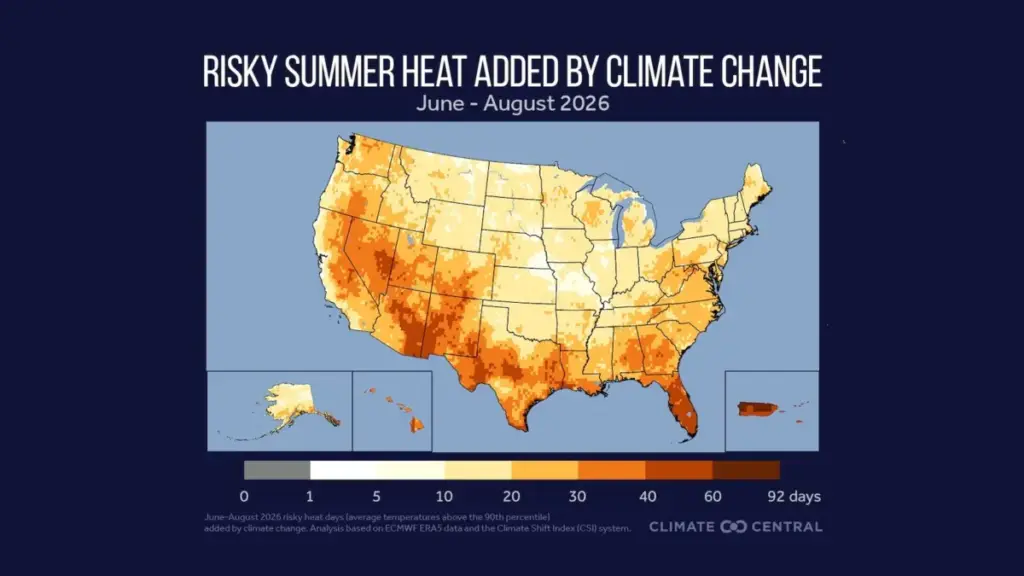
Climate Central’s comprehensive modeling framework evaluates temperatures relative to local historical baselines to identify "risky heat" days. The findings paint a harrowing picture of widespread exposure:
- The U.S. Population Impact: 293 million Americans (86% of the population) experienced 30 or more days of risky heat.
- Average Climate-Driven Days: The average American suffered roughly 26 days during the summer whose intensity was directly attributable to and amplified by human-driven climate change.
- Regional Epicenters in the U.S.: Colorado bore the most glaring anomaly, registering summer temperatures 4.4 degrees Fahrenheit above normal. It was closely followed by Utah and Nevada, both experiencing a 3.8-degree surge above historical norms. Four of the top five states with the highest number of climate-influenced risky heat days were concentrated in the American West.
- Global Exposure: Approximately 2.8 billion people across Asia faced equivalent or greater durations of extreme heat exposure.
The Arctic Amplification and the Pollution Paradox
Why is Europe warming faster than any other continent? Climatologists point to two primary drivers: proximity to the rapidly melting Arctic and a fascinating, counterintuitive phenomenon known in atmospheric science as the "pollution paradox."
The Arctic is warming at a rate roughly four times faster than the global average. As white, reflective sea ice melts away, it exposes dark blue ocean waters that absorb vast quantities of solar radiation rather than bouncing it back into space—a positive feedback loop known as the albedo effect. Because Europe sits downstream and adjacent to these rapidly changing polar dynamics, it absorbs much of this transferred thermal energy.
However, a stranger and more paradoxical factor is also at play: the success of modern environmental regulations. For decades, industrial emissions pumped vast quantities of sulfur dioxide and other aerosol particulate matter into European skies. While these microscopic pollutants created deadly smog and respiratory crises, they also performed an unintended planetary cooling service by acting as a reflective aerosol shield, bouncing incoming solar radiation back out into the cosmos.
With the aggressive implementation of clean air policies across the European Union and the United Kingdom, industrial sulfur emissions have plummeted. Public health has benefited immensely, but this cleanup has inadvertently unmasked the true magnitude of global warming.
"As we clean up our industrial processes and we have less aerosols in the atmosphere, which is the case in much of Europe, we’re unmasking that climate signal," explains Kristina Dahl, vice president for science at Climate Central. "Europe’s experiencing more of the full brunt of climate change because of that."
Official Statements and Expert Perspectives
As the data from NOAA and Climate Central reverberates through the scientific and policy communities, leading climatologists and public health experts are raising urgent alarms regarding the compounding nature of modern heat waves.
Speaking on the release of the summer climate retropectives, scientific leaders emphasized that extreme heat is fundamentally distinct from other natural disasters. Unlike hurricanes or earthquakes, which possess clear beginnings, middles, and ends, extreme heat is increasingly characterized by its invisible persistence and systemic health impacts.
"The numbers are just really mind-boggling," said Dr. Kristina Dahl. "Extreme heat on its own can cause health problems, but it can also exacerbate a lot of underlying health conditions."
Medical professionals have echoed these concerns, pointing out that the true lethality of modern heat waves lies in the destruction of the natural nocturnal recovery window. Historically, even during hot summers, radiant cooling after sunset allowed human bodies to shed core heat, lowered indoor ambient temperatures, and gave stressed electrical grids a brief respite.
Today, because nights are warming significantly faster than days, that biological and infrastructural recovery window is rapidly vanishing. When individuals—particularly the elderly, outdoor laborers, and those living in substandard housing without air conditioning—are subjected to days of unrelenting heat followed by nights that offer no cooling relief, the body’s thermoregulatory system eventually collapses. Heat stroke, renal failure, cardiovascular strain, and pulmonary distress compound rapidly, transforming persistent heat into a silent mass casualty event.
Future Outlook: The Specter of Super El Niño
If the summer of 2026 felt like an apocalyptic preview of the future, climatologists warn that the worst may still be ahead of us. The global climate system is currently pivoting under the influence of a strengthening El Niño—the periodic warming of surface ocean waters in the central and eastern tropical Pacific Ocean.
El Niño phases are historically associated with boosts in global average temperatures, as heat stored in the vast expanse of the Pacific Ocean is released into the atmosphere. The current El Niño event is shaping up to be exceptionally potent, leading researchers to label it a potential "Super El Niño."
While this oceanic cycle played a measurable role in amplifying the thermal anomalies of the past summer, scientists emphasize that the event is still in its developmental stages. Because the peak of an El Niño cycle often lags behind its initial formation, the atmospheric heat injection is projected to grow even more severe in the coming months.
"It’s still an event that’s taking shape, so it’s nowhere near its peak," warned Dr. Dahl, underscoring the anxiety within the scientific community regarding next year’s seasonal outlook.
The Policy and Adaptation Imperative
As the world stares down the barrel of potentially even hotter summers, municipal planners, national governments, and international bodies face an urgent mandate. Adapting to the reality of the Anthropocene will require massive investments in urban green infrastructure, the retrofitting of building stock for passive cooling, the aggressive expansion of reliable zero-emission renewable energy grids (such as the solar power networks that successfully prevented catastrophic blackouts in Europe this past summer), and legally binding heat-protection standards for outdoor laborers.
Without rapid mitigation of greenhouse gas emissions paired with robust, equitable adaptation strategies, records like those set in the summer of 2026 will quickly become nostalgic reminders of a cooler, more stable past. The era of extreme heat is no longer a distant theoretical projection; it is the defining environmental reality of our time.



