

Executive Overview
The intersection of corporate sustainability marketing and consumer protection law continues to be a high-stakes battleground for multinational consumer packaged goods (CPG) giants. Colgate-Palmolive is currently navigating a deeply contested consumer class-action lawsuit in the United States District Court for the Northern District of California.
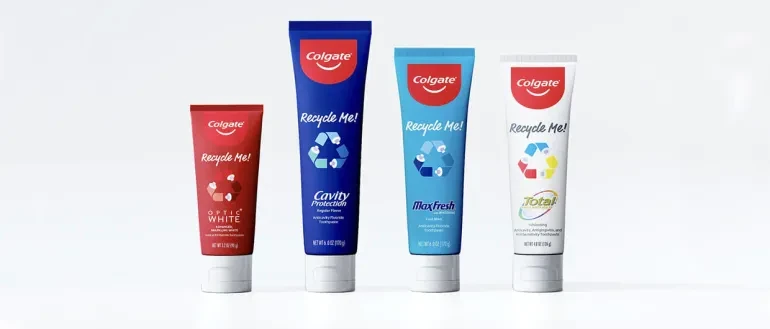
The litigation centers on whether messaging and symbols deployed on the packaging of certain Colgate and subsidiary Tom’s of Maine toothpaste lines—such as "recyclable tube," "first of its kind recyclable tube," and the universal chasing-arrows recycling symbol—constitute misleading greenwashing or an accurate representation of genuine environmental innovation.
Originally initiated in 2023 by three California consumers, the case crossed a critical legal threshold when the court formally certified the plaintiffs’ class-action motion. Colgate-Palmolive’s subsequent swift appeal to narrow or overturn the class definition was rebuffed by the judiciary. With the class status now locked in stone, the litigation is advancing rapidly toward the discovery phase, with a tentative trial date penciled in for April 2028.
As regulatory bodies crack down on environmental marketing claims—highlighted by recent legislative skirmishes like California’s SB 343 "truth in labeling" law—this high-profile legal challenge serves as a cautionary tale for corporations attempting to market packaging innovations before local municipal sorting infrastructure can reliably process them.
Detailed Chronology of the Litigation
2019–2023: The Rollout and the Root of the Dispute
The roots of the legal controversy date back to Colgate-Palmolive’s multi-year sustainability initiative. Facing mounting pressure to address the plastic waste crisis, the CPG giant invested five years into research and development to engineer what it touted as a breakthrough in sustainable packaging: a recyclable toothpaste tube manufactured primarily out of #2 High-Density Polyethylene (HDPE), the very same widely recycled plastic utilized globally for household soap and detergent bottles.
As the company initiated a phased, multi-year transition away from traditional multi-material laminate tubes—which are notoriously difficult to recycle—it began stamping select product packaging with labels celebrating the new format. However, because the transition occurred gradually over a five-year period, not all toothpaste tubes on store shelves featured the updated packaging or the recyclability claims concurrently.
2023: The Lawsuit Takes Shape
Sensing a disconnect between corporate marketing and actual curbside reality, three consumers filed a class-action lawsuit in the U.S. District Court for the Northern District of California in 2023. The plaintiffs alleged that they paid a financial premium for Colgate and Tom’s of Maine toothpaste products explicitly because of the prominent "recyclable tube" labeling.
Crucially, the consumers argued that these marketing claims were deceptive. They asserted that the Material Recovery Facilities (MRFs) operating in the California regions where their household waste was processed did not actually accept or sort such tubes. Consequently, the plaintiffs argued, toothpaste tube recycling was functionally unavailable to the vast majority of California residents during the relevant purchase window.
2024: The Motion to Dismiss Denied
The legal viability of the lawsuit was solidified in 2024 when Judge Joseph Spero denied Colgate-Palmolive’s initial motion to dismiss the case. By allowing the suit to proceed, the court signaled that the plaintiffs had raised plausible claims under consumer protection statutes regarding whether reasonable consumers would be misled by the labeling, regardless of the technological recyclability of the plastic material in a vacuum.
April 2026: Class Certification and the Failed Appeal
The litigation reached a major inflection point on April 1, 2026, when the court officially granted the plaintiffs’ motion for class certification. The certified class was defined broadly: anyone who purchased a Colgate or Tom’s of Maine brand toothpaste featuring "recyclable tube" language on its outer packaging within the state of California, spanning from August 29, 2019, until the formal filing of the lawsuit in 2023.
Unwilling to let the broad class definition stand unchallenged, Colgate-Palmolive launched an immediate appeal. The company contended that the court had committed manifest errors in certifying the class without adequately accounting for several key packaging nuances. Specifically, the defense pointed out that:
- Approximately 200 distinct toothpaste SKUs had been transitioned over time, meaning the packaging lacked recyclability claims for roughly 40% of the overall class period.
- When the claim did appear on ten representative SKUs, it was restricted to the back or side panels of the outer cartons 57% of the time, rather than front-and-center, potentially limiting consumer exposure.
Despite these arguments, the appellate path proved nearly impassable. Emmanuel Hurtado, an associate at Stubbs Alderton & Markiles who specializes in antitrust and commercial defense—though not directly involved in this specific case—emphasized the extreme difficulty of overturning a district court’s class certification.
"You have to show that the district court’s decision was manifestly erroneous, like completely wrong," Hurtado noted.
Ultimately, Judge Spero declined to alter his ruling, effectively shutting down Colgate-Palmolive’s appeal without issuing extensive written documentation explaining a reversal. With the appeal dead on arrival, the class definition is now permanently cemented, paving the way for the plaintiffs’ legal team to launch a two-month solicitation campaign using targeted graphics and messaging to onboard additional class members.
Supporting Context, Metrics, and Legal Mechanics
The Core Conflict: Material Science vs. Municipal Reality
At the center of this legal battle lies a fundamental tension between corporate innovation and municipal waste management infrastructure:
- The Defense Position: Colgate-Palmolive maintains that the tubes are not only physically capable of being recycled, but are actively processed in California via the widely available #2 HDPE recycling stream. To address regional discrepancies, the company’s official website introduction to the recyclable tubes features a cautioning footnote advising consumers: "Your community may not yet accept tubes for recycling. Check locally."
- The Plaintiff Position: The consumer advocates argue that fine-print disclosures or website footnotes do not cure front-facing or prominent package labeling that implies universal recyclability. Furthermore, they contend that because local MRFs in their districts reject these tubes due to their shape, size, and composite residual toothpaste weight, the environmental benefit advertised to consumers is illusory.
The Role of Discovery and Industry Subpoenas
With class status settled, the legal teams have turned their attention to the grueling discovery phase, where core issues of liability, economic damages, and corporate intent will be aggressively scrutinized.
According to recent court documents, plaintiffs’ attorneys plan to issue formal subpoenas to major waste and recycling operators in California, including Waste Management (WM), Republic Services, and other regional players. While these subpoenas are initially targeted at securing documentary evidence regarding facility capabilities, legal experts note that attorneys retain the option to call executives or operational managers from these waste haulers as live witnesses during depositions or at trial.
Official Statements and Industry Insights
The implications of this lawsuit extend far beyond the balance sheets of Colgate-Palmolive, sending ripples across the entire Fast-Moving Consumer Goods (FMCG) sector. As brands rush to meet environmental, social, and governance (ESG) benchmarks, marketing teams are increasingly walking a legal tightrope between promoting eco-friendly packaging and avoiding accusations of deceptive greenwashing.
Emmanuel Hurtado points out that much of the heavy lifting in class-action lawsuits of this magnitude is consumed early on by procedural housekeeping.
"So far, the entire litigation has just been about defining what the class is, which is common in class-action lawsuits," Hurtado explained to Packaging Dive. However, with the class parameters now ironclad, the litigation transitions from procedural posturing to substantive legal combat.
Legal observers are watching closely to see how courts interpret the legal weight of qualifying statements (such as "Check locally") when juxtaposed against bold, eye-catching environmental icons like the chasing-arrows recycling symbol. If plaintiffs successfully argue that consumers interpret these symbols as an absolute guarantee of local recyclability regardless of fine print, CPG companies may be forced to radically overhaul their packaging design and marketing copy nationwide.
Future Outlook and Broader Regulatory Landscape
The Path to Trial (April 2028)
The federal court has scheduled the trial to commence in April 2028. While trial dates in complex class-action suits frequently serve as flexible estimates that are adjusted outward to accommodate extended discovery schedules, Hurtado notes that the advanced state of the current proceedings suggests this timeline may actually hold firm.
"This case seems to be far enough along so the named date might be a good estimate of when it’s actually going to go to trial," Hurtado observed. Over the next two years, both sides will spar over expert witness testimonies, consumer purchasing behavior analytics, pricing premiums, and infrastructural audits of California’s recycling streams.
Broader Greenwashing and Truth-in-Labeling Trends
The Colgate-Palmolive litigation is far from an isolated incident; it represents a broader wave of legal and regulatory scrutiny targeting environmental claims on consumer packaging.
In a parallel development highlighting the volatile regulatory environment, a federal judge recently granted a preliminary injunction blocking the enforcement of California’s landmark SB 343—popularly known as the "truth in labeling" law—which was originally slated to take effect on October 4. SB 343 seeks to severely restrict when companies can legally display the chasing-arrows recycling symbol on packaging, prohibiting its use unless the material can actually be recycled in jurisdictions representing a significant majority of the state’s population.
As federal and state regulators close loopholes, and as class-action attorneys find fertile ground in consumer protection statutes, the era of unverified or aspirational eco-marketing is coming to an abrupt end. For Colgate-Palmolive, the outcome of the 2028 trial could establish a monumental legal precedent, dictating how brands communicate packaging innovations to consumers without crossing the perilous line into actionable greenwashing.



