As millions of K-12 students return to classrooms across the United States, they are greeted by the familiar cadence of traditional subjects: mathematics, English, history, and biology. But quietly woven alongside these foundational disciplines is a newer, less transparent curriculum: the normalization of plastics.
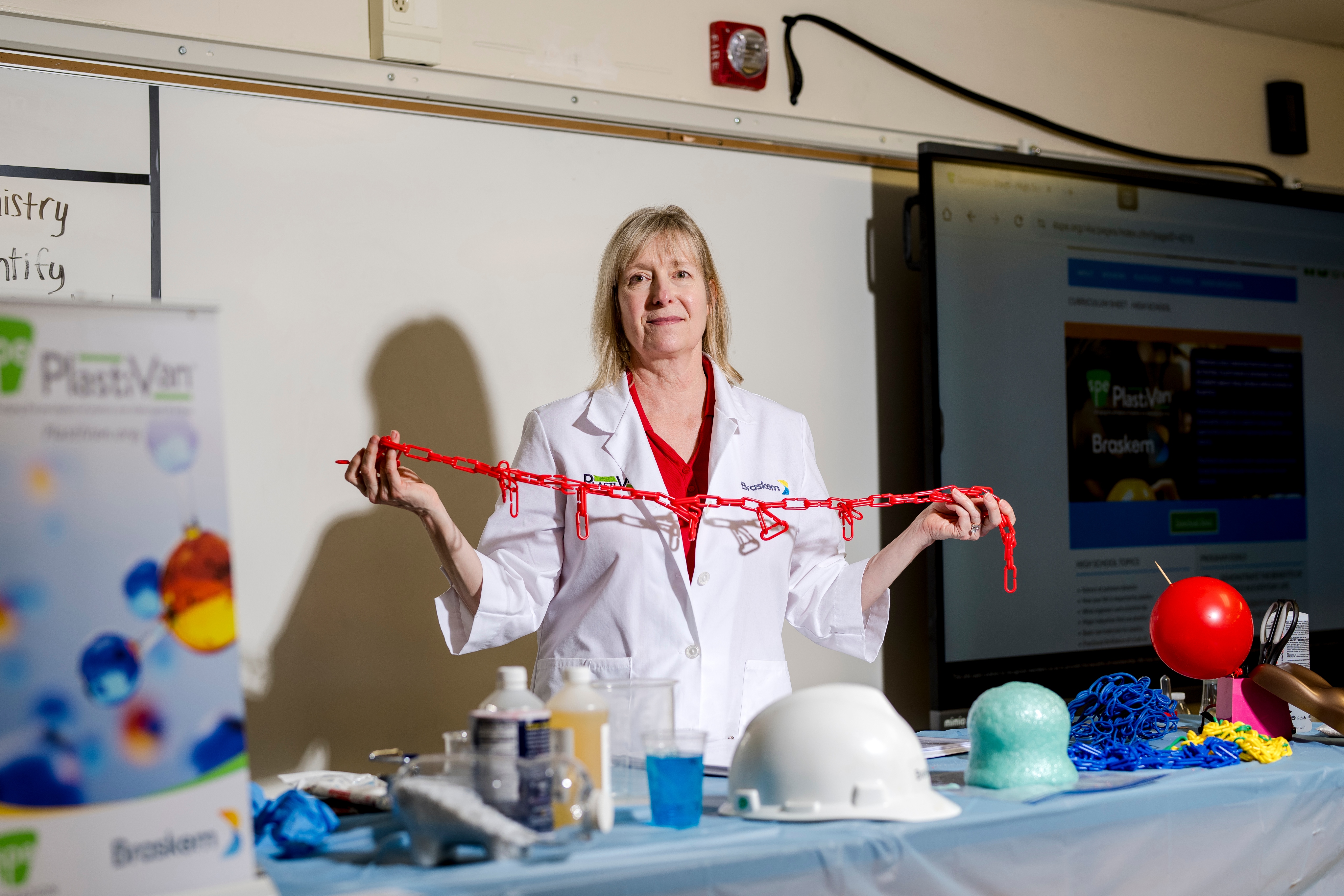
A comprehensive investigative report released by the nonprofit Plastic Pollution Coalition reveals that the plastics and petrochemical industries have systematically embedded their commercial agendas into public education systems nationwide. Through cleverly disguised lesson plans, interactive worksheets, hands-on science experiments, and mobile outreach programs like the "PlastiVan," industry-backed groups are actively shaping how young minds perceive synthetic materials.
These educational resources, often distributed to underfunded school districts for free or at minimal cost, present a heavily sanitized narrative. While they often champion STEM (Science, Technology, Engineering, and Math) learning objectives, they simultaneously champion industry talking points: emphasizing the affordability, safety, and modern necessity of plastics. Crucially, when these curricula acknowledge the environmental crisis of plastic pollution, they consistently deflect blame away from manufacturers, shifting responsibility onto consumers while promoting advanced recycling as a silver bullet—a premise thoroughly debunked by decades of internal industry documents and environmental data.
The infiltration of corporate messaging into schools reflects a broader vulnerability within America’s public education infrastructure. Starved of adequate public funding, teachers frequently rely on external resources to supplement their classrooms. Industry giants have readily stepped into this vacuum, utilizing school boards and community partnerships to secure long-term cultural influence. As advocates, educators, and policy experts grapple with this trend, a fierce debate has emerged over how to safeguard academic integrity without stripping educators of the autonomy they desperately need.
Detailed Chronology: Decades of Corporate Classroom Integration
The integration of corporate narratives into American schools is not a sudden development; it represents a decades-long, deliberate strategy by the fossil fuel and plastics sectors to secure social license and preempt regulatory scrutiny.
Early Roots and Textbook Llobbying (2000s–2010s)
Corporate-sponsored educational materials have targeted school children since at least the early 2000s, evolving from rudimentary pamphlets into sophisticated, standards-aligned digital modules.
A notable early instance of this strategy occurred between 2009 and 2011, when a prominent plastics trade association heavily lobbied the California Department of Education. The group attempted to insert a dedicated section titled "The Advantages of Shopping Bags" directly into state high school textbooks, seeking to counter growing municipal movements aimed at banning single-use plastic bags.
Around the same period, the Society of Plastics Engineers (SPE)—a trade group that has since integrated into the Plastics Industry Association—expanded its "PlastiVan" program. Launched to travel from city to city, the program tours schools to teach students about "the contribution plastics make to modern life." Since its inception, SPE claims the initiative has reached over 132,000 students, utilizing interactive demonstrations to generate early career interest in the polymer industry.
In recent years, industry outreach has shifted from broad textbook lobbying to hyper-localized community investments, particularly in regions dominated by petrochemical infrastructure.
A primary case study highlighted in the Plastic Pollution Coalition report centers on Beaver County, Pennsylvania. Here, energy giant Shell operates a massive 386-acre plastics production complex. To secure local goodwill, Shell has invested millions of dollars into developing plastics-related curricula and recycling programs for local grade schools and community colleges.
The corporate benevolence in Beaver County extends far beyond standard lesson plans. Shell has donated hundreds of backpacks stuffed with school supplies and purchased a brand-new basketball court for a local school—investments intricately tied to the adoption of corporate-approved plastics recycling modules into the local curriculum. This transactional approach ensures that communities economically dependent on fossil fuel extraction also embrace the normalization of plastics from a tender age.
Supporting Context & Metrics: The Reality Behind the Classroom Claims
The core dissonance of industry-sponsored curricula lies in the vast chasm between corporate messaging and scientific reality. Educational modules produced by groups like the SPE and the American Association of Chemistry Teachers (an initiative associated with the Dow Chemical Company) heavily emphasize themes of consumer convenience, material durability, and recycling efficacy.
The Recycling Myth
According to industry lesson plans—such as those featuring a "plastic scavenger hunt" or exercises where students design grocery bags while "pretending to be an employee for Dow Chemical Company"—plastic waste is framed primarily as a management problem born of irresponsible consumer behavior. The proposed solution in these classrooms is almost universally centered on recycling.
However, global metrics paint a starkly different picture:
Low Global Recycling Rates: According to data from the Organisation for Economic Co-operation and Development (OECD), only 9 percent of all plastic waste generated globally is successfully recycled.
The Production Surge: Independent scientists and environmental watchdogs have repeatedly warned that recycling infrastructure cannot—and was never designed to—keep pace with the exponential growth of projected plastic production.
Historical Deception: Landmark investigative reporting has revealed that major oil and plastics companies were aware of recycling’s economic and technical limitations decades ago. Despite knowing that widespread recycling was unfeasible, these entities aggressively promoted it to deflect public outrage and safeguard production volumes.
Environmental and Health Tolls
By reducing complex systemic challenges to simplistic recycling slogans, industry lesson plans obscure the multifaceted hazards associated with plastics. According to Madison Dennis, senior policy and advocacy manager for the Plastic Pollution Coalition, these materials obfuscate the true scope of the crisis.
Human Health Exposure: Plastics regularly leach hazardous chemical additives into food, water, and human tissue, posing potential endocrine-disruptraining and carcinogenic risks.
Climate Change Contributions: The entire lifecycle of plastic—from extraction and refining to degradation in the environment—releases substantial volumes of planet-warming greenhouse gases.
Pedagogical Critique
Educators and science specialists argue that these materials fail even basic educational standards. Wendy Johnson, a science education specialist at the National Center for Science Education (NCSE), points out that corporate lesson plans often lack rigorous pedagogical frameworks. Materials frequently claim alignment with state-level STEM standards without specifying how or which benchmarks are met.
Instead of fostering genuine scientific inquiry, these worksheets introduce heavy industry jargon—such as "stretch blow molding" or "thermosetting"—to project an aura of academic authority.
"By using all of these technical terms, it’s tricking people into thinking that they’re doing science," Johnson noted. "What the materials really teach are ideological perspectives about the economy, like the desirability of cheap consumer goods."
Official Statements and Stakeholder Perspectives
The debate over corporate influence in public education highlights deep divisions among educators, environmental advocates, and nonprofit leaders regarding the proper boundaries of school funding and curriculum design.
The Call for Strict Bans
Advocacy groups like the Plastic Pollution Coalition argue that half-measures are insufficient. They are calling for school boards and state education departments to enact strict policies banning educational materials sponsored by the chemical, fossil fuel, and plastics industries.
To address the root cause of the problem—teacher desperation for resources—advocates argue that systemic financial reforms are necessary. Dennis suggests eliminating lucrative tax breaks currently awarded to petrochemical processing and plastics production facilities, which routinely deprive municipal governments and public school districts of essential tax revenues.
The Defense of Educator Autonomy
Not all environmental and educational advocates support outright bans, however. Katie Allen, executive director of Algalita, a California-based environmental nonprofit focused on plastic pollution education, cautions against censorship.
"Once you start banning one thing, where does it end? What I want to do is give educators the benefit of the doubt and allow them to make their own decisions," Allen argued.
Allen suggests that seasoned teachers can utilize industry-sponsored materials as case studies to teach media literacy and critical-thinking skills, instructing students how to identify corporate greenwashing.
The Reality of Teacher Burnout
The proliferation of corporate curricula is fueled by chronic underfunding. As K-8 environmental educator Suzie Hicks observed, teachers are perpetually pressed for time and financial resources, making free online lesson plans irresistible.
"As a teacher, I’m always looking for free stuff," said Hicks. While Hicks possesses the specialized environmental background necessary to vet and deconstruct corporate greenwashing, most general classroom educators do not have that luxury.
When well-funded corporate entities—echoing historical playbooks once used by the tobacco, junk food, and pesticide industries—offer polished, cost-free instructional kits, under-resourced school districts find it exceptionally difficult to decline.
Future Outlook: Navigating Alternatives and Systemic Reform
As awareness of petrochemical lobbying in schools grows, educators and communities are increasingly pioneering independent solutions to ensure students receive unvarnished, scientifically sound environmental education.
Non-Industry Curricula and Non-Profit Resources
A robust ecosystem of independent nonprofits now offers alternatives to corporate lesson plans. Organizations such as Algalita provide free, peer-reviewed curricula exploring oceanic garbage patches and biomagnification—the process by which plastics accumulate up the marine food chain. Similarly, organizations like The Story of Stuff Project offer comprehensive high-grade curricula that critically examine the true socio-economic and environmental costs of consumer goods.
While these organizations maintain their own educational philosophies, educators note a fundamental distinction: unlike petrochemical companies, public-interest nonprofits are not attempting to sell an addictive, polluting commodity.
Grassroots Classroom Innovation
Beyond pre-packaged curricula, some educators have chosen to build grassroots educational models directly inside their classrooms. A prime example is Jacqueline Omania, a recently retired elementary school teacher in Berkeley, California.
Beginning in 2015, Omania transformed her classroom into a functional zero-waste laboratory. For over a decade, she and her students established annual zero-waste classroom agreements, systematically eliminating single-use items—such as replacing individual glue sticks with communal tubs. Crucially, Omania’s students did not stop at classroom behavioral changes; they engaged in civic advocacy, successfully campaigning for municipal policies that required local Berkeley restaurants to eliminate single-use plastic foodware.
"There are so many challenges in the world, but plastic is something tangible," Omania reflected. "It’s right there in front of them, and they can see the difference that they’re actually making through their actions."
The Path Forward
The battle over plastics in the classroom serves as a micro-chasm of a much larger societal struggle. As long as public schools remain chronically underfunded while petrochemical interests retain vast financial resources to project their influence, the tug-of-war over children’s minds will persist.
Protecting the integrity of American science education will require more than individual teacher vigilance; it demands robust public investment in education, systemic policy reforms to hold corporate polluters accountable, and a recommitment to teaching ecological literacy rooted in empirical science rather than corporate public relations.