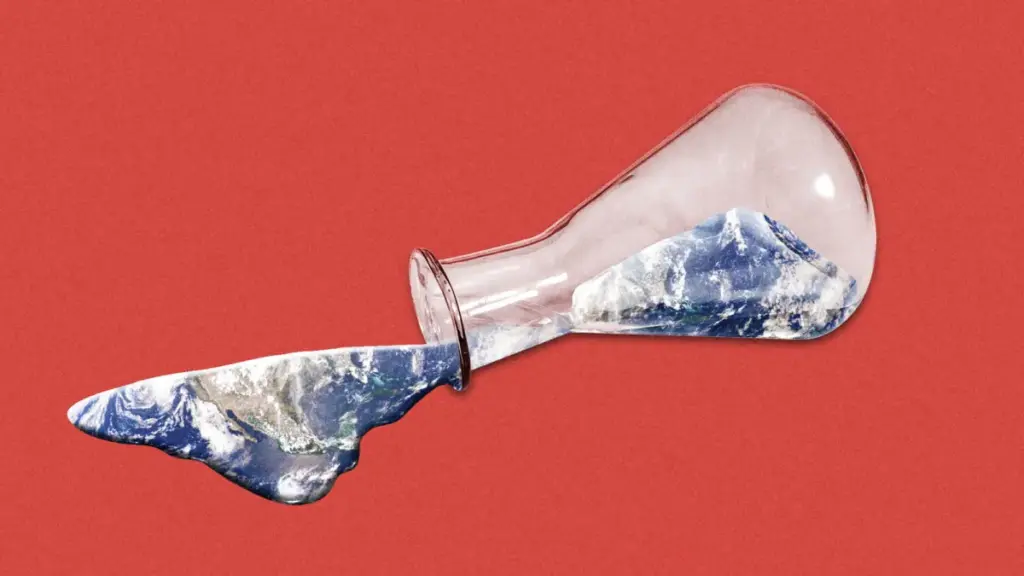
WASHINGTON — In a move that has sent shockwaves through the international scientific community, the Trump administration has officially withdrawn federal backing for the Arctic Report Card, a cornerstone annual assessment that has tracked rapid environmental shifts in the Earth’s polar north for two decades.
The decision marks a significant escalation in the administration’s systematic dismantling of federal climate monitoring, research initiatives, and public data accessibility. NOAA officials confirmed that while raw environmental data will continue to be collected and made publicly available, the federal government will no longer coordinate, fund, or publish the peer-reviewed synthesis that translates complex polar metrics into actionable intelligence for scientists, policymakers, and local communities.
The decision has left researchers scrambling to salvage the upcoming editions of the report, while critics warn that the abrupt withdrawal represents a profound abdication of U.S. leadership in global environmental security.
Executive Overview: A Quiet Retreat from Polar Science
The Arctic Report Card has served as an indispensable baseline for understanding the speed and scale of climate change since its inception in 2006. Documenting conditions across the Arctic’s atmosphere, oceans, cryosphere, and tundra, the report has routinely highlighted a stark reality: the Arctic is warming at a rate roughly four times faster than the global average.
By stepping away from the coordination of the report, the National Oceanic and Atmospheric Administration (NOAA) has severed a critical conduit of federal scientific communication. While agency representatives insist that underlying monitoring programs—vital for national security, weather prediction, and maritime navigation—will remain operational, the loss of the synthesis report creates an immediate void.
Independent scientists and former federal officials argue that raw data alone is insufficient; without rigorous, centralized analysis, the economic, societal, and ecological risks posed by a rapidly destabilizing Arctic will be obscured from the public eye and municipal planners alike.
Detailed Chronology: The Unraveling of Federal Climate Research
The cancellation of support for the Arctic Report Card does not occur in a vacuum; it is the latest milestone in a sustained campaign by the Trump administration to reshape or eliminate federal programs touching upon global heating.
A Pattern of Rollbacks Since January
Since taking office, the administration has steadily targeted climate and environmental science institutions:
- Targeting Terminology: Early in the administration, directives were issued to strip away support for scientific research projects and grants that explicitly incorporated or mentioned "climate change."
- Disassembling Infrastructure: High-profile actions included the targeted dismantling of a premier climate research center in Colorado—a move Colorado Governor Jared Polis fiercely criticized as a direct threat to public safety.
- Deep-Sea and Disaster Monitoring: The administration attempted to scrap a critical $368 million deep-sea observation system and abruptly ceased NOAA’s tracking of the skyrocketing financial costs associated with climate-fueled extreme weather disasters.
- Erasing Public Portals: Key national climate assessment reports and databases have been systematically scrubbed or removed from federal government websites.
- Purging Contributors: The administration dismissed active contributors to the U.S. government’s flagship reports on climate adaptation and crisis preparedness, replacing institutional expertise with ideologically aligned personnel.
The NOAA Announcement
On a Tuesday briefing, Kim Doster, communications director for NOAA, confirmed the policy shift regarding the polar assessment.
"Coordination of the 2026 Arctic Report Card will not be facilitated through NOAA," Doster stated, adding a caveat that historic data streams gathered by the agency would remain accessible.
When pressed on why the administration chose to sever institutional ties with the report, NOAA officials offered no rationale, choosing instead to emphasize that other agency programs would continue supporting narrow economic and navigational interests.
Supporting Context & Metrics: The Crisis at the Top of the World
To understand the gravity of losing the Arctic Report Card, one must examine the unprecedented ecological transformation documented in its recent editions. The Arctic is not merely a remote expanse of ice; it is the primary engine of the global climate system.
1. Record-Breaking Temperatures and Sea Ice Collapse
According to the 2025 Arctic Report Card, surface temperatures across the region between October 2024 and September 2025 were the highest ever recorded since reliable record-keeping began in 1900. Furthermore, satellite observations from March 2025 revealed that winter sea ice had shrunk to its lowest annual maximum extent in the 47-year satellite era, continuing a catastrophic multi-decadal downward trend.
2. Rising Seas and Permafrost Degradation
On land, relentless glacier loss continues to feed global sea-level rise, threatening coastal and island populations worldwide while exacerbating local hazards in the Arctic, including destructive floods, sudden landslides, and tsunami risks triggered by destabilized slopes.
3. The Phenomenon of "Rusting Rivers"
One of the most visually and ecologically startling developments tracked by the report involves Alaska’s hydrological systems. Across more than 200 watersheds in Arctic Alaska—where snowmelt and rainwater drain northward into the Arctic Ocean—thawing permafrost has begun releasing ancient mineral deposits.
- Over the past decade, high concentrations of iron and toxic metals have stained major rivers and streams a vivid, toxic orange.
- These "rusting rivers" have experienced sharp increases in water acidity and heavy-metal contamination.
- The resulting degradation has damaged fragile aquatic habitats, poisoned rural drinking water supplies, and devastated traditional subsistence fishing communities.
Official Statements and Expert Reactions
The decision to defund and abandon the report has drawn fierce condemnation from scientists, former regulators, and environmental advocates who view the move as an intentional act of scientific censorship.
Rick Thoman: A Desperate Scramble
Rick Thoman, lead editor for the 2025 report, expressed deep frustration over the logistical chaos inflicted by the administration’s timeline.
"We are scrambling to pull the pieces together," Thoman noted. "I am optimistic that we can find a path forward for 2027 and beyond. Given the late date, whether we can pull it together for 2026 is an open question, but we’re trying to make it happen."
Twila Moon: A Loss of U.S. Leadership
Twila Moon, a scientist at the Colorado-based National Snow and Ice Data Center and an editor of the report, emphasized the interconnected nature of polar shifts.
"The U.S. is an Arctic nation. It’s not just a distant place. It’s also our national place," Moon said. "So many of the changes there have impacts that reach down into our mid-latitudes, even farther south."
Moon also lamented the geopolitical and institutional dimensions of the retreat:
"Even if we’re able to move the Arctic Report Card forward in a way that brings information to people, there’s still a real loss in this not being a U.S. federal effort. That’s a real stepping back of U.S. leadership in the science arena, in the environmental intelligence arena, and that kind of has a whole other flavor of harm as well."
Rick Spinrad: An "Unconscionable" Blind Spot
Former NOAA Administrator Rick Spinrad, who led the agency under the Biden administration, did not mince words regarding the political motivations behind the shutdown.
"It’s really unconscionable," Spinrad said. "It provides the baseline of what’s happening in the Arctic. Then in terms of value for future planning, you can imagine anybody who’s dependent on Alaskan infrastructure—for example, like the oil pipeline, or the fishing community, or local communities that are worried about changes in weather conditions that are going to affect frost heaves on their roads."
Spinrad pointed out that municipalities such as Anchorage and Fairbanks, along with commercial operators across the north, rely heavily on these integrated scientific evaluations to maintain physical infrastructure in a shifting permafrost zone. Without federally synthesized guidance, local stakeholders will bear the burden of sourcing raw data and independently funding complex analytical modeling.
"It’s not clear to me why the administration made this decision," Spinrad added. "I can only infer that it’s tied to their aversion to anything associated with having a better understanding of climate change."
Future Outlook: Navigating the Dark
As independent scientific networks, academic consortia, and international partners work to devise alternative frameworks to keep the Arctic Report Card alive, the broader horizon for American environmental science remains deeply uncertain.
The strategy adopted by the Trump administration signals a concerted effort to decouple federal policymaking from empirical ecological reality. By dismantling flagship monitoring tools, suppressing climate terminology, and purging independent experts from advisory boards, the federal government is effectively blinding itself—and the American public—to the compounding crises unfolding across the planet’s most vulnerable ecosystems.
While researchers vow to continue their vital work through university partnerships, non-governmental organizations, and international collaborations, the withdrawal of U.S. federal backing represents a historic fracture in the global architecture of climate intelligence. For a nation with vital strategic, economic, and geographic interests in the Arctic, turning a blind eye to the north does not halt its warming; it merely ensures that the nation is entirely unprepared for the consequences when they arrive at our doorstep.