

By Joel Richard, Technical Coordinator, Biodiversity Heritage Library
Published June 2026
Executive Overview
The Biodiversity Heritage Library (BHL), the world’s largest open-access digital literature repository for biodiversity documentation, has officially initiated a major infrastructural relocation. Managed by its dedicated Technical Team, BHL is currently executing a carefully scheduled, three-week migration of its core technical infrastructure. The transition moves the operational architecture from its long-standing home at the Smithsonian data center just outside Washington, D.C., to the prestigious Field Museum in Chicago, Illinois.
This logistical and digital undertaking ensures that global biodiversity knowledge remains universally accessible, highly resilient, and seamlessly distributed. Crucially, the migration has been designed with minimal downtime for the millions of researchers, taxonomists, historians, and citizen scientists who rely on the platform daily. By staging the hardware transfer across two precise phases in June 2026, the BHL engineering team aims to maintain continuous access to catalog metadata while upgrading the underlying network performance.
Beyond the technical logistics, this move marks a fascinating cultural and geographic shift for a database that treats literature much like a living ecosystem. In a tongue-in-cheek nod to ecological principles, the BHL team has evaluated the "habitat" of their servers—comparing historical rainfall, soil profiles, and vegetation zones between the U.S. East Coast and the Midwest. Backed by the robust support of the Field Museum’s administration and technical staff, BHL is well-positioned to successfully put down digital roots in the Windy City.

Detailed Chronology: The Three-Week Migration Plan
Migrating a massive digital archive housing millions of digitized pages, taxonomic names, and structural metadata without interrupting global service requires meticulous planning. The BHL Technical Team structured the transition into a preparatory phase, followed by two distinct deployment milestones across June 2026.
Phase 1: Network Configuration and the Warm-Up (Early June 2026)
Months prior to physical hardware movement, the BHL team collaborated closely with IT specialists at the Field Museum to configure, stress-test, and optimize the local network environment. By June, BHL was already operating in a testing capacity quietly routed through the Chicago network. This advance deployment provided the engineering team with empirical performance data, ensuring high confidence in the infrastructure’s stability.
Phase 2: The First Shipment (June 11, 2026)
The physical relocation began in earnest on June 11, 2026, with the first wave of hardware dispatched from the Washington, D.C. area to Chicago. Designed as a operational warmup, this initial transit wave carried auxiliary systems and secondary servers. Because core production routing and mirror systems remained active during this window, users experienced zero impact on standard website functions, catalog searches, or digital asset retrieval.
Phase 3: The Production Cutover and Full-Text Search Interruption (June 25, 2026)
The definitive milestone of the relocation occurs on June 25, 2026. On this day, the primary production databases and full-text-search servers make their cross-country journey.

To safeguard data integrity, this phase introduces a temporary, scheduled limitation to the platform’s search capabilities:
- Unaffected Services: Core catalog functions—including searches for titles, authors, subjects, publication years, and taxonomic metadata—will remain fully online. Users can continue to browse and download digitized volumes uninterrupted.
- Affected Services: The deep full-text search engine (which allows users to scan the interior text of millions of digitized historical books and articles) will be temporarily offline while the dedicated search server is physically in transit and undergoing rack integration in Chicago.
- Duration: This temporary limitation is projected to last for 5 to 6 days, strategically scheduled over a weekend to minimize disruption to academic workflows.
By the conclusion of this window, BHL operations will be officially and permanently served out of the Field Museum’s infrastructure, completing a seamless infrastructural evolution.
Supporting Context, Metrics, and Technical Architecture
The relocation of BHL is not merely a change of physical address; it represents a strategic alignment with institutional partners who share a deep, historical commitment to natural history documentation.
Institutional Partnership with the Field Museum
The success of this transition rests upon the collaborative infrastructure provided by the Field Museum. Welcoming BHL’s technology into its data center allows the museum to act as a vital custodian of global scientific heritage. The synergy between the Smithsonian Libraries and Archives—which has historically anchored BHL operations—and the Field Museum guarantees that the repository benefits from world-class institutional backing, secure power grids, and advanced cybersecurity frameworks.

Assessing the Digital "Habitat": An Ecological Metaphor
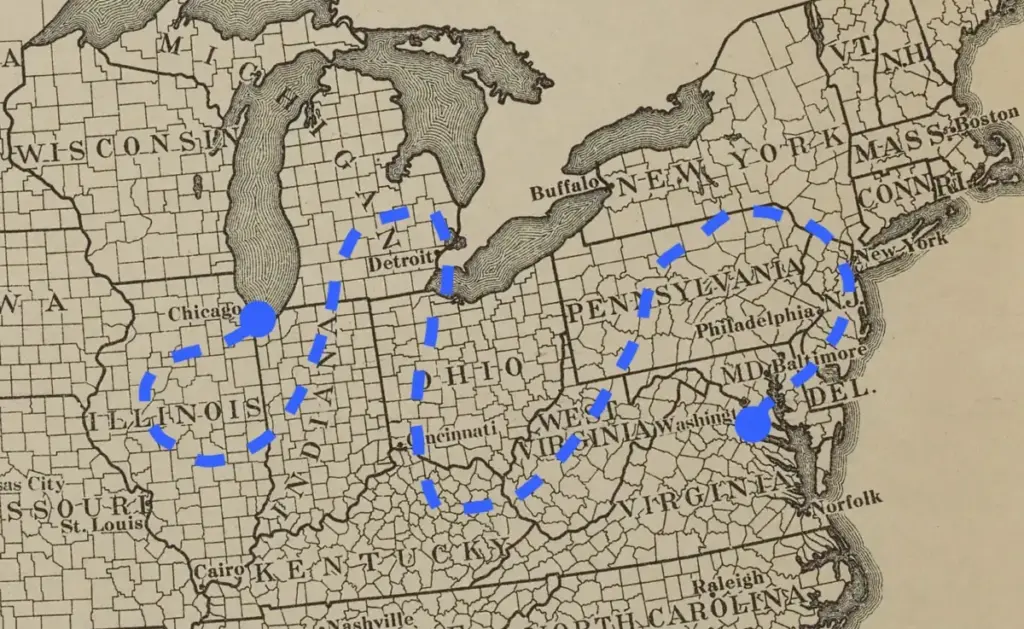
In a playful yet thoughtful approach to server migration, the BHL team evaluated the environmental conditions of their former home in the Mid-Atlantic relative to their new home in the American Midwest, utilizing vintage cartographic data sourced directly from the BHL’s own collections (specifically the Atlas of American Agriculture).
-
Hydrological Conditions & Rainfall:
- East Coast Baseline: 35–40 inches (85–100 cm) of annual rainfall.
- Chicago Environment: 30–35 inches (75–88 cm) of annual rainfall.
- Mitigation Factor: While historical averages show a slight decrease in precipitation, Chicago’s immediate proximity to Lake Michigan—one of the world’s largest freshwater bodies—provides a stabilizing environmental buffer. However, engineers jokingly noted that current regional drought monitors in the north-central United States mean the servers must adapt to drier macroeconomic data trends.
-
Edaphic (Soil) Profiles:
- East Coast Baseline: Gray-Brown Podzolic soils.
- Chicago Environment: Soils of the Northern Prairie.
- Adaptation Strategy: Historical agricultural maps indicate that BHL’s familiar soil types exist in close geographical proximity to its new Midwestern baseline, inspiring confidence that the infrastructure will acclimate swiftly to the local digital terroir.
-
Vegetative Cover:

- East Coast Baseline: Abundant Oak-Pine and Chestnut-Oak-Yellow Poplar forests.
- Chicago Environment: Tallgrass Prairie Grasslands.
- Transition Comfort: While moving from eastern forests to prairie grasslands represents a major biome shift, the presence of neighboring Oak-Hickory ecosystems ensures that familiar arboreal influences remain nearby, easing the transition for a repository deeply rooted in botanical and zoological literature.
Official Statements and Access Resources
The BHL administration has emphasized transparency throughout the planning and execution phases. Users, librarians, and institutional partners seeking real-time updates, network maps, and technical bulletins can utilize dedicated project resources:
- Informational Hub: The BHL team has established a centralized Field Museum Move Project Page to track milestones, downtime schedules, and engineering logs.
- Transit Visualization: A custom routing map detailing the conceptual path of the servers from Washington, D.C., to Chicago has been published on the official BHL blog, drawing visual inspiration from historical maps found within the library’s digital collections.
- Direct Communication Channels: Regular status updates are being broadcast across BHL’s social media channels and mailing lists to ensure the global taxonomic community remains fully informed.
Future Outlook: A New Era for Open-Access Biodiversity Literature
As the final servers are racked, powered on, and integrated into the Field Museum’s network infrastructure in late June 2026, the Biodiversity Heritage Library enters an exciting new chapter.
The successful completion of this migration secures long-term operational redundancy, strengthens institutional partnerships across major natural history repositories, and guarantees that researchers from every corner of the globe retain uninterrupted access to centuries of accumulated scientific literature. Backed by sufficient digital "water," familiar ecological neighbors, and the robust support of the Field Museum, the BHL is primed to thrive in its new Midwestern home, continuing its vital mission to inspire discovery through free access to biodiversity knowledge.



