Executive Overview
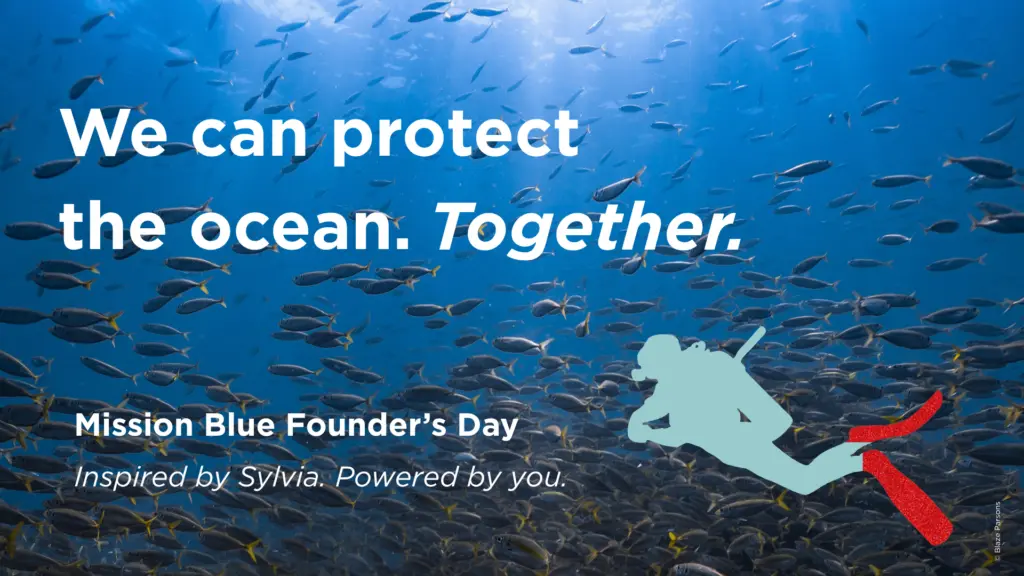
On August 30, the renowned marine conservation organization Mission Blue will observe a historic milestone: its very first Founder’s Day. This newly established annual tradition is designed to honor the birthday of legendary oceanographer, explorer, and environmental pioneer Dr. Sylvia Earle, while simultaneously celebrating the foundational ethos that has driven Mission Blue’s global campaigns since inception. Far more than a simple celebration of an individual’s extraordinary life, Founder’s Day is envisioned as an international rallying cry. It underscores a core philosophy that has guided decades of marine preservation: that while visionary leadership can spark a movement, the ultimate restoration and defense of the global ocean depend entirely on collective, grassroots action.
Dr. Sylvia Earle—affectionately dubbed "Her Deepness" by the scientific community—has spent over half a century beneath the waves, transforming how humanity perceives the marine biosphere. Her pioneering work using SCUBA gear, her record-breaking deep-sea expeditions, and her tireless public advocacy have altered the consciousness of millions. Yet, as Mission Blue’s leadership frequently emphasizes, the organization’s triumphs have never been about a singular figure. Instead, they represent a cascading wave of inspiration that reverberates across continents, disciplines, and generations.
The launch of Founder’s Day arrives at a critical juncture in planetary history. As anthropogenic pressures—ranging from overfishing and deep-sea mining to plastic pollution and climate-induced ocean acidification—push marine ecosystems toward catastrophic tipping points, traditional top-down conservation models have proven insufficient. Mission Blue recognizes that safeguarding the blue heart of our planet requires an unprecedented mobilization of civil society. Through this new tradition, the organization aims to bridge the gap between scientific awareness and community-led execution, transforming passive admirers of the ocean into active stewards of its future.
Detailed Chronology: From Deep-Sea Pioneering to a Global Network
To understand the profound significance of Mission Blue’s Founder’s Day, one must trace the extraordinary trajectory of Dr. Sylvia Earle’s life and the subsequent evolution of the organization that carries her visionary mantle.
The Early Decades: Opening the Deep Frontier
Sylvia Earle’s relationship with the ocean began along the coast of New Jersey and the west coast of Florida, where an innate childhood fascination with marine life blossomed into rigorous scientific inquiry. Earning her doctorate in phycology from Duke University, Earle quickly distinguished herself in a male-dominated scientific landscape. In 1970, she achieved global renown as the leader of the Tektite II project, living for two weeks in an underwater habitat fifty feet beneath the surface of the Virgin Islands. This groundbreaking endeavor proved that mixed-gender teams could conduct saturation diving safely and effectively, opening up entirely new dimensions for marine research.
Throughout the 1970s, 80s, and 90s, Earle shattered barriers. She served as the Chief Scientist of the National Oceanic and Atmospheric Administration (NOAA) from 1990 to 1992, becoming the first woman to hold the prestigious post. During the Gulf War in 1991, she led a team of scientists to assess the environmental damage inflicted on the marine ecosystems of the Persian Gulf by massive oil spills—an experience that cemented her transition from pure researcher to vocal environmental advocate.
The Genesis of Mission Blue
Despite her numerous accolades, Earle grew increasingly alarmed by the accelerating degradation of marine ecosystems. Industrial fishing, coastal development, and the burgeoning crisis of marine plastic pollution were systematically dismantling the ocean’s life-support systems. In 2008, Earle won the prestigious TED Prize, being granted a wish to change the world. She used this global platform to articulate a bold, sweeping vision: to build a global network of marine protected areas—dubbed "Hope Spots"—large enough to restore the ocean’s health.
This pivotal moment catalyzed the creation of Mission Blue. Operating under the auspices of the Sylvia Earle Alliance, Mission Blue set out to identify, champion, and secure legal protection for critical marine habitats around the globe. What began as a conceptual map of ecologically vital ocean areas has since expanded into a sprawling, interconnected global network of over 150 Hope Spots, each championed by dedicated local communities, scientists, and indigenous leaders.
The Evolution Toward Collective Ownership
In the years following its establishment, Mission Blue realized that designating Hope Spots on a map was only the first step. True, long-term conservation required localized ownership and sustained political pressure. The organization shifted its strategic focus toward empowerment—equipping local champions with the media tools, scientific data, and international platforms necessary to defend their local waters from industrial encroachment.
The culmination of this evolutionary process is the establishment of Founder’s Day on August 30. By anchoring this day of global action to Dr. Earle’s birthday, Mission Blue is formalizing a continuous cycle of remembrance and mobilization. It honors the woman who showed the world what is possible beneath the waves, while passing the torch of responsibility to a burgeoning international community of ocean defenders.
Supporting Context & Metrics: The State of the Ocean and the Hope Spot Strategy
The urgency surrounding Mission Blue’s initiatives—and by extension, the imperative of Founder’s Day—is underscored by sobering scientific metrics regarding the health of the global ocean.
The Ecological Imperative
The ocean covers over 70 percent of the Earth’s surface, produces more than half of the oxygen in our atmosphere, absorbs a quarter of all human-generated carbon dioxide emissions, and regulates global weather patterns. Yet, decades of relentless exploitation have left marine ecosystems severely compromised. According to recent scientific assessments:
- Overfishing: More than one-third of global fish stocks are currently fished at biologically unsustainable levels, disrupting intricate marine food webs.
- Habitat Destruction: Coral reefs, often referred to as the rainforests of the sea, have experienced widespread degradation, with over half of the world’s live coral cover lost in recent decades due to warming waters and ocean acidification.
- Pollution: Millions of metric tons of plastic enter the marine environment annually, breaking down into microplastics that infiltrate every level of the oceanic food chain, from zooplankton to apex predators.
The Hope Spot Mechanism: Science Meets Community
In response to these compounding crises, Mission Blue’s Hope Spot strategy offers a beacon of pragmatic optimism. Hope Spots are not merely pristine wilderness areas; they are locations scientifically identified as critical to the health of the ocean due to their biodiversity, unique habitats, or importance to endangered species. Crucially, many Hope Spots also possess cultural significance for coastal communities whose livelihoods depend on marine abundance.
The metrics underlying the Hope Spot network demonstrate remarkable growth:
- Global Reach: Over 150 Hope Spots have been formally designated worldwide, spanning everything from the remote coral reefs of the Coral Triangle to coastal estuaries in the Pacific Northwest and the Mediterranean Sea.
- Diverse Champions: Each Hope Spot is spearheaded by a "Hope Spot Champion"—ranging from marine biologists and educators to indigenous elders and grassroots activists—who serve as the local stewards and primary advocates for the area.
- Measurable Impact: While individual Hope Spots vary in their regulatory status, their collective designation has catalyzed local conservation legislation, galvanized sustainable fisheries management, and successfully blocked destructive industrial projects such as seabed mining and seismic testing in sensitive ecological zones.
Founder’s Day acts as an operational multiplier for these metrics. By encouraging individuals around the world to rally behind their nearest Hope Spot—or to advocate for the establishment of new ones—Mission Blue is transforming isolated regional victories into a unified global force.
Official Statements and Perspectives from the Frontlines of Conservation
The launch of the inaugural Founder’s Day has drawn enthusiastic commentary from environmental leaders, scientists, and community champions within the Mission Blue network. These perspectives highlight the multifaceted nature of the campaign and its deep roots in collaborative advocacy.
Dr. Sylvia Earle herself has frequently emphasized the interconnectedness of human survival and marine health, noting that the fate of humanity is inextricably bound to the state of the ocean. In a statement reflecting on the philosophy behind the new tradition, Earle remarked:
"When people know, they care, and when they care, they act. We often look at the ocean as too vast to fail, or too big for any single individual to impact. But every human breath we take is tied to the sea. The beauty of Mission Blue has never been about my work alone—it is about the brilliant, fierce, and relentless wave of people who have taken this mission into their own hands, in their own communities, across every corner of the globe."
Mission Blue’s executive leadership team has reinforced this sentiment, pointing out that Founder’s Day is designed to democratize conservation. A senior spokesperson for the organization noted:
"We wanted a tradition that transcends a standard birthday celebration. August 30 is an opportunity to look at what Dr. Earle started and ask ourselves: how do we scale this courage? Whether you are a scientist sharing data, a teacher introducing children to marine biology, a donor funding coral restoration, or a neighbor talking to a friend about sustainable seafood, you are doing the work of Mission Blue. Founder’s Day is about recognizing that power within every single individual."
Local Hope Spot Champions have also voiced profound support for the initiative. María Elena Rodriguez, a marine biologist and Hope Spot Champion in Latin America, highlighted the psychological and strategic boost the new day provides:
"Working on the frontlines of ocean conservation can often feel isolating, especially when battling well-funded industrial interests. Knowing that there is a synchronized, global community standing behind us on Founder’s Day gives our local campaigns immense validation and renewed energy. It reminds us that our local reef is part of a magnificent, planetary blue heart."
Future Outlook: Building a Lasting Legacy of Ocean Stewardship
As Mission Blue looks toward the horizon, the establishment of Founder’s Day marks a permanent fixture in the global environmental calendar. The organization has laid out an ambitious strategic roadmap for how this annual tradition will shape marine conservation in the coming decades.
Scaling the Hope Spot Network
A primary objective of the Founder’s Day initiative is to accelerate the designation and protection of new Hope Spots. Mission Blue aims to dramatically expand the network over the next ten years, pushing toward the international conservation target of protecting at least 30 percent of the global ocean by 2030 (the "30×30" framework). Achieving this ambitious target requires scaling grassroots engagement to match political lobbying efforts. By leveraging the peer-to-peer fundraising campaigns, educational toolkits, and community outreach frameworks rolled out during Founder’s Day, Mission Blue intends to build an unstoppable wave of public demand for marine protection.
Empowering the Next Generation of Ocean Advocates
Long-term conservation success depends on intergenerational knowledge transfer. Mission Blue is placing a heavy emphasis on educational integration as part of the Founder’s Day rollout. By providing educators with specialized curricula that bring ocean science into classrooms, the organization is cultivating a generation of children who view marine stewardship not as an abstract scientific discipline, but as an integral part of their daily lives. From school-led cleanups to youth-led advocacy panels, the future of the movement rests in the hands of young people equipped with the tools to speak up for the sea.
Fostering Cross-Sector Collaboration
Finally, Mission Blue recognizes that saving the ocean requires breaking down traditional silos between science, policy, philanthropy, and commerce. Founder’s Day serves as a unifying nexus where corporate donors, philanthropic foundations, academic institutions, and independent activists can converge around shared ecological goals. By facilitating transparent, high-impact giving and community-led restoration projects, Mission Blue is proving that collective action can yield tangible, restorative results for damaged marine habitats.
As August 30 approaches, the global environmental community stands poised to embrace this new tradition. Inspired by the pioneering legacy of Dr. Sylvia Earle and powered by the relentless energy of millions of everyday citizens, Mission Blue’s Founder’s Day is more than a celebration—it is a clear declaration that the future of our blue planet belongs to all of us. Because protecting the ocean, quite simply, takes all of us.