SEATTLE, WA — In an era where the global tourism industry faces an unprecedented reckoning over its environmental footprint, Sustainable Travel International has introduced a disruptive technological solution aimed at eliminating one of the sector’s most stubborn operational hurdles.
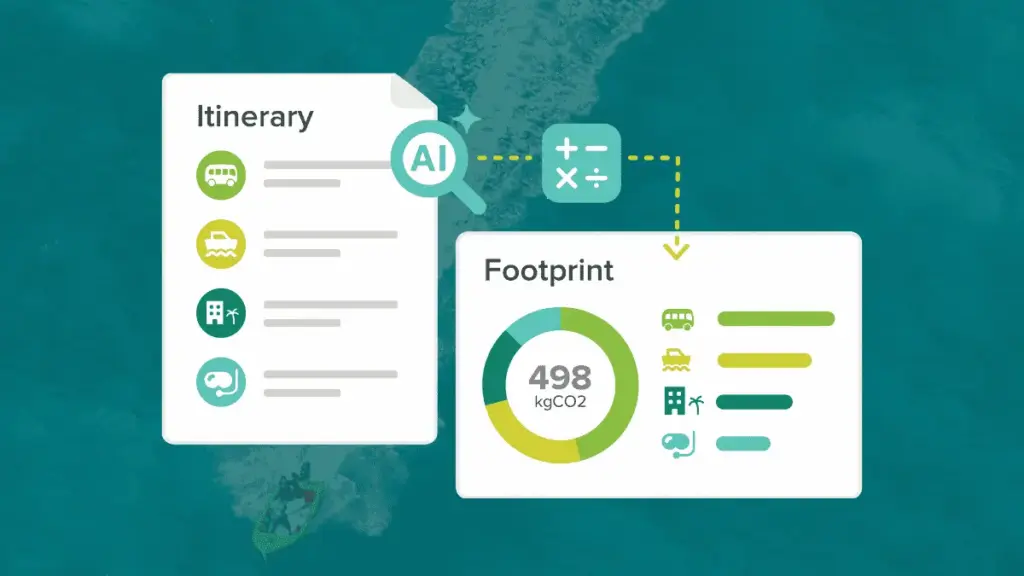
The non-profit organization officially launched Humí, a cutting-edge, artificial intelligence-powered carbon footprinting tool designed specifically for the tourism sector. By bridging the gap between raw marketing copy and rigorous scientific accounting, Humí promises to transform complex, multi-day tour itineraries into comprehensive emissions reports in mere seconds rather than weeks.
The launch arrives at a critical juncture for the travel industry. As regulatory frameworks tighten globally—most notably with the rollout of aggressive anti-greenwashing laws across Europe—and as modern travelers increasingly demand verifiable, data-backed proof of sustainable practices, tour operators find themselves under a microscope. Historically, calculating the precise carbon cost of a holiday was a formidable task, bogged down by manual data collection, fragmented spreadsheets, and a crippling lack of standardized information. Humí seeks to sweep away these barriers, offering a streamlined, automated workflow built on over two decades of specialized environmental research.
For a limited time, Sustainable Travel International is making the tool available for free, signaling a strategic intent to drive broad, immediate adoption across an industry desperate for scalable climate solutions.
Executive Overview: The Dawn of Automated Carbon Accounting
The fundamental premise of Humí is deceptively simple: users paste a direct URL to a tour itinerary webpage or upload a standard PDF document. Behind the scenes, however, the tool leverages advanced natural language processing and domain-specific algorithms to deconstruct the marketing language of travel. It translates qualitative descriptions—such as "scenic train rides through the valley," "luxury jungle lodge stays," or "remote island excursions"—into hard quantitative metrics: transport distances, exact vehicle categories, fuel burn estimations, and accommodation energy footprints.
For decades, the standard approach to carbon accounting in tourism has relied on manual entry. Sustainability managers, often working with limited resources, would spend hours trying to glean vague logistical details from brochures or back-and-forth emails with local suppliers. If an itinerary lacked specifics—a common occurrence in the fast-paced design of tour packaging—the entire calculation process would stall out, requiring extensive investigative work.
Humí disrupts this tedious loop. When itinerary details are incomplete or ambiguous, the AI engine relies on smart, context-aware assumptions derived from historical tourism data and geographical baselines. Crucially, the system does not sweep uncertainties under the rug; it assigns transparent "confidence scores" to every data point. This mechanism clearly flags where the AI has filled in the blanks, allowing operators to start working immediately with the data they have on hand while progressively sharpening accuracy as finer details emerge from ground partners.
By cutting down the administrative runway from weeks to seconds, Humí democratizes carbon measurement. It enables small-to-medium enterprises (SMEs)—which make up the vast majority of the global tourism ecosystem—to engage in serious climate accounting without needing to hire expensive external consultants or build proprietary calculation models from scratch.
Detailed Chronology: Solving the Data Blind Spot in Tourism
The development of Humí is the culmination of years of frustration observed across the sustainable tourism landscape. To understand the significance of this launch, it is necessary to examine how the industry arrived at this technological crossroad.
The Era of the Spreadsheet (Pre-2020)
For years, measuring a tour’s carbon footprint meant wrestling with sprawling, multi-tabbed Microsoft Excel sheets. Operators attempted to manually apply generic emissions factors—often sourced from aviation or heavy industry rather than specialized tourism datasets—to their itineraries. This method was not only intensely time-consuming but also prone to human error. A single miscalculated kilometer or an overlooked domestic flight could skew an entire portfolio’s emissions report by orders of magnitude.
The Rise of Generic AI and Its Limitations (2023–2025)
As generative artificial intelligence exploded into the mainstream, early tech adopters attempted to plug standard Large Language Models (LLMs) into sustainability workflows. While these generic AI tools excelled at drafting text or summarizing reports, they proved dangerously inadequate for specialized carbon accounting. Standard AI models consistently failed to accurately evaluate complex, niche tourism experiences. A safari vehicle traversing rugged terrain, a charter flight into a remote bush airstrip, or a fuel-intensive snorkeling excursion operating in a fragile marine ecosystem require specialized thermodynamic and logistical modeling that generic code simply cannot provide.
The Birth of Humí (June 2026)
Recognizing that the industry was floundering between crude spreadsheets and inadequate generic software, Sustainable Travel International leveraged its 20-plus years of specialized methodology to build a purpose-built solution. Released on June 10, 2026, Humí represents the first major attempt to fuse deep tourism-specific emissions science with real-time web-scraping and document-parsing AI. The tool was engineered specifically to handle the messy, multifaceted reality of multi-day itineraries, bridging the gap between raw travel writing and carbon accountability.
Supporting Context & Metrics: Under the Hood of Specialized Methodology
What separates Humí from standard carbon calculators is the DNA of its calculation engine. Generic carbon calculators are typically optimized for simple point-A to point-B flights or standard hotel room nights. They treat travel as a static, linear equation. However, real-world tourism is inherently dynamic.
Tailored for Complex Itineraries
A typical multi-day tour package might include:
- International long-haul and regional domestic flights.
- Inter-city transfers via private shuttle, public rail, or rented vehicles.
- Specialized transit, such as 4×4 safari vehicles, speedboats, or heritage steam trains.
- Diverse accommodations, ranging from energy-efficient boutique urban hotels to remote, off-grid eco-lodges dependent on diesel generators.
- Immersive activities that carry distinct operational footprints, from guided trekking to motorized wildlife viewings.
Humí’s underlying methodology accounts for these nuances. Developed through two decades of field research, project implementation, and data synthesis by Sustainable Travel International, the algorithm weighs the specific emission profiles of different transport types and regional energy grids. This ensures that an off-grid lodge in a remote tropical rainforest is not unfairly penalized or mistakenly equated to an energy-guzzling high-rise hotel, and that unique transit modes are measured with contextual realism.
Scalability Through Enterprise Architecture
While the free public tier offers an accessible entry point for independent operators looking to test individual tours, Sustainable Travel International has designed robust Enterprise plans tailored for larger tourism boards, tour operators, and multinational travel conglomerates managing extensive portfolios.
Enterprise functionality includes:
- Bulk Portfolio Analysis: The ability to ingest and evaluate hundreds of tour itineraries simultaneously, turning portfolio-wide audits from a multi-year project into an afternoon task.
- Expert Review: Human-in-the-loop oversight where sustainability scientists review and validate algorithmic outputs to ensure maximum rigor.
- Centralized Dashboards: Unified management interfaces that allow sustainability directors to compare footprints across different product lines, track reduction trajectories over time, and isolate high-emission itinerary segments for redesign.
- Communications and Reporting Guidance: Step-by-step frameworks on how to translate complex carbon data into compliant, consumer-facing marketing and corporate sustainability reports without stepping into the trap of greenwashing.
Official Statements and Industry Perspectives
The urgency driving Humí’s release is underscored by tightening international regulations and evolving consumer expectations. Industry leaders have been vocal about the systemic barriers that have historically kept tour operators from measuring their impacts.
"Carbon measurement is the first step to taking climate action, but tour operators have been stuck with a system that makes emissions measurement far harder than it should be," said Paloma Zapata, CEO of Sustainable Travel International.
Zapata emphasized that the deliberate design of Humí directly addresses the friction points that have paralyzed small and mid-sized businesses. "We built Humí to significantly reduce the time and technical effort required to measure tour emissions without compromising accuracy, making it easier for businesses to understand their impacts and start taking action."
The timing of this release is far from accidental. Across Europe and other key travel markets, incoming anti-greenwashing regulations are set to penalize companies that make sweeping environmental claims without verifiable, data-backed proof. Consumers, too, are growing increasingly skeptical of vague buzzwords like "eco-friendly" or "green." They are demanding transparency—asking operators to show, rather than simply tell, how their journeys impact the planet.
By providing an instant, scientifically grounded mechanism to generate audit-ready emissions data, Humí positions tour operators to not only comply with upcoming legal mandates but also to build genuine, trustworthy relationships with conscious travelers.
Future Outlook: The Road Ahead for Transparent Tourism
As the travel industry navigates the second half of the 2020s, the intersection of artificial intelligence and environmental stewardship will undoubtedly define the market leaders of tomorrow. Tools like Humí signal a broader, necessary evolution: the shift from voluntary, marketing-driven sustainability toward mandatory, data-transparent accountability.
Looking forward, Sustainable Travel International plans to expand Humí’s capabilities, integrating broader socio-economic impact metrics alongside carbon footprints, reflecting the organization’s holistic approach to destination stewardship. However, the immediate battleground remains carbon reduction. By removing the administrative and financial barriers to emissions measurement, Humí gives the global tour operating community the clarity it needs to move past paralysis.
Tour operators eager to evaluate their portfolios can access Humí free for a limited time by visiting sustainabletravel.org/humi.
About Sustainable Travel International
Sustainable Travel International is a pioneering non-profit organization dedicated to protecting vulnerable destinations and transforming tourism’s impact on nature and people. For more than 20 years, the organization has advanced climate action within the tourism sector while supporting broader sustainability journeys. Through practical technological innovations, data-driven impact measurement systems, inclusive stakeholder engagement, and expert guidance, Sustainable Travel International helps travel businesses, destination leaders, and consumers address complex challenges—from escalating carbon emissions and overtourism to fragile ecosystems and local community welfare.
For further press inquiries or technical details regarding the Humí platform, media professionals can contact Sustainable Travel International directly through their official portal at www.sustainabletravel.org.