The race to secure a domestic supply chain for critical battery metals has hit a complex logistical roadblock—and a major regulatory milestone. American Battery Technology Company (ABTC), a frontrunner in the lithium-ion battery recycling and critical minerals space, has secured a vital export license allowing the company to maintain operations at its flagship Nevada recycling facility.
The regulatory approval comes at a critical juncture for the United States green energy transition. According to ABTC leadership, the collection and preprocessing of spent lithium-ion batteries—driven by massive inflows from electric vehicles, consumer electronics, and stationary energy storage systems—have far outpaced the development of domestic downstream refining capacity. Without access to carefully managed international processing channels, recyclers faced an acute operational bottleneck.
This special exception highlights the delicate balancing act facing federal regulators. While the U.S. government views domestic control over critical minerals as a paramount national security priority—particularly to counter China’s near-monopoly on global processing markets—it must also prevent regulatory gridlock from suffocating the nascent recycling ecosystem it aims to foster. By granting ABTC this targeted license, the Department of Commerce has offered a pragmatic bridge, allowing domestic operators to stay solvent and operational while multi-billion-dollar refining infrastructure continues to scale across the United States.
Detailed Chronology: The Road to the Black Mass Exception
To understand the significance of ABTC’s recent licensing approval, it is necessary to examine the rapid evolution of U.S. critical mineral policy over recent years, culminating in the strict federal guardrails governing "black mass" exports.
The Rise of Domestic Battery Recycling
Over the past decade, the proliferation of electric vehicles (EVs) and grid-scale energy storage has created an unprecedented wave of lithium-ion battery waste. Recognizing that recycling would be the fastest, most environmentally sustainable way to source critical battery ingredients—such as lithium, cobalt, nickel, and manganese—companies like ABTC invested heavily in collection networks and mechanical separation plants.
ABTC’s primary operational hub in Nevada quickly established itself as a key processing center. The facility takes in massive volumes of large-scale battery systems—including those retired from data centers, artificial intelligence infrastructure, and early-generation EVs—shredding them down into an intermediate product known as "black mass." Alongside this powdered cathode and anode mix, the facility recovers structural metals like copper, aluminum, and steel.
The Federal Clampdown on Black Mass Exports
As geopolitical tensions escalated and the strategic value of critical minerals became starkly apparent, Washington shifted its posture from laissez-faire environmental policy to aggressive industrial planning. The federal government officially categorized critical materials as a pillar of national security.
Under emergency directives—such as the Defense Production Act (DPA) allocation orders targeting recoverable critical minerals—the U.S. government moved to stem the flow of raw and semi-processed battery materials out of the country. A sweeping ban on black mass exports was enacted to ensure that American resources remained onshore to fuel the domestic clean-energy manufacturing base. The federal register explicitly noted that an "inadequate supply of critical minerals and materials poses an increasing risk to our national defense and security," positioning the export ban as an immediate defense of national supply chains.
The "Refining Gap" Crisis
However, the federal export ban inadvertently created an operational paradox. While collection and mechanical dismantling (the "upstream" phase) scaled rapidly, the construction of hydrometallurgical refining plants (the "downstream" phase) faced the usual delays associated with permitting, capital expenditure, and complex chemical engineering.
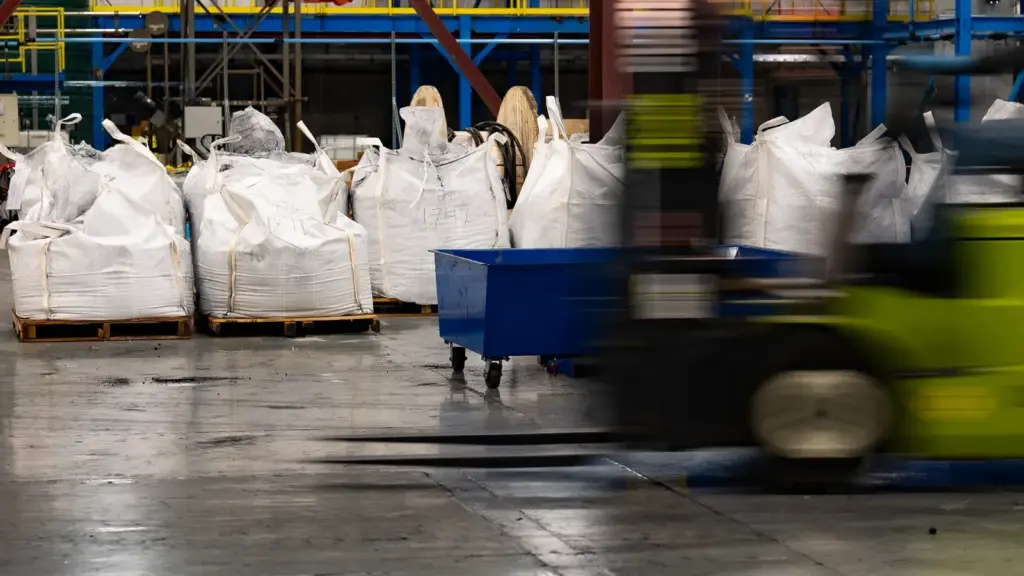
ABTC and peer companies found themselves sitting on mountains of intermediate black mass with limited domestic outlets capable of finishing the purification process to battery-grade specifications. Without immediate relief, recyclers faced a severe liquidity crunch, forced storage constraints, and the real possibility of scaling back collection operations.
The Exception Mechanism and ABTC’s Breakthrough
Recognizing this structural bottleneck, federal regulators built narrow exception pathways into the export restrictions. Companies could apply for licenses if they met stringent criteria:
Demonstrating that materials would be sent abroad for processing with a legally binding guarantee that the refined critical minerals would be returned to the United States.
Proving that blocking the export would cause "undue hardship" to the operator.
Showing that a total export block would paradoxically result in a reduced overall domestic supply of critical minerals by strangling the financial viability of recyclers.
Leveraging its operational transparency and strategic importance, ABTC successfully navigated this complex bureaucratic vetting process. The Department of Commerce’s decision to award the license validates ABTC’s compliance framework and shields the company from the worst impacts of the infrastructure lag.
Supporting Context & Metrics: The Anatomy of the Critical Minerals Gap
The challenges facing ABTC are emblematic of a broader macroeconomic struggle within the Western clean-tech manufacturing sector.
The Geopolitical Landscape and China’s Dominance
For decades, China systematically secured the global supply chain for critical energy minerals. Today, China controls a commanding share of global lithium chemical production, nearly 70% of cobalt refining, and upwards of 85% of rare earth and manganese processing.
For the United States, breaking this dependency is not merely an economic preference; it is an urgent defense mandate. The U.S. Department of Energy (DOE) has poured billions of dollars into domestic mining, refining, and recycling grants to insulate the American automotive and defense sectors from foreign supply shocks.
ABTC’s Dual-Track Infrastructure Strategy
ABTC’s business model relies on a vertically integrated approach, though execution requires staggering amounts of capital and time. The company is actively developing two major pillars:
Critical Mineral Recycling Facility (Nevada): Focused on shredding, sorting, and producing black mass and recovered structural metals from end-of-life lithium-ion assets.
Commercial-Scale Lithium Hydroxide Refinery (Nevada): A separate, highly complex chemical processing plant designed to take intermediate products and refine them to battery-grade standards.
To accelerate this second pillar, ABTC has received robust federal backing, most notably a reinstated $57 million grant from the U.S. Department of Energy. However, building a state-of-the-art chemical refinery takes years of engineering, environmental review, and construction—creating the very "refining gap" that necessitated the recent export license.
[Battery Feedstock: EVs, AI Data Centers, Consumer Electronics]
                          │
                          ▼
        [ABTC Mechanical Recycling & Shredding]
                          │
                          ▼
       [Intermediate Product: Black Mass] ◄───┐
                          │                   │
         ┌────────────────┴──────────────┐    │
         ▼                               ▼    │
[Domestic Refining (Lagging)]   [Export License Exception]
         │                               │    │
         └───────────────┬───────────────┘    │
                         ▼                    │
             [Battery-Grade Materials] ───────┘
          *(Refined materials returned to U.S.)*
Official Statements and Industry Perspectives
The announcement drew praise from corporate leadership, who emphasized that the license is a testament to the company’s operational maturity and regulatory compliance.
In an official corporate statement, ABTC Chief Executive Officer Ryan Melsert expressed deep appreciation for the federal government’s pragmatic approach:
"We are grateful for this license and continued support from the U.S. government for the sales of our domestic critical mineral products. The Department of Commerce’s decision to give ABTC a black mass export license shows that the company has proved its reliability, and strengthens our market position while that domestic refining gap closes."
Melsert emphasized that the company’s feedstock pipeline is more robust than ever, drawing from diverse, high-tech streams. Modern recycling feedstock no longer consists solely of consumer electronics and damaged passenger EV packs; it increasingly includes heavy-duty stationary energy storage systems (ESS) that were deployed to back up data centers, AI computing facilities, and commercial microgrids.
Industry analysts note that while the export license is a temporary pressure valve, it also places a heavy burden of accountability on companies like ABTC. Regulatory bodies will closely monitor the chain of custody to ensure that materials exported for offshore refining are indeed brought back to strengthen the domestic manufacturing supply chain.
Future Outlook: Bridging the Gap to Full Domestic Circularity
As the United States pushes toward its mid-century decarbonization targets, the intersection of national security, industrial policy, and environmental management will remain fraught with operational hurdles.
What Lies Ahead for ABTC and the Sector?
Closing the Refining Gap: The primary objective for ABTC over the next 24 to 36 months will be commissioning its commercial-scale lithium hydroxide refinery. As domestic hydrometallurgical capacity catches up with mechanical recycling output, the reliance on export exceptions will naturally diminish.
Stricter Traceability Standards: As global trade tensions persist, expect regulatory agencies to implement even tighter digital tracking for black mass shipments. Blockchain-based provenance tracking and cryptographic chain-of-custody verifications are quickly becoming the industry standard to ensure compliance with export exemption rules.
Expanding Feedstock Realities: With the artificial intelligence boom driving unprecedented construction of energy-hungry data centers, the decommissioning of massive backup battery arrays will accelerate. Recyclers capable of handling large-scale stationary storage will find themselves sitting on lucrative inventories of strategic metals.
Conclusion
ABTC’s successful procurement of a black mass export license is more than a routine administrative victory—it is a case study in how government policy must adapt to the growing pains of the energy transition. By offering flexibility to operators caught between rapid collection rates and lagging refining infrastructure, regulators are keeping the recycling engine running.
Ultimately, the goal remains unchanged: building a fully sovereign, closed-loop domestic critical minerals market. Until that final piece of refining infrastructure is built, strategic international cooperation under strict federal oversight will remain an indispensable lifeline for America’s green technology pioneers.