

Executive Overview
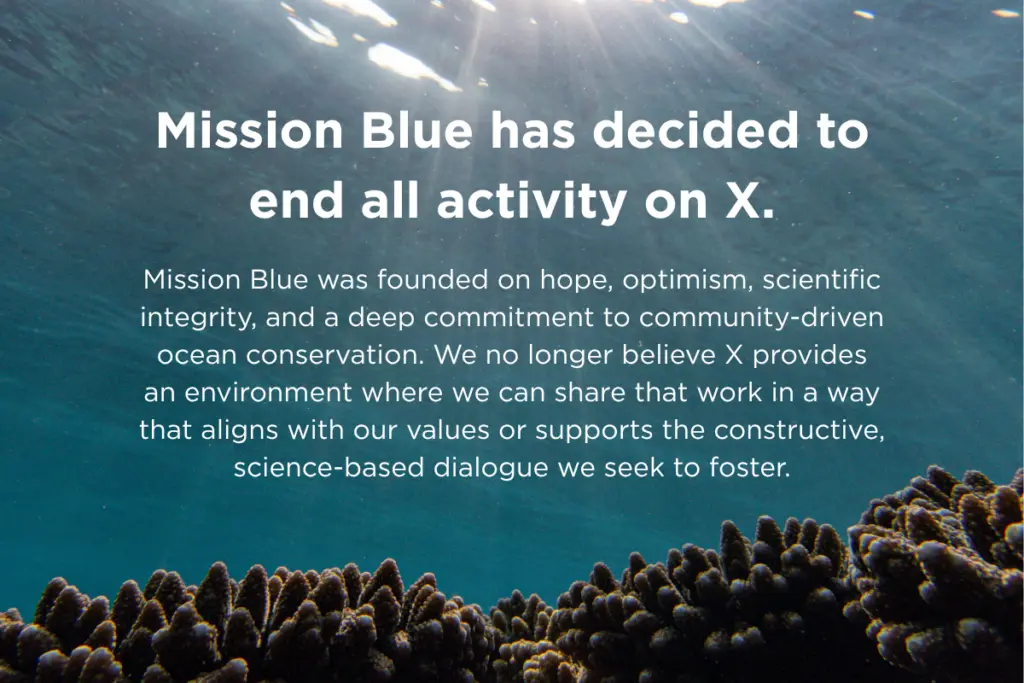
In an era defined by rapid digital transformation and shifting communication paradigms, organizations dedicated to global advocacy face complex decisions regarding where and how they allocate their resources. On [Date/Recent Context], Mission Blue—the globally renowned ocean conservation foundation founded by legendary oceanographer Dr. Sylvia Earle—officially announced its departure from active engagement on X (formerly Twitter). Moving forward, the foundation will redirect its social media strategy toward platforms it deems more aligned with its core ethos of constructive dialogue, scientific integrity, and community-driven hope: Instagram, Facebook, LinkedIn, and YouTube.
This decision is far more than a routine administrative update or a simple reallocation of marketing hours. It represents a significant strategic pivot by a leading environmental watchdog, highlighting a growing tension between scientific institutions and the structural realities of modern social media ecosystems. For years, digital platforms served as powerful equalizers, democratizing access to environmental research and allowing grassroots advocates to mobilize global movements instantly. However, as the digital landscape has evolved, organizations like Mission Blue have increasingly found themselves at a crossroads. The proliferation of algorithmic environments that frequently reward sensationalism, polarization, and the overt suppression or denial of empirical science has forced a critical re-evaluation of digital stewardship.
Mission Blue’s exit from X underscores a broader cultural and institutional reckoning. Environmental NGOs (ENGOs), academic institutions, and conservation bodies are beginning to weigh the diminishing returns of maintaining a presence in toxic digital spaces against the brand risks and psychological toll placed on their communities. By choosing to abandon active posting while preserving an archived version of its account, Mission Blue is drawing a definitive line in the sand. This article provides an in-depth examination of the forces driving this decision, tracing the evolution of Mission Blue’s digital presence, analyzing the broader socio-technical shifts on X, exploring the foundation’s go-forward strategy across alternative platforms, and assessing the long-term implications for science communication in the digital age.
Detailed Chronology: From Early Adoption to Strategic Departure
To fully understand Mission Blue’s exit from X, one must examine the historical trajectory of the organization’s digital footprint and the corresponding evolution of the platform itself.
Phase 1: The Optimistic Era of Digital Networking (2009–2015)
When Mission Blue was established in the wake of Dr. Sylvia Earle’s 2009 TED Prize wish—which called for the creation of a global network of marine protected areas known as "Hope Spots"—the digital landscape looked fundamentally different. Social media was heralded as an unprecedented tool for democratization and rapid mobilization. In its formative years, the platform then known as Twitter was viewed by environmental advocates as an invaluable digital town square.
During this window, Mission Blue utilized the platform to bridge vast geographic divides. Marine scientists conducting field research in remote locations—from the Galapagos Islands to the Coral Sea—could post real-time updates, photographs, and preliminary findings directly to an international audience. For Mission Blue, the platform offered a direct line of communication to "Champions," donors, policymakers, and everyday ocean lovers. The environment, while occasionally contentious, was largely characterized by a culture of curiosity and information sharing. Algorithms were less dominant, and chronological feeds allowed users to curate information streams based on genuine interest rather than algorithmic provocation.
Phase 2: Algorithmic Shifts and Rising Friction (2016–2021)
As the platform matured and transitioned through various ownership and architectural shifts, the underlying mechanics of digital engagement began to transform. The introduction of engagement-driven algorithms fundamentally altered user behavior. Platforms realized that outrage, controversy, and divisiveness were remarkably effective at driving user retention and ad revenue.
For Mission Blue, this shift manifested as a subtle but unmistakable degradation in the quality of discourse. Discussions surrounding marine conservation, climate change, and biodiversity loss—issues backed by decades of peer-reviewed marine science—increasingly became flashpoints for coordinated harassment, skepticism, and bad-faith arguments. While the foundation remained committed to engaging diverse perspectives, the signal-to-noise ratio began to deteriorate. Field updates that once inspired constructive policy discussions were frequently drowned out by noise, hostile commentary, and anti-science rhetoric.
Phase 3: The Tipping Point and the Decision to Exit (2022–Present)
The final chapter in Mission Blue’s active tenure on X was marked by profound systemic changes following the platform’s acquisition and subsequent rebranding. The relaxation of content moderation standards, the dismantling of verified trust-and-safety teams, and the dramatic rise in unverified accounts pushing demonstrably false narratives created an untenable environment for a science-based organization.
Mission Blue leadership observed a sharp uptick in the prevalence of misinformation regarding oceanic health, climate dynamics, and environmental regulation. More concerningly, the foundational values of the organization—hope, optimism, and respectful community-building—were perpetually at odds with the platform’s architectural design, which seemed structurally optimized to reward hostility. Recognizing that their continued presence could inadvertently lend legitimacy to a compromised ecosystem, Mission Blue made the deliberate choice to step away. The account will remain live as a static, searchable archive of past educational campaigns, but active publishing has ceased entirely.
Supporting Context & Metrics: The Crisis of Science Communication Online
Mission Blue’s departure does not occur in a vacuum. It reflects a systemic crisis within digital science communication, wherein empirical institutions find themselves increasingly outmatched by algorithmic systems that amplify noise over nuance.
The Economics of Outrage vs. Environmental Nuance
Marine conservation is inherently complex. Communicating the multifaceted threats facing the global ocean—ranging from ocean acidification and overfishing to deep-sea mining and plastic pollution—requires nuance, patience, and a reliance on complex ecological data.
Conversely, the prevailing economic model of modern social media relies on rapid, high-arousal emotional triggers. Anger, fear, and outrage drive clicks, shares, and watch time far more effectively than measured scientific reporting. Consequently, organizations attempting to communicate sober environmental realities on platforms like X face a structural disadvantage. When a marine biologist shares a peer-reviewed paper on coral bleaching, it frequently struggles to compete for algorithmic visibility against emotionally charged or intentionally misleading counter-narratives designed to provoke outrage.
Misinformation as a Barrier to Conservation
The proliferation of anti-science rhetoric on social media has tangible, real-world consequences. Studies in environmental sociology consistently demonstrate that public perception of ecological crises directly influences political will and legislative action. When digital platforms permit the unchecked spread of misinformation regarding climate change and ocean health, public consensus fractures, creating political gridlock that stalls vital conservation efforts.
Mission Blue’s decision highlights a growing consensus among non-profit leaders: engaging in toxic digital environments is no longer a neutral act. By maintaining a presence on platforms where misinformation is routinely amplified, organizations risk expending precious human and financial resources fighting an asymmetric war against bad actors, detracting from their core mission of on-the-ground advocacy and community empowerment.
Official Statements and Institutional Perspective
The decision to abandon a major communications channel requires careful deliberation and unanimous buy-in from organizational leadership. While the formal announcement was communicated directly to supporters via their website and newsletter updates, the underlying philosophy reflects the lifelong ethos of founder Dr. Sylvia Earle.
The Core Philosophy: Leading with Hope
From its inception, Mission Blue has deliberately positioned itself apart from traditional, doom-and-gloom environmental messaging. While acknowledging the severe crises facing the marine biosphere—such as the depletion of global fish stocks and the degradation of coral reefs—the organization has steadfastly championed a message of constructive hope.
In public statements regarding their digital pivot, Mission Blue representatives emphasized that this philosophy extends directly to how the organization manages its digital spaces. An institutional spokesperson noted:
"We are all connected to the same ocean. Through our digital strategy, we seek to build a curious, welcoming online community. We cannot, in good faith, continue to use the X platform when its current environment stands in direct opposition to informed, respectful, and solutions-oriented dialogue."
Reaffirming Commitment to Safe, Constructive Spaces
The leadership team made it clear that the retreat from X is not a retreat from digital advocacy as a whole, but rather a strategic reallocation of energy toward platforms that respect their audience. By stepping away from a space characterized by polarization, Mission Blue is reclaiming its agency, ensuring that donor funds and staff bandwidth are dedicated to fostering communities where science is respected, questions are welcomed, and collective action is encouraged.
Future Outlook: Rebuilding the Digital Community on Welcoming Shores
As Mission Blue closes the book on its chapter with X, the organization is aggressively expanding its footprint across alternative digital ecosystems where constructive engagement remains viable. The foundation’s future digital strategy rests on four core pillars: Instagram, Facebook, LinkedIn, and YouTube, alongside a reinvigorated direct-to-subscriber newsletter.
1. Instagram: Visual Storytelling and Immediate Impact
Given that the ocean is a realm of breathtaking beauty, vibrant biodiversity, and striking visual contrasts, Instagram serves as an ideal medium for Mission Blue. The platform’s emphasis on high-resolution photography, short-form video reels, and interactive stories allows the foundation to showcase Hope Spots in vivid detail. By highlighting the faces of local marine conservationists, underwater expeditions, and thriving marine ecosystems, Instagram enables Mission Blue to maintain a deeply emotional, visually compelling connection with ocean lovers worldwide.
2. Facebook: Fostering Deep Community Dialogue
Facebook continues to serve as an effective hub for long-form community building. Through its official page and associated groups, Mission Blue can cultivate dedicated spaces for discussions, educational resource sharing, and grassroots mobilization. The platform’s demographic reach allows the foundation to engage diverse age groups who are deeply invested in conservation policy and community action.
3. LinkedIn: Engaging the Corporate, Academic, and Policy Sectors
Environmental conservation cannot succeed without the active participation of the scientific community, policymakers, and corporate stakeholders. By focusing efforts on LinkedIn, Mission Blue is strategically positioning itself to engage professional networks. This platform provides an optimal environment for sharing peer-reviewed research, discussing sustainable blue economy initiatives, and forming strategic partnerships with global corporations and academic institutions committed to environmental stewardship.
4. YouTube: Immersive Educational Content and Long-Form Storytelling
Video remains one of the most powerful tools for education and empathy-building. Mission Blue’s YouTube channel will serve as the primary repository for documentary-style content, deep dives into specific Hope Spots, interviews with leading marine scientists, and webinars. By investing in YouTube, the foundation ensures that its audience has access to comprehensive, thoroughly researched educational material that transcends the superficial soundbites typical of microblogging platforms.
5. The Direct-to-Subscriber Newsletter: Owning the Relationship
Perhaps the most resilient component of Mission Blue’s go-forward digital strategy is its commitment to direct communication through email newsletters. In an era where third-party algorithms can arbitrarily suppress content, alter visibility, or expose communities to toxic interference, the direct-to-inbox newsletter remains a sacred, uncompromised channel. By encouraging supporters to subscribe directly, Mission Blue ensures an unbroken, transparent line of communication regarding Hope Spot updates, conservation victories, and actionable ways to protect the global ocean.
Conclusion
Mission Blue’s decision to sunset its active presence on X marks a watershed moment for environmental advocacy in the digital age. It serves as a powerful reminder that organizations driven by empirical science and ethical missions are not obligated to participate in digital environments that undermine their core values.
By prioritizing quality over quantity, fostering constructive dialogue over algorithmic outrage, and redirecting energy toward platforms that respect their communities, Mission Blue has charted a courageous and principled course forward. As the organization continues its vital work to champion Hope Spots around the globe, its digital evolution demonstrates that true leadership sometimes requires stepping back from the crowd to find a clearer, more purposeful path ahead. For ocean advocates, scientists, and supporters worldwide, the message is clear: the journey to save the blue heart of our planet continues, anchored in hope, sustained by science, and shared within communities built on mutual respect.



