Executive Overview
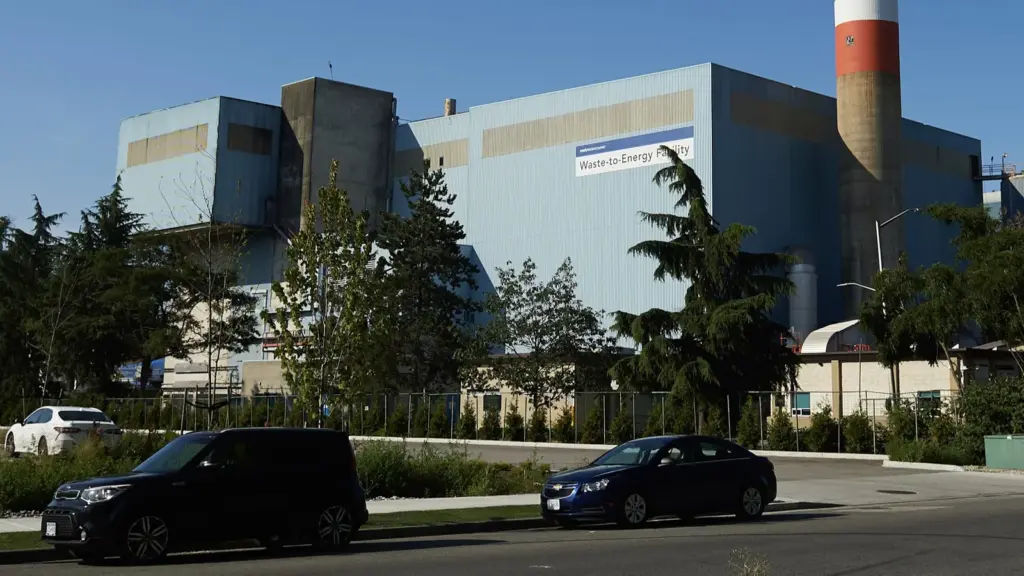
The Metro Vancouver Waste-to-Energy Facility in Burnaby, British Columbia—a critical infrastructure asset handling regional solid waste and specialized refuse—has been forced to suspend primary operations following a sudden strike by unionized workers. On Tuesday, approximately 40 steam engineers and plant operators represented by Unifor Local 433 walked off the job, shuttering the site to the majority of commercial and municipal customers.
The labor stoppage marks a volatile escalation in an ongoing contract dispute between the frontline workers and the facility’s new private operator, Veolia North America. Veolia assumed operations of the plant in March 2025 under a lucrative, multi-year framework agreement previously managed for a quarter-century by Reworld (formerly Covanta). According to the union, the transition has introduced corporate demands for wage and benefit concessions that fail to reflect the fixed-cost architecture of Veolia’s public-sector contract.
While core thermal processing has been paused, a provincial essential services order allows for limited, controlled operations to handle sensitive materials. Non-hazardous healthcare waste, international marine and airline refuse, and specific wastewater treatment plant residuals continue to be received by management personnel. However, the wider regional implications of the strike are significant. The Burnaby facility processes roughly 240,000 metric tons of municipal solid waste annually, playing a foundational role in Metro Vancouver’s zero-waste and energy-recovery strategies.
As pressure mounts on both parties to return to the negotiating table, the labor impasse highlights the complex intersections of municipal waste management, private-sector corporate governance, and labor rights in the green-energy economy.
Detailed Chronology of the Dispute
To understand the current impasse at the Burnaby facility, it is necessary to trace the sequence of events that brought labor relations to a breaking point following a major corporate transition.
The Transition of Power (October 2024 – March 2025)
The roots of the current labor conflict stretch back to late 2024, when Metro Vancouver—the regional federation governing 21 municipalities, one electoral area, and one treaty First Nation—awarded a massive, multi-million-dollar operating contract for the Burnaby facility. For 25 years, the plant had been successfully operated by Reworld. However, when the contract came up for renewal, Reworld opted not to submit a competitive bid.
Veolia North America stepped into the vacuum, securing a high-profile contract valued at up to $245 million. The agreement officially took effect on March 3, 2025. For Veolia, the contract represented a significant milestone: its first waste-to-energy facility in Canada, slotting into the multinational corporation’s broader strategy to aggressively expand its North American environmental services portfolio.
Breakdown in Negotiations (Early 2026)
Upon taking over the facility, Veolia inherited a workforce of specialized steam engineers and technicians represented by Unifor Local 433. Collective bargaining for a renewed collective agreement commenced shortly after the operational transition, but progress quickly stalled.
By early 2026, negotiations hit a permanent roadblock. According to union representatives, contract talks officially broke down last month after Veolia introduced demands for labor concessions. Unifor argued that these demands were unjustified, pointing out that Veolia’s corporate costs for running the plant are largely fixed under its comprehensive five-year operating agreement with Metro Vancouver.
The Strike Notice and Facility Closure (Tuesday)
With the bargaining process deadlocked and members unwilling to accept concessions, Unifor Local 433 officially announced strike action on Tuesday. The immediate consequence of the job action was the complete closure of the Burnaby facility to most regular customers and an immediate halt to standard waste incineration operations.
Following the strike announcement, the British Columbia Labour Relations Board stepped in to establish operational parameters during the labor dispute. An essential services order issued last week mandated that the facility could pause thermal processing for up to a maximum of 10 days, which can then be followed by six days of renewed processing if deemed necessary for environmental safety. Crucially, the board’s order also placed strict prohibitions on the employer, legally barring Veolia from hiring replacement workers or bringing in outside volunteers to maintain normal plant operations during the strike.
Supporting Context & Metrics
The Burnaby mass burn combustion facility is not merely a local landfill alternative; it is an industrial-scale energy generator and a vital link in British Columbia’s environmental safety infrastructure.
Facility Specifications and Economic Footprint
- Year Established: 1988 (nearly four decades of continuous regional service).
- Annual Processing Capacity: Approximately 240,000 metric tons of municipal solid waste.
- Contract Valuation: Up to $245 million over its current operational term.
- Workforce Impact: Approximately 40 highly skilled steam engineers and operational personnel represented by Unifor Local 433.
- Global Context: Prior to securing the Burnaby contract, Veolia operated dozens of similar waste-to-energy facilities worldwide, though this site stands as its premier Canadian energy-recovery asset.
Essential Services and Public Impact
While the suspension of standard municipal waste processing forces haulers to seek alternative disposal methods, certain critical waste streams cannot simply be rerouted. Metro Vancouver has issued explicit instructions to the public and specialized commercial haulers regarding the handling of critical waste that cannot be processed anywhere else in the region.
These exceptions include:
- Non-hazardous healthcare facility waste: Medical and institutional refuse requiring high-temperature thermal destruction to prevent biohazards.
- International marine and airline waste: Regulated biological waste originating from foreign ports and flights, which must be incinerated immediately under strict biosecurity protocols to prevent the introduction of foreign pests or pathogens.
- Wastewater treatment plant residuals: Specific sludge and byproduct streams from regional sanitation infrastructure that require continuous thermal management.
According to updates provided by Metro Vancouver, "non-union Veolia personnel who regularly work at the facility" have been mobilized to manage the reception of these essential waste streams and execute other qualified tasks allowed under the essential services framework.
Corporate Labor History: A Global Trend
Veolia’s encounter with labor friction in Burnaby is not an isolated incident. The multinational giant has navigated similar industrial disputes across its international footprint.
Last year, workers at Veolia’s Energy Recovery Facility in Newhaven, United Kingdom, staged four separate weeklong walkouts over a four-month period amid contentious contract negotiations. Similarly, a prolonged labor dispute involving two distinct labor unions representing Veolia waste collection workers in Sheffield, U.K., finally reached a resolution late last year. These recurring flashpoints suggest a persistent friction point between Veolia’s corporate cost-containment strategies and the collective bargaining expectations of its unionized workforce across different regulatory jurisdictions.
Official Statements
The standoff has triggered sharp rhetoric from union leadership, corporate executives, and regional municipal authorities, reflecting high stakes for all involved parties.
Unifor National Leadership
Unifor National President Lana Payne did not mince words when addressing Veolia’s management strategy in a blistering public statement released on Tuesday:
"The employer should give its head a shake if it thinks Unifor members are going to eat concessions to pad Veolia profits. This employer won a public bid to do this service with existing labor costs. Concessions will rob our members to reward shareholders."
The union’s core argument rests on the principle that a private contractor taking over a stable public utility should honor the established socioeconomic baseline of the workforce rather than utilizing concessionary bargaining to artificially inflate profit margins under a fixed-revenue contract.
Veolia North America and Veolia Canada
Countering the union’s claims, Veolia maintains that it has negotiated in good faith and places the onus of the stalled talks back onto the bargaining table. Wes Muir, director of business development and government relations at Veolia Canada, issued an emailed statement emphasizing the company’s willingness to re-engage:
"Veolia stands ready to resume negotiations as soon as possible and reach a fair contract that restarts the Waste-to-Energy Facility, offers fair employment terms for Local 433."
Muir further asserted that the union has failed to bring forward any new, substantive terms for a contract since formally rejecting Veolia’s previous proposal last month.
Metro Vancouver’s Stance
As the ultimate owner of the Burnaby facility, Metro Vancouver occupies a mediating position. The regional federation—representing 21 municipalities, an electoral area, and a treaty First Nation—has maintained a strict policy of neutrality regarding the collective bargaining process, while prioritizing environmental safety and operational continuity.
Greg Valou, a spokesperson for Metro Vancouver, addressed the federation’s position on the job action:
"Metro Vancouver respects the right to lawful job action, and we’re hopeful that Veolia and Unifor will reach a negotiated agreement soon."
Metro Vancouver continues to monitor the facility’s adherence to the B.C. Labour Relations Board’s essential services order, ensuring that public health protections involving healthcare and international waste remain uncompromised during the strike.
Future Outlook
The immediate future of the Burnaby Waste-to-Energy Facility hangs on the willingness of Veolia and Unifor Local 433 to return to active mediation. Because the British Columbia Labour Relations Board has explicitly prohibited the use of replacement labor or external volunteers, Veolia’s capacity to operate the plant is severely constrained by the parameters of the essential services order. Management personnel can handle specialized medical and international waste for a limited duration, but the cessation of full-scale municipal waste incineration creates a growing backlog for regional haulers.
If the strike persists beyond the operational windows stipulated by the B.C. Labour Relations Board, Metro Vancouver may face mounting secondary pressures regarding regional solid waste diversion. Municipal authorities would be forced to lean more heavily on traditional landfill sites or alternative transport logistics to manage the 240,000 metric tons of annual waste usually consumed by the Burnaby facility.
Ultimately, resolution will require either Veolia abandoning its push for labor concessions or Unifor accepting a revised compensation package. Given the uncompromising stances staked out by Lana Payne and Veolia’s regional executives, stakeholders are bracing for a potentially protracted dispute unless state-appointed mediators can bridge the gap between corporate shareholder expectations and labor protections in Canada’s vital green-energy sector.