

Executive Overview
In a landmark legal and environmental victory, South Africa’s Constitutional Court delivered a definitive blow to neocolonial resource extraction on August 14, 2026. The nation’s apex court permanently halted oil and gas exploration plans by multinational energy giant Shell and its partner, Impact Africa, off the ecologically and culturally sensitive Wild Coast.
The ruling brings a definitive end to a multi-year legal battle fought by Indigenous coastal communities, local fishers, and environmental justice organizations. By upholding the foundational principles of procedural justice, constitutional rights, and meaningful public participation, the court declared that speculative economic benefits and corporate investments can never supersede human rights, ecological preservation, or historical justice.
Beyond its immediate impact on South Africa’s maritime frontier, the judgment serves as a watershed moment for the African continent. It establishes a powerful legal precedent against the legacy of resource exploitation, accelerating the imperative for African nations to transition away from fossil-fuel dependencies and pivot toward decentralized renewable energy economies funded by climate justice initiatives.
Detailed Chronology: A Years-Long Battle for the Ocean
The road to the Constitutional Court was paved by grassroots resistance, corporate overreach, and a protracted judicial struggle that exposed the friction between profit-driven globalization and Indigenous rights.
1. The Genesis of Resistance (2021)
The conflict ignited when Shell and Impact Africa secured exploration rights to conduct seismic surveys across roughly 6,000 square kilometers of the Indian Ocean off the Wild Coast. The operation relied on the Amazon Warrior, a seismic vessel utilizing high-powered airguns designed to fire deafening acoustic shockwaves into the seabed every ten seconds to map oil and gas deposits.
The plans drew immediate, fierce pushback. Environmental scientists warned that the deafening acoustic blasts would disorient, injure, and kill vulnerable marine life, including southern right whales and the critically endangered coelacanth. For coastal communities whose ancestral, spiritual, and economic identities are tied to the ocean, the project represented an existential threat.
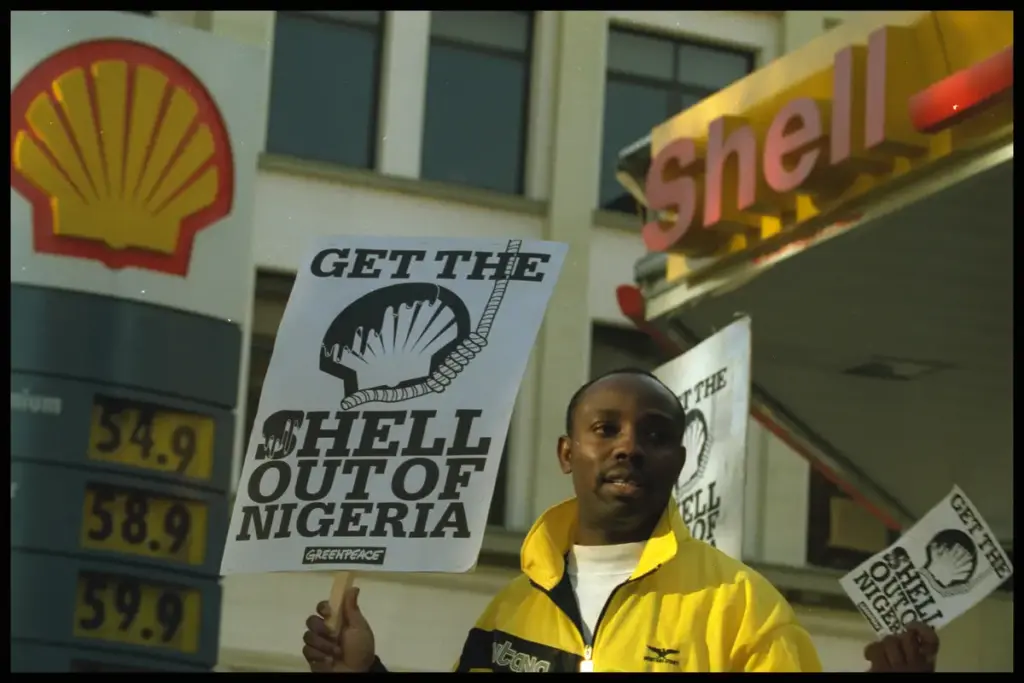
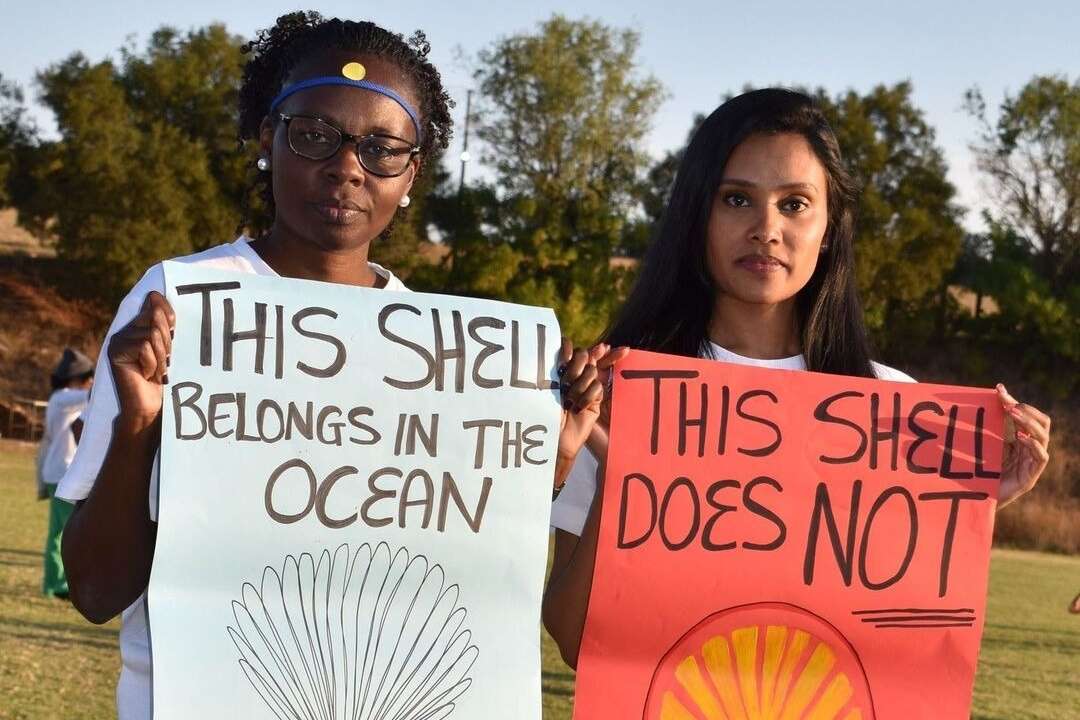
Grassroots mobilization exploded across South Africa. Protests erupted in nearly 100 towns and cities, spearheaded by coastal residents, local fishers, and civil rights groups.
2. The Makhanda High Court Interdict (December 2021)
United by organizations such as Sustaining the Wild Coast, the Amadiba Crisis Committee, and Natural Justice, local communities launched a legal challenge in the Makhanda High Court. In December 2021, the court granted an urgent interdict halting the seismic surveys, ruling that Shell had failed to secure the necessary environmental authorizations and had entirely neglected to consult affected Indigenous communities.
3. Judicial Back-and-Forth: The High Court and Supreme Court of Appeal
Shell challenged the interdict, leading to a judicial review. In subsequent hearings, the High Court reaffirmed that the original exploration right had been unlawfully granted because the Department of Mineral Resources and Energy had failed to fulfill its statutory duty of public consultation.
However, the legal battle took a complex turn when the Supreme Court of Appeal (SCA) delivered its 2024 ruling. While acknowledging that the original granting of the rights was unlawful, the SCA offered Shell a legal backdoor, suggesting the company could remedy its failure through a retrospective consultation process. Unwilling to compromise their constitutional rights, community representatives elevated the case to South Africa’s highest court.
4. The Apex Court’s Final Word (August 14, 2026)
The Constitutional Court categorically rejected the SCA’s compromise, setting aside the exploration right and its subsequent renewals permanently. The apex court warned that allowing retrospective corporate consultations would set a dangerous precedent where financial muscle could easily excuse grave constitutional violations.
Supporting Context & Metrics: The Human and Ecological Stakes
To fully grasp the magnitude of the Constitutional Court’s decision, one must examine the broader ecological vulnerabilities of the Wild Coast and the historical precedent of extractive industries across the African continent.
The Ecological Significance of the Wild Coast
The South African coastline is not merely a geographic boundary; it is a vital engine of climate resilience. The region features expansive kelp forests that sequester vast amounts of carbon, protect shorelines from erosion, and shelter critical marine biodiversity.
Subjecting these waters to seismic blasting threatens not just individual species, but the complex marine ecosystems that act as natural defenses against the climate crisis. Global heating has already driven ocean temperatures to critical thresholds, meaning that industrial-scale fossil fuel exploration compounds an already fragile environmental baseline.
The Shadow of the Niger Delta
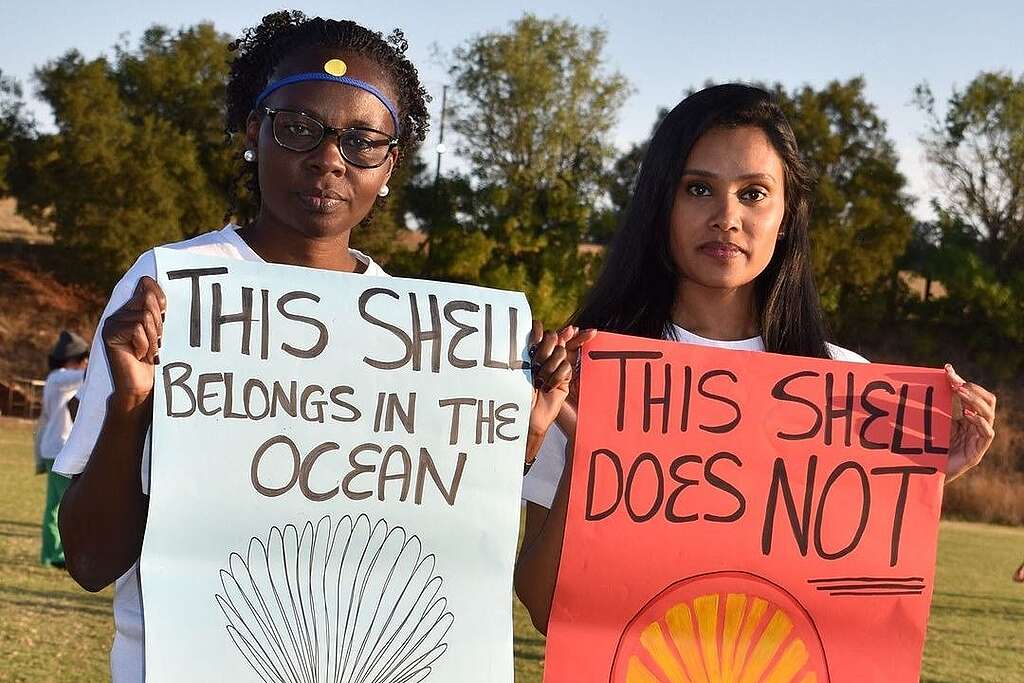
For many South African activists, Shell’s intentions on the Wild Coast evoked painful parallels with the corporation’s decades-long footprint in Nigeria’s Niger Delta. Since commercial oil production began there in 1958, Niger Delta communities have endured catastrophic ecological degradation, widespread oil spills, and the violent suppression of environmental protests—most notably marked by the tragic execution of activist Ken Saro-Wiwa in 1995.
The history of the Niger Delta served as a stark warning to South Africans: the promises of economic prosperity made by multinational oil companies routinely give way to generational poverty cycles, compromised health, and devastated local economies.
Neocolonial Extractivism and Global Financial Inequities
Fossil fuel corporations continue to target African resources under the guise of economic development. However, structural global mechanisms often siphon wealth away from the continent. Weak international tax frameworks enable extractive multinationals to shift at least 12% of their global profits—and up to 20% during commodity booms—into tax havens.
In South Africa, a nation grappling with structural inequality and high unemployment, the presence of heavy extractive industries has historically failed to translate into broad-based prosperity. Instead, communities living adjacent to heavy industrial and energy infrastructure find themselves trapped in environmental degradation and poverty.
Official Statements and Legal Perspectives
The Constitutional Court’s judgment was heralded by legal experts, human rights defenders, and community leaders as a triumph for constitutional democracy.
-
Sinegugu Zukulu of Sustaining the Wild Coast:
"For centuries, colonialism and capitalism have enabled a system that ignores the rights of Indigenous People in their own land. At last we have been able to assert the rights of Indigenous People over the profits of global corporations. We went to court for the future and for future generations."

-
Nonhle Mbuthuma of the Amadiba Crisis Committee:
"True development must come from people deciding their own future. We have spent decades opposing mining on our land, and now we have successfully asserted that our oceans are not for sale to the highest corporate bidder."
-
Delme Cupido of Natural Justice:
"This case demonstrates that public participation is not simply about ticking bureaucratic boxes. It is about placing people’s dignity, cultural practices, and constitutional rights at the very center of decisions that affect their lives."
-
Eugene Perumal of Greenpeace Africa:
"The message from the court is unambiguous: people and their constitutional rights come before corporate profits. This judgment provides a vital shield for communities facing the onslaught of neocolonial extractivism."
Crucially, the Constitutional Court also integrated international jurisprudence into its reasoning, referencing the 2025 International Court of Justice (ICJ) advisory opinion on climate change. The court emphasized that modern legal frameworks must account for robust scientific evidence, international climate commitments, and the foreseeable impacts of decisions on both present and future generations.
Future Outlook: Paving the Way for a Just Transition
As the dust settles on the Shell litigation, attention has pivoted toward the future of South Africa’s energy landscape and economic model. The ruling is more than just a defensive victory; it is an invitation to accelerate structural economic transformation.
1. Scaling Renewable Energy and Green Jobs
The permanent halt of Wild Coast oil exploration removes a distraction from South Africa’s true economic potential: renewable energy. With abundant solar irradiation and world-class coastal wind resources, the country is uniquely positioned to build a decentralized, resilient power grid.
Global data underscores this shift. Approximately 85% of new global power capacity added in recent years has been renewable, driven primarily by solar and wind technologies. By investing heavily in these sectors, African nations can train local workforces, stimulate domestic manufacturing industries, and insulate themselves against the volatile price shocks of imported fossil fuels.
2. Financing the Transition Through Global Polluter Taxes
A central challenge for emerging economies transitioning away from fossil fuels is securing adequate financing. Civil society organizations and climate justice advocates argue that the capital required for a "just transition" can be raised by implementing aggressive national and international taxes on polluting multinational corporations and ultra-high-net-worth individuals.
A proposed global polluter tax of 20% on the windfall profits of the world’s largest oil and gas conglomerates could generate upwards of US $100 billion annually. These funds would be earmarked directly for climate adaptation, loss and damage compensation, and the rapid deployment of clean energy infrastructure.
As governments worldwide negotiate frameworks like the UN Tax Convention, South Africa and other developing nations have a generational opportunity to hold extractive polluters financially accountable for the ecological crises they have manufactured.
Conclusion
The Constitutional Court’s permanent halt of Shell’s Wild Coast exploration is a testament to the power of collective, community-led resistance. By drawing a hard line in the sand—and the surf—South Africa has signaled to the global corporate community that constitutional rights, Indigenous heritage, and ecological preservation are non-negotiable. As the continent looks toward a future powered by renewables rather than fossil fuels, this historic ruling will echo as a foundational blueprint for climate and social justice across the globe.



