


Executive Overview
As the global imperative to accelerate the deployment of low-carbon infrastructure intensifies, governments and massive multinational conglomerates have traditionally taken center stage in the financing conversation. From multi-billion-dollar federal tax credits to venture capital-backed clean tech start-ups, the prevailing narrative is that the green transition requires gargantuan amounts of institutional capital.
However, a quiet revolution is taking place across Canada—one that shifts the locus of power away from distant corporate boardrooms and directly into the hands of local citizens. The answer to our daunting infrastructure funding gap may be far more local than we think.
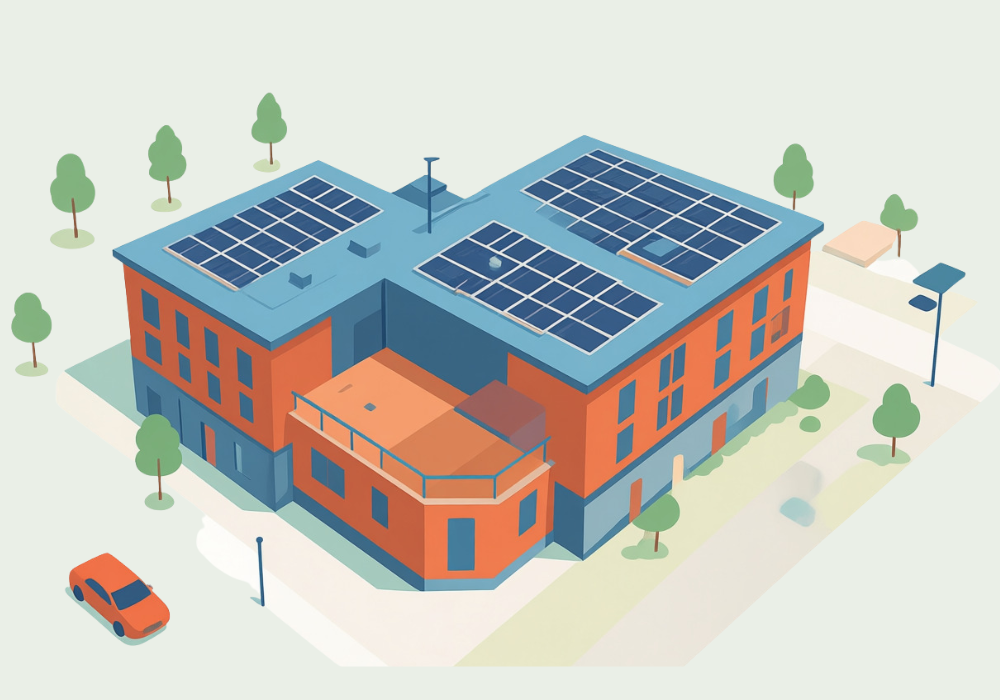
Across the country, from urban centers in Ontario to the windswept shores of Lake Huron and the residential rooftops of Saskatchewan, communities are bypassing traditional financial gatekeepers. Through innovative financing models such as renewable-energy cooperatives, community bonds, and collective ownership schemes, everyday citizens are mobilizing capital to fund solar arrays, wind turbines, electric vehicle (EV) charging networks, net-zero housing, and sacred space retrofits.
This deep dive explores eight pioneering Canadian projects that demonstrate how grassroots financing is reshaping the clean energy landscape. While these initiatives prove that community-led capital can successfully deliver tangible climate solutions, they also shed light on the inherent financial risks, regulatory hurdles, and structural evolutions facing local green financing today.
Detailed Chronology and Case Studies: Eight Pioneers of Community-Led Clean Energy
To understand how grassroots funding operates in practice, we must examine the diverse array of projects that have paved the way over the past two decades. Each initiative illustrates a unique application of community capital, reflecting the geographic, cultural, and technological diversity of Canada’s climate movement.
1. WindShare (Toronto, Ontario): The Trailblazer
- The Project: A utility-scale wind turbine co-owned by local residents and Toronto Hydro.
- The Impact: WindShare holds a vital place in Canadian environmental history as the first example of local residents directly owning a clean energy project.
- The Mechanism: Launched in an era when community renewable energy was virtually unheard of in Canada, WindShare brought together 825 Toronto residents and municipal utility provider Toronto Hydro. By pooling their financial resources, these individuals proved that urban citizens without direct rooftop access could still participate in—and profit from—wind energy generation. It established a vital precedent for cooperative governance and utility partnerships.
2. OREC – Ottawa Renewable Energy Co-operative (Lake Huron, Ontario)
- The Project: Partial ownership of two utility-scale wind turbines on the shores of Lake Huron.
- The Impact: Founded in 2010, OREC has grown into a formidable regional player. Its assets generate roughly 3.3 million kWh annually, providing enough clean electricity to power more than 400 homes each year.
- The Mechanism: OREC operates on a cooperative investment model, allowing everyday investors to purchase shares or bonds that fund commercial-scale renewable energy assets. By distributing the financial returns back to its members, OREC keeps wealth within the local economy while actively driving down provincial carbon emissions.
3. Wintergreen (Kingston, Ontario)
- The Project: A strategically placed solar array located just outside Kingston, capable of powering 100 homes.
- The Impact: Wintergreen is managed and operated by SolarShare, widely recognized as Canada’s leading renewable-energy cooperative.
- The Mechanism: SolarShare aggregates capital from thousands of members to build and acquire solar generation facilities across Ontario. The Wintergreen array exemplifies how mid-scale solar projects can be seamlessly integrated into rural and semi-urban landscapes through democratic, member-owned frameworks, bypassing the need for corporate utility equity.
4. ZooShare (Toronto, Ontario): Innovation and Real-World Risk
- The Project: A pioneering biogas facility that transforms organic animal waste from the Toronto Zoo and commercial food waste into electricity for Ontario’s primary power grid.
- The Impact: ZooShare brought circular economy principles to life, turning waste management challenges into local, low-carbon energy resources with financial backing from 800 cooperative members who purchased community bonds.
- The Mechanism & Cautionary Tale: While ZooShare initially symbolized the immense potential of community bonds in alternative energy sectors, it also underscores the financial vulnerabilities inherent in grassroots infrastructure. Following a member vote in 2023, ZooShare was forced to temporarily halt interest payments on its community bonds, committing instead to repaying the principal when cash flow permits. This pivot highlights the operational, market, and regulatory headwinds that community-owned projects can face when scaling complex biological and engineering systems.
5. EcoCharge (Quebec and New Brunswick)
- The Project: The first EV-charging community bond campaign of its kind in Canada.
- The Impact: EcoCharge successfully democratized the rollout of zero-emission transportation infrastructure, resulting in cooperative member ownership of roughly 100 EV charging stations spanning Quebec and New Brunswick.
- The Mechanism: Recognizing that the electric vehicle revolution requires extensive charging infrastructure—particularly in regions underserved by major commercial networks—EcoCharge leveraged community bonds to finance capital-intensive hardware placement. Members who invested in the campaign directly hold a stake in the region’s burgeoning EV infrastructure corridor.
6. Propolis (Kamloops, British Columbia)
- The Project: A modern, 53-unit affordable and net-zero apartment building in Kamloops.
- The Impact: Propolis successfully raised $1 million through community bonds sourced from approximately 100 local and regional investors.
- The Mechanism: Propolis expands the scope of community bonds beyond electricity generation into the built environment. By securing local funding to construct high-efficiency, affordable housing, the project addresses two of Canada’s most acute crises simultaneously: climate change and housing affordability. Investors earn a modest return while directly contributing to a climate-resilient urban fabric.
7. Faithfully Green (Interfaith Network)
- The Project: A specialized green retrofit fund designed to decarbonize religious facilities.
- The Impact: The Faithfully Green Fund assists diverse faith communities in financing sustainable building retrofits—such as energy-efficient heating, insulation, and solar installations—by issuing community bonds and lending capital on a revolving basis.
- The Mechanism: Religious institutions often occupy historic or large facilities that are notoriously difficult and expensive to heat and maintain. By pooling resources through an interfaith revolving fund, churches, temples, and mosques can undertake major green retrofits that would otherwise be financially out of reach, paying back the loans over time through reduced utility bills.
8. Wascana (Regina, Saskatchewan)
- The Project: A localized solar installation comprising 400 solar panels distributed across Regina.
- The Impact: Wascana directly solves the access barrier for urban renters and apartment-dwellers. The cooperative is collectively owned by about 100 members who otherwise would not be able to install solar panels due to property ownership constraints.
- The Mechanism: Wascana pools small-scale investments to install solar panels on commercial or shared rooftops. Members purchase units of the cooperative, receiving a proportional share of the financial revenues generated by selling the power back to the grid. This model democratizes solar access for individuals locked out of the traditional residential solar market.
Supporting Context and Metrics: The Mechanics of Community Bonds
To fully grasp the significance of these eight initiatives, one must understand the financial instrument driving many of them: the community bond.

Unlike municipal bonds—which are issued by city governments backed by tax revenues—or corporate bonds issued by publicly traded entities, community bonds are debt instruments issued by non-profit enterprises, cooperatives, or charities. They allow everyday citizens to invest directly in local projects that generate verifiable environmental and social returns alongside modest financial yields.
Key Metrics of Grassroots Green Financing:
- Democratized Ticket Sizes: Unlike traditional private equity or institutional syndicates requiring hundreds of thousands of dollars in minimum commitments, community bonds frequently feature entry thresholds as low as $500 or $1,000, enabling true grassroots participation.
- Localized Multiplier Effect: Research into cooperative financial models indicates that capital raised and spent locally tends to retain a significantly higher economic multiplier effect within the region compared to capital funneled through distant institutional portfolios.
- Risk Diversity: As demonstrated by projects like WindShare and OREC, well-structured renewable assets can offer predictable, long-term revenue streams through long-term power purchase agreements (PPAs) with provincial utilities. However, as ZooShare’s 2023 restructuring proves, operational complexities can introduce default or delay risks that investors must carefully weigh.
Official Statements and Expert Perspectives
The shift toward localized, community-driven financing has drawn commentary from energy economists, cooperative leaders, and urban planners across Canada.

"We know we need to build low-carbon power projects at an unprecedented scale. And while finding the funding may seem daunting when looking at national balance sheets, the answer is often more local than we think," notes Yashvi Shah, a Toronto-based writer and researcher specializing in sustainable finance and urban infrastructure.
Industry advocates emphasize that community ownership does more than simply raise capital—it builds public buy-in for the green transition. When local residents own a stake in a nearby wind turbine, solar array, or EV charging network, historical friction points such as "not-in-my-backyard" (NIMBY) opposition routinely transform into fierce community pride and active stewardship.

At the same time, financial regulators and cooperative directors issue words of caution. The transition from pure ideology to execution requires rigorous financial oversight. As cooperative housing and renewable energy sectors face macroeconomic pressures, inflation, and shifting government subsidy regimes, transparency regarding project delays and debt restructuring—such as the measures taken by ZooShare—is viewed by market analysts as a hallmark of a maturing sector rather than a fatal blow to the movement.
Future Outlook: Where Do We Go From Here?
As Canada charts its course toward its 2050 net-zero targets, the role of grassroots financing is poised to evolve dramatically. While community bonds and energy cooperatives cannot single-handedly replace multi-billion-dollar federal investments in grid-scale transmission lines or heavy industrial decarbonization, they occupy an indispensable niche in the clean energy ecosystem.

Key Trends Shaping the Future:
- Regulatory Modernization: Provincial securities commissions are increasingly recognizing the need to streamline exemptions for community bond issuers, lowering administrative friction and legal costs for non-profits seeking local capital.
- Hybrid Financing Models: Future projects are expected to combine community bonds with government green grants and low-interest loans from institutions like the Canada Infrastructure Bank (CIB), creating a blended finance stack that mitigates risk for retail investors while accelerating project delivery.
- Equitable Urban Transitions: Initiatives like Propolis and Wascana signal a vital pivot toward addressing urban equity—ensuring that renters, low-income households, and marginalized communities are not left behind in the transition to net-zero housing and decentralized power.
Conclusion
The journey from WindShare’s single turbine in early-2000s Toronto to today’s intricate ecosystem of EV networks, biogas digesters, interfaith retrofit funds, and net-zero housing cooperatives reveals a profound truth about Canada’s climate movement. The green transition is not merely an engineering challenge or a macroeconomic hurdle; it is a profound social project. By empowering ordinary citizens to put their savings where their values are, community-led financing is proving that the power to build a low-carbon future has been in our hands all along.



