


Executive Overview
As the global imperative to transition toward a low-carbon economy intensifies, the sheer scale of the financial challenge can often feel daunting. Governments and massive multinational corporations are routinely looked to as the primary architects and funders of the renewable energy revolution. However, a quiet paradigm shift is occurring from the ground up, proving that the answer to our energy financing dilemma may be far more local—and democratic—than previously imagined.
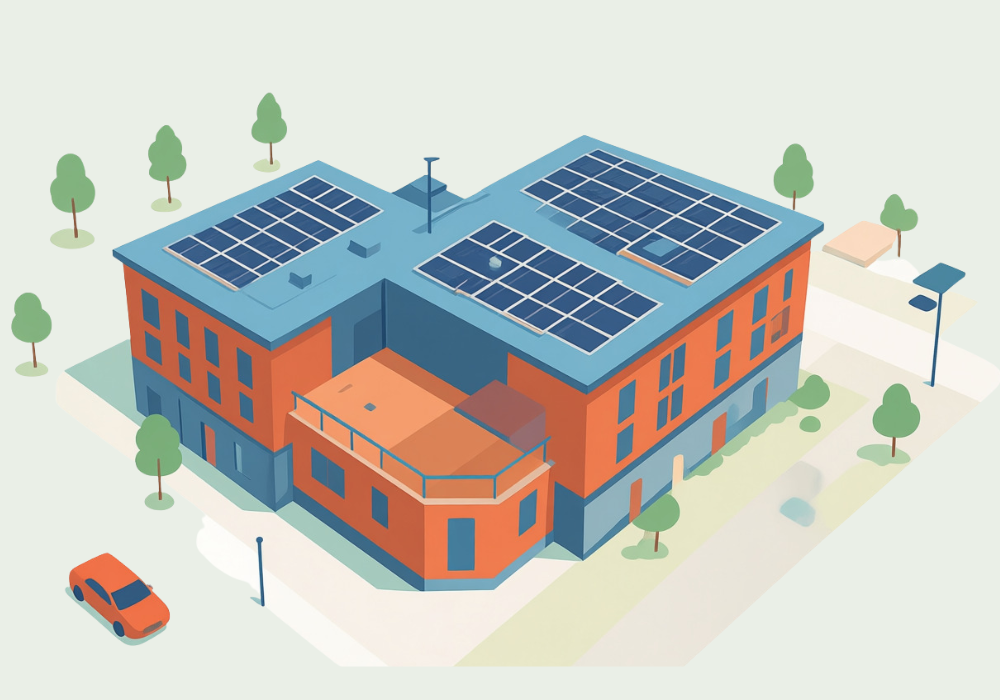
Across Canada, a growing movement of citizen-led cooperatives, community bonds, and localized micro-investments is successfully bypassing traditional venture capital bottlenecks. From solar arrays in rural Ontario and wind turbines overlooking the Great Lakes to affordable net-zero housing in British Columbia and EV-charging networks spanning Eastern Canada, local funding models are rewriting the playbook for green infrastructure.
While centralized energy grids have traditionally dictated power production and distribution, community-owned renewable projects are empowering everyday citizens to become active stakeholders in the energy transition. This investigative feature explores eight pioneering Canadian initiatives that demonstrate how grassroots financing is bridging the gap between climate ambition and capital execution—proving that when it comes to powering a sustainable future, local investment is a formidable force.
Detailed Chronology and Evolution of Canadian Community Power
The journey of localized renewable energy ownership in Canada did not happen overnight. It evolved through decades of regulatory advocacy, cooperative organizing, and innovative financial structuring.
The Genesis: WindShare and Toronto’s Urban Turbine (Early 2000s)
The roots of modern Canadian community power trace back to the early 2000s, when the concept of citizen-owned renewable energy was practically nonexistent in the country. A major milestone was reached with WindShare, a pioneering cooperative that partnered with Toronto Hydro to co-own a commercial wind turbine in the city.
By bringing together 825 Toronto residents and a municipal utility, WindShare proved that urban environments could host clean energy projects and that everyday citizens could directly share in the ownership and economic returns of wind generation. This groundbreaking project shattered the perception that large-scale renewables were exclusively the domain of heavy industry or government utilities.
Scaling Up: The Rise of Solar Cooperatives and Regional Expansion (2010s)
Building on the momentum of early wind projects, the 2010s saw a proliferation of solar cooperatives and regional green energy funds across Canada.
- 2010: The Ontario Renewable Energy Cooperative (OREC) was founded, carving a path for community participation in heavy wind generation. By partnering to partly own two massive wind turbines along the shores of Lake Huron, OREC demonstrated that rural-urban cooperative alliances could successfully scale up generation capacity to supply millions of kilowatt-hours annually.
- Mid-2010s: Organizations like SolarShare emerged to scale solar energy access. Projects like Wintergreen outside Kingston, Ontario, demonstrated how streamlined cooperative models could pool capital from hundreds of individuals to construct utility-grade solar arrays capable of powering entire suburban neighborhoods. Simultaneously, innovative bio-energy ventures like ZooShare began transforming organic waste into grid-ready electricity, expanding the technological scope of community power beyond simple wind and solar.
Diversification into Transportation, Efficiency, and Equity (Late 2010s–Present)
In recent years, the community bond model has evolved beyond raw electricity generation into adjacent sectors of the low-carbon economy: green transportation, urban density, retrofitting, and energy equity.
- EcoCharge broke new ground by applying the community bond framework to electric vehicle charging infrastructure, distributing ownership of charging stations across Quebec and New Brunswick.
- Initiatives like British Columbia’s Propolis utilized community bonds to finance net-zero, affordable housing developments, proving that low-carbon building design and social equity can be funded concurrently.
- Concurrently, organizations like the Faithfully Green Fund and Saskatchewan’s Wascana cooperative addressed the accessibility gap, enabling apartment-dwellers and historic faith communities to participate in the clean energy transition through shared solar panel arrays and revolving retrofit loans.
Supporting Context & Metrics: The Financial Mechanics of Grassroots Green Energy
To truly understand the impact of Canada’s community power movement, one must examine the specific mechanics and metrics driving these eight pioneering initiatives.

| Project Name | Location | Primary Technology / Focus | Financing Mechanism | Key Impact & Metrics |
|---|---|---|---|---|
| 1. Wintergreen | Kingston, ON | Solar Photovoltaic | Cooperative Membership / SolarShare | Generates enough clean electricity to power 100 homes. |
| 2. ZooShare | Ontario | Biogas / Organic Waste Conversion | Community Bonds (800+ members) | Converts animal and food waste into grid electricity (Note: interest payments suspended in 2023; bonds to be repaid as cash permits). |
| 3. EcoCharge | Quebec & New Brunswick | Electric Vehicle Charging Infrastructure | Community Bonds | Community members collectively own roughly 100 EV charging stations. |
| 4. Propolis | Kamloops, BC | Net-Zero Affordable Housing | Community Bonds ($1M raised from ~100 investors) | Funded the construction of a 53-unit net-zero apartment building. |
| 5. Faithfully Green Fund | Canada-wide (Multi-faith) | Deep Energy Retrofits | Revolving Loans & Community Bonds | Finances green retrofits for temples, churches, and mosques on a revolving basis. |
| 6. Wascana | Regina, SK | Urban Solar Arrays | Cooperative Ownership (~100 members) | Installed 400 solar panels, specifically catering to apartment-dwellers unable to mount private solar. |
| 7. WindShare | Toronto, ON | Urban Wind Generation | Cooperative & Utility Co-ownership (825 residents) | Canada’s first citizen-owned clean energy project; co-owned a commercial wind turbine with Toronto Hydro. |
| 8. OREC | Lake Huron, ON | Large-Scale Wind Generation | Cooperative Ownership (Founded 2010) | Partly owns two wind turbines generating ~3.3 million kWh annually (powering 400+ homes/year). |
The Power of the Community Bond
At the heart of many of these projects is the community bond—a fixed-income retail investment product that allows local residents to lend money to a specific, mission-driven local project in exchange for a set financial return. Unlike traditional municipal bonds backed by tax revenues, community bonds tie investor capital directly to tangible local infrastructure, such as a solar farm, an apartment complex, or a network of EV chargers.
This financial vehicle solves two major hurdles in the energy transition:
- Capital Access for Green Pioneers: Smaller non-profits, housing co-ops, and renewable energy groups often struggle to secure traditional commercial bank financing due to perceived risks or unconventional project structures. Community bonds tap into local pools of eager, values-driven capital.
- Democratic Wealth Building: Instead of all dividends and profits flowing to distant corporate shareholders, financial returns are captured and redistributed within the local community, fostering civic pride and local economic resilience.
Official Perspectives and Industry Insights
The evolution of grassroots energy financing has attracted attention from municipal planners, financial regulators, and cooperative leaders alike.
Industry analysts emphasize that while community-scale projects face unique hurdles—such as navigating complex regulatory frameworks and fluctuating interest rates—they offer an irreplaceable social license for infrastructure development. Public pushback against large-scale transmission lines and wind farms is often rooted in a sense of disenfranchisement; local residents feel that industrial projects are being imposed upon them by distant developers for outside profit.
By contrast, cooperative models flip this dynamic entirely. When residents hold a direct stake in a project—whether through a SolarShare membership in Kingston, a Wascana solar panel share in Regina, or a bond in Kamloops’ Propolis development—opposition gives way to active advocacy.
Moreover, recent financial realities have tested the resilience of these models. For instance, the restructuring at ZooShare—where member votes led to a temporary pause on interest payments in favor of prioritizing eventual capital repayment—highlights the genuine financial risks inherent in green entrepreneurship. Unlike government-backed megaprojects, community initiatives operate in the real economic marketplace, where supply chain disruptions, regulatory shifts, and operational hurdles can impact bottom lines. Yet, the willingness of members to navigate these challenges collectively underscores the deep ideological and community commitment underpinning these ventures.

Future Outlook: The Road Ahead for Localized Clean Energy
As Canada charts its course toward net-zero emissions by 2050, the role of localized, community-driven financing is poised to transition from a decentralized alternative to a cornerstone of national energy strategy.
Overcoming Barriers to Scale
For the community power sector to fully realize its potential, several systemic hurdles must be addressed:
- Regulatory Streamlining: Provincial energy boards and utility regulators must modernize interconnection policies to make it easier and more cost-effective for small-scale cooperative generation projects to feed power back into the main grid.
- Expanded Financial Toolkits: Increased government-backed loan guarantees, tax credits for community bonds, and partnerships with credit unions can significantly lower the barrier to entry for everyday investors.
- Equity and Inclusion: As demonstrated by projects like Wascana and the Faithfully Green Fund, future green financing initiatives must intentionally design solutions for renters, low-income households, and marginalized communities who have historically been excluded from the rooftop solar and green retrofit markets.
A Decentralized, Resilient Future
The transition to a low-carbon grid is fundamentally a massive infrastructure challenge, but it is equally a social and democratic one. The eight initiatives highlighted—from the urban wind turbines of Toronto to the net-zero apartments of Kamloops—prove that Canadians are more than ready to put their money where their values are.

By democratizing ownership of our energy systems, we do more than just reduce carbon emissions; we build more resilient local economies, foster deep community cohesion, and ensure that the wealth generated by the clean energy transition stays where it belongs: in the hands of the people.



