

Executive Overview
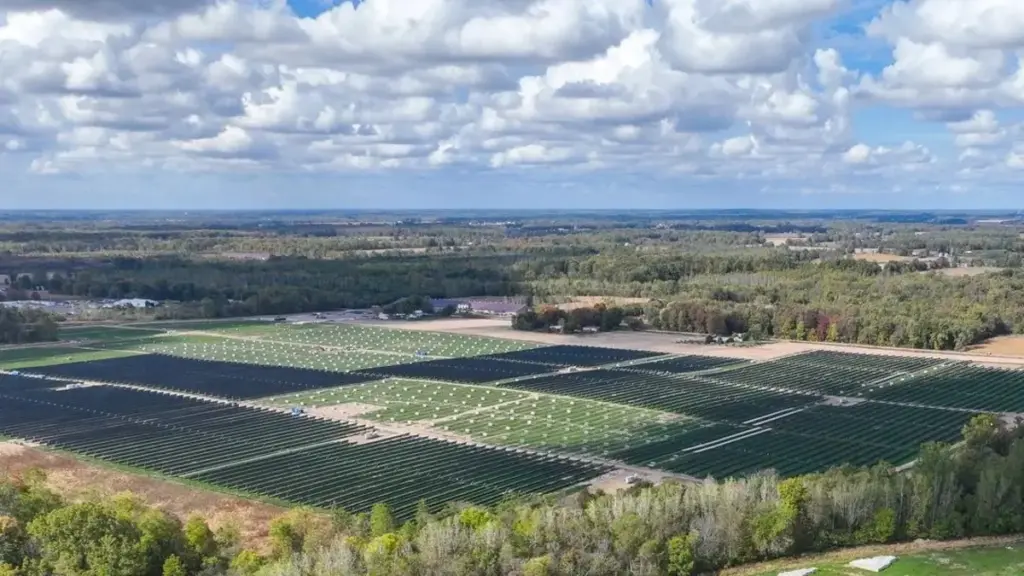
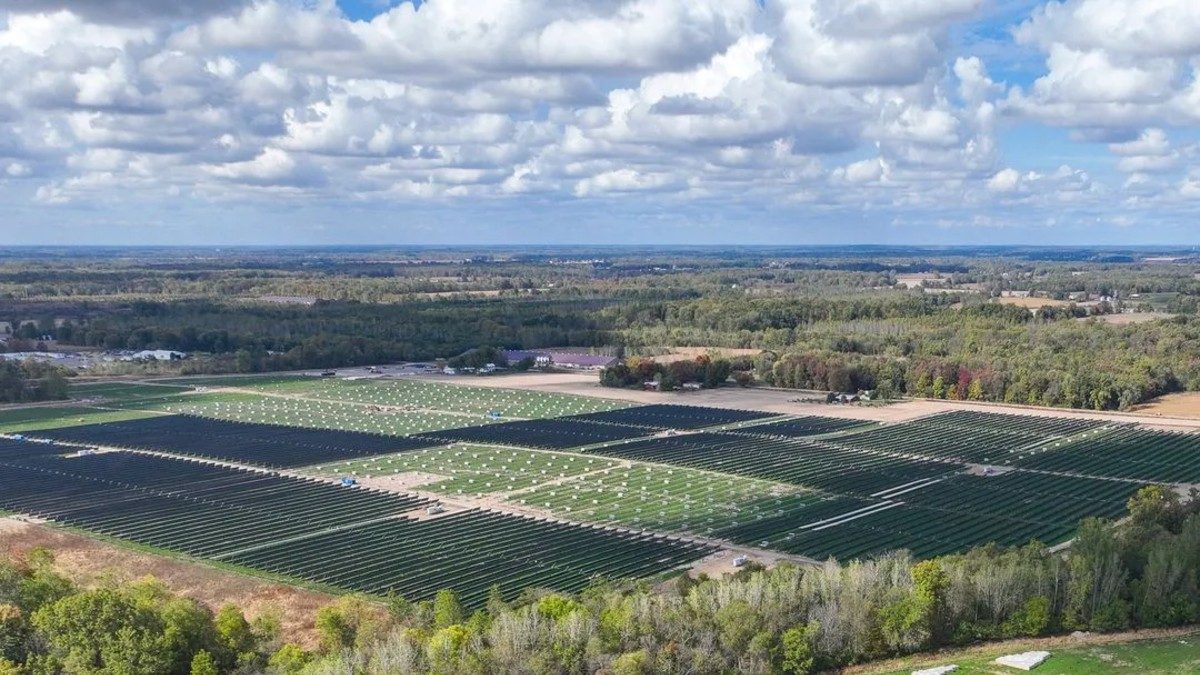
The transition of the American industrial sector toward absolute sustainability achieved a significant milestone this week with the completion of the Cold Creek Solar Park. Situated near Coldwater, Michigan, this sprawling 100-megawatt (MW) clean energy installation represents a major triumph for public-private collaboration in renewable energy generation. Developed by Detroit-based energy heavyweight DTE Energy and heavily funded by American automotive pioneer Ford Motor Company, the $194 million project underscores a shared commitment to local decarbonization and grid modernization.
The Cold Creek installation is far more than a regional solar farm; it is the vanguard of a massive procurement strategy designed to fundamentally reshape how legacy manufacturing operates. By participating in DTE’s voluntary renewable energy initiative—known as CleanVision MIGreenPower—Ford has secured a dedicated source of carbon-free electricity capable of feeding its home-state manufacturing footprint.
While the facility officially began construction in April 2025 and has now crossed the finish line of completion, its true weight lies in its broader environmental framework. Generating enough capacity to power between 23,000 and 25,000 typical Michigan households annually, Cold Creek serves as the cornerstone for Ford’s ambitious regional targets. Yet, the road to absolute sustainability has not been without adjustments; timeline shifts reveal the complex operational challenges inherent in greening a global supply chain. As policymakers, environmental advocates, and industrial stakeholders analyze the rollout of Cold Creek, the project stands as a real-world stress test for corporate-utility partnerships aiming for a net-zero future.
Detailed Chronology of the Cold Creek Project
The realization of the Cold Creek Solar Park is the culmination of years of strategic planning, regulatory alignment, and infrastructural execution. Understanding the trajectory of this project requires looking back at the formal agreements that laid its foundation and examining the pace of its physical realization across Michigan’s landscape.
The 2022 Agreement: Planting the Seeds of Change
The origin story of the Cold Creek facility traces back to August 2022. During a period of intense industry-wide introspection regarding climate change and supply chain emissions, Ford and DTE Energy struck a landmark agreement. Under the terms of this pact, Ford committed to purchasing an unprecedented 650 megawatts of renewable energy through DTE’s CleanVision MIGreenPower program.
At the time of the announcement, the agreement was hailed as the largest renewable energy purchase ever finalized with a utility provider in the United States. It established a framework wherein large corporate entities could directly finance and anchor the construction of new wind and solar arrays within the state. For Ford, the partnership was designed to secure a steady stream of green energy to offset its intensive manufacturing demands in Michigan, ensuring that the economic and environmental benefits of the transition remained local.
Breaking Ground: April 2025
Following nearly three years of site acquisition, environmental impact assessments, engineering designs, and transmission interconnection studies, physical work on the Cold Creek Solar Park officially commenced in April 2025. Heavy machinery moved onto the rural acreage near Coldwater, transforming agricultural and open tracts into a high-tech energy generation hub.
The construction phase called for the deployment of hundreds of thousands of advanced photovoltaic panels, mounting structures optimized for maximum solar capture, and high-voltage substation upgrades capable of feeding the massive power yield directly into DTE’s regional distribution network. Despite supply chain hurdles that historically plague large-scale infrastructure projects, development proceeded steadily, leading up to its recent completion announcement.
Supporting Context & Metrics: Unpacking the Numbers
To fully grasp the scale of the Cold Creek Solar Park, one must examine the hard metrics governing its financial footprint, energy output, and socioeconomic impact on the state of Michigan.
| Metric Category | Project Detail / Specification |
|---|---|
| Nameplate Capacity | 100 Megawatts (MW) |
| Total Capital Investment | $194 Million |
| Geographic Location | Near Coldwater, Michigan |
| Utility Provider | DTE Energy |
| Primary Corporate Offtaker | Ford Motor Company |
| Program Affiliation | CleanVision MIGreenPower |
| Equivalent Household Power | 23,000 – 25,000 Michigan Homes |
| Construction Timeline | April 2025 – Late 2026 |
Financial Magnitude and Program Framework
The $194 million poured into Cold Creek represents a substantial capital deployment aimed at expanding Michigan’s renewable infrastructure. Through the CleanVision MIGreenPower mechanism, participants like Ford do not merely purchase existing green credits; they act as financial anchors that de-risk and enable the physical construction of new generation assets. This program is structured to allow both residential and commercial subscribers to match their electricity consumption with locally generated wind and solar resources, driving the rapid expansion of Michigan’s clean energy grid without shifting undue financial burdens onto non-participating ratepayers.
Economic Ripples in Host Communities
Beyond its environmental merits, utility-scale solar projects of this magnitude inject vital economic activity into rural municipalities. While DTE has not yet released granular, project-specific employment figures exclusively for Cold Creek, the utility’s broader projections for Ford’s massive 650 MW procurement framework paint a clear picture of localized benefits.
When the overarching multi-project agreement was initially unveiled, DTE estimated that the cumulative construction phases would generate roughly 250 temporary, high-paying jobs for trade workers, electricians, and civil engineers, alongside approximately 10 permanent operational and maintenance positions. Furthermore, host communities reap long-term financial rewards through increased local tax revenues. Local governments can channel these funds into critical civic infrastructure, including road repairs, public school funding, library enhancements, and the operational readiness of first responders and emergency services.
Official Statements and Evolving Timelines
As corporate sustainability pledges face increasing scrutiny from investors and consumers alike, the timelines attached to these promises are subject to intense evaluation. The completion of Cold Creek brings to light a notable shift in Ford’s operational targets regarding its Michigan manufacturing plants.
The Adjusted Deadline: Shifting from 2025 to 2027
When Ford and DTE initially announced their historic 650 MW clean energy pact in August 2022, corporate leadership set an aggressive target: Ford aimed to assemble every single vehicle it manufactures in Michigan utilizing the equivalent of 100% carbon-free electricity by the end of 2025.
However, in the latest official communications accompanying the completion of Cold Creek, that milestone has been officially adjusted. The target date for powering all Michigan assembly operations with carbon-free electricity has been moved to the end of 2027.
Notably, neither DTE Energy nor Ford Motor Company provided an explicit, detailed explanation for the two-year timeline extension in their joint announcements. Industry analysts suggest that such adjustments are frequently the result of complex variables, including the intricate sequencing of transmission line upgrades, localized zoning and permitting delays, global supply chain bottlenecks for heavy electrical components like step-up transformers, and the phased rollout of the remaining solar and wind assets tied up in the broader 650 MW agreement.
Maintaining Transparency in the Energy Transition
Despite the timeline adjustment, stakeholders emphasize that the foundational commitment remains entirely intact. Cold Creek is explicitly designated as the first of several major DTE projects currently moving through the pipeline to fulfill Ford’s procurement goals. As subsequent installations reach completion over the coming months and years, the cumulative energy yield will bridge the gap, bringing the automaker’s iconic home-state factories—such as the historic Rouge Complex—closer to complete decarbonization.
Future Outlook: The Road to Global Net-Zero
The commissioning of the Cold Creek Solar Park is a vital stepping stone in a much grander, multi-decade strategic vision for both DTE Energy and Ford Motor Company.

Ford’s Global Decarbonization Roadmap
For the automaker, the regional milestones achieved in Michigan are components of a tiered, global environmental strategy:
- State-Level Goal (2027): Achieve the equivalent of 100% carbon-free electricity across all vehicle manufacturing facilities located within the state of Michigan.
- Global Manufacturing Goal (2035): Transition 100% of Ford’s global manufacturing footprint to rely exclusively on carbon-free electricity.
- Enterprise-Wide Carbon Neutrality (No later than 2050): Achieve complete carbon neutrality across the entirety of the company’s vehicles, global manufacturing operations, and extensive supply chain network.
To hit these aggressive markers, procurement models pioneered through DTE’s MIGreenPower program will likely serve as blueprints for Ford’s operations in other states and international markets. As electric vehicle (EV) production ramps up globally, ensuring that the manufacturing process itself is powered by clean electrons is essential to maintaining genuine lifecycle sustainability.
The Broader Future of Michigan’s Grid
For DTE Energy, projects like Cold Creek validate the effectiveness of voluntary green tariffs in accelerating the clean energy transition. As corporate demand for renewable energy surges, utilities are finding that collaborative financing models can rapidly expand generation capacity without compromising grid reliability.
Looking ahead, the integration of 100 MW of solar power from Coldwater into the grid highlights the ongoing modernization of Michigan’s energy infrastructure. With energy storage solutions increasingly pairing with utility-scale solar arrays to combat intermittency, the next generation of renewable projects will likely feature advanced battery systems to ensure round-the-clock clean power delivery.
Ultimately, the Cold Creek Solar Park stands as a testament to what can be achieved when industrial giants and regional energy providers align their long-term interests. While challenges in project execution and timeline management remain realities of the modern industrial landscape, the completion of Cold Creek proves that the transition to a carbon-free economy is steadily moving off the drawing board and into the physical world.



