Executive Overview
An underground power line may not sound like the stuff of technological revolution, but the newly completed Champlain Hudson Power Express (CHPE) represents a monumental leap forward for regional grid planning, infrastructural ambition, and carbon emissions reduction. Stretching an impressive 339 miles from the Canadian border to Queens, New York, this engineering marvel is designed to supply up to 20% of New York City’s total electricity demand. Crucially, that power will be drawn almost entirely from the abundant, clean reservoirs of Quebec’s hydroelectric network.
Yet, as the energy sector watches closely, this high-profile project is experiencing a complicated infancy. The line has spent the majority of its operational weeks offline due to a series of early-stage outages, sparking discussions among energy analysts regarding technical teething pains and broader systemic vulnerabilities—most notably, the looming threat of multi-year droughts impacting Quebec’s water supplies.
This deep dive examines the historical roots of the CHPE, the engineering feats required to lay North America’s longest underground transmission line, the immediate hurdles threatening its launch, and what this multi-billion-dollar experiment means for the future of decarbonized cross-border energy markets.
Detailed Chronology: From Conception to Construction and Crisis
A 15-Year Regulatory Odyssey
The vision behind the CHPE—affectionately nicknamed "Chippy" by those in the industry—dates back a decade and a half. The formal permitting process kicked off in March 2010, driven by a mutual desire to bridge the energy generation powerhouse of Quebec with the ravenous, fossil-fuel-dependent demand center of southern New York.
For years, the project navigated a labyrinth of state, federal, and local regulatory hurdles, environmental impact assessments, and community consultations. The core premise, however, remained unchanged: create a direct, high-capacity energy highway that could bypass congested terrestrial rights-of-way and deliver carbon-free electricity directly to the heart of the nation’s largest municipal market.
Construction Marvels and the $6 Billion Price Tag
Realizing this vision required a powerhouse partnership. Transmission Developers—a firm owned by alternative asset management giant Blackstone—teamed up with Hydro-Québec, the province’s crown-owned generation and transmission titan. Construction finally broke ground in late 2022 and wrapped up earlier this year, culminating in a privately funded price tag of $6 billion.
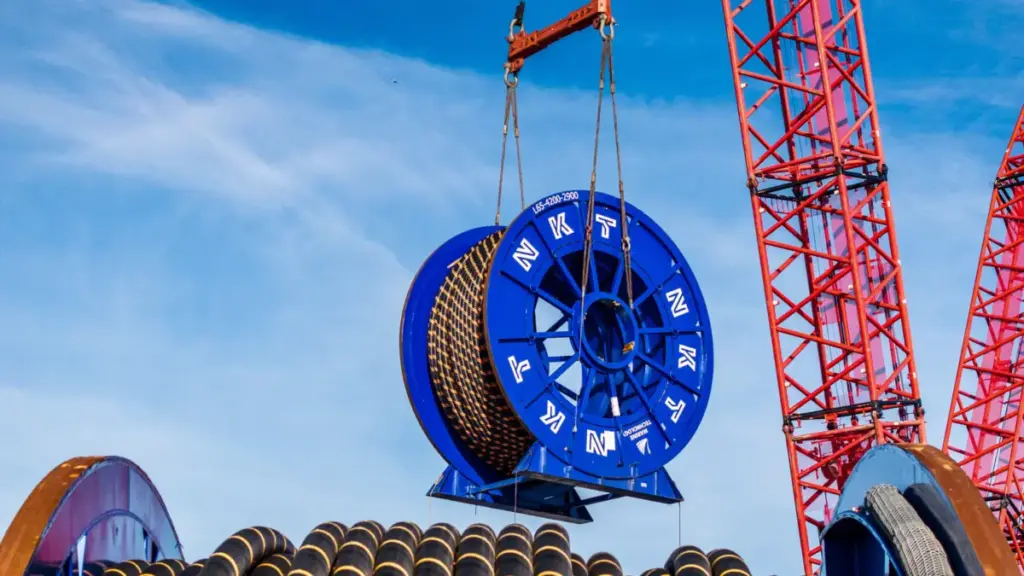
The physical construction of the line stands as a landmark achievement in modern civil engineering. The CHPE consists of a bundle of two high-voltage direct-current (HVDC) power cables, each measuring approximately five inches in diameter. To minimize visual blight and environmental disruption, developers buried this bundle either underground or underwater along the entire length of New York State.
A substantial portion of the line was laid directly at the murky bottom of the Hudson River. This phase of the operation required specialized marine vessels outfitted with high-powered water jets that blasted deep into the river sediment, carving out precise trenches to safely cradle and bury the cables far away from marine traffic and anchors.
A Bumpy Rollout: The 2026 Outages
Despite the triumphs of its engineering and construction phase, the CHPE’s operational debut has been decidedly rocky. The system has suffered two distinct outages during its maiden months:
- Outage One: Striking on July 1, industry reports traced the initial failure to a converter trip on the Canadian side of the border.
- Outage Two: Beginning on July 4, this second disruption kept the power line out of commission through late July, prompting intense scrutiny from energy regulators and trade publications alike.
Experts, however, urge a degree of patience, framing these glitches as standard operational growing pains for complex megaprojects. Normand Mousseau, a physics professor at the Université de Montréal, noted in interviews with regional press that massive transmission systems cannot be fully stress-tested under real-world conditions until they are officially energized and integrated into the broader grid.
Investigations by trade publications like RTO Insider revealed that the root cause of the prolonged July outage was a damaged section of cable located on the U.S. side of the border. The cable’s manufacturer swiftly deployed engineering experts to inspect the site, isolate the failure, and execute repairs.
Supporting Context & Metrics: The Geopolitics of Cross-Border Clean Energy
The Quebec-New York Energy Synergy
To understand the strategic importance of the CHPE, one must examine the energy landscapes of the two jurisdictions it connects. Quebec’s energy grid is an environmental gold standard: over 99% of the province’s electricity is generated from renewable sources. The vast majority of its domestic demand and export capacity is met by sprawling hydroelectric networks, complemented by rapidly expanding wind energy infrastructure.
New York State, conversely, features a more diversified generation portfolio containing in-state hydroelectricity, nuclear energy, and wind farms. Nevertheless, the state continues to rely heavily on fossil fuel-fired power plants—particularly natural gas facilities—to meet peak load demands downstate. By funneling surplus Canadian hydro into New York City, the CHPE acts as a massive displacement valve for carbon emissions.
The Macroeconomics of Interconnection
Energy economists have long championed grid interconnection as a cornerstone of the global green transition. Moving electricity rapidly and efficiently across geographic boundaries maximizes resource utilization and dramatically reduces the total volume of new generation capacity that regions must build from scratch.
Academic research underscored by landmark studies in journals like Nature Climate Change and data from the Pacific Northwest National Laboratory (PNNL) demonstrates that expanding high-voltage transmission lines yields dual benefits:

- Emissions Reductions: Seamlessly integrating remote renewable assets (such as northern hydro or western wind) into urban demand centers accelerates the retirement of dirtier fossil-fuel infrastructure.
- Lower System Costs: Accessing diverse, geographically decoupled generation pools protects ratepayers from localized fuel price shocks, lowering overall operational and capacity costs for grid operators.
Parallels in New England
The teething issues plaguing the CHPE are not isolated to New York. Similar operational headwinds have afflicted the New England Clean Energy Connect (NECEC) line. Opening in January, the 145-mile transmission line linking Quebec to Maine has also weathered intermittent outages and initial delays, resulting in minimal additional energy flow into the Northeast market thus far. These concurrent challenges highlight the inherent technical complexities of stitching together cross-border, high-voltage macro-grids across rugged terrain.
Official Statements and Industry Reactions
Grid Reliability and the Safety Net
For New York energy planners, the timing of the CHPE’s outages could have been catastrophic had the grid been overly dependent on its capacity. Fortunately, system operators had accounted for the unpredictability inherent in commissioning a first-of-its-kind transmission line.
Kevin Lanahan, a spokesperson for the New York Independent System Operator (NYISO)—the private, non-profit corporation responsible for managing the state’s bulk electricity grid—offered reassurance regarding regional power reliability during a sweltering summer heat wave:
"Our planning studies did not assume CHPE would be available this summer, and that was one reason the grid performed reliably during the heat wave earlier this month. A core principle of reliability planning is not relying on any single project."
Lanahan’s comments underscore a foundational tenet of modern power systems engineering: redundancy and risk mitigation. While megaprojects like the CHPE are envisioned as the backbone of future decarbonized grids, grid operators design their short-term capacity margins to withstand the unexpected failure of any single generation or transmission asset.
Repair Progress and Outlook from Hydro-Québec
Addressing the mechanics of the July outage, Hydro-Québec officials confirmed that swift remediation efforts were underway. Lynn St-Laurent, a corporate spokesperson for Hydro-Québec, provided an optimistic update regarding the timeline for returning the line to service:
"The damaged portion of the cable has been removed and replaced. It is currently estimated that the remaining work, including necessary post-repair testing, will be completed by the weekend."
Once those post-repair diagnostics are successfully finalized, electricity is expected to resume flowing southward, allowing engineers to resume the gradual process of ramping up load testing and integrating the line into daily market dispatches.
Future Outlook: Overcoming Barriers for Long-Term Success
As the CHPE moves past its initial hardware failures, planners and investors are already looking toward the horizon to evaluate the long-term viability and constraints of this multi-billion-dollar bet on clean energy transmission.
Building Long-Term Confidence
In the coming months and years, as the equipment undergoes rigorous stress-testing under varying weather conditions and seasonal demand peaks, utilities and regional grid operators will slowly build confidence in its reliability. The pressure to get projects like the CHPE working smoothly is immense; massive underground and subaquatic transmission lines require monumental capital outlays that must be justified by decades of reliable, uninterrupted service.
If successful, the CHPE will transition from a supplementary test project to a foundational pillar of New York’s statutory climate goals, which mandate a zero-emission electricity sector by 2040.
The Shadow of Climate Change: Drought in the North
However, a successful transmission line is only as viable as the energy source feeding it. Energy analysts and environmental scientists point to a critical, overarching variable moving forward: the sustained health and stability of Quebec’s vast hydropower fleet.
For the past three consecutive years, the region encompassing Quebec’s northern watersheds has experienced intense, persistent drought conditions. These dry spells have eaten deep into the natural water reserves and reservoir levels traditionally relied upon to drive maximum hydroelectric generation capacity.
This environmental reality introduces a complex risk factor into the equation. Even if the CHPE transmission corridor is operating at peak technical efficiency, severe hydrological deficits in northern Canada could constrain the volume of abundant, cheap hydropower available to export across the border. Moving forward, climate-induced volatility in precipitation patterns may force grid planners to closely monitor northern reservoir levels alongside substation diagnostics and cable integrity.
Conclusion
The Champlain Hudson Power Express is much more than a bundle of five-inch copper and insulation cables buried beneath rivers and state soil; it is a stress test for the future of North American energy policy. While early outages and environmental pressures like northern droughts highlight the fragility of mega-infrastructure transitions, the underlying logic of the project remains unassailable. By forging deep, clean energy ties between Canadian renewables and American urban centers, projects like the CHPE point the way toward a more interconnected, resilient, and decarbonized grid. As engineers finalize repairs and look toward the future, the lessons learned along the Hudson River will shape the blueprint for the next generation of energy transmission across the continent.