

Executive Overview
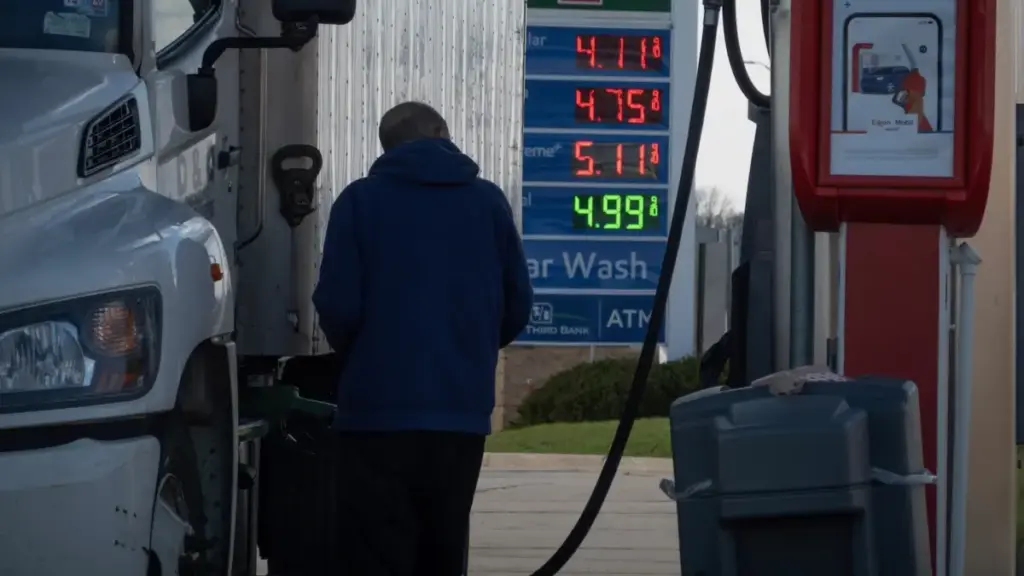
The American economy is facing an unprecedented energy squeeze as diesel fuel prices shatter historic records day after day. According to data from the American Automobile Association (AAA), the national average for a gallon of diesel has climbed to a staggering $5.94. This represents an alarming $2.27 surge since late February, when the United States and Israel launched a military campaign against Iran. In certain regions, the financial burden is far more severe; California drivers and businesses are confronting punishing prices averaging $7.87 per gallon.
While the average American motorist may not pump diesel directly into a personal sedan, the societal and economic dependence on the fuel is absolute. Diesel is the invisible lifeblood of global commerce, powering the heavy-duty semi-trucks, cargo ships, and freight trains that move everything from fresh milk and pharmaceuticals to raw lumber and electronics. The costs of high-priced fuel are inevitably embedded into the final retail prices consumers encounter at checkout counters and grocery aisles.
The last time consumers experienced such severe diesel inflation was in 2022, in the immediate wake of Russia’s invasion of Ukraine, when prices peaked at $5.82 per gallon. However, the current crisis is driven by a more complex convergence of geopolitical conflicts, structural supply constraints, and critically depleted domestic inventories.
The financial fallout is already immense. Research from a dedicated Brown University tracker indicates that the surging price of diesel has cost U.S. consumers an additional $46 billion—translating to roughly $350 per household. While gasoline prices have drawn more immediate public attention with a $55 billion impact, diesel’s jaw-dropping 61 percent price spike has dramatically outpaced gasoline’s 41 percent increase.
Compounding the economic distress, these crippling fuel and home heating costs arrive at the worst possible political juncture: directly ahead of the midterm elections. With the economy firmly positioned at the forefront of voters’ minds, soaring transportation and energy expenses threaten to reshape the political landscape, particularly in cold-weather states where residents face punishing home heating bills.
Detailed Chronology: How the Crisis Unfolded
To understand the severity of the current diesel emergency, it is essential to trace the geopolitical and economic chain of events that transformed a stable energy market into a volatile pressure cooker.
Late February: The Outbreak of Conflict
The catalyst for the current trajectory occurred in late February, when the United States and Israel initiated military operations against Iran. While military analysts focused heavily on immediate strategic objectives and regional stability, energy markets reacted with immediate panic. The conflict effectively paralyzed the Strait of Hormuz—a narrow maritime chokepoint through which approximately 10 percent of the world’s seaborne diesel once traveled.
The near-total closure of this critical trade route instantly severed traditional supply lines to global markets. Refined products that normally flowed seamlessly from the Middle East to international buyers were suddenly bottlenecked or forced to take longer, more expensive maritime detours.
Spring and Summer: The Supply Chain Lag
In the weeks following the outbreak of the war, the full impact on average consumers was temporarily masked. David Ortega, a professor of food economics and policy at Michigan State University, explained the mechanics of this lag to the Associated Press:
"Early on, much of the cost increase gets absorbed along the supply chain through existing freight contracts and retailer margins. But as contracts reprice and fuel surcharges take hold, more of that cost makes its way to the grocery store."
As long-term freight agreements expired throughout the spring and early summer, logistics companies had no choice but to pass astronomical fuel surcharges down to manufacturers, wholesalers, and ultimately, everyday shoppers.
August and September: The Perfect Storm of Depleted Inventories
By late summer, the crisis intensified due to compounding international pressures. Patrick De Haan, head of petroleum analysis for fuel-tracking app GasBuddy, noted that diesel has become entangled in intense geopolitical crosshairs. In addition to the ongoing conflict in Iran, escalating and increasingly successful Ukrainian drone and missile strikes against Russian oil refineries have severely restricted Moscow’s export capabilities.
"Russia is no longer supplying the global market," De Haan emphasized.
Simultaneously, domestic U.S. refineries have been operating at or near full operational capacity, leaving them virtually zero margin to pick up the slack or ramp up production. According to official data from the Energy Information Administration (EIA), domestic distillate inventories have plummeted to their lowest levels since 1982.
David Russell, global head of market strategy at TradeStation, underscored the precariousness of this timing in an interview with Reuters:
"We’re entering a key period for diesel consumption with the lowest inventories on record for early September. Farmers and truckers typically use more diesel in the autumn, which raises the stakes for the current crisis and increases the risk of sharper price increases."
Supporting Context & Metrics: The Ripple Effects on Consumers
The mathematics of the diesel crisis reveal a widespread economic burden that extends far beyond the transportation sector. The ripple effects touch nearly every corner of the American household budget.
Macroeconomic Impact and Household Costs
- National Average: $5.94 per gallon, representing a $2.27 jump since late February.
- Regional Extremes: Up to $7.87 per gallon in states like California.
- Aggregate Consumer Cost: An estimated $46 billion additional expenditure, averaging roughly $350 per U.S. household.
- Comparative Inflation: A staggering 61 percent increase in diesel prices compared to a 41 percent increase in regular gasoline over the same timeframe.
The Agriculture and Logistics Squeeze
Autumn is traditionally one of the most diesel-intensive seasons in the United States. Agricultural producers rely heavily on diesel-powered tractors, combine harvesters, and irrigation systems to harvest staple crops such as corn, soybeans, and wheat. Simultaneously, the transport sector experiences a surge in demand as goods are moved into regional distribution centers ahead of the winter holiday shopping season.
When the price of fuel climbs, it acts as a universal tax on physical goods. Because transportation costs are embedded in the price of every item shipped across the nation’s highways and railways, consumers see inflated prices not just at the pump, but at the supermarket checkout, the hardware store, and the pharmacy.
Official Statements and Industry Insights
Energy experts, economists, and advocacy groups have expressed profound concern over the trajectory of the fuel market and its downstream socioeconomic consequences.
The Geopolitical Reality of Distillates
Patrick De Haan of GasBuddy highlighted the unique structural vulnerabilities of the diesel market compared to regular gasoline. Because diesel is chemically and functionally tied to heavy industrial use, shipping, and heating, its supply-demand fundamentals are far more sensitive to global disruptions.
"Diesel right now is caught up in more of a geopolitical turmoil than gasoline," De Haan observed, pointing to the twin pressures of the Middle East conflict and the systematic degradation of Russian refining infrastructure.
The Looming Heating Oil Crisis
The crisis is expanding beyond transportation as the weather begins to cool. Heating oil, which is chemically nearly identical to diesel fuel, dictates the home-heating budgets of millions of families, particularly in the Northeastern United States.
Mark Wolfe, executive director of the National Energy Assistance Directors Association, warned Axios of the impending winter hardship:
"If you’re in the Northeast, then this is much more burdensome than anywhere else in the country. Families are getting hit by both gasoline and heating oil."
This impending financial strain is exacerbated by political battles in Washington. The administration of President Donald J. Trump has proposed eliminating the Low Income Home Energy Assistance Program (LIHEAP)—a crucial federal lifeline that helps low-income households afford their winter fuel bills. Without federal assistance, vulnerable populations face the terrifying prospect of choosing between heating their homes and purchasing basic necessities.
The Political Calculus of the Midterm Elections
With the midterms fast approaching, economic anxiety is dominating the political discourse. While energy prices traditionally operate as a secondary factor in voter decision-making, policy analysts suggest this election cycle could break historical molds.
Kevin Book, head of research at energy consulting firm ClearView Energy Partners, noted the heightened stakes in an interview with Axios:
"In cold-weather states—particularly those that rely on fuels other than natural gas—it could be a very big deal."
Voters facing exorbitant utility bills and inflated grocery prices are expected to channel their frustrations directly at the ballot box, turning energy policy and geopolitical stability into central referendum topics for the current administration.
Future Outlook: A Long Road to Recovery
For consumers hoping for quick relief, industry experts offer a sobering reality check. Even if the military conflicts in Iran and Ukraine were to find an immediate diplomatic resolution, energy markets cannot pivot overnight.
The path to price normalization requires a multi-step recovery process. According to Patrick De Haan, restoring equilibrium depends entirely on rebuilding depleted global stocks:
"After both of those are solved, then once the flow normalizes, that will start to help global inventories recover. Only after inventories have recovered do diesel prices really see a full decline."
Until the Strait of Hormuz reopens securely, Russian refining capacity stabilizes, and domestic U.S. inventories recover from historic lows, diesel prices will remain stubbornly elevated. For American families, trucking companies, agricultural producers, and policymakers alike, the coming months will demand extraordinary resilience in the face of persistent, high-cost economic headwinds.



