

Executive Overview
Modern transit architecture has long labored under a pervasive architectural critique: the notion of the "non-place." Coined by French anthropologist Marc Augé, the term describes spaces of transience—highways, hotel rooms, subway stations, and airports—that lack sufficient significance to be regarded as "places" in the traditional anthropological sense. They are sterile environments designed for swift movement, alienation, and anonymous processing, devoid of local identity, historical narrative, or communal belonging.
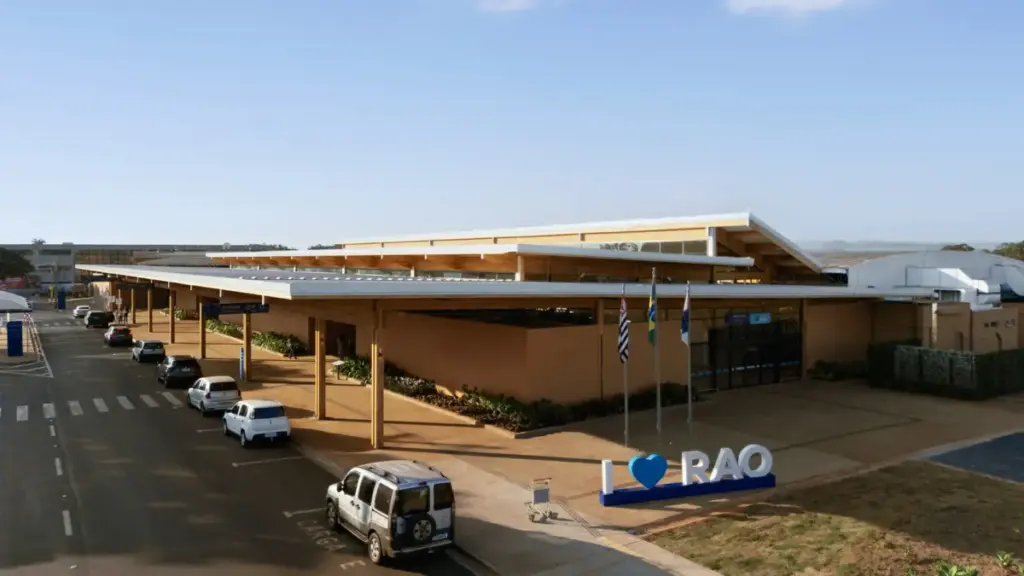
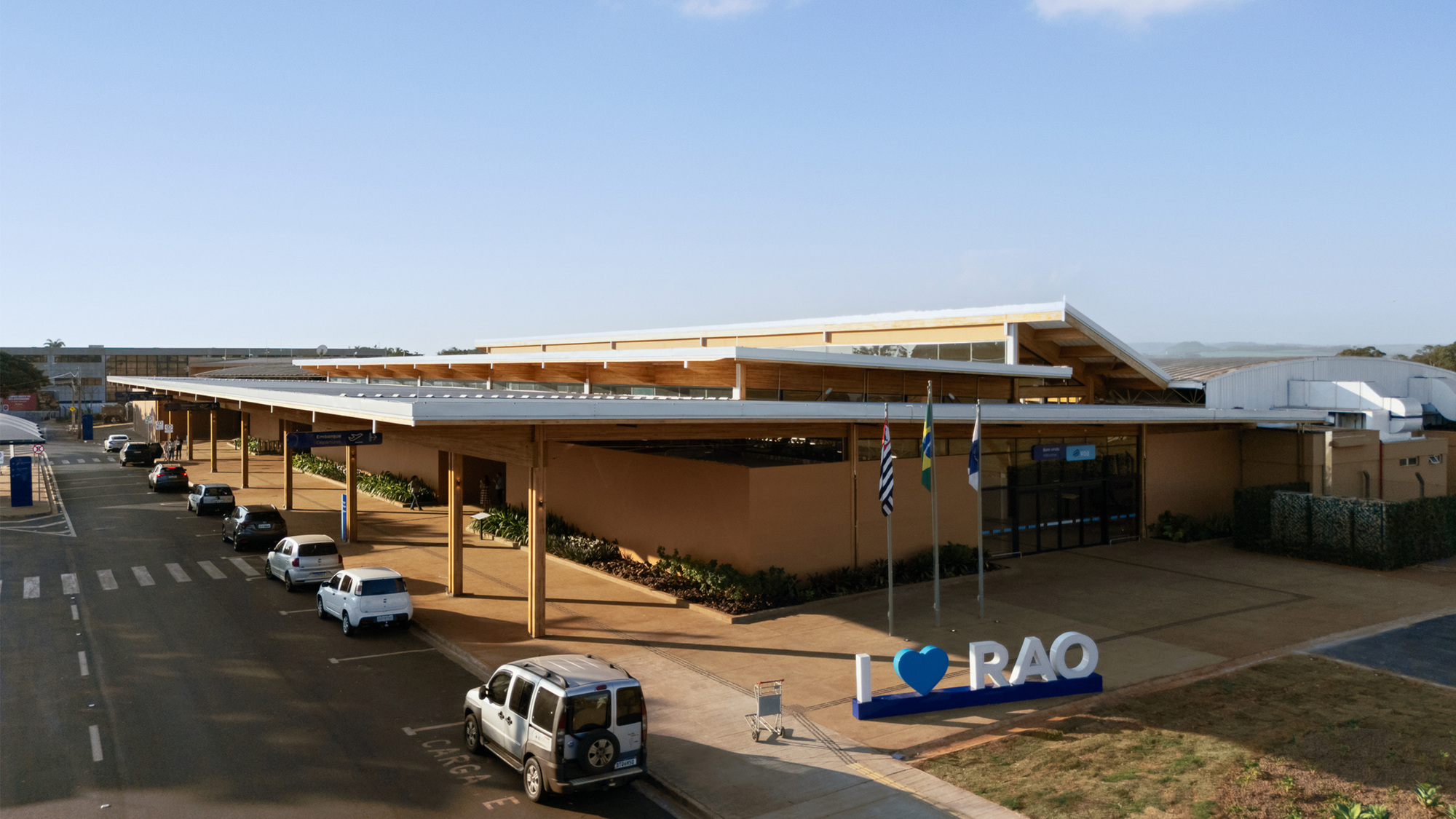
Challenging this homogenizing paradigm, Brazilian architecture firm Bacco Arquitetos Associados has completed a visionary overhaul of the Doutor Leite Lopes State Airport in Ribeirão Preto, São Paulo. Curated for the global architectural stage by Susanna Moreira and captured through the lens of architectural photographer Ana Mello, this project represents a radical departure from the steel-and-concrete monoliths that typically define aviation design.
Instead of treating the regional airport as a detached machine for processing passengers, Bacco Arquitetos Associados has re-engineered the facility into an active, breathing civic hub. By deliberately tying the terminal’s material language, spatial organization, and structural identity to the socio-economic and cultural context of Ribeirão Preto, the design bridges the gap between local heritage and global mobility. At the heart of this transformation is an extensive deployment of Glued Laminated Timber (glulam)—a sustainable structural choice that dramatically reduces the building’s carbon footprint while paying homage to the region’s deep-rooted agro-industrial identity.
This article explores the comprehensive narrative behind the Doutor Leite Lopes State Airport renovation, analyzing its structural innovations, urban integration strategies, material lifecycle, and its broader implications for the future of regional transport infrastructure in Latin America.
Detailed Chronology and Project Evolution
The Genesis of a Regional Hub
Located in Ribeirão Preto—one of the economic powerhouses of the state of São Paulo, globally renowned for its formidable agricultural and agro-industrial sectors—the Doutor Leite Lopes State Airport serves as a vital arterial link for business, logistics, and tourism. For decades, however, the airport’s infrastructure struggled to keep pace with the exponential economic growth of the region. Originally built to handle modest passenger volumes, the legacy terminal suffered from spatial fragmentation, operational bottlenecks, and an architectural identity that felt entirely disconnected from the vibrant, industrious spirit of Ribeirão Preto.
The imperative for modernization was clear: the airport required not merely a capacity expansion, but a complete conceptual reimagining. Bacco Arquitetos Associados won the mandate to rethink the facility, approaching the commission not as an engineering exercise in maximizing passenger throughput, but as an urban design challenge.
Phase-by-Phase Transformation
The architectural intervention unfolded across a carefully orchestrated timeline designed to minimize disruption to ongoing flight operations while executing complex structural maneuvers:
-
Master Planning and Urban Integration (Initial Phase):
The design team began by analyzing the airport’s interface with the surrounding urban fabric of Ribeirão Preto. Rather than treating the airport boundary as a defensive wall, Bacco Arquitetos Associados proposed integrating public plazas, accessible forecourts, and landscaped buffer zones that invite the local community into the airport ecosystem. -
Structural Overhaul via Sustainable Engineering:
The core of the terminal expansion relied on the implementation of advanced mass timber engineering. The architectural team transitioned away from traditional high-emission construction materials, opting instead for prefabricated Glued Laminated Timber (glulam) frames. This phase required intricate logistical coordination to transport massive timber elements to the site and assemble them with surgical precision.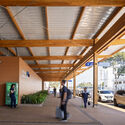
-
Spatial Reorganization and Passenger Experience:
Internally, the floor plans were completely overhauled to eliminate bottlenecks. Check-in zones, security checkpoints, and baggage claim areas were laid out in a continuous, highly legible sequence flooded with natural light. Sightlines were prioritized to ensure seamless orientation, transforming the user journey from a stressful hurdle into a calm, intuitive experience. -
Interior Finishing and Biophilic Integration:
The final phase focused on acoustic comfort, thermal insulation, and the integration of biophilic elements. Glazing was optimized to maximize solar heat rejection while welcoming diffused daylight deep into the building’s core, reducing reliance on artificial lighting and mechanical climate control.
Supporting Context & Metrics
Architectural Statistics & Design Parameters
- Project Name: Doutor Leite Lopes State Airport (Aeroporto Estadual Doutor Leite Lopes)
- Architectural Practice: Bacco Arquitetos Associados
- Location: Ribeirão Preto, State of São Paulo, Brazil
- Curator: Susanna Moreira
- Photography: Ana Mello
- Primary Structural Material: Glued Laminated Timber (Glulam)
- Design Philosophy: Rejection of the "non-place"; integration of regional agro-industrial identity; urban civic connectivity; carbon-negative / low-carbon structural strategy.
The Materiality of Place: Timber in the Tropics
The decision to utilize glulam as the primary structural system for Doutor Leite Lopes is arguably the project’s most defining characteristic. In contemporary aviation design, steel and reinforced concrete have long held a monopoly due to their perceived durability and capacity to span vast unobstructed distances. However, these materials carry an immense embodied carbon footprint.
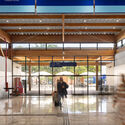
By shifting to engineered timber, Bacco Arquitetos Associados tapped into a material lifecycle that sequesters carbon dioxide throughout the building’s operational life. Furthermore, the warm, organic aesthetic of exposed timber creates a psychological shift for the traveler. Studies in neuro-architecture consistently demonstrate that natural wood surfaces lower stress hormones, reduce heart rates, and foster a sense of psychological safety—qualities desperately needed in high-anxiety travel environments.
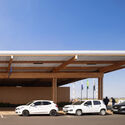
Moreover, the choice of timber carries a powerful symbolic resonance. Ribeirão Preto and its surrounding municipalities form the beating heart of Brazil’s agricultural innovation, historically tied to the cultivation and processing of sugarcane, ethanol, and agribusiness logistics. The sweeping timber arches and columns of the terminal evoke the organic forms of the agrarian landscape, establishing a subtle yet profound dialogue between the built architecture and the regional terrain.
Official Statements and Design Philosophy
In their official design statements, the architects at Bacco Arquitetos Associados elaborate on their departure from traditional transit typologies:
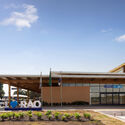
"In contrast to the concept of the ‘non-place,’ the design transforms the airport into an active urban element integrated into the Ribeirão Preto community. The Glued Laminated Timber (glulam) structure reduces the carbon footprint and establishes a connection with the local agro-industrial identity, converting transit infrastructure into a welcoming space for social gathering."
This philosophy challenges the foundational assumptions of 20th-century airport design. For decades, airports were designed to isolate passengers from the city—enclosed bubbles where time and space dissolve into a blur of duty-free shops and boarding gates. Bacco Arquitetos Associados posits that regional airports can and should function as civic extensions of their host cities.
By creating generous public gathering areas, open-air viewpoints, and welcoming spatial thresholds, the redesigned Doutor Leite Lopes State Airport welcomes not only departing and arriving passengers but also locals who come to see off loved ones, conduct business meetings in terminal cafes, or simply enjoy the architectural atmosphere. The terminal transcends its utilitarian mandate to become a modern civic pavilion.
Future Outlook: The Paradigm Shift in Regional Aviation
The completion and critical reception of the Doutor Leite Lopes State Airport project arrive at a pivotal moment for global architecture and infrastructure planning. As municipalities worldwide grapple with the dual crises of climate change and social alienation, the mandate for public architecture is undergoing a profound reassessment.
Sustainability as Standard Practice
The successful deployment of mass timber on an aviation scale in Brazil signals a major turning point for the Global South’s construction sector. Historically, tropical and developing regions have defaulted to energy-intensive concrete construction under the assumption that local industrial capacity could not support advanced timber engineering. Bacco Arquitetos Associados has proven that renewable bio-materials can be successfully harnessed to deliver world-class infrastructure that meets rigorous international safety, acoustic, and spatial standards while radically shrinking embodied carbon.
The Re-Enchantment of Regional Transit
As major international hubs become increasingly congested and impersonal, regional airports are experiencing a renaissance. They represent the primary gateways to secondary and tertiary economic markets, serving as the first and last impressions for global investors, tourists, and returning locals.
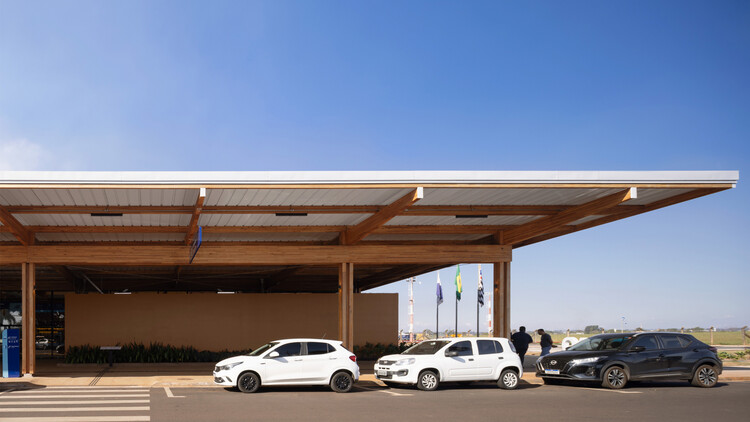
By infusing the Doutor Leite Lopes State Airport with a distinct sense of place, Bacco Arquitetos Associados has established a new benchmark for regional airport design. The project demonstrates that efficiency and emotional resonance are not mutually exclusive. Through thoughtful material selection, rigorous spatial programming, and an unwavering commitment to community integration, the firm has turned a utilitarian transit stop into an enduring architectural landmark for Ribeirão Preto—proving that even an airport can truly feel like home.



