

Executive Overview
The American biogas and renewable natural gas (RNG) sectors are experiencing a period of profound evolution, marked by steady operational expansion, strategic corporate partnerships, and evolving regulatory frameworks. According to a landmark report released by the American Biogas Council (ABC), wastewater treatment plants continue to serve as the bedrock of the domestic anaerobic digestion industry. Operating nearly half of all installed digesters across the United States, municipal and private wastewater facilities remain the earliest and most steadfast adopters of biogas infrastructure.
At the same time, the broader industry is moving beyond traditional power generation. Across the agricultural and solid waste sectors, developers are increasingly integrating advanced infrastructure to upgrade raw biogas into pipeline-quality renewable natural gas (RNG), produce combined heat and power (CHP), and execute complex codigestion strategies that maximize organic waste valorization.
Concurrently, market dynamics are shifting. While major waste management firms near the completion of their initial, highly publicized landfill-gas-to-RNG deployment commitments, the industry’s focus is pivoting toward optimizing end-use applications, navigating complex environmental credit markets, and forging long-term feedstock and offtake agreements. This report synthesizes key updates from the biogas sector, examining recent facility inaugurations, multi-million-dollar capital investments, and regulatory pricing benchmarks shaping the market in late 2026.
Detailed Chronology: Key Industry Developments
Mid-September 2026: Montauk Renewables Unlocks Agricultural Biogas in North Carolina
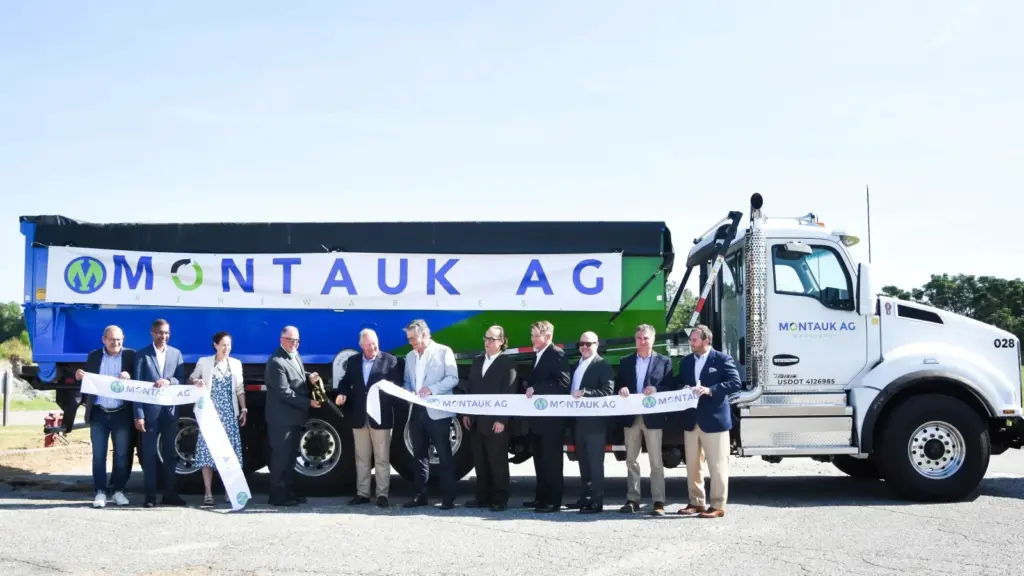
On September 15, 2026, executives from Montauk Renewables gathered alongside local officials in Turkey, North Carolina, to celebrate the official opening of a major new anaerobic digestion facility. Representing a substantial $200 million capital investment by Montauk, the facility is engineered to harvest agricultural biogas derived from swine waste, transforming environmental liabilities into valuable baseload electricity and organic fertilizer.
The project is underpinned by extensive supply agreements. According to corporate disclosures and Montauk’s annual reports, the facility has secured long-term feedstock contracts spanning more than 80 distinct farming locations in the region. To monetize the output, Montauk has established a 10-year power purchase agreement alongside a secondary pact to sell approximately one-third of the renewable energy certificates (RECs) generated by the plant to Duke Energy. At peak operational capacity, the Turkey facility is projected to yield up to 41 megawatt-hours of electric power annually, alongside an estimated 870 tons of high-grade organic fertilizer alternatives.
This agricultural deployment arrives on the heels of robust financial performance for Montauk Renewables. The company closed out the second quarter with total revenues climbing 19.7% year-over-year to reach $54 million, while quarterly RNG production expanded by 3% to touch 1.5 million million British thermal units (mmBtus).
Mid-September 2026: Waga Energy Expands Footprint with LRS and Casella
French RNG developer Waga Energy—bolstered by private equity backing—cemented its position in the North American landfill gas market with a pair of strategic announcements in September.
On September 15, Waga announced that Lakeshore Recycling Systems (LRS) had selected the firm to build, own, and operate an advanced RNG facility at the Eco-Hill Landfill. Located in Atkinson, Illinois, the Eco-Hill site is LRS’s sole landfill asset and serves as a vital waste management hub for the greater Chicago metropolitan area. The upcoming facility is projected to process landfill gas with an initial capacity of 3,000 standard cubic feet per minute (scfm), scaling up to produce an estimated 610,000 mmBtus of pipeline-quality RNG annually. Under the agreement, LRS will secure a direct share of the revenues generated from the on-site RNG sales, with commercial operations slated to commence in 2028.
Earlier in the month, on September 3, Waga and Casella Waste Systems jointly announced the successful commissioning and startup of their third collaborative landfill gas project. Situated at Casella’s McKean Landfill in Mount Jewett, Pennsylvania, this installation is engineered to process 2,000 scfm of gas. At full run-rate capacity, the McKean facility will generate up to 407,000 mmBtus of RNG annually, with production volumes currently ramping up. This multi-site partnership relies on a capital structure where Waga finances, constructs, and operates each facility under a 20-year operational window, sharing resulting commodity revenues with Casella.
Late August to Mid-September 2026: Opal Fuels Secures California Assets and Municipal Contracts
Opal Fuels made significant operational strides in California throughout late August and mid-September, reinforcing its footprint in both municipal landfill-gas-to-energy generation and commercial transportation fuels.
On September 16, Opal announced the formal renewal of its long-standing operating agreement with the City of San Diego. The five-year contract extension enables Opal to continue managing the landfill-gas-to-energy project at the Miramar Landfill, an installation that has been operational since 1998 and consistently generates approximately 400,000 megawatt-hours of electricity annually.
This municipal milestone followed an August infrastructure milestone in Goshen, California, where Opal completed a major capacity upgrade at its compressed natural gas (CNG) fueling station. Following extensive renovations, the Goshen station expanded its throughput capacity by 1.7 million gasoline gallon equivalents (GGE), incorporating renewable natural gas into its supply mix. Opal acquired the Goshen facility in 2025 and has aggressively deployed capital across its portfolio, investing $52.7 million during the first half of 2026 alone. Financial reports from mid-2026 reflect this capital-intensive growth phase: while second-quarter revenues rose 4% year-over-year, first-half revenues dipped 5% relative to the prior year, even as quarterly RNG production advanced 6% to reach 2.4 million mmBtus.
Supporting Context & Metrics: The Wastewater Baseline and Market Valuations
The Dominance of Wastewater Treatment Plants
The American Biogas Council’s comprehensive report underscores the foundational role that wastewater treatment infrastructure plays in the national biogas ecosystem. Wastewater facilities represent the earliest adopters of anaerobic digestion, a status they retain by operating a commanding 47% of all active anaerobic digesters in the United States.
The ABC report documents the continuous, incremental growth of the sector, identifying 29 new municipal and industrial wastewater facilities that have come online nationwide since 2020. This brings the total national count of wastewater treatment plants equipped with anaerobic digesters to 1,213.
Industry analysts emphasize that significant headroom remains for market penetration. Wastewater facilities with daily flow rates reaching or exceeding 1 million gallons per day are considered prime candidates for anaerobic digestion. According to ABC data, only about 24% of these eligible facilities currently deploy operational digesters. If the remaining three-quarters of eligible plants were to adopt the technology, the domestic biogas sector would experience an unprecedented surge in capacity.
Environmental Credit Pricing and Market Benchmarks
Navigating the commercial landscape of biogas and RNG requires continuous tracking of complex environmental credit markets, compliance programs, and carbon pricing structures. Valuations captured at the close of the third quarter of 2026 illustrate the shifting economic incentives for project developers:
- D3 RIN Prices (Renewable Identification Numbers for cellulosic biofuel): Trading at $2.294, down slightly from $2.380 in 2025. Despite the marginal year-over-year decline, D3 RIN values remain a primary revenue driver for RNG producers injecting fuel into the transportation sector.
- D5 RIN Prices (Advanced biofuel): Registered at $2.085, exhibiting a modest upward tick from $2.060 in 2025.
- Oregon Clean Fuels Program (CFP): Maintained a credit valuation of $81 per metric ton of carbon dioxide equivalent ($textMTCO_2texte$), providing localized incentives for low-carbon fuels entering the Pacific Northwest market.
- California Low Carbon Fuel Standard (LCFS): Stood at $88 per metric ton of $textMTCO_2texte$. The California LCFS market remains a bellwether for project finance, dictating the financial viability of many large-scale agricultural and landfill RNG projects operating across the western United States.
(Source data provided courtesy of the EcoEngineers Carbon Market Snapshot, current as of October 7, 2026).
Official Statements and Industry Perspectives
The release of the American Biogas Council’s wastewater report sparked widespread dialogue among industry leaders regarding the untapped potential sitting within municipal utilities and industrial processing plants.
Highlighting the dual necessity of expanding physical infrastructure and optimizing legacy assets, ABC Executive Director Patrick Serfass issued a definitive statement accompanying the report:
"Our survey shows there are opportunities to do more — by expanding anaerobic digestion where it makes sense and getting more value from the digesters already in place."
Serfass’s comments point to a broader operational maturation within the sector. Historically, wastewater digesters were constructed primarily for internal sludge volume reduction and basic operational safety, utilizing the resulting biogas for low-value onsite heating or flaring. Today, industry stakeholders are increasingly viewing these facilities as sophisticated biorefineries.
Since 2018, ABC data indicates a structural shift in how new wastewater digesters are engineered. An expanding cohort of facilities is retrofitting their operations to upgrade raw biogas into pipeline-grade RNG, investing in high-efficiency combined heat and power (CHP) systems, or implementing codigestion models. Codigestion—the practice of introducing high-strength organic wastes (such as food waste, fats, oils, and greases) into municipal wastewater digesters—dramatically increases methane yields while generating tipping fee revenues for facility operators.
Currently, wastewater digesters across the U.S. successfully capture and utilize more than 100 billion cubic feet of biogas annually. However, the ABC calculates that if the sector achieves widespread adoption across all eligible municipal and industrial sites, facilities could capture an additional 70 billion cubic feet of biogas per year—substantially bolstering the nation’s domestic renewable energy supply while cutting municipal greenhouse gas emissions.
Future Outlook
As the biogas industry navigates the closing months of 2026, the strategic horizon is defined by diversification, technological retrofitting, and macroeconomic adaptation.
Major waste management corporations are rapidly approaching the completion milestones of their initial, highly publicized landfill-gas-to-RNG development cycles. This transition marks the end of an era focused purely on rapid portfolio expansion and ushers in a sophisticated phase centered on asset optimization, yield enhancement, and margin defense. Developers are increasingly exploring localized microgrid integration, direct-to-industry offtake contracts, and participation in voluntary carbon markets to hedge against regulatory volatility in compliance credit pricing.
Simultaneously, the agricultural and wastewater sectors are poised to drive the next wave of capital deployment. Projects such as Montauk Renewables’ swine waste facility in North Carolina demonstrate that investor appetite remains robust for complex, multi-farm agricultural aggregations, provided they are secured by long-term feedstock and power purchase agreements. Similarly, as municipal utilities face mounting pressure to decarbonize operations and manage rising volumes of organic waste, partnerships with experienced RNG developers like Waga Energy and Opal Fuels will likely accelerate.
Ultimately, the trajectory of the North American biogas sector hinges on its ability to bridge environmental compliance frameworks with resilient commercial models. By unlocking the dormant potential within the nation’s remaining wastewater treatment plants and scaling innovative gas-upgrading technologies across landfills and agricultural holdings, the industry is well-positioned to cement its status as an indispensable pillar of the clean energy transition.



