

Executive Overview
The North American waste and recycling sector stands at a monumental crossroads, caught between aggressive municipal sanitation mandates, chronic labor shortages, and an aging workforce. Into this high-stakes landscape steps Don Ross, a seasoned industry veteran and chairman of the National Waste & Recycling Association’s (NWRA) board of trustees. Ross has taken the helm of a new U.S. base of operations for Kollekt, an innovative truck manufacturer backed by the prestigious Kirchhoff family of companies.
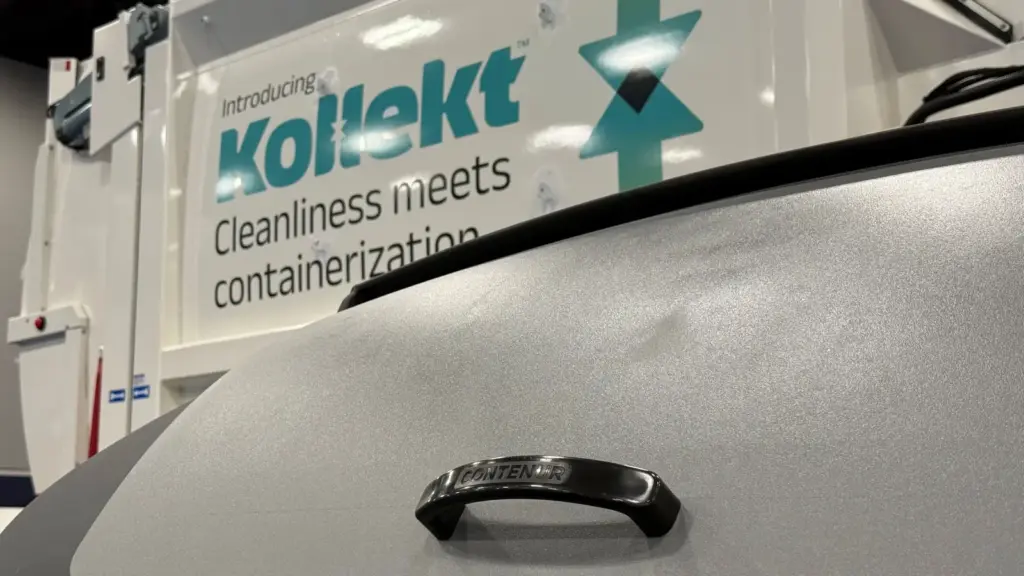
Kollekt is positioning itself to tackle one of the most complex logistical challenges currently facing municipal waste management: the large-scale containerization of residential trash in high-density urban environments. By deploying specialized automated side-loading collection vehicles designed to interface seamlessly with massive European-style bins—such as the Empire Bins manufactured by Contenur—Kollekt is offering a technological bridge to the future.
This market entry is catalyzed by New York City’s sweeping mandate, championed by leadership, to fully containerize all residential trash by the end of 2031. As the New York City Department of Sanitation (DSNY) scales up its containerization infrastructure, rolling out thousands of specialized bins to multifamily residential buildings, the demand for vehicles capable of servicing these heavy-duty receptacles has skyrocketed. Kollekt’s entry into the U.S. market is not merely a product launch; it is a strategic intervention designed to reshape how high-density American cities handle refuse, alleviate physical strains on a depleted workforce, and modernize urban infrastructure for the decades ahead.
Detailed Chronology & Market Entry
The genesis of Kollekt’s American expansion is rooted in decades of European waste management innovation combined with recent, highly aggressive municipal policy shifts in the United States.
The European Blueprint Meets American Realities
The core technology powering Kollekt’s flagship vehicle is far from unproven. The underlying truck model and its automated side-loading mechanism first debuted in European markets in 1997, where high-density urban planning has long necessitated sophisticated containerization strategies. However, despite its proven track record across the Atlantic, this specific automated side-loader design had not achieved widespread commercial adoption or operational integration within the United States.
Recognizing an emergent void in the American market—particularly as major metropolitan areas began rethinking traditional curbside bag-and-dumpster protocols—the Kirchhoff family of companies backed the creation of Kollekt as a specialized vehicle provider. To lead this ambitious American venture, they tapped Don Ross, a respected industry figure who recently served as the chief sales officer at New Way Trucks before its high-profile acquisition by Federal Signal, and who holds a deep operational background with waste giant WM.
The New York City Catalyst
The primary proving ground and catalyst for Kollekt’s U.S. strategy is New York City. For generations, the nation’s most populous municipality has relied on an archaic system of leaving millions of loose plastic trash bags directly on narrow sidewalks. This practice has long drawn ire from residents, exacerbated urban rodent infestations, and created pedestrian bottlenecks.
To combat this, municipal leadership established a strict timeline: complete containerization of all residential trash across the five boroughs by the end of 2031. To achieve this, DSNY has initiated comprehensive pilot programs and scheduled massive rollouts of standardized, large-scale receptacles. Notably, the city has piloted the large Empire Bins—manufactured by Contenur—specifically tailored for multifamily residential buildings.
The logistical implications of this transition are staggering. According to DSNY estimates, shifting to these containerized systems and expanding collection routes could add up to 1.2 million more vehicle miles to the city’s annual collection operations. Furthermore, the city laid out detailed plans to aggressively expand this infrastructure by deploying 6,500 specialized bins across newly designated collection districts.
Servicing these heavy, standardized bins requires a radically different mechanical approach than traditional rear-loader trucks operated by manual labor teams. While Kollekt does not currently hold a direct, exclusive contract with DSNY—opting instead to market its trucks through established regional equipment dealers—the company’s leadership recognized that DSNY’s trajectory would inevitably create a severe supply-and-demand gap for compatible machinery. Currently, industry analysts note a distinct scarcity of domestic truck models capable of safely and efficiently handling the specific mechanical requirements of the Contenur bin system.
Supply Chain and Manufacturing Evolution
To establish a viable operational footprint in North America, Kollekt has adopted a hybrid manufacturing and assembly model. Currently, the robust bodies of the collection vehicles are manufactured in Italy, leveraging advanced European engineering and fabrication techniques. These bodies are then shipped to the United States, where they are meticulously paired with heavy-duty truck chassis built to domestic specifications.
Looking forward, Ross and the leadership team are actively exploring the establishment of a dedicated North American manufacturing base as demand scales. Concurrently, the company is investing heavily in establishing a comprehensive parts inventory and a responsive technical support structure. This service network is designed to ensure that municipal fleets and private operators can rely on minimal downtime, guaranteeing rapid maintenance and repairs for these sophisticated assets.
Supporting Context & Metrics: Labor, Automation, and Logistics
While municipal cleanliness and aesthetic appeal are primary drivers for containerization, the structural transformation of the waste industry is equally anchored in profound labor and demographic realities.
The Demographic Crisis in Commercial Driving
Data compiled by the Federal Motor Carrier Safety Administration (FMCSA) paints a stark picture of the American commercial driving workforce: holders of Commercial Driver’s Licenses (CDLs) are, on average, significantly older than the broader national workforce. The waste and recycling industry has historically experienced acute challenges in recruiting and retaining younger talent. The grueling nature of traditional waste collection—requiring workers to manually heave heavy, unpredictable trash bags into the hoppers of rear-loading trucks for hours on end—has contributed to high turnover rates and severe physical wear-and-tear on personnel.
+-----------------------------------------------------------------+
|               KEY INDUSTRY METRICS & DRIVERS                    |
+-----------------------------------------------------------------+
| • CDL Workforce Age: Average age of CDL holders significantly   |
|   exceeds that of the broader U.S. labor force.                 |
| • NYC Containerization Goal: 100% of residential trash          |
|   containerized by the end of 2031.                             |
| • Additional Fleet Mileage: Estimated 1.2 million more vehicle  |
|   miles annually for DSNY collection routes.                    |
| • Near-Term Municipal Rollout: 6,500 specialized bins slated    |
|   for deployment across multiple NYC districts.                 |
+-----------------------------------------------------------------+
The Ergonomic and Economic Case for Automation
The integration of automated side-loading vehicles—such as those marketed by Kollekt—offers a dual-benefit solution to these systemic labor challenges:
- Extending Career Longevity: By utilizing automated hydraulic arms to lift and empty massive bins directly into the truck body, physical strain on operators is virtually eliminated. This technological shift allows older, highly experienced drivers to remain safely behind the wheel and productive within the workforce for many years longer than would be possible under manual collection regimes.
- Lowering Barriers to Entry: The reduction of arduous physical labor opens up career opportunities in waste management to a much broader, more diverse pool of potential candidates who might otherwise be deterred by the strenuous lifting requirements of traditional routes.
While automated side-loaders have achieved high market saturation and proven success on single-family suburban and low-density residential collection routes over the past two decades, high-density multifamily complexes—particularly in dense urban environments like New York City—have historically lagged behind. These urban sectors have remained stubbornly reliant on loose curb bags or cumbersome, uncontained dumpsters. Kollekt’s technology directly addresses this missing link in the urban waste stream, bridging the gap between suburban automation and inner-city containerization.
Official Statements & Industry Perspectives
Speaking candidly about the launch and strategic vision of Kollekt at the recent RCon industry conference, Don Ross emphasized the historic nature of the shift currently sweeping through waste management operations.
"This is a great opportunity for us to showcase a different kind of collection," Ross stated during an interview at the event. Reflecting on the evolution of urban waste handling, he added, "This is another type of automated product addressing a part of the waste stream we’ve never been able to get to."
Addressing the scaling of municipal infrastructure and the symbiotic relationship between manufacturing capacity and government mandates, Ross maintained a confident outlook on market demand:
"As they scale, we’ll scale."
Drawing from his extensive executive career—including his tenure as chief sales officer at New Way Trucks and leadership positions at WM—Ross views Kollekt not merely as a commercial venture, but as a defining capstone to his decades in the industry. He noted that introducing advanced, ergonomic technologies can radically alter the daily reality of municipal workers, making the occupation safer, cleaner, and more sustainable.
"I think this is a technology that has meaningful purpose," Ross reflected. "That’s how I’d want to go out and be remembered, as someone who made a difference."
Future Outlook: Scaling Beyond New York
As New York City serves as the primary proving ground for Kollekt’s American operations, the broader horizon for the company extends far beyond the Hudson River.
Municipalities across the United States and Canada are closely watching New York’s ambitious 2031 containerization rollout. City planners in major metropolitan areas are grappling with similar pressures: aging infrastructure, rising urban density, stringent environmental health standards, and intensifying public demands for cleaner, rodent-free sidewalks. As these cities formulate their own modern containerization strategies, the demand for specialized collection vehicles capable of servicing standardized European-style bins is projected to rise exponentially.
Strategic Roadmap for Expansion
- Geographic Diversification: Kollekt is actively evaluating deployment opportunities in other major North American metropolitan areas experiencing containerization shifts. Cities on the West Coast and in the industrial Midwest, as well as Canadian urban centers, are emerging as prime secondary markets.
- Supply Chain Localization: Transitioning from an Italian-manufactured body combined with a U.S. chassis toward a fully integrated North American manufacturing and assembly ecosystem remains a key long-term milestone for the company. This shift will insulate operations from international logistics disruptions and reduce lead times for municipal clients.
- Ecosystem and Support Infrastructure: Building a robust, nationwide network of certified equipment dealers, parts distribution hubs, and specialized technical support teams will be paramount as fleet deployments scale. Ensuring that municipal mechanics are thoroughly trained in maintaining automated side-loader mechanisms will determine long-term customer retention and fleet reliability.
Ultimately, Don Ross and the backing of the Kirchhoff family have positioned Kollekt at the vanguard of a quiet revolution in urban sanitation. By marrying decades-old European engineering with urgent American municipal reforms, Kollekt is providing the mechanical backbone necessary to rid major cities of curbside trash bags once and for all—transforming an overlooked, grueling manual trade into a mechanized, efficient, and forward-looking pillar of modern urban infrastructure.



