

By Liz Kimbrough / Mongabay
Published: September 2026
Executive Overview
On January 8, 2026, the Tribal Council of the Eastern Band of Cherokee Indians (EBCI) convened in Cherokee, North Carolina, for a vote that would rewrite the boundaries of American environmental law. In a historic, unanimous decision, the council passed a resolution recognizing the inherent legal rights of the vwi Ganvhida, known traditionally as the Longperson.
Brought forward by the NAIWA Daughters—the youth wing of the North American Indian Women’s Association, comprising Indigenous girls aged 10 to 17—this landmark resolution marks the first all-female-led Rights of Nature initiative in United States history. It is only the second youth-led Rights of Nature resolution ever passed by a sovereign tribal nation.
The legislation rejects the foundational Western legal premise that nature is merely property to be exploited. Instead, it establishes five inalienable rights for the 1,270-kilometer (790-mile) interconnected waterway system, whose headwaters begin in the Great Smoky Mountains and eventually empty into the Gulf of Mexico. By formally enshrining the Longperson as a living entity and relative, the EBCI Tribal Council has set a powerful precedent for Indigenous sovereignty, climate resilience, and grassroots youth organizing across Turtle Island.
Detailed Chronology: From River Tubing to the Council Chambers
Sparking the Movement
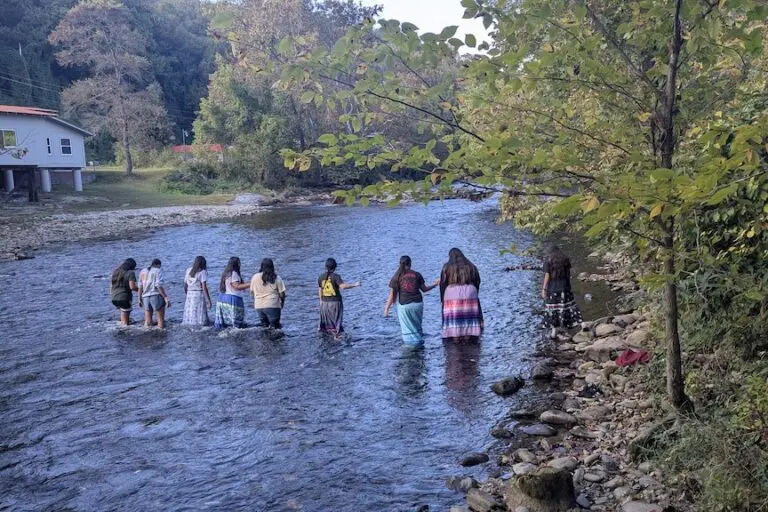
The journey to legal personhood for the Longperson did not begin in a high-priced corporate law office or an academic seminar; it started in the cooling waters of a local river. While tubing down the waterway, a group of young Cherokee girls noticed tourists carelessly stacking river rocks. This seemingly harmless tourist pastime disrupted the fragile microhabitats of the eastern hellbender salamander (Cryptobranchus alleganiensis alleganiensis), known in the Cherokee language as tsuwa.

“We were frustrated,” recalled Jasmine Smith, NAIWA Daughters chair and co-founder. “We thought, what if we made a resolution that says you can’t do this?”
That localized frustration catalyzed a sweeping environmental campaign. At the 2024 Indigenous Environmental Network Conference, the girls crossed paths with Britt Gondolfi, a lawyer and Rights of Nature project coordinator for the Bioneers Indigeneity program. Gondolfi invited the youth group to participate in a rigorous, six-week Rights of Nature training program, equipping them with the legal frameworks necessary to turn their vision into actionable policy.
Guidance from Elders and Allies
Initially, the NAIWA Daughters focused narrowly on securing protections for the endangered hellbender salamanders. However, tribal elders guided them toward a more holistic, foundational approach: protecting the entire interconnected watershed that sustains all life within it.
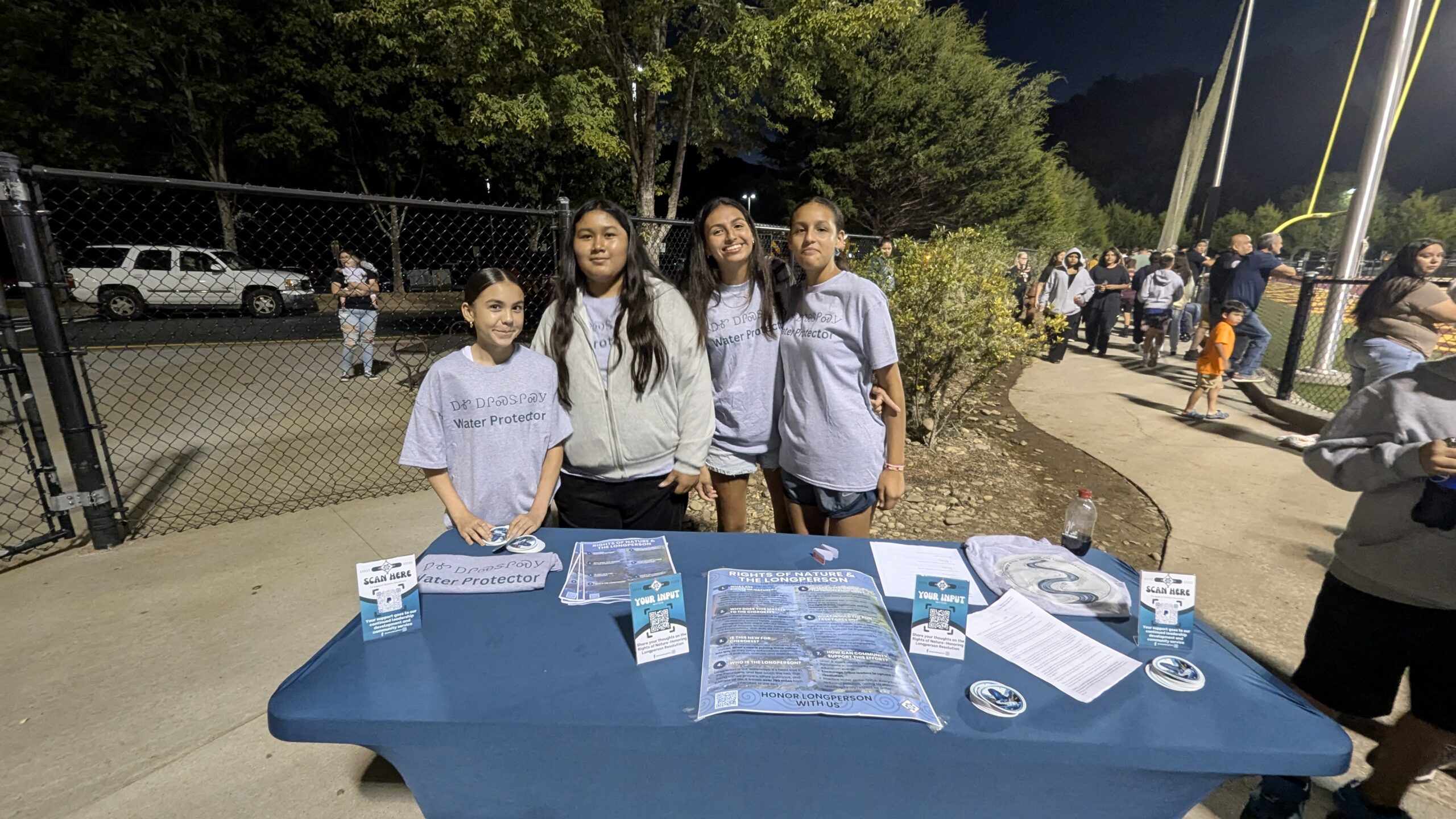
With support from Bioneers and the Earth Law Center, the young women spent 18 months engaging in intensive, old-fashioned grassroots organizing. They hosted community dinners, conducted public input surveys, set up informational tables at local Cherokee events, and met face-to-face with individual council members to build trust and gather feedback.
The physical and emotional toll was immense. Jasmine Smith noted the profound sacrifices made by the young leaders: “I have watched them give everything to this, showing up tired, overwhelmed, emotional, sacrificing school breaks, weekends, and still fighting for our sovereign rights to be Cherokee.”
The Day of the Vote
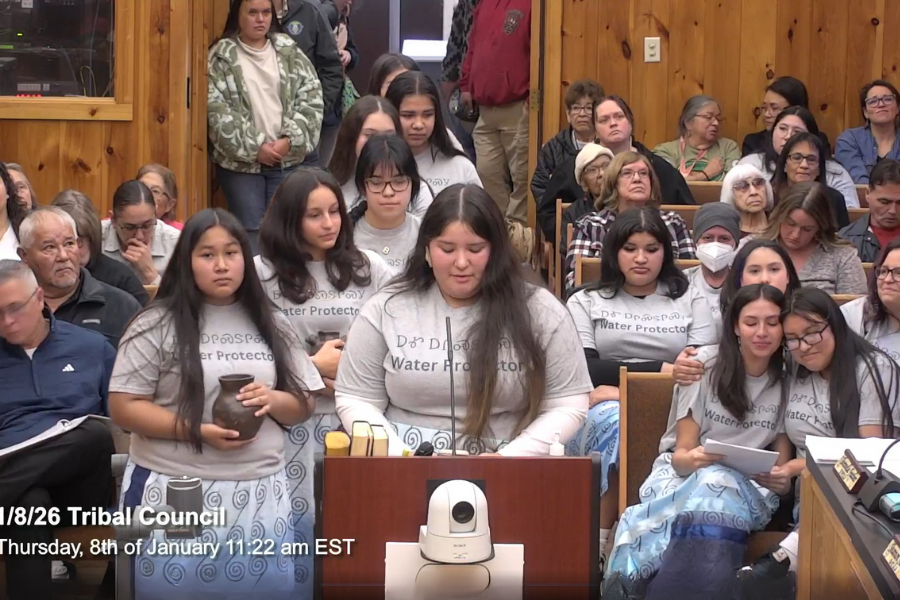
On the morning of January 8, 2026, the NAIWA Daughters entered the tribal chamber carrying the Longperson with them—water gathered directly from the mountain headwaters and held safely inside traditional pottery. The chamber swelled far beyond capacity, with supporters spilling out into the lobby.
When the vote was called, the council passed the resolution unanimously. The room erupted into a standing ovation, honoring both the historic nature of the legislation and the youth who brought it to life. Following the proceedings, the girls returned the vessel of headwater clean to the Oconaluftee River in a traditional water ceremony.
Supporting Context & Metrics: The Anatomy of the Longperson Resolution
What is the Longperson?
To the Eastern Band of Cherokee Indians, the Longperson (historically referred to as the Long Man) is not a resource or a geographical feature; it is a living entity of immense spiritual and cultural significance. As the Cherokee describe it, the headwaters begin in the mountains, and its "feet" reach the Gulf of Mexico.
Juanita Wilson, an enrolled EBCI member who has spearheaded the tribe’s annual "Honoring Longperson" cleanup efforts since 2021, emphasizes the interconnectedness of the ecosystem. “We look to [Longperson] for a lot of strength,” Wilson told Mongabay. “There are a number of rituals that people do for medicine, physical and emotional health. Whatever’s on land is going to end up in the water. It’s literally the lifeblood of everything.”
Legal Scope and Provisions
The EBCI resolution formally grants the Longperson five inherent rights:

- The right to exist, persist, and regenerate: Freedom from harmful human-induced disturbances that disrupt vital ecological cycles.
- The right to natural integrity: Protection from severe pollution and invasive species.
- The right to serve as habitat: Safeguarding homes for nonhuman relatives and native aquatic species.
- The right to free-flowing conditions: Preventing unnatural obstructions that alter natural river pathways.
- The right to legal and traditional defense: Direct protection under both EBCI tribal law and ancient Cherokee custom.
The Global and National Rights of Nature Movement
The Rights of Nature framework asserts that ecosystems and natural entities possess fundamental legal standing to exist and thrive, mirroring the rights historically reserved for corporations or individual humans. Ecuador made global history in 2008 by writing the Rights of Nature into its national constitution.
Across the United States, Indigenous nations have pioneered the movement through constitutional amendments, tribal resolutions, and lawsuits:
- 2016: The Ho-Chunk Nation became the first U.S. tribal sovereign entity to propose adding Rights of Nature to its constitution.
- 2017: The Ponca Nation of Oklahoma recognized nature’s right to exist.
- 2018: The White Earth Band of Ojibwe affirmed the rights of manoomin (wild rice) to flourish.
- 2019: The Yurok Tribe established legal rights for the Klamath River.
- 2020: The Nez Perce recognized the Snake River as a living entity, while the Menominee Indian Tribe of Wisconsin asserted the Menominee River’s right to remain unpolluted.
- 2022: The Sauk-Suiattle Indian Tribe sued the city of Seattle in federal court with a salmon named as the primary plaintiff, successfully compelling the city to construct fish passages at its hydroelectric dams.
The NAIWA Daughters have now seamlessly extended this powerful lineage eastward, applying international and national frameworks to their ancestral Appalachian waters.
Official Statements
The passage of the resolution drew widespread acclaim from legal experts, environmental advocates, and Indigenous leaders across North America:
-
Grant Wilson, Executive Director of the Earth Law Center:

"This historic resolution holds a mirror to the Cherokee understanding that the Longperson is a sacred, living relative—not mere property—and translates this relationship into a powerful legal framework. Those with the deepest cultural and spiritual connections to the land are often the ones best equipped to give Nature a voice in law."
-
Jasmine Smith, NAIWA Daughters Chair and Co-founder (speaking at the Bioneers Conference):
"The room was heavy with the presence of Ancestors and community alike. That day crystallized in my memories: the honor to bring Longperson into the chamber to speak for it, beside it. We are blessed to live in the oasis of our homelands… we hold the responsibility of stewarding the headwaters, so every living being downstream has water for life."
-
Britt Gondolfi, Rights of Nature Project Coordinator, Bioneers Indigeneity Program:
"The young women behind this law didn’t AI themselves into this historic moment. They consulted with elders, lawyers, experts in the field, and culture keepers. They put in 18 months of community organizing and created a grassroots movement to honor this ecosystem in law and deed. They revived a traditional customary Indigenous moral philosophy into law."
-
Kyndra Postoak, NAIWA Daughters Rights of Nature Project Lead:
"Do we see nature as something we own, or do we view it as something we have the responsibility to protect?"
Future Outlook: Beyond the Resolution
The passage of the Rights of Longperson resolution on January 8 was only the beginning. The momentum generated by the NAIWA Daughters has unlocked a cascading series of ecological restorations and policy implementations within the EBCI territory.
The Ela Dam Removal Project
Within weeks of the historic vote, the tribe’s natural resources department—alongside the NAIWA Daughters—submitted a follow-up resolution committing the EBCI to lead a fundraising and advocacy campaign to remove the decommissioned Ela Dam. The Tribal Council passed this crucial initiative in March.
For over a century, the Ela Dam has severely fragmented the watershed, blocking the migration corridors of the critically imperiled sicklefin redhorse (Moxostoma ugidatli). Often called "the salmon of the south," this culturally vital fish derives its scientific species name from the Cherokee word meaning "it wears a feather."

Kimberly Smith, a mentor to the NAIWA Daughters, noted the multifaceted benefits of the project:
"Just removing the dam will provide safe passage for an aquatic relative."
Furthermore, sediment buildup cleared from the dam site will be repurposed to construct a traditional Cherokee earth mound, maintaining cultural continuity that spans millennia.
Ongoing Stewardship and Education
In May, the newly established Rights of Nature Task Force held its inaugural meeting. The task force is actively monitoring the health of the Longperson, guiding future policy decisions, and mentoring incoming generations of tribal youth.
The NAIWA Daughters also plan to share their blueprint at the upcoming national NAIWA convergence, with the explicit goal of inspiring Indigenous women and youth across the United States to enact similar legislation for their own homelands.

As the community prepares for the annual Honoring Longperson event on September 25—which features river cleanups and educational workshops led by the NAIWA youth—the triumph of January serves as an enduring testament to youth-led activism. It demonstrates conclusively that when ancient Indigenous philosophies meet dedicated grassroots organizing, the law can evolve to protect the true lifeblood of the planet.



