

Executive Overview
As the Northeastern United States confronts a deepening environmental and logistical crisis regarding municipal solid waste (MSW) disposal, a paradigm shift is underway across the waste management sector. Years of relentless urban growth, combined with widespread community pushback against local facility expansions, have pushed regional landfill capacity to a critical tipping point. With local permits vanishing and regional dump sites marching toward inevitable closures, major waste operators are no longer looking just down the road for solutions—they are looking hundreds of miles away.
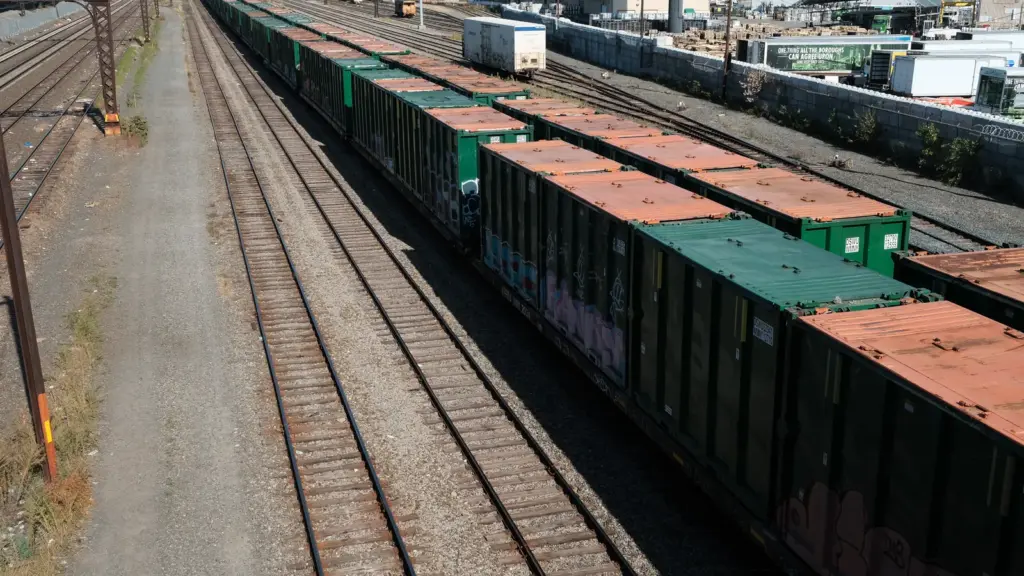
The answer to this spatial crunch lies in heavy steel and locomotive power: waste-by-rail.
Across New England, New York, and New Jersey, leading industry players are heavily deploying capital into intermodal transfer stations, specialized railcars, and sprawling long-distance supply chains. By establishing direct rail corridors connecting densely populated urban centers to massive, remote landfills in states like Ohio, Pennsylvania, and Alabama, waste companies are attempting to unlock vital airspace and maintain lower tipping fees.
However, this transition is far from a silver bullet. While moving garbage by train bypasses the notorious permitting bottlenecks of the Northeast, it introduces a labyrinth of financial, logistical, and operational complexities. Capital intensity, extended asset turnaround times, and multi-step transfer hurdles mean that rail shipping can cost up to eight times more than traditional trucking. Nevertheless, with skyrocketing national fuel costs, persistent highway congestion, and millions of tons of waste facing imminent export, the waste-by-rail movement has transformed from an experimental alternative into a structural necessity for the modern American waste economy.
Detailed Chronology: The Evolution of Northeast Waste Logistics
To understand how the Northeast arrived at its current reliance on long-distance rail transit, it is necessary to examine the gradual erosion of regional disposal infrastructure over the past several decades.
- The Late 20th Century – Regional Reliance on Local Landfills: Historically, municipalities and private haulers relied on local landfills and municipal solid waste (MSW) incinerators situated relatively close to major metropolitan areas. As long as permitting authorities and host communities accepted local expansions, waste logistics remained localized, short-haul, and heavily dependent on heavy-duty diesel trucks.
- The Early 2000s – Emerging Scarcity: As local landfills filled up, municipal resistance ("Not In My Backyard," or NIMBYism) hardened. State regulators began denying permit renewals for expansions, forcing early pioneers to begin exploring out-of-state disposal options. Simultaneously, early waste-by-rail prototypes emerged in the Pacific Northwest, proving that high-volume garbage transit via rail could be economically viable over long distances.
- 2019 – The Consolidation Wave Begins: A major turning point occurred when Win Waste Innovations acquired Tunnel Hill Partners, instantly catapulting the firm to become one of the largest waste-by-rail operations in the United States. This move signaled to the broader market that consolidation around rail assets was a viable strategy for capturing future market share.
- 2020 – Securing Strategic Outposts: Interstate Waste Services (IWS) made a bold strategic play by acquiring the massive Apex Landfill in Amsterdam, Ohio, fortifying its ability to ingest millions of tons of out-of-state refuse. Around the same time, Republic Services acquired Devens Recycling in Massachusetts to lock down regional rail transfer capabilities.
- 2023 – Deepening Southern Connections: Waste Connections accelerated its rail strategy by acquiring Arrowhead Environmental Partners. This transaction granted the company immediate access to a sprawling 1,345-acre site in Alabama with immense permitted airspace, directly linking northeastern intermodal facilities to the Deep South.
- 2024 – The Tipping Point of Disposal Loss: According to estimates from the Northeast Waste Management Officials’ Association (NEWMOA), the region disposed of roughly 33.56 million tons of waste in 2024 alone. Most alarmingly, roughly 23% of that total was directed to landfills scheduled to close within five years. An additional 12 million tons were exported entirely out of the region, solidifying long-distance transit as a daily operational reality.
- 2025–Present – Upgrading Infrastructure for the Long Haul: Major players continue to double down. Casella Waste Systems completed multi-million-dollar infrastructure enhancements at its McKean Landfill in Western Pennsylvania—adding over a mile of spur track and high-capacity gantry cranes—to internalize regional flows from newly acquired assets like Boston’s Star Waste Systems. Meanwhile, private equity and infrastructure funds have dialed into the sector, exemplified by Terramont Infrastructure Partners’ acquisition of Hainesport Transportation Group to capture high-value intermodal assets in New Jersey.
Supporting Context & Metrics: The Scale of the Capacity Crunch
The urgency driving waste companies toward rail investments is grounded in stark demographic, environmental, and regulatory data. The Northeast is running out of space, and the mathematics of modern garbage disposal leave very little room for error.
The Declining Lifespan of Regional Landfills
Public opposition to landfill sites in Maine, New Hampshire, New York, and Pennsylvania has effectively halted the creation of new disposal facilities in the upper Northeast. Consequently, existing sites are aging out rapidly:
- Casella’s Bethlehem Landfill (New Hampshire): Volumes are actively being ramped down as the facility approaches its scheduled closure at the end of 2027.
- Ontario County Landfill (Stanley, New York): Operated by Casella and owned by Ontario County, this facility is expected to shutter permanently by the end of 2028.
- McKean Landfill (Pennsylvania): While currently serving as Casella’s primary rail-served disposal asset, it is being meticulously ramped up to handle long-term regional shortfalls. Its massive permitted annual capacity of 1.6 million tons stands in stark contrast to its initial phased acceptance of roughly 200,000 tons per year as upgrades are finalized.
The Scale of Rail Operators
The titans of the waste industry have built formidable logistical networks to keep pace with these closures:
- Win Waste Innovations: Operates two massive rail-served landfills in Ohio, supported by a network of specialized transfer stations and a captive fleet of 2,300 railcars. The company moves approximately 5 million tons of waste by rail annually.
- Interstate Waste Services (IWS): Manages three rail-served facilities in New Jersey alongside two gondola operation facilities in Connecticut and New Jersey. IWS transports roughly 2.5 million tons of waste annually via rail, removing an estimated 96,775 trucks from the highway every year.
- Waste Connections: Leverages its acquisition of Arrowhead Environmental Partners to feed an Alabama landfill featuring a 425-acre Subtitle D footprint, roughly 60 million cubic yards of permitted airspace, and a daily capacity of 15,000 tons—95% of which arrives via rail.
Environmental Efficiency vs. Economic Friction
Proponents of rail emphasize its undeniable environmental advantages. Moving bulk commodities by rail is roughly four times more fuel-efficient than hauling via highway trucks. At a time when national fuel costs remain volatile—exacerbated by geopolitical tensions in the Middle East—rail transport insulates operators from runaway diesel expenditures.
Furthermore, trains offer unmatched volumetric efficiency. A single train can displace dozens, if not hundreds, of long-haul semi-trucks, radically lowering highway wear-and-tear and shrinking corporate carbon footprints.
Official Statements and Industry Perspectives
Industry executives, investment specialists, and rail representatives offer a clear-eyed view of the strategic advantages and operational hurdles defining the waste-by-rail movement.
Tara Hemmer, COO of WM (speaking at the Oppenheimer Industrial Growth Conference):
"How do we make the connection between these large centers of waste to more regional landfills? We’ve invested quite a bit in looking at how to connect the dots between our transfer station network and our landfill network… Waste companies have been playing a long game to find workarounds for the Northeast waste capacity crunch for decades now."
Ron Mittelstaedt, CEO of Waste Connections (during an April earnings call):
"Waste management companies are not building new landfills in the Northeast, and it’s obviously difficult to expand landfills in the upper Northeast. Those conditions are ripe for rail to take waste out of the geography as landfill airspace and scarcity gets tighter… We’ve grown our Arrowhead landfill rail network over the last two years by effectively 300% now, and all of that is moving off the Eastern Seaboard from New Jersey north through our intermodal facilities."
Ned Coletta, CEO of Casella Waste Systems (discussing the capital intensity of the McKean Landfill):
"About 30% of the waste that’s generated in the Northeast needs to be exported given the lack of disposal capacity in our markets… It’s one of only a few rail-served landfills that can service the market, given the capital intensity and logistical complexity of building rail services… When you think about the capital involved with that, it’s very, very high versus having one truck and one trailer that’s just making a loop. If we can continue to flow waste to either third-party sites, like waste-to-energy incinerators or to our own landfills, we’ll do that before putting waste on a rail car. It’s just really complex and costly."
Dickson Suit, President and CIO of Laurel Mountain Capital:
"Every time there’s an additional touch, the cost increases… You want to make sure that there’s no kind of bottleneck along the way. If you’re unloading three or four or five cars a day there, you want to have consistency of those cars coming back. If things get stuck somewhere, that might create additional costs, and also impacts operations by creating backlogs."
Jonathan Stuckey, Manager of Media Relations at CSX:
"We’ve seen a growing interest among customers in shifting business from truck to rail as a result of rising fuel prices and truck rates."
Future Outlook: Integration, Private Equity, and the Road Ahead
As the countdown ticks toward the closure of major landfills in New Hampshire and New York, the future of Northeast waste management will likely be defined by aggressive vertical integration and infrastructure optimization.
The Threat of Bottlenecks and Turnaround Times
Despite its strategic necessity, rail transport is fraught with logistical friction. While a regional truck can complete a round-trip loop from a transfer station to a local landfill within a single day, a specialized railcar can require up to 20 days to complete a round-trip journey before becoming available for reuse.
Additionally, multi-modal transport introduces "touches"—loading waste at a municipal source, trucking it to a transfer station, offloading it into rail containers, shipping it across Class I rail lines (such as CSX or Norfolk Southern), offloading it via gantry cranes or tipping mechanisms, and moving it to the active landfill face. Each step increases capital expenditure and introduces potential points of failure. Transfer stations face rigid daily processing caps, and receiving landfills operate under strict state-mandated daily volume limits.
Private Equity and M&A Activity
Given the high capital barrier to entry, analysts predict a surge in merger-and-acquisition (M&A) activity. Private equity firms and major waste conglomerates are actively hunting for rail-transfer assets, intermodal yards, and strategically located disposal facilities that can be integrated into existing regional networks. The recent acquisition of Hainesport Transportation Group by Terramont Infrastructure Partners demonstrates that institutional capital views waste rail infrastructure as a stable, high-value asset class.
Other facilities, such as Big Sky Environmental’s massive disposal site in Adamsville, Alabama—which is permitted to accept 25,000 tons per day and services customers across all lower 48 states—exemplify the massive scale required to make long-distance merchant waste-by-rail viable.
Conclusion
The Northeast waste capacity crunch is not a temporary anomaly; it is a permanent structural shift. As local communities continue to bar the door against new landfills and regional disposal sites go dark, waste operators have crossed the Rubicon.
While shipping garbage by rail demands immense capital investment, complex logistical choreography, and a tolerance for extended asset turnaround times, it remains the ultimate escape hatch for a region literally running out of room. By forging resilient partnerships with major freight railroads and optimizing transfer networks, the waste industry is successfully engineering a heavy-rail lifeline—ensuring that the Northeast’s garbage can safely and efficiently find a home hundreds of miles away.



