

Executive Overview
For over a decade, the narrative surrounding the electrification of the American transportation sector has been tethered to a singular, inflexible doctrine: bigger is better, further is mandatory, and luxury is the baseline. Industry giants poured billions into engineering heavy, long-range electric vehicles (EVs) designed to replace internal combustion engines (ICE) pound-for-pound, mile-for-mile. Yet, this high-stakes gamble has hit a structural wall. Accounting for under 10% of total new-vehicle sales in the United States—with momentum actively slowing—the domestic EV market is facing an existential crisis.
This stagnation represents a severe blow to national climate goals. Because the transportation sector remains the single largest source of greenhouse-gas emissions in the United States, electrifying personal transit is not merely a commercial opportunity; it is an ecological imperative. But the status quo—typified by heavy, expensive vehicles saddled with massive battery packs—has failed to capture the mass market.
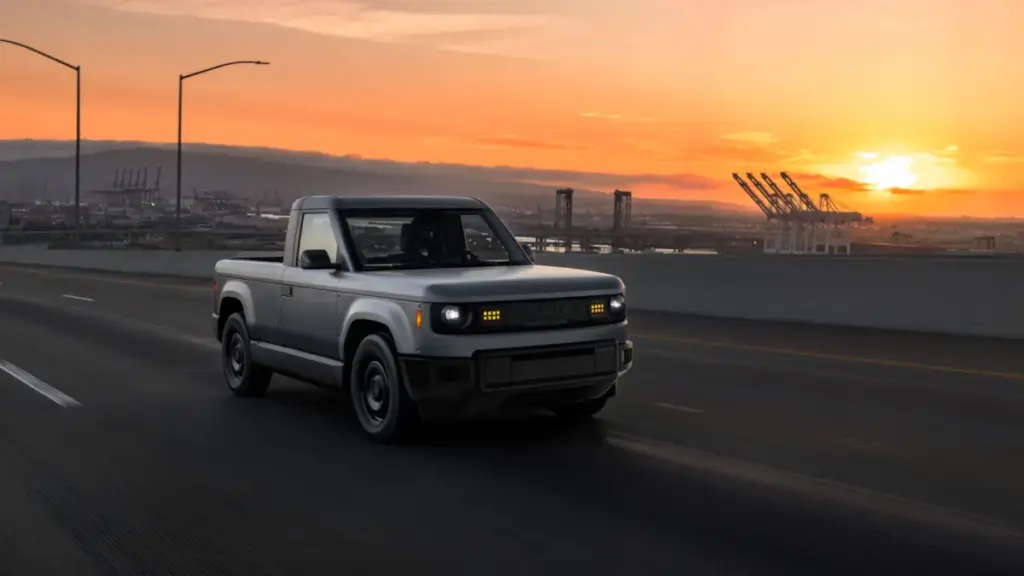
Enter Slate Auto. In a landscape obsessed with 300-plus-mile ranges, dual-motor AWD systems, and cabin technology that mimics a Silicon Valley workstation, Slate is executing a radical pivot toward asceticism. Its flagship offering—a tiny, two-door electric pickup truck shorter than a Honda Civic—deliberately bucks every convention of the modern American automotive market. By championing radical simplicity, foregoing high-end frills, and accepting a modest battery capacity, Slate is preparing to launch a base model priced at under $25,000.
Backed by nearly $1.4 billion in venture capital from heavyweights like Jeff Bezos and sporting a production capacity projected at 100,000 vehicles in its inaugural year, Slate Auto is testing a bold hypothesis: Are American drivers ready to trade away redundant range and superfluous luxury in exchange for genuine affordability? As the nation navigates a punishing cost-of-living crisis, this low-cost, minimalist ethos may well prove to be the spark that finally ignites the American EV revolution.
Detailed Chronology: The Rise, Fall, and Re-Calibration of the US EV Market
To understand the audacity of Slate Auto’s strategy, one must trace the trajectory of the American electric vehicle market over the past decade—a history defined by initial euphoria followed by a sobering collision with economic and engineering realities.
The Era of the Electric Titan (2019–2021)
During the late 2010s and early 2020s, the automotive establishment operated under the assumption that consumers would only abandon gas-powered vehicles if electric alternatives matched or exceeded their traditional counterparts in every conceivable metric. This philosophy reached its cultural zenith in May 2021 when Ford Motor Company officially announced the F-150 Lightning.
As an electric adaptation of the best-selling vehicle in America for over four decades, the Lightning was heralded as the undisputed hero of US automotive electrification. Wall Street rejoiced, pre-orders flooded in, and policymakers pointed to the truck as proof that the heartland was ready to embrace a zero-emission future. When commercial shipments began in 2022, the base model carried an approachable price tag of roughly $40,000, creating a wave of optimistic momentum across the industry.
The Policy Shifts and Inflationary Pressures (2022–2025)
The optimism, however, was short-lived. The manufacturing realities of building large, heavy EVs soon collided with global supply chain disruptions, soaring inflation, and shifting political winds.
The primary culprit behind the ballooning costs of trucks like the Lightning was their massive power source. To achieve a targeted range approaching 300 miles, these vehicles required sprawling lithium-ion battery packs—sometimes double the capacity of smaller, urban-focused alternatives. Consequently, manufacturing costs soared. By the time the F-150 Lightning entered its final year of production, the base price had climbed past $54,000, pricing out the very working-class consumers who form the backbone of the pickup truck market.
Compounding these commercial pressures was the macroeconomic and political environment. The second Trump administration enacted sweeping legislative cuts, slashing federal tax credits and dismantling regulatory support systems specifically designed to foster EV adoption. Without artificial market stimuli to bridge the price gap between electric and gas-powered vehicles, sales growth ground to a halt.
The Collapse of the Legacy Blueprint (December 2025)
The definitive turning point for the old guard arrived in December 2025, when Ford Motor Company made the stunning announcement that it was officially discontinuing the F-150 Lightning, just four years after its high-profile introduction.
While the failure of the Lightning cannot be laid entirely at Ford’s doorstep—macroeconomic headwinds, political shifts, and infrastructural bottlenecks all played a role—the cancellation served as a brutal autopsy of the "bigger is better" EV strategy. Consumers simply refused to shoulder the financial burden of over-engineered vehicles. The market needed a reset. The era of the bloated, hyper-expensive halo truck was officially over; the era of radical pragmatism had begun.
Supporting Context & Metrics: Deconstructing the "Range Anxiety" Myth
At the heart of Slate Auto’s disruptive model lies a direct challenge to a deeply entrenched psychological barrier: range anxiety. For years, automotive marketers have convinced American buyers that owning an EV with a range under 300 miles is an exercise in high-stakes gambling. Slate, however, is betting that empirical reality will eventually override automotive superstition.
The Arithmetic of Daily Commuting
When examining how Americans actually use their personal vehicles, the obsession with massive battery ranges looks increasingly irrational. According to data from the National Household Travel Survey (NHTS):
- The average American driver puts under 35 miles on their vehicle’s odometer in a single day.
- Nearly 90% of all trips taken in a personal vehicle cover a distance of 20 miles or less.
Even more telling is how drivers utilize their existing electric vehicles. A comprehensive study conducted by Recent on real-world EV usage patterns revealed that motorists typically consume less than 20% of their vehicle’s total range on any given day. The vast majority of a 300- or 400-mile battery sits dormant, serving as a psychological security blanket that drives up the vehicle’s weight, resource consumption, and retail price.
The Cost-of-Living Squeeze
This psychological re-evaluation is arriving at an opportune moment. American households are currently navigating a profound affordability crisis. According to data compiled in recent Harris polls and economic assessments, approximately half of the US population struggles to pay for basic necessities such as residential gas, electricity, and groceries. A staggering 95% of Americans believe the country is trapped in a persistent cost-of-living emergency.
In this economic climate, purchasing a new vehicle priced at the current US market average of roughly $50,000 is an impossibility for millions. Furthermore, historical habits—such as buying a massive vehicle strictly to accommodate a single annual road trip—are giving way to hyper-pragmatic calculations. An inexpensive, minimalist vehicle that slashes monthly fuel expenditures while carrying an entry-level price tag under $25,000 is no longer seen as a compromise; it is recognized as financial common sense.
Global Precedents: What the US Can Learn From China and Europe
While American manufacturers have hyper-focused on long-range luxury cruisers, international markets have taken a markedly different path, yielding staggering results.
| Region | Total EV Adoption / Market Share | Average New EV Range (2025) | Consumer Strategy Focus |
|---|---|---|---|
| China | Over 40 million EVs/PHEVs (~50% of new sales) | 247 miles | High affordability, urban utility, compact framing |
| Europe | Moderate to High (~20–25% of new sales) | 281 miles | City-friendly sizing, efficiency, balanced taxation |
| United States | Under 10% and slowing | 329 miles | Heavy framing, long-range luxury, oversized batteries |
As illustrated above, China boasts over 40 million electric vehicles and plug-in hybrids on its roadways, with electric models capturing roughly half of all new vehicle sales. Crucially, Chinese automakers achieved this milestone by prioritizing affordability and efficiency over sheer distance. In 2025, the average range of a new EV sold in China was 247 miles—significantly below the US average of 329 miles over the same period. Europe sits comfortably in the middle at 281 miles.
By refusing to adapt to these global realities, American automakers effectively locked themselves out of the high-volume, mass-market segments that thrive elsewhere in the world. Slate Auto’s design philosophy aims to bridge this international gap.
Official Statements & Industry Analysis: Inside Slate’s Spartan Blueprint
To achieve a retail price point below $25,000, Slate Auto has systematically stripped away every non-essential component that inflates the cost of modern automobiles. This approach has drawn intense media scrutiny, commercial skepticism, and enthusiastic venture backing in equal measure.
Engineering Austerity: Hand Cranks and LFP Chemistry
Much of the early media coverage surrounding Slate’s compact pickup truck has fixated on its most unapologetically retro feature: the base model utilizes manual hand-crank windows. In an automotive market where capacitive touchscreens, motorized tailgates, and heated steering wheels are treated as baseline expectations, hand-crank windows feel like a dispatch from 1995.
Yet, industry analysts note that this level of austerity is precisely what allows the vehicle to remain economically viable. Beyond the windows, Slate has rejected complex, high-nickel battery chemistries in favor of a modest 65-kilowatt-hour lithium iron phosphate (LFP) battery. LFP chemistry is not only cheaper to manufacture and inherently safer against thermal runaway, but it also avoids the geopolitical supply chain vulnerabilities associated with cobalt and nickel mining.
The resulting vehicle is a tiny, two-door utility machine. With a quoted top range of 205 miles, it easily accommodates the daily driving habits of 90% of the American workforce without requiring the heavy, resource-intensive battery architecture of its competitors.
The Modular Upgrade Path
Slate is not entirely abandoning consumer choice; rather, it is shifting the financial burden of luxury onto an a la carte modular upgrade model. While the base vehicle strips away superfluous ornamentation, buyers retain the option to customize their trucks.
Customers who desire modern conveniences can opt for factory-installed or aftermarket add-ons, including:
- A functional Bluetooth stereo system for connectivity and navigation.
- Protective and customizable vinyl body wraps in lieu of expensive multi-stage paint jobs.
- Power window conversion packages for those unwilling to part with electronic actuation.
Even with select upgrades factored into the final bill, industry analysts project that a well-equipped Slate truck will still retail at a price point well below the $50,000 industry average, ensuring it remains deeply competitive.
Financial Backing and Venture Confidence
Despite breaking every conventional rule of American automotive retail, Slate Auto has experienced no shortage of financial validation. The company has successfully secured nearly $1.4 billion across three major funding rounds. Notably, this investment syndicate includes high-profile tech visionaries such as Amazon founder Jeff Bezos, signaling strong institutional belief in the viability of low-cost, minimalist EV manufacturing.
Slate’s operational infrastructure is scaling rapidly to meet anticipated demand. The company’s manufacturing plant is engineered with a projected capacity of 100,000 vehicles in its first year of operation, with output slated to ramp up to 150,000 units annually shortly thereafter. According to corporate disclosures, tens of thousands of prospective buyers have already secured their vehicles through pre-orders ahead of the official delivery window.
Future Outlook: The Road Ahead for Affordable Electric Mobility
As Slate Auto prepares to initiate customer deliveries in late 2026, the broader automotive landscape is beginning to shift in response to its impending market entry. The company’s aggressive pricing strategy has forced legacy automakers to re-evaluate product pipelines that were previously abandoned or deprioritized.
Chief among these legacy responses is Ford’s strategic pivot. Recognizing the vacuum left by the cancellation of the F-150 Lightning and the success of low-cost international models, Ford is actively developing a new, smaller electric truck. Codenamed and slated for an expected retail debut in 2027, this upcoming vehicle targets an accessible price point of approximately $30,000, directly acknowledging that the future of electric trucks lies in smaller footprints and rationalized battery capacities.
The Ultimate Test of Consumer Adaptability
The decisive question that will determine whether Slate Auto ascends as a market disruptor or fades as an automotive footnote is fundamentally cultural: Can American drivers permanently unlearn their obsession with redundant range and cosmetic excess for the sake of financial sanity?
For decades, automotive marketing successfully framed vehicle size and battery capacity as direct proxies for personal freedom and status. Dismantling that psychological conditioning will not happen overnight. However, macro-economic realities are accelerating the process. When grocery bills, housing costs, and traditional fuel expenses consume an unprecedented share of household income, the appeal of a sub-$25,000 electric vehicle grows exponentially stronger.
If Slate Auto successfully proves that simplicity can coexist with commercial profitability, it will not just rescue its own balance sheet—it will fundamentally re-architect the American automotive landscape. By proving that less can truly be more, Slate may finally give the US electric vehicle market the pragmatic, accessible jolt it has desperately needed all along.



