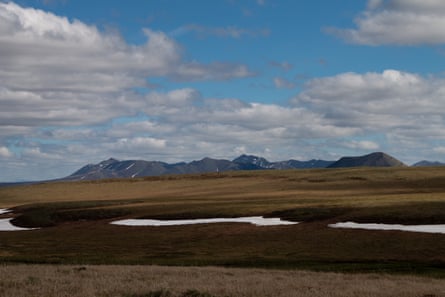
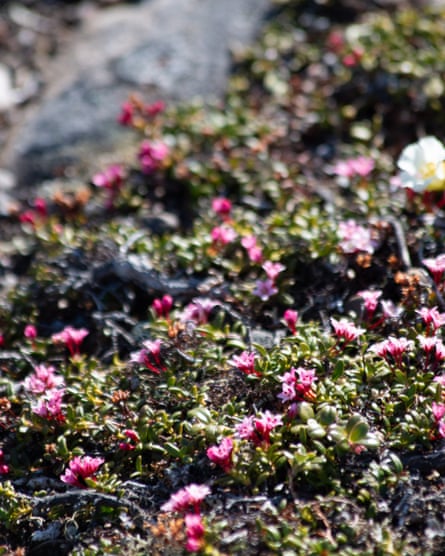
On the remote, wind-swept expanses of Alaska’s North Slope, a team of fifty scientists is rewriting our understanding of how ecosystems survive planetary heating. Spanning nearly 190 miles along the rugged Dalton Highway—a corridor slicing from just south of the imposing Brooks Range up toward Sagwon Creek—researchers are engaged in a first-of-its-kind, six-year, $15 million project funded by the US National Science Foundation.
Known as the Evolving Meta-Ecosystems Institute (Evome), this ambitious initiative challenges the traditional, solitary view of evolutionary biology. For decades, the dominant paradigm of "survival of the fittest" has framed climate adaptation as an isolated, species-by-species struggle. Evome posits a revolutionary alternative: what if species do not succeed or fail alone, but instead leverage their longstanding ecological relationships to rapidly evolve and adapt together?
By focusing on five interconnected keystone species—the white-crowned sparrow, the feltleaf willow, the Arctic grayling, an aquatic mayfly, and a ground beetle—researchers are mapping the complex genetic and ecological matrices that bind tundra and stream habitats. Because the Arctic is warming faster than any other region on Earth, it serves as an accelerated natural laboratory. What scientists discover here in the far north may ultimately forecast how global ecosystems, from tropical forests to alpine meadows, will weather the escalating climate crisis.
Detailed Chronology: Fieldwork and Laboratory Obstacles on the North Slope
The operational reality of conducting multi-tiered genetic and ecological research above the Arctic Circle is defined by harsh elements, logistical hurdles, and immense geographic scale.
Spring Thaw and the Arrival of Migrants
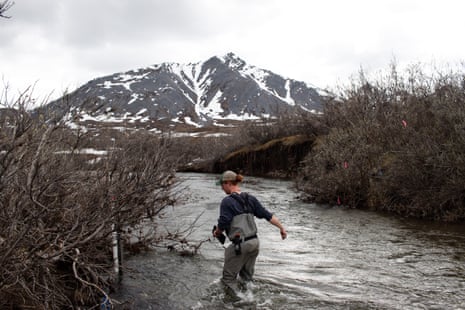
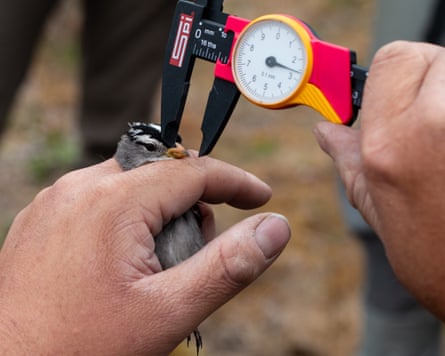
As winter loosens its grip on the North Slope, the scientific season begins with a rush. In May, researchers navigate clumps of tussock grasses toward fast-flowing streams draining the snow-capped Brooks Range. Near Galbraith Creek, ornithologists string mist nets to capture white-crowned sparrows freshly arrived from southern latitudes. These songbirds face a compressed Arctic summer, giving them only weeks to establish territories, find mates, lay eggs, and rear chicks on a steady influx of insects.
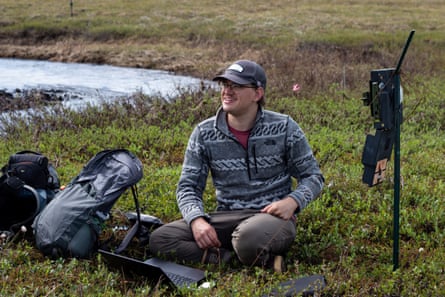
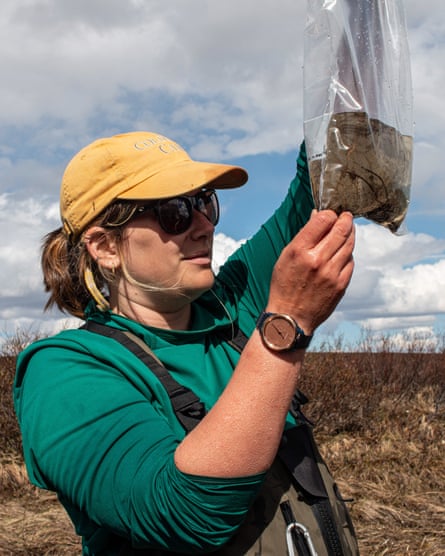
Concurrently, graduate students and field researchers fan out across 15 designated field sites flanking the Dalton Highway. They deploy sticky traps into the permafrost, set acoustic recording boxes to monitor bird calls, submerge temperature sensors in frigid waterways, and pin mesh bags to the tundra to gather willow leaves.
The Grayling Egg Expedition
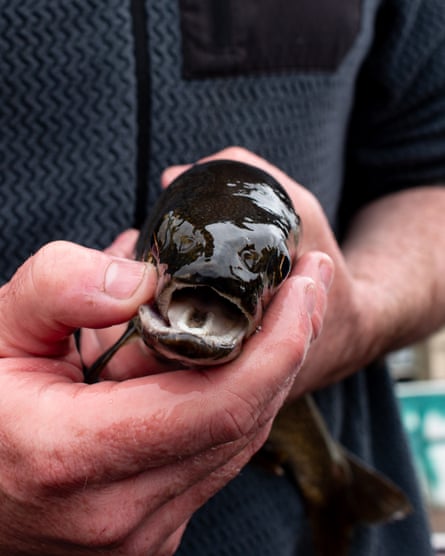
Among the most complex logistical feats of the early season unfolded in May, when University of Alaska Fairbanks students Matthew Zimmerman and Roberto Ponce Velez embarked on a mission to collect fertilized eggs from spawning Arctic grayling. Located in a lake just south of the Brooks Range, locating an active spawning event proved exceptionally difficult—described by Zimmerman as "like throwing a hammer at a nail."
Transporting the delicate biological bounty back to the university’s Fairbanks laboratory along the notoriously jarring, unpaved Dalton Highway presented an immediate disaster: more than half of the fragile eggs perished en route due to the relentless vibration and thermal fluctuations.
Laboratory Trials and Thermal Stress
The survivors that successfully reached Fairbanks were immediately integrated into a high-stakes controlled experiment. Researchers divided the resilient embryos into four experimental tanks calibrated to five distinct water temperatures ranging from 4°C to 20°C. To establish a geographic baseline, the students simultaneously gathered fertilized eggs from the Chena River near Fairbanks, where local grayling were spawning at 4°C—six degrees cooler than their northern counterparts.
By rearing these distinct geographic populations under identical thermal conditions, the team aimed to isolate genetic variances in heat tolerance. The preliminary results underscored the delicate trade-offs governing Arctic biology: while elevated temperatures accelerated embryonic development, they triggered catastrophic mortality rates. In subsequent field seasons, researchers plan to source additional genetic material from across the North Slope to refine these thermal response curves.
Supporting Context & Metrics: The Anatomy of Shrubification and Meta-Ecosystem Dynamics
To comprehend the fragility of the Arctic, scientists must analyze how physical changes in the landscape ripple across distinct ecological boundaries—specifically, the terrestrial tundra and aquatic stream networks.
The Shrubification of Arctic Rivers
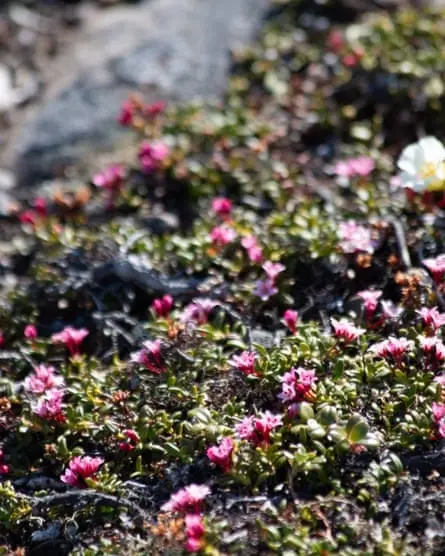
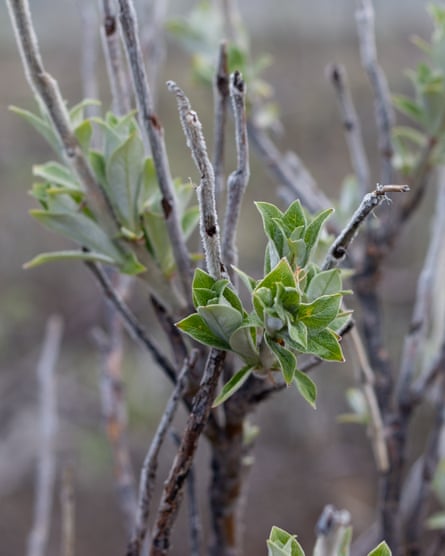
One of the primary drivers of ecological disruption in northern Alaska is a phenomenon known as "shrubification." As permafrost thaws and temperatures rise, willow shrubs are aggressively claiming new territory along Arctic rivers and streams. While seemingly benign, this botanical migration fundamentally alters the physics and chemistry of aquatic habitats:
Light Deprivation: Encroaching willow canopies cast denser shadows over waterways, reducing the solar radiation necessary for aquatic photosynthesis. This drop in algae production starves grazing insects like mayflies and caddisflies.
Nutrient Shifts: Conversely, increased willow leaf litter introduces a massive pulse of detritus into the streams. Shredding insects, such as stoneflies that specialize in consuming decaying leaves, may experience population booms.
Emergence Mismatches: Unlike mayflies, which emerge in massive summer swarms, stoneflies typically hatch much earlier during the spring melt, raising questions about whether migratory birds and fish can successfully synchronize their feeding cycles with this shifting food web.
The Three Modes of Climate Adaptation
According to evolutionary theory, organisms confronting rapid environmental shifts rely on three primary mechanisms to persist:
Behavioral Adjustments: Mobile species alter their habits, such as birds shifting their migration routes or arrival timing.
Physiological Acclimatization: Individuals temporarily modify bodily functions to endure stress, akin to trees temporarily altering photosynthesis during a severe drought.
Adaptive Evolution: Populations undergo rapid genetic adaptation, passing advantageous traits to offspring within just a few generations—a phenomenon scientists call "evolutionary rescue."
Historical documentation confirms the power of evolutionary rescue. During the 2010s, populations of scarlet monkeyflowers in Oregon and California rapidly evolved to survive a punishing four-year drought. Evome researchers are now investigating whether similar genetic buffering exists within Arctic species.
Official Statements and Expert Perspectives
The complexity of linking single-species genetics to macro-level ecosystem stability has assembled a multidisciplinary coalition of top-tier ecologists, geneticists, and physiologists.
"There is how organisms respond individually, but then all those organisms also live in a matrix that is an ecosystem. We think those connections will help them prosper in climate change. Things won’t completely fall apart."
— Dr. Linda Deegan, Senior Scientist at the Woodwell Climate Research Center and leader of the Evome Institute.
Dr. Deegan emphasizes that while researchers hold an optimistic hypothesis regarding ecological resilience, empirical data on how adaptive evolution influences entire multi-habitat nutrient and energy flows remains virtually nonexistent.
"Across hundreds of experiments, we have seen this happening. There is this incredible buffer ability of adaptive evolution."
— Dr. Mark Urban, Evolutionary Biologist at the University of Connecticut.
Dr. Urban highlights the limits of traditional ecology, noting that genetic sequencing is vital for uncovering the underlying drivers of organismal behavior:
"We can get so far with ecology, but at some point we want to get down to the basics of why organisms do the things they do, and can they change the things they do. That’s something only genetics can explain."
Addressing the elusive search for single-gene solutions, Dr. Urban notes:
"The holy grail in genomics is to find that one gene that affects everything. The gene that rules them all. I think that’s optimistic. Most of the traits are going to be determined by hundreds of thousands of genes."
Detailing the physical stressors acting on migratory aquatic species, environmental ecologist Dr. Chris Neill of the Woodwell Climate Research Center points out the compounding pressures of altered hydrology:
"The snow is melting earlier most years, but summers are also getting drier and grayling have to move. Certain cues tell grayling when they should begin migrating. Those cues may be programmed into their genome—or they may not."
Future Outlook: Bouncing Back, Bending, or Breaking
As the Evome Institute moves past its initial phases, the overarching goal remains clear: to construct comprehensive reference genomes for keystone species like the Arctic grayling and map the genetic diversity underpinning northern Alaska’s biodiversity.
By unifying mist-netting surveys, aquatic algae scrubbing, high-throughput DNA sequencing, and rigorous thermal tank trials, the scientific community hopes to build predictive models capable of forecasting ecosystem trajectories under severe climate pressures.
Yet, the ultimate fate of the North Slope remains an open question. While adaptive evolution may provide a crucial shock absorber against rapid warming, the velocity of change in the high latitudes continues to push natural systems to their absolute limits. As Dr. Mark Urban aptly summarizes:
"I think there are going to be a lot of springs. But we’ll also witness a few breaks or bends in the system."
Ultimately, the insights forged along the Dalton Highway will transcend the Arctic tundra, offering a vital blueprint for preserving biodiversity across a warming planet.