

Executive Overview
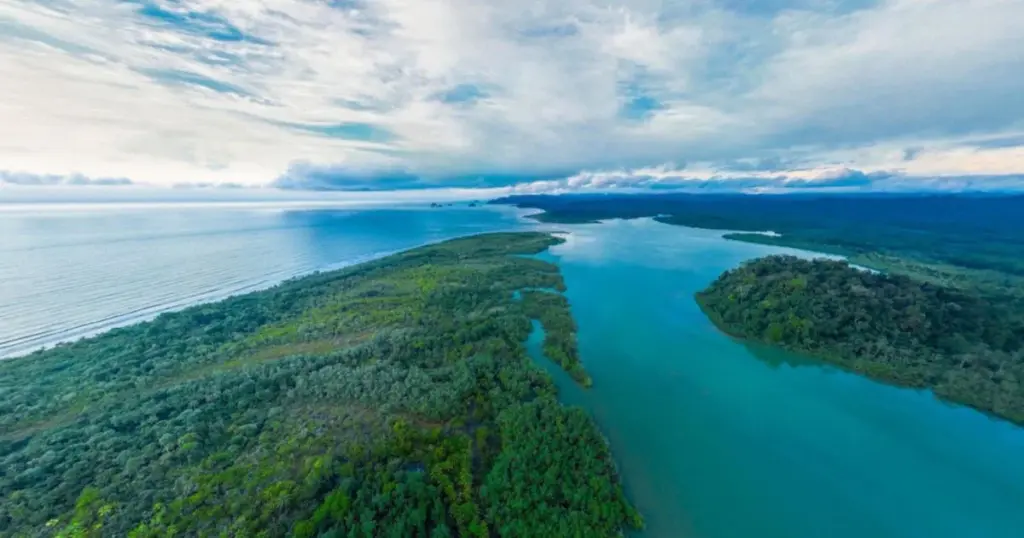
In a monumental victory for global marine conservation, the Colombian government officially expanded the Acandí, Playón and Playona Wildlife Sanctuary by nearly 63,000 hectares in May 2026. This decisive administrative action elevated the total protected area to upwards of 89,000 hectares. Crucially, the expansion extends formal national park protections to the offshore coral ecosystems of the Capurganá and Cabo Tiburón Hope Spot for the very first time.
Situated in the northern reaches of the Department of Chocó along the Caribbean Sea, this biodiverse marine frontier has been the focus of tireless local leadership, rigorous citizen science, and sustained advocacy since 2008. The newly realized boundary enlargement serves as the capstone achievement of a "triple protection" framework. It follows on the heels of the region’s 2024 designation as a Marine Biosphere Reserve under UNESCO’s Man and the Biosphere (MAB) Program, solidifying a multi-layered governance model designed to safeguard critical migratory corridors, remarkably resilient coral reefs, and nesting grounds for four threatened sea turtle species.
This article explores the trajectory of this conservation milestone, tracing its origins from grassroots monitoring networks to international recognition by Sylvia Earle’s Mission Blue foundation. It details the ecological stakes, highlights the leadership driving the initiative, and evaluates the broader implications of securing one of the Caribbean’s most dynamic marine strongholds.
Detailed Chronology: A Roadmap to Marine Protection
The path toward the 2026 sanctuary expansion was neither swift nor accidental; it represents nearly two decades of coordinated persistence among local fishers, academic institutions, indigenous communities, NGOs, and government regulators.
2008–2015: The Genesis of Community Science and Local Stewardship
The foundational groundwork for the Capurganá and Cabo Tiburón Hope Spot began in 2008. Recognizing alarming declines in regional marine biodiversity and mounting anthropogenic pressures on coastal habitats, local stakeholders in Chocó initiated long-term citizen science monitoring programs. Unlike top-down conservation initiatives imposed by distant capitals, this movement was built from the water up.
Local fishers, recreational divers, and community organizers partnered with researchers to systematically document reef health, track artisanal fishing yields, and monitor vulnerable sea turtle populations. Over years of consistent data collection, these grassroots efforts revealed a surprising ecological phenomenon: despite broader Caribbean-wide trends of coral degradation, the reefs of Capurganá and Cabo Tiburón exhibited exceptional resilience to thermal stress and disease. Furthermore, long-term monitoring data proved that artisanal fisheries were beginning to show signs of recovery, while nesting trends for the critically endangered leatherback turtle (Dermochelys coriacea) demonstrated positive stabilization.
Formalizing the Hope Spot and Coalition Building
Armed with empirical data gathered by community scientists, local advocates sought broader international platforms to amplify their cause. The coalition partnered with Mission Blue—the global marine conservation initiative founded by legendary oceanographer Dr. Sylvia Earle—alongside the local NGO Foundation ICRI Colombia and the International Coral Reef Observatory (ICRO).
In recognition of the area’s remarkably resilient reefs and its status as a crucial sanctuary for threatened marine life, Capurganá and Cabo Tiburón was officially designated a Mission Blue Hope Spot. This designation served as a powerful catalytic tool, drawing international attention, scientific resources, and strategic visibility to a stretch of Caribbean coastline that had historically lacked sufficient federal protection.
2024: The UNESCO Biosphere Reserve Designation
The momentum continued to accelerate into the mid-2020s. In 2024, the Man and the Biosphere (MAB) Program formally declared the Darien North of Chocó region as a Marine Biosphere Reserve. This international accolade validated the region’s socio-ecological importance, framing it as a model for sustainable coexistence between local human communities—including Afro-descendant and indigenous populations—and delicate marine environments.
However, while the Biosphere Reserve designation provided a vital framework for regional planning and sustainable development, it lacked the hard regulatory teeth of strict national park status. Conservationists recognized that safeguarding the terrestrial and coastal nesting beaches was insufficient; the offshore marine environments, particularly the contiguous coral reefs, remained vulnerable to unmanaged extraction and shifting environmental pressures.
May 2026: Achieving "Triple Protection" and Sanctuary Expansion
The culmination of nearly two decades of advocacy arrived in May 2026. The Colombian government formally approved the expansion of the Acandí, Playón and Playona Wildlife Sanctuary by approximately 63,000 hectares.
This administrative stroke of the pen achieved what local leaders had long championed: a completed "triple protection" framework. By folding the offshore marine zones and critical coral habitats into the National Parks System alongside the existing wildlife sanctuary and the UNESCO Biosphere Reserve, Colombia established an airtight legal fortress around the Capurganá and Cabo Tiburón Hope Spot.
Supporting Context & Ecological Metrics
To understand the profound significance of the 2026 sanctuary expansion, one must examine the unique ecological architecture of the northern Chocó seascape and the specific biodiversity it shelters.
The Ecological Significance of the Capurganá and Cabo Tiburón Hope Spot
Straddling the border between Colombia and Panama, the northern Chocó coast represents a unique biogeographical transition zone where the Pacific influences and Caribbean currents converge. This interaction generates nutrient-rich waters that support complex, highly productive marine webs.
Within this expanse, the coral reefs of Capurganá and Cabo Tiburón act as underwater breakwaters, protecting coastal communities from severe storm surges while providing shelter, breeding grounds, and nurseries for hundreds of species of fish, crustaceans, and mollusks. What distinguishes these reefs in contemporary marine science is their innate resilience. As global climate change drives rising sea surface temperatures and widespread coral bleaching events across the wider Caribbean, the reefs within this Hope Spot have demonstrated an encouraging capacity to withstand thermal anomalies—making them critical genetic repositories for future reef restoration efforts worldwide.
Sanctuary Metrics at a Glance
- Pre-Expansion Sanctuary Area: Approximately 26,000 hectares (primarily focused on terrestrial and coastal nesting zones).
- Sanctuary Expansion Area: Nearly 63,000 hectares of offshore marine habitats, including deep-water ecosystems and coral reefs.
- Total Post-Expansion Area: More than 89,000 hectares under strict national park protection.
- Timeline of Grassroots Monitoring: Initiated in 2008, providing nearly two decades of continuous ecological baseline data.
- International Designations: Mission Blue Hope Spot (regional recognition) and UNESCO Marine Biosphere Reserve (2024).
Haven for Threatened Marine Species
Beyond coral reef health, the expanded sanctuary is globally renowned as a sanctuary for sea turtles. The beaches of Acandí, Playón, and Playona have long served as primary nesting sites for four distinct species of sea turtles, all of which face severe conservation threats globally:
- Leatherback Turtles (Dermochelys coriacea): The largest of all living reptiles, these pelagic giants undertake massive oceanic migrations to nest on the Chocó beaches. Long-term monitoring data indicate that local conservation efforts have successfully reversed localized negative population trends for this species.
- Hawksbill Turtles (Eretmochelys imbricata): Heavily targeted historically for the tortoiseshell trade, hawksbills depend directly on the healthy sponge populations found within the newly protected coral reef ecosystems.
- Green Turtles (Chelonia mydas): These marine herbivores graze extensively on seagrass meadows adjacent to the reefs, playing a vital role in maintaining the health of benthic habitats.
- Loggerhead Turtles (Caretta caretta): Utilizing the offshore waters for foraging, loggerheads find critical refuge in the rich benthic environments now shielded by the sanctuary’s expanded boundaries.
Official Perspectives and Leadership
The realization of the 2026 sanctuary expansion is a testament to collaborative governance, uniting community-level actors with institutional decision-makers.
The Role of Nohora Galvis and ICRO
At the epicenter of this conservation triumph is Nohora Galvis, the Mission Blue Hope Spot Champion and current Director of the International Coral Reef Observatory (ICRO). For years, Galvis has served as a tireless bridge between empirical science and community action. Working hand-in-hand with local fishers, recreational dive operators, academic researchers, and municipal and national government bodies, Galvis and her team at ICRO built the unassailable body of evidence required to justify the massive territorial expansion.
Reflecting on the milestone, conservation advocates emphasize that Galvis’s leadership shattered the traditional dichotomy between strict environmental preservation and human livelihoods. By actively incorporating artisanal fishers into the monitoring and management frameworks, the initiative proved that protecting marine biodiversity can simultaneously secure sustainable local economies.
Institutional Synergy
The success in northern Chocó also highlights a maturing partnership between Colombian environmental authorities—such as Parques Nacionales Naturales de Colombia—and regional civil society organizations. Government agencies recognized that statutory protection cannot succeed without local enforcement and community buy-in. Conversely, grassroots organizations realized that local stewardship requires the legal backing and enforcement capacity of the national park system to deter industrial encroachment and illegal fishing practices.
In an official statement celebrating the achievement, Mission Blue lauded the Chocó expansion as a masterclass in modern conservation:
"This milestone is a powerful example of what Hope Spots can catalyse: elevating local conservation leaders, connecting science and community action, and helping transform a shared vision for ocean protection into lasting policy. It proves beyond doubt that acting locally can indeed create global impact."
Future Outlook: Challenges and Opportunities Ahead
While the May 2026 sanctuary expansion marks a historic triumph, environmental leaders emphasize that paper parks are insufficient; rigorous implementation, active management, and sustained funding are imperative to secure the long-term ecological integrity of the region.
Enforcement and Transboundary Management
Expanding the protected area to over 89,000 hectares exponentially increases the surveillance footprint required by national authorities. Illegal industrial fishing fleets, unmanaged coastal development, and the pressures of unregulated tourism pose persistent threats to the offshore reefs. Establishing robust maritime patrols, leveraging satellite monitoring technologies, and maintaining active community ranger networks will be essential components of the sanctuary’s day-to-day operations.
Furthermore, because the Capurganá and Cabo Tiburón Hope Spot sits directly on the maritime border between Colombia and Panama, fostering cross-border conservation cooperation will be a critical priority for the coming decade. Marine species do not recognize geopolitical boundaries; ensuring that protective measures extend seamlessly into contiguous Panamanian waters will be vital for highly migratory species like sea turtles and pelagic fish stocks.
Climate Resilience and Scientific Research
As global climate change continues to drive ocean acidification and unpredictable weather patterns, the resilient coral reefs of northern Chocó will serve as an invaluable living laboratory. Researchers plan to scale up scientific studies within the expanded sanctuary to understand the physiological and genetic mechanisms underlying the corals’ thermal tolerance. These insights could hold the key to restoring degraded reef systems across the broader Wider Caribbean Region.
A Blueprint for Global Marine Conservation
Ultimately, the journey of the Acandí, Playón and Playona Wildlife Sanctuary offers a replicable blueprint for coastal nations worldwide. It demonstrates that when local communities are empowered as stewards, supported by dedicated non-governmental organizations, and backed by visionary national policy, marine ecosystems can recover, thrive, and endure against the mounting pressures of the Anthropocene.
As the world looks toward international conservation targets—such as protecting 30% of the global ocean by 2030—the success in Chocó stands as a beacon of hope, proving that grassroots dedication can reshape the geopolitical landscape of ocean governance.



