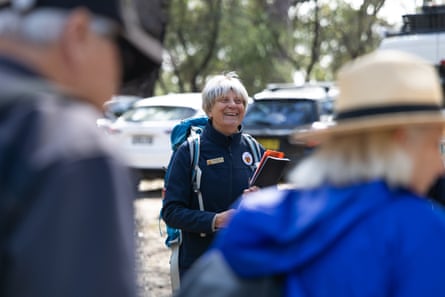
On a crisp, overcast spring morning on the northern fringes of Sydney, a small assembly of twenty nature enthusiasts gathered quietly at the iron-gated portal of the Muogamarra Nature Reserve. "Good to see nobody is wearing thongs," volunteered tour leader Helen Logie, breaking the hush with a dry chuckle that drew relieved smiles from the group. Footwear compliance is no trivial matter here; the terrain demands respect.
We are part of an exceptionally exclusive demographic: fewer than 5,000 people granted access to the 2,300-hectare reserve during its brief, six-week annual autumn-into-spring window. This fleeting opening coincides with the southern hemisphere’s wildflower explosion. Demand vastly outstrips supply. Tickets for the limited guided and self-guided treks vanished in under a week, driven by a public starved of authentic, uncurated wilderness.
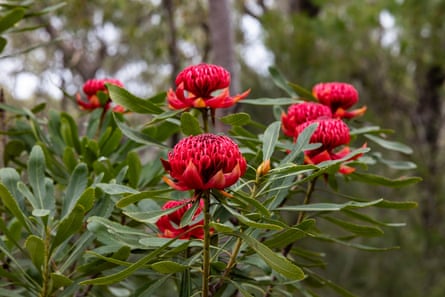
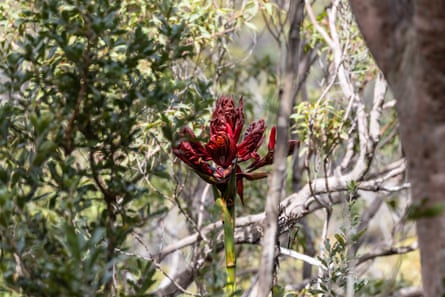
As our vehicles wound along the rugged, wind-scoured entry tracks, cars repeatedly slowed to a crawl. Passengers leaned out of windows, rubbernecking to marvel at the iconic New South Wales waratah (Telopea speciosissima) standing in full, defiant crimson bloom. This threatened botanical emblem sits precariously on the frontline of Australia’s mounting conservation crises. Yet, within these protected sandstone ridges, it thrives much as it has for millennia, hidden from the relentless tide of urban sprawl.
Muogamarra represents a rare conservation time capsule. Protected for nearly a century and cradled by the traditional custodianship of Aboriginal peoples for at least 20,000 years, the reserve spends the remaining forty-six weeks of the year locked away. This strict quarantine safeguards a fragile ecosystem and a wealth of sensitive cultural heritage, offering a visceral glimpse into pre-colonial Australia that cannot be replicated in manicured botanical gardens or commercial tulip festivals.
Detailed Chronology: A Journey Through Time and Botany
The Ancient Foundations and Indigenous Custodianship
Long before European settlers cast covetous eyes toward the Hawkesbury River basin, the plateau of Muogamarra was a vital cultural, spiritual, and commercial crossroads for its traditional owners. Archaeological traces of this deep past are woven into the very fabric of the landscape. The reserve is "littered with shell middens, rock engravings, and sacred ceremonial sites," according to historical surveys, though many of these locations remain strictly off-limits to casual visitors to prevent degradation and preserve sacred law.
The name "Muogamarra" itself is derived from an Indigenous word meaning "to preserve for future generations"—an irony not lost on modern conservationists, who grapple daily with the pressures of a booming metropolis less than an hour’s drive south.
Tipper’s Vision and the Fight Against Species Collapse
The modern genesis of Muogamarra is rooted in the interwar period of the 1930s—an era of acute ecological anxiety characterized by widespread species collapse across eastern Australia. Koalas were hunted relentlessly by the tens of thousands for the fur trade, while vast carpets of native wildflowers were systematically clear-cut across Sydney’s outskirts to be hawked in city streets and railway stations.
Enter John Duncan Tipper, a visionary conservationist and engineer. Deeply alarmed by the unchecked degradation of the region’s native flora and fauna, Tipper secured a lease on approximately 800 hectares of the land in the 1930s. Working tirelessly with limited resources, Tipper laid the groundwork for what would eventually be gazetted as a dedicated nature reserve, establishing a precedent for rigorous, hands-off habitat protection that predates the modern environmental movement by decades.
The Spring Expedition: From Tipper Loop to the Western Lookout
Our morning excursion was mapped across two distinct segments: the historic Tipper Loop and a demanding two-kilometer trek tracking westward toward the escarpment’s edge. Botanically, the reserve is a powerhouse of biodiversity, hosting roughly 900 plant species, 14 native mammal species, and over 100 varieties of birds. Yet, it is the floral tapestry that dictates the rhythm of the journey.
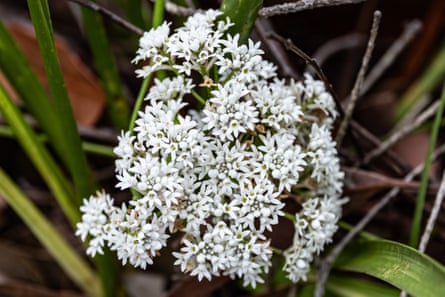
As we navigated the sandstone pathways, Helen Logie drew our attention to the architectural marvel of the Gymea lily (Doryanthes excelsa), which thrusts massive, sword-like green leaves upward before erupting into clusters of deep red, trumpet-shaped flowers. Nearby stood the delicate smoke bush (Conospermum longifolium), its intricate white inflorescences resembling fine-spun lace when inspected under a macro lens.
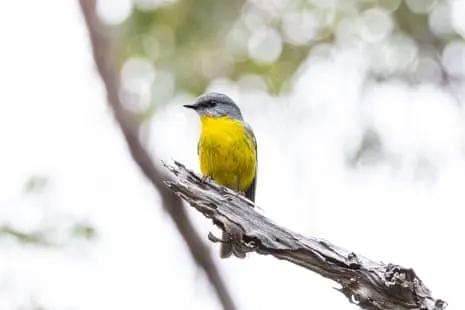
The acoustic backdrop was equally compelling. Amidst a grove of ancient, gnarled banksias and scribbly gums hundreds of years old, the haunting call of a fan-tailed cuckoo pierced the morning air. Logie noted that while elusive wedge-tailed eagles and lyrebirds frequently patrol the canopy, and whispered rumors of resident koalas persist among rangers, the real spectacle lies closer to the ground.
Fire, Soil, and Regeneration
The geological foundation of Muogamarra is a complex interplay of Hawkesbury sandstone and pockets of volcanic intrusion, creating harsh, nutrient-deficient ridge tops. Paradoxically, it is this very adversity that fosters such extraordinary biological richness. Native species have evolved not merely to survive in spite of the poor soil, but to leverage it.
We paused to admire a purple sun orchid (Thelymitra)—a fleeting beauty that bursts into color only under precise climatic cues—and stands of lobelia, a genus famously dependent on the scouring heat of bushfires to trigger germination. Greg Kirby, National Parks area manager, explained that ecological management here incorporates traditional-style back-burning regimens. Recent hazard-reduction burns had just been finalized ahead of the high-risk summer fire season; already, brilliant green epicormic shoots were erupting through the charred, blackened bark of ancient eucalypts.
Supporting Context & Metrics
To understand the operational realities of Muogamarra is to understand the tightrope walk between public education and ecological preservation. Below is a breakdown of the reserve’s core environmental and logistical parameters:
Parameter
Metric / Detail
Total Land Area
2,300 hectares
Indigenous History
At least 20,000 years of continuous traditional occupation
Public Access Window
6 weeks annually (typically aligning with early spring)
The ecological vulnerability of the park was thrown into sharp relief during our visit by broader climatic anomalies. Sydney had recently recorded its warmest, wettest winter on record—a meteorological trend that upended predictable biological clocks. Logie pointed out that many native species had begun flowering and subsequently dying off weeks ahead of their historical schedules.
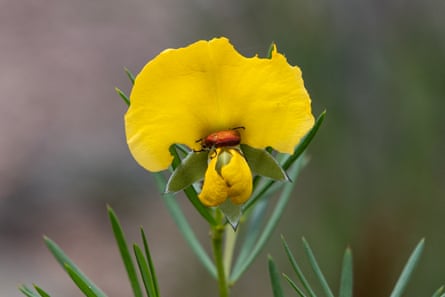
"It’s nearly impossible to artificially curate an environment so that everything hits peak bloom during our exact six-week opening window," Logie noted. Unlike botanical gardens, which rely on hothouses, irrigation, and seasonal replanting to guarantee visitor satisfaction, Muogamarra offers an unfiltered, highly volatile reality. This transience is its defining feature. Spotting a rare lady’s finger orchid that had eluded guides on previous excursions underscored the organic, unscripted nature of the reserve.
Official Statements and Expert Perspectives
The philosophical underpinnings of Muogamarra’s strict access protocols were articulated by Greg Kirby, Area Manager for North Western Sydney within the National Parks and Wildlife Service (NPWS).
"There are very few places left in New South Wales that have experienced such little human interaction," Kirby stated during a briefing at the western lookout. "The longstanding protection means it’s pristine. And in spring, it’s just this cacophony of colour. You’re completely enveloped by it."
Kirby emphasized that the decision to lock down the reserve for the vast majority of the year is non-negotiable if the state’s fragile sandstone heathlands are to survive the pressures of contemporary development. The reserve functions as a living laboratory and a sanctuary of last resort for species facing compounding threats from habitat fragmentation, invasive pathogens like Phytophthora cinnamomi (root rot fungus), and accelerating climate volatility.
Conservation scientists monitoring the Hawkesbury bioregion echo Kirby’s sentiments. As urban densities swell along Sydney’s north-west and central-coast corridors, protected areas like Muogamarra act as vital ecological stepping stones. They maintain genetic connectivity for mobile fauna species and preserve seed banks of endemic flora that exist nowhere else on Earth.
Future Outlook: Preserving the Untouched Wilderness
Emerging from the quiet sanctuary of the reserve back onto the asphalt arteries of the Pacific Highway offered a jarring transition. The sensory overload of heavy traffic, roadside billboards, and introduced weed species—such as African olive and lantana choking nearby drainage ditches—cast the surrounding landscape in a harsh, critical light.
The contrast highlights the central dilemma facing New South Wales conservation management in the 21st century: how to shield fragments of pristine wilderness from an encroaching world that increasingly treats nature as either a commodity or a backdrop.
For the fortunate few thousand who secure tickets to Muogamarra each spring, the experience serves as a recalibration. Standing at the western lookout—gazing across Pete’s Crater and Pete’s Bite (an ancient volcanic diatreme and dyke system), the mangrove-fringed shores of Bar Island, the sprawling expanse of the Hawkesbury River, and the distant, blue-hazed ridges of the Blue Mountains National Park—the sheer scale of the landscape humbles the human ego.
As climate change accelerates and urban boundaries push ever closer to the escarpments, sanctuaries like Muogamarra will require increasingly intensive, science-led management to maintain their integrity. Yet, as long as its iron gates remain firmly bolted for forty-six weeks of the year, this ancient botanical fortress will continue to hold the line—preserving a fleeting, breathtaking window into what Australia looked like long before the arrival of the modern world.