

Executive Overview
As the global transition toward electric vehicles (EVs), renewable energy infrastructure, and advanced artificial intelligence hardware accelerates, the underlying supply chain for critical minerals faces unprecedented pressures. Permanent magnets—crucial components in everything from EV traction motors and wind turbine generators to robotics and defense applications—rely heavily on rare earth elements. Historically, this supply chain has suffered from extreme geopolitical concentration, leaving Western manufacturing deeply vulnerable to trade restrictions, price volatility, and supply disruptions.
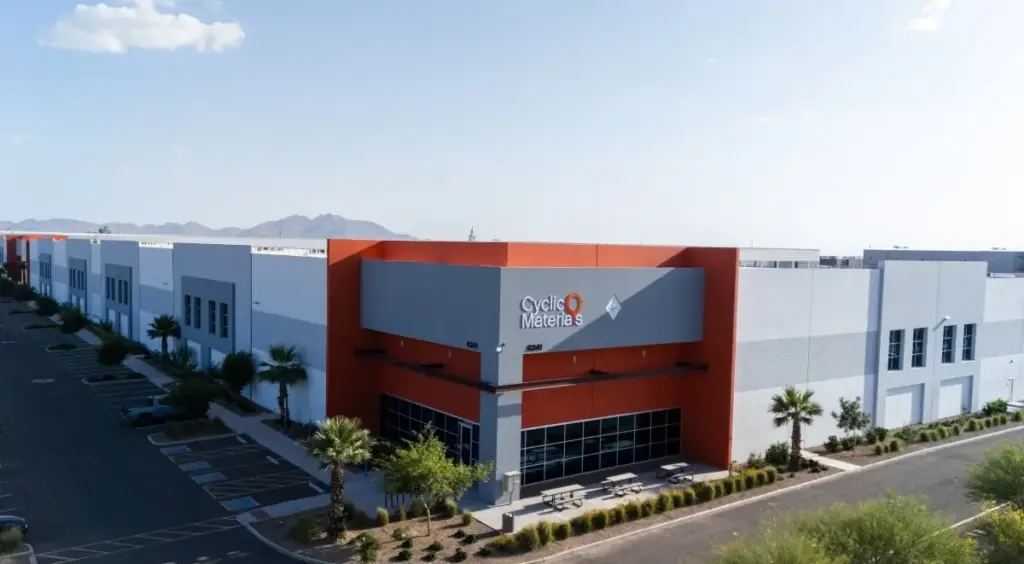
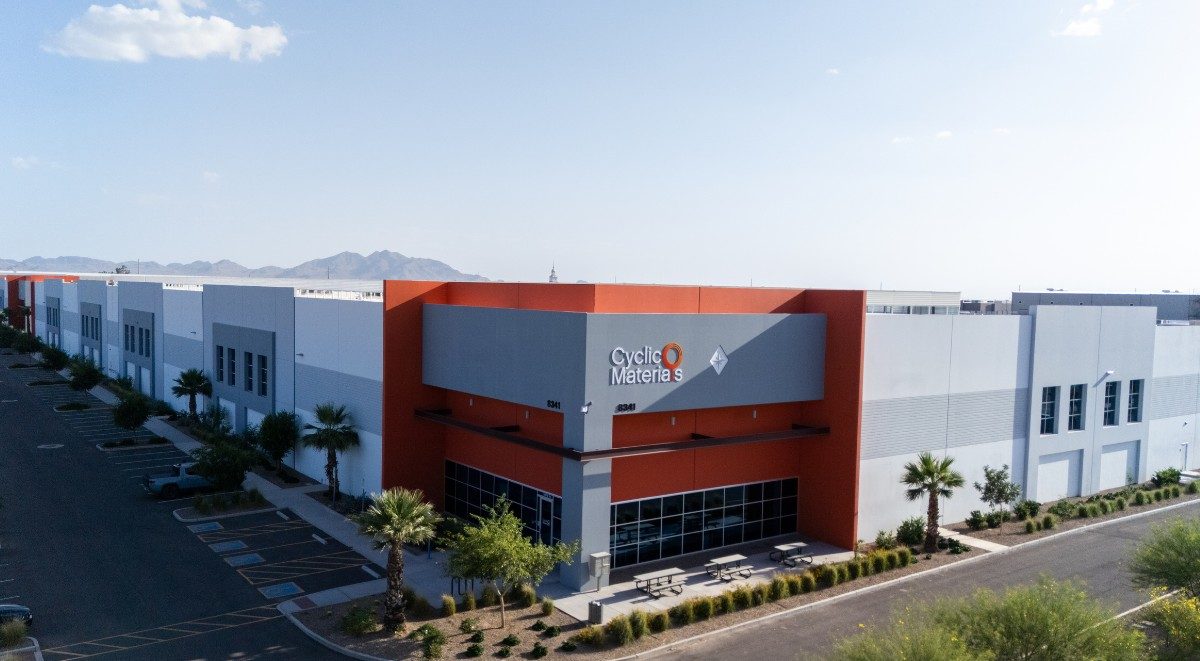
In a major stride toward supply chain sovereignty, clean-tech innovator Cyclic Materials has officially opened its inaugural commercial-scale rare earth magnet recycling facility in Mesa, Arizona. Utilizing the company’s proprietary MagCycle technology, the plant boasts an annual processing capacity of up to 25,000 metric tons of magnet-bearing, end-of-life products. By mechanically extracting rare earth magnets from discarded electronics, industrial machinery, and consumer goods, the facility recovers valuable concentrates alongside critical structural metals like copper, aluminum, and steel.
Coming just 17 months after the initial project announcement, the Mesa facility represents a watershed moment for domestic resource recovery in the United States. With initial processing already underway—backed by a delivery stream exceeding 7,000 metric tons of raw feed material—Cyclic Materials is poised to issue its first commercial shipments to domestic customers. This development bridges a critical gap in the North American manufacturing ecosystem, offering a sustainable, localized alternative to newly mined materials at a time when global demand for rare earths is projected to triple.
Detailed Chronology: From Concept to Commercial Launch
The realization of Cyclic Materials’ Mesa facility is a study in rapid infrastructure deployment within the clean-tech sector. Bringing a novel chemical-mechanical recycling process from the laboratory bench to a high-capacity, commercial-scale plant in under a year and a half requires a tightly coordinated roadmap of technological validation, strategic partnerships, and logistical execution.
The Foundation and Technology Development
Cyclic Materials was founded to address the glaring vulnerabilities of the rare earth supply chain through circular economy principles. Traditional recycling methods for electronics have historically focused on base and precious metals like gold, silver, and copper, often overlooking the microscopic or structurally embedded permanent magnets containing neodymium, dysprosium, and praseodymium.
To overcome this, the company developed MagCycle, a proprietary technology designed to isolate, extract, and process rare earth magnets from complex end-of-life streams without the destructive, highly toxic chemical footprints typical of traditional separation processes. The technology yields a high-grade rare earth magnet concentrate known as Mag-Xtract, alongside clean streams of copper, aluminum, and steel that can be immediately reintroduced into industrial supply chains.
Project Anniversaries and Strategic Milestones
- Spring 2024 to Summer 2025: Cyclic Materials advanced engineering designs for its first commercial site, finalizing location selection in the strategic industrial hub of Mesa, Arizona. The region offers favorable logistics, an expanding technological workforce, and close proximity to key Western US manufacturing corridors.
- July 2026 (The ERI Partnership): A pivotal moment in the plant’s operational readiness occurred when Cyclic Materials secured a major supply agreement with major US e-waste recycler ERI. This strategic partnership guaranteed a steady, high-volume inflow of feedstock—discarded electronics and industrial scrap containing high concentrations of permanent magnets.
- September 2026 (Plant Completion & Opening): Exactly 17 months after breaking ground on the initiative, Cyclic Materials announced the completion and official opening of the Mesa facility.
- Current Operations (Late September 2026): Even prior to the ribbon-cutting, over 7,000 metric tons of magnet-bearing material had been delivered to the Arizona site. Processing units are actively operating, and the company confirmed that its maiden commercial shipments of refined concentrates to domestic customers are scheduled for later this month.
Supporting Context & Metrics: The Macroeconomics of Rare Earths
To understand the strategic significance of Cyclic Materials’ Mesa plant, one must examine the broader macroeconomic and geopolitical realities governing rare earth elements (REEs) in the 21st century.
The Geopolitical Bottleneck
Rare earth elements are not actually geologically scarce, but the refining, processing, and permanent magnet manufacturing capacity is heavily consolidated. Currently, China controls the vast majority of the world’s rare earth mining and an even higher percentage of the processing and permanent magnet fabrication capacity. This geographic concentration creates a structural choke point. Any geopolitical friction, export controls, or domestic policy shifts overseas instantly ripple through Western automotive, aerospace, and energy sectors, threatening production lines for everything from fighter jets to wind turbines.
Exponential Demand Projections
According to market analyses cited by Cyclic Materials, global demand for rare earth elements is projected to triple by 2035. This unprecedented surge is being fueled by several overlapping technological revolutions:
- The Electric Vehicle Transition: High-performance permanent magnet synchronous motors dominate the EV traction motor market due to their superior power density and efficiency.
- Renewable Energy Expansion: Direct-drive wind turbine generators require massive quantities of neodymium-iron-boron (NdFeB) magnets to convert kinetic wind energy into electricity reliably over decades.
- Artificial Intelligence and Robotics: The boom in AI hardware data centers, industrial automation, and humanoid robotics relies heavily on precision actuators and miniaturized motors driven by high-strength permanent magnets.
- Defense Applications: Advanced guidance systems, radar arrays, communication platforms, and electric naval propulsion systems depend entirely on a secure, uncompromised supply of critical minerals.
The Role of Urban Mining and Recycling
Mining new rare earth deposits involves extensive capital expenditure, long lead times (often 10 to 15 years from discovery to production), and significant environmental remediation challenges. By contrast, urban mining—recovering materials from products that have reached the end of their useful lives—offers a closed-loop alternative.

The Mesa facility’s capacity of 25,000 metric tons per year represents a meaningful injection of domestic material. By keeping these resource-rich products within North America, recycling acts as an essential shock absorber against international supply disruptions while drastically reducing the carbon intensity associated with virgin mining and primary refining.
Official Statements and Industry Perspective
The launch of the Mesa facility has drawn attention from industrial leaders, policymakers, and environmental advocates alike, highlighting the collective urgency of building domestic critical mineral infrastructure.
Ahmad Ghahreman, CEO and founder of Cyclic Materials, emphasized the broader mission of the company during the facility’s unveiling:
"This facility delivers new capacity for the US to keep resource-rich products here and build a domestic rare earth supply. Cyclic is quickly closing gaps in the domestic supply chain as we expedite our rare earth and critical mineral infrastructure development in the US."
Industry analysts note that Ghahreman’s emphasis on "keeping resource-rich products here" strikes at the heart of modern industrial policy. For decades, the United States and its allies exported millions of tons of high-tech scrap—effectively shipping away the very minerals now deemed critical to national security and economic competitiveness.

Manufacturing partners and supply chain experts have similarly praised the integration of Cyclic’s MagCycle technology. By converting raw e-waste streams into high-purity Mag-Xtract concentrates, the company bridges the missing link between waste aggregators (such as ERI) and advanced magnet manufacturers within the United States. This symbiotic ecosystem ensures that valuable metals do not end up in landfills or get lost in overseas export loops.
Future Outlook: Scaling Beyond Arizona
While the opening of the Mesa facility marks a monumental milestone for Cyclic Materials, company leadership views it merely as the first phase of a broader, aggressive expansion strategy designed to fortify North America’s critical mineral independence.
The South Carolina Campus (2028)
Building on the momentum generated in Arizona, Cyclic Materials has already broken ground on its next major undertaking: a comprehensive recycling and refining campus in South Carolina, scheduled to open in 2028.
Unlike the Mesa plant—which primarily focuses on mechanical separation and the production of magnet concentrates—the upcoming South Carolina site is designed to combine magnet recovery and advanced rare earth refining at a single, highly integrated location. This facility will take the intermediate products generated by operations like Mesa and refine them all the way down to separated rare earth oxides and metals, ready to be alloyed into new permanent magnets.
Toward a Circular Industrial Ecosystem
The roadmap laid out by Cyclic Materials reflects a broader structural shift in Western manufacturing. As regulatory frameworks—such as the United States Inflation Reduction Act (IRA) and similar legislation in Europe—increasingly incentivize domestic sourcing and recycled content, companies that can guarantee a transparent, secure, and environmentally friendly supply of critical minerals will dictate the pace of the green transition.

By proving that commercial-scale rare earth recycling is not only technologically feasible but economically viable, Cyclic Materials is setting a new standard. As the Mesa facility ramps up its output this month and ships its first commercial batches to domestic customers, it signals the dawn of a new era—one where the electronic waste of today becomes the high-performance electric motors and wind turbines of tomorrow, entirely sourced from within domestic borders.



