

Executive Overview
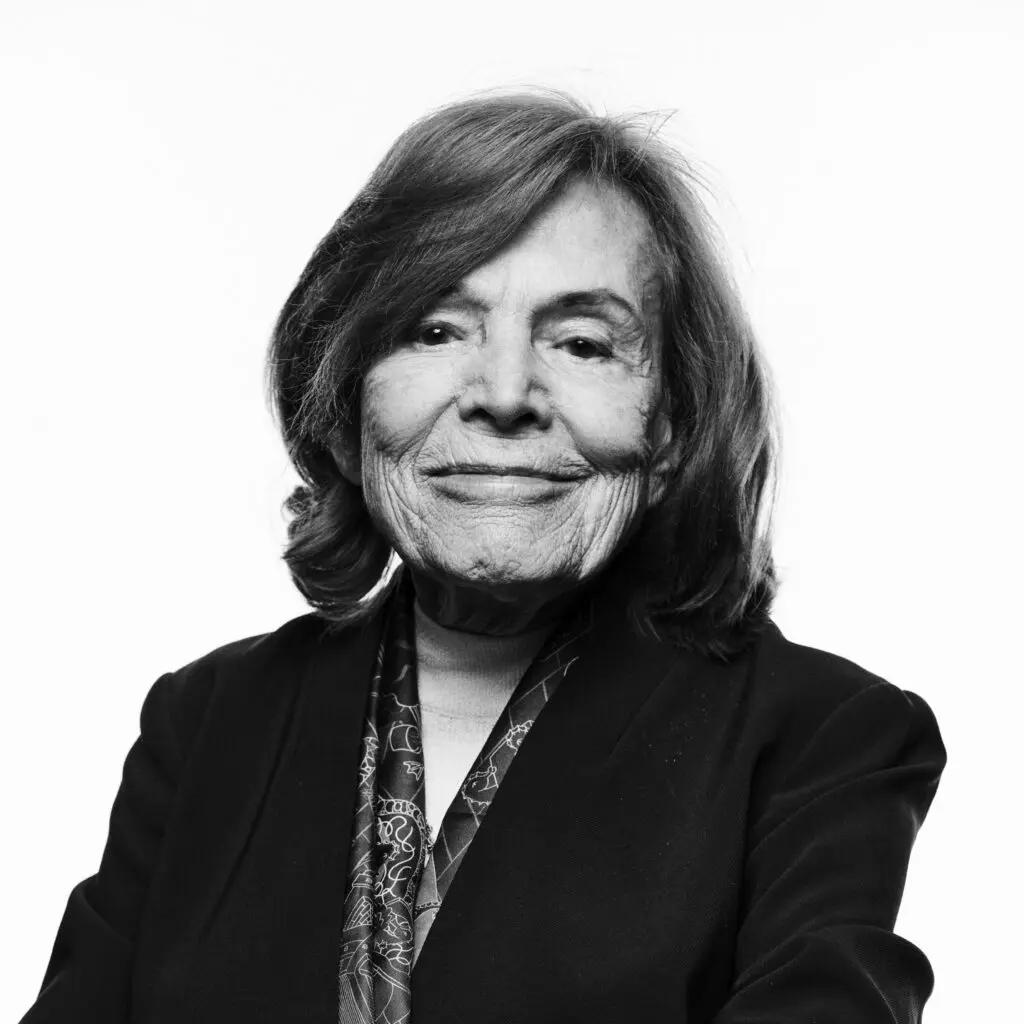
For more than 70 years, legendary oceanographer, explorer, and author Dr. Sylvia Earle has stood at the vanguard of marine science and conservation. Affectionately dubbed "Her Deepness" by the scientific community and the media alike, Earle’s storied career has shattered glass ceilings, rewritten marine biology textbooks, and fundamentally shifted how humanity perceives the global ocean.
In a recent, expansive interview on The World, host Carolyn Beeler sat down with Earle to reflect on a lifetime spent exploring the earth’s final frontier. Their conversation traverses seven decades of monumental shifts in marine technology, the profound psychological and physiological connection between humankind and the sea, and the alarming, undeniable degradation of marine ecosystems witnessed firsthand over the course of a single human lifetime.
This report synthesizes the core themes of Earle’s illustrious career, tracking her evolution from an inquisitive childhood naturalist to the world’s most prominent oceanic advocate. Through an investigative lens, we examine the milestones that defined her path, analyze the shifting metrics of ocean health over the last seventy years, and explore her ongoing crusade to secure global protection for critical marine habitats before it is too late.
Detailed Chronology: A Life Spent in the Deep
To understand the scope of Sylvia Earle’s impact, one must trace a trajectory that mirrors the evolution of modern oceanography itself. Her career bridges the gap between primitive diving equipment and cutting-edge deep-submergence engineering.
The Formative Years and Early Expeditions (1950s–1960s)
Long before scuba technology was widely available—let alone accepted within conservative academic circles—a young Sylvia Earle was already captivated by the watery world. Growing up along the Gulf Coast of New Jersey and later Florida, she spent her formative years observing coastal ecology firsthand.
When self-contained underwater breathing apparatus (SCUBA) technology became accessible in the mid-20th century, Earle was among the very first scientists to recognize its potential for rigorous empirical research. While many contemporary scientists relied on dredged samples hauled blindly onto the decks of research vessels, Earle insisted on descending beneath the surface to observe organisms in their native habitats.
During the 1960s, she completed hundreds of dives, collecting thousands of plant specimens and establishing herself as a formidable phycologist (a specialist in the study of algae). Her early work proved that scuba gear was not merely a tool for recreational divers or commercial salvagers, but an indispensable instrument for serious ecological inquiry.
Breaking Barriers: The Tektite II Mission (1970)
One of the most defining moments of Earle’s early career occurred in the summer of 1970, when she served as the leader of an all-female team of aquanauts for the National Oceanic and Atmospheric Administration’s (NOAA) Tektite II program.
Living fifty feet beneath the surface of the Caribbean Sea in the Virgin Islands for two weeks, Earle and her team conducted vital marine research while proving definitively that female scientists could operate successfully in extreme, isolated, and high-pressure undersea environments. The mission generated international headlines, challenging the deeply entrenched gender biases of the scientific establishment and inspiring a generation of young women to pursue careers in STEM fields.
Pushing the Limits: The Deepest Untethered Sea Walk (1979)
Never one to rest on her laurels, Earle set a world record in 1979 that remains unbroken to this day. Donning an atmospheric diving suit known as the JIM suit—a heavy, pressurized metal suit that insulates the diver from crushing oceanic pressures—Earle stepped out of a submersible off the coast of Oahu, Hawaii.
She walked untethered along the seafloor at a depth of 1,250 feet (381 meters) below the surface. Exposed to the absolute blackness and immense pressure of the deep ocean, Earle spent hours collecting samples and documenting life in the twilight zone. The feat earned her global acclaim and cemented her reputation as one of the most daring and resilient explorers in history.
Leadership at NOAA and Entrepreneurial Ventures (1980s–1990s)
In 1990, Earle achieved another historic milestone when she was appointed as the first female chief scientist of the National Oceanic and Atmospheric Administration. In this high-profile federal role, she advised policymakers on critical environmental issues, fisheries management, and marine pollution during a period of mounting ecological concern.
However, recognizing the bureaucratic constraints of government agencies, Earle eventually stepped down to focus on direct action and technological innovation. Alongside engineer Graham Hawkes, she founded Deep Ocean Engineering and later DOER Marine, companies dedicated to designing and building advanced robotic submersibles and atmospheric diving systems designed to expand human access to the deep sea.
Supporting Context & Metrics: Seven Decades of Oceanic Decline
While Earle’s personal achievements are a testament to human courage and intellectual curiosity, her longitudinal perspective on ocean health tells a more sobering story. In her conversation with Carolyn Beeler, Earle emphasizes that the ocean she explores today bears little resemblance to the pristine ecosystems she encountered during her youth in the 1950s.
The Transformation of Coral Reefs
Marine scientists estimate that the world has lost upwards of 50% of its coral reefs over the past half-century, and Earle has witnessed this devastation firsthand. Once-vibrant, structurally complex reef systems that teemed with sharks, sea turtles, and kaleidoscopic schools of fish have, in many regions, been reduced to bleached, algae-smothered skeletal remains.
Climate change-induced marine heatwaves, ocean acidification, agricultural runoff, and overfishing have conspired to push these critical ecosystems to the brink of collapse. Earle notes that the rapid degradation of coral reefs is not merely an aesthetic tragedy, but an existential threat to global biodiversity, as reefs serve as the nurseries for roughly a quarter of all marine life.
The Collapse of Pelagic Fisheries
The industrialization of commercial fishing following the Second World War fundamentally altered the biological composition of the open ocean. According to historical fisheries data and ecological assessments, large predatory fish populations—including tuna, sharks, cod, and swordfish—have declined by up to 90% since pre-industrial times.
Earle frequently points out that humanity has shifted its fishing practices from catching large, long-lived apex predators to "fishing down the food web," harvesting smaller forage fish and invertebrates that form the foundation of the marine food chain. This practice threatens the food security of hundreds of millions of people globally who rely on seafood as their primary source of protein.
Plastic Pollution and Chemical Infiltration
Perhaps the most ubiquitous symbol of modern anthropogenic impact is plastic pollution. During Earle’s early dives in the mid-20th century, encountering anthropogenic debris in the open ocean was a relative rarity. Today, microplastics have infiltrated every marine stratum, from sunlit surface waters to the deepest abyssal trenches of the Mariana Trench.
Furthermore, agricultural runoff laden with nitrogen and phosphorus has created hundreds of hypoxic "dead zones" worldwide—vast oceanic expanses where dissolved oxygen levels are too low to support marine life.
Official Statements and Perspectives
During her interview with The World, Dr. Earle articulated a philosophy that marries rigorous scientific observation with an urgent, moral imperative for conservation. Below are synthesized key takeaways and official perspectives from her decades of advocacy:
-
On the Illusion of Ocean Inexhaustibility:
"For most of human history, we operated under the comfortable delusion that the ocean was simply too big to fail—too vast to be permanently altered by human activity. We treated it as an infinite larder and an infinite dumping ground. Seven decades of observation have proven, beyond any shadow of a doubt, that this assumption was catastrophically wrong."
-
On the Urgency of Marine Protected Areas (MPAs):
"We cannot continue to extract everything of value from the sea without consequence. That is why our primary focus must be the establishment of ‘Hope Spots’—large, fully protected marine reserves where no industrial fishing, drilling, or mining is permitted. When you give the ocean a chance to breathe and recover, nature bounces back with astonishing resilience."
-
On Climate Change and Ocean Function:
"People talk about climate change as if it’s purely an atmospheric problem. It is an ocean problem. The ocean has absorbed over 90% of the excess heat generated by greenhouse gas emissions and roughly 30% of our carbon dioxide. If the ocean fails, we fail. Protecting the blue heart of our planet is not an environmental sidebar; it is our absolute best chance for survival."
Future Outlook: The Mission Ahead
As Sylvia Earle enters her eighth decade of marine exploration, she shows no signs of slowing down. Through her non-profit organization, Mission Blue, she continues to spearhead a global campaign to designate and protect critical marine areas, known as "Hope Spots."
The "Hope Spots" Initiative
Mission Blue currently recognizes over 150 Hope Spots around the globe—special marine areas critical to the health of the ocean, identified through scientific criteria. Earle’s stated goal is to secure formal government and international protection for at least 30% of the world’s oceans by the year 2030 (frequently referred to as the "30×30" initiative).
While achieving this target requires overcoming entrenched political inertia, powerful commercial fishing lobbies, and the looming threat of deep-sea seabed mining, Earle remains stubbornly optimistic. She argues that humanity possesses the technology, the scientific knowledge, and the financial resources necessary to reverse course; what is required now is the political will and a fundamental shift in our cultural relationship with the natural world.
The Next Generation of Explorers
A central pillar of Earle’s ongoing legacy is her commitment to mentoring and empowering the next generation of marine scientists, conservationists, and policymakers. She frequently emphasizes that today’s youth are better informed, more globally connected, and more acutely aware of ecological realities than any previous generation. By sharing her institutional memory and her unwavering passion, she provides young scientists with the historical context and emotional resilience needed to tackle the monumental environmental crises of the 21st century.
Conclusion
Dr. Sylvia Earle’s 70-year career serves as both an extraordinary chronicle of personal discovery and a sobering reminder of human impact on the biosphere. From her pioneering days with early scuba gear to her current role as global ambassador for the seas, she has illuminated the darkest depths of the ocean and brought them into the global consciousness.
As her conversation with Carolyn Beeler on The World powerfully demonstrates, the challenges facing our global ocean are immense, immediate, and multifaceted. Yet, in the face of widespread ecological degradation, Sylvia Earle remains a beacon of hope—a living testament to the fact that a single, dedicated human life can alter the course of history and inspire millions to fight for the preservation of our blue planet.



