

Executive Overview
Deep within the mist-shrouded evergreen forests of Thailand’s Thong Pha Phum National Park, botanical researchers have pulled back the veil on a botanical phantom. Cloaked in total darkness for the vast majority of its life, a newly identified species of "fairy lantern"—plants belonging to the enigmatic genus Thismia—has officially been introduced to science as Thismia daemona.
Unlike traditional flora that bask in the sunlight to harvest solar energy, T. daemona is an achlorophyllous mycoheterotroph. Completely devoid of the green pigment required for photosynthesis, this subterranean dweller spends its entire existence buried beneath a thick blanket of decaying leaf litter. It relies entirely on a subterranean network of soil fungi to siphon the nutrients it needs to survive. Only during brief, fleeting windows does it push its bizarre, otherworldly blooms above the soil to reproduce.
The discovery, detailed in a recent study published in the journal PhytoKeys, expands our understanding of the ecological breadth of the Thismia genus. Historically believed to be strictly confined to the perennially humid, low-altitude rainforests of the tropics, this population was located in a seasonal montane ecosystem at an elevation approaching 1,000 meters (approx. 3,300 feet) above sea level.
Yet, alongside the excitement of discovery comes profound conservation concern. With a population numbering fewer than 50 mature individuals restricted to a fragile micro-habitat spanning less than 5 hectares (12 acres), T. daemona stands precariously on the brink of extinction. Its sole known habitat intersects with popular trekking paths traversed by tourists, placing it under immediate threat of human-induced habitat degradation. Consequently, researchers have provisionally classified the species as Critically Endangered under the rigorous criteria of the International Union for Conservation of Nature (IUCN) Red List.
Detailed Chronology: The Discovery of Thismia daemona
The journey to uncovering Thismia daemona reads like a botanical expedition into the unknown, defying standard expectations of where such elusive flora should be found.
The Expedition into Thong Pha Phum
The narrative began during a routine biodiversity survey conducted by a team of botanists exploring the rugged mountain terrain of Thong Pha Phum National Park, situated in Thailand’s Kanchanaburi Province near the border with Myanmar. The park is renowned for its rich biodiversity, dense tropical canopies, and steep elevation gradients, making it a prime hotspot for undiscovered flora and fauna.
However, even seasoned researchers searching the evergreen forests at nearly 1,000 meters elevation were unprepared for what lay beneath their boots. Amidst the dense mat of decomposing leaves and forest detritus, a tiny, unfamiliar floral structure caught the eye of the survey team. None of the botanists had ever encountered anything resembling it in the field.
Examination and Classification
Recognizing that they had stumbled upon a potential new-to-science taxon, the researchers carefully documented and collected specimens for rigorous morphological and taxonomic analysis. Back in the laboratory, microscopic evaluations and comparisons with known specimens from across Southeast Asia confirmed their suspicions: this was an entirely novel species belonging to the family Burmanniaceae, specifically the genus Thismia.
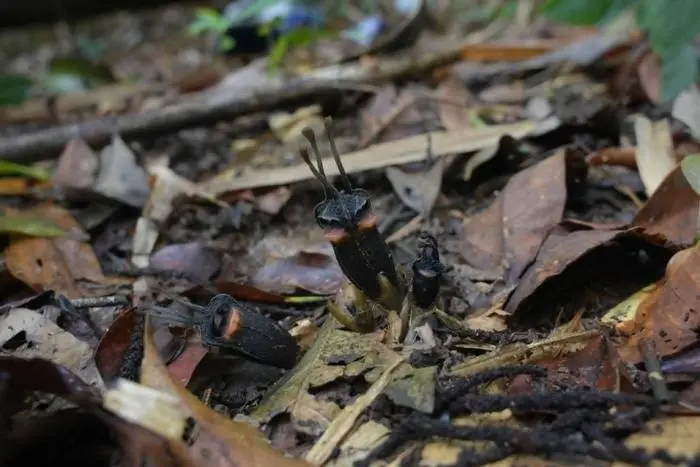
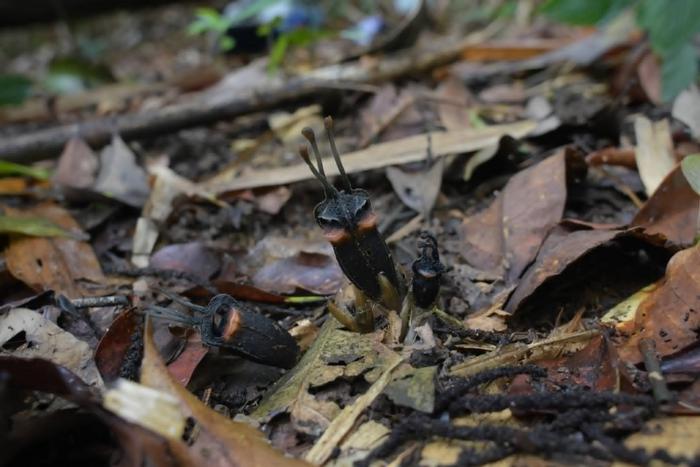
The formal description of the plant was published under the binomial Thismia daemona. The specific epithet, daemona, was chosen deliberately to reflect the plant’s eerie, dramatic morphology. Featuring a dark, charcoal-hued or blackish floral tube crowned by sinister, horn-like appendages and underpinned by vivid reddish-orange petals, the flower evokes imagery of folklore and myth.
Co-author Sahut Chantanaorrapint of Thailand’s Prince of Songkla University reflected on the naming process: "Combined with its hidden, subterranean and mysterious lifestyle on the forest floor, our team unanimously agreed that naming it Thismia daemona perfectly captured its enigmatic and devil-like essence."
Supporting Context & Metrics: The Secret World of Fairy Lanterns
To fully appreciate the significance of Thismia daemona, one must understand the bizarre evolutionary adaptations and ecological niches occupied by the broader Thismia genus.
+-----------------------------------------------------------------+
|                  THE ECOLOGY OF FAIRY LANTERNS                  |
+-----------------------------------------------------------------+
|  Life Stage          | Habitat / Mechanism                      |
+----------------------+------------------------------------------+
|  Vegetative Growth   | Buried entirely beneath leaf litter.     |
|  Nutrition Source    | Mycoheterotrophy (derived via soil fungi)|
|  Photosynthesis      | None (total lack of chlorophyll).        |
|  Reproduction        | Brief emergence of specialized flowers.  |
|  Pollination Vector  | Likely fungus gnats or small insects.    |
+-----------------------------------------------------------------+
Mycoheterotrophy: Living on Borrowed Energy
Plants are classically defined as autotrophs—organisms capable of generating their own food through photosynthesis by converting sunlight, water, and carbon dioxide into sugars. Mycoheterotrophic plants, including all species of Thismia, have abandoned this evolutionary pathway.
Lacking chlorophyll entirely, T. daemona cannot process sunlight. Instead, it has forged a parasitic or mutually dependent relationship with mycorrhizal and saprophytic fungi residing in the soil. These fungi form extensive networks that decompose organic matter in the leaf litter. Thismia plants tap directly into these fungal hyphae, stealing the carbon and nutrients the fungi have extracted from decaying matter. This underground lifestyle means the plant can spend months, or even years, completely hidden from the outside world, functioning essentially as a parasitic entity sustained by fungal intermediaries.
Breaking the Ecological Mold
Prior to this discovery, the global distribution and habitat preferences of the genus Thismia were thought to be relatively well-bounded. Most of the roughly 90 known species worldwide are documented in perennially humid lowland rainforests, where moisture levels remain consistently high throughout the year to support both the fungi and the fragile emergent structures of the plants.
The discovery of T. daemona shatters these established assumptions. Finding a Thismia population in a seasonal, montane evergreen forest at an altitude of nearly 1,000 meters demonstrates that these ghost-like plants possess greater ecological plasticity than previously recognized. It raises compelling questions for evolutionary biologists: How did this lineage adapt to seasonal shifts in moisture and temperature at higher elevations? Are there other undiscovered high-altitude populations hiding in similar mountain ranges across Southeast Asia?
Morphological Metrics and Population Vulnerability
The physical dimensions of T. daemona are as delicate as its ecology is fragile. Standing only a few centimeters tall when it breaks the surface, the plant dedicates almost all its biomass to its subterranean roots and the brief burst of its flowering structure.
The baseline conservation metrics compiled by the research team paint a stark picture of vulnerability:
- Total Known Populations: 1 single localized site.
- Geographic Spread: Restricted to an area spanning less than 5 hectares (approx. 12 acres).
- Population Size: Estimated at fewer than 50 mature individuals.
These tight thresholds automatically trigger the highest levels of concern under the conservation guidelines established by the IUCN.
Official Statements and Expert Perspectives
The formal unveiling of Thismia daemona has drawn commentary from leading botanists and conservationists who view the discovery as both a triumph for taxonomic research and a sobering reminder of global biodiversity loss.
In an official press release issued following the publication of the study, Dr. Sahut Chantanaorrapint emphasized the sheer unpredictability of ecological field research:
"Finding Thismia daemona in Thong Pha Phum National Park was indeed a major surprise. Typically, Thismia species are known to occur in perennially humid lowland rainforests, however, this population was discovered in a seasonal, montane evergreen forest at an elevation of nearly 1,000 meters above sea level."
Expanding on the collaborative efforts required to document and name the species, Chantanaorrapint noted how the physical characteristics of the plant naturally guided its nomenclature:
"Combined with its hidden, subterranean and mysterious lifestyle on the forest floor, our team unanimously agreed that naming it Thismia daemona perfectly captured its enigmatic and devil-like essence."
Beyond the scientific intrigue, conservation specialists have been quick to point out the policy and management implications that arise when an extremely rare, localized species is discovered directly adjacent to human infrastructure.
Future Outlook: Conservation Challenges and the Path Forward
The discovery of Thismia daemona is an exhilarating milestone for Asian botany, but it also sounds an urgent alarm bell regarding its long-term survival.
The Threat of Anthropogenic Disturbance
The primary existential threat to T. daemona is its agonizingly small geographic footprint. Because the entire known population of fewer than 50 individuals is compressed into an area smaller than 12 acres within Thong Pha Phum National Park, any localized environmental disruption could drive the species to extinction in the wild almost overnight.
Compounding this risk is the habitat’s unfortunate geography: the sole known population sits immediately alongside trails regularly traversed by tourists, hikers, and park visitors. While national parks are established to protect nature, heavy foot traffic introduces severe risks of:
- Soil Compaction: Heavy footsteps can crush delicate subterranean root systems and disrupt the underground fungal networks upon which the plants depend for survival.
- Accidental Trampling: Because the plants are invisible for the majority of the year, visitors can easily crush emerging flowers before they have a chance to set seed and reproduce.
- Microclimate Alteration: Clearing vegetation along trails can alter humidity, light levels, and leaf-litter depth, destroying the precise micro-environmental conditions required for the species to thrive.
Provisional IUCN Status and Strategic Safeguards
Based on these compounding risk factors, the study’s authors have formally and provisionally classified Thismia daemona as Critically Endangered under IUCN Red List criteria.
Reversing this trajectory will require a delicate balance of protective policy and community engagement. Dr. Chantanaorrapint and his colleagues have stressed that traditional, heavy-handed conservation models—such as fencing off areas entirely—can sometimes breed resentment among local communities. Instead, they advocate for a community-centric approach.
By inspiring local residents and indigenous communities to take immense pride in hosting such a rare, globally unique botanical treasure, conservationists hope to foster grassroots stewardship. Empowering locals to act as guardians of the forest not only safeguards the delicate microhabitat of T. daemona but also lays the groundwork for sustainable, community-led ecotourism. Under this model, visitors can be guided respectfully through the park with strict protocols in place to prevent trail-side degradation.
Conclusion: A Reminder of Earth’s Hidden Depths
The story of Thismia daemona serves as a humbling reminder of how much of Earth’s biodiversity remains undocumented, hidden in plain sight beneath our very feet. As scientists race to map and understand these fragile ecosystems against a backdrop of global environmental change, the fate of the "devil-like" fairy lantern hangs in the balance. Whether T. daemona becomes a celebrated symbol of successful conservation or another tragic casualty of human footprint expansion will depend entirely on the swift, deliberate actions taken by Thai conservationists, park authorities, and local communities in the years to come.



