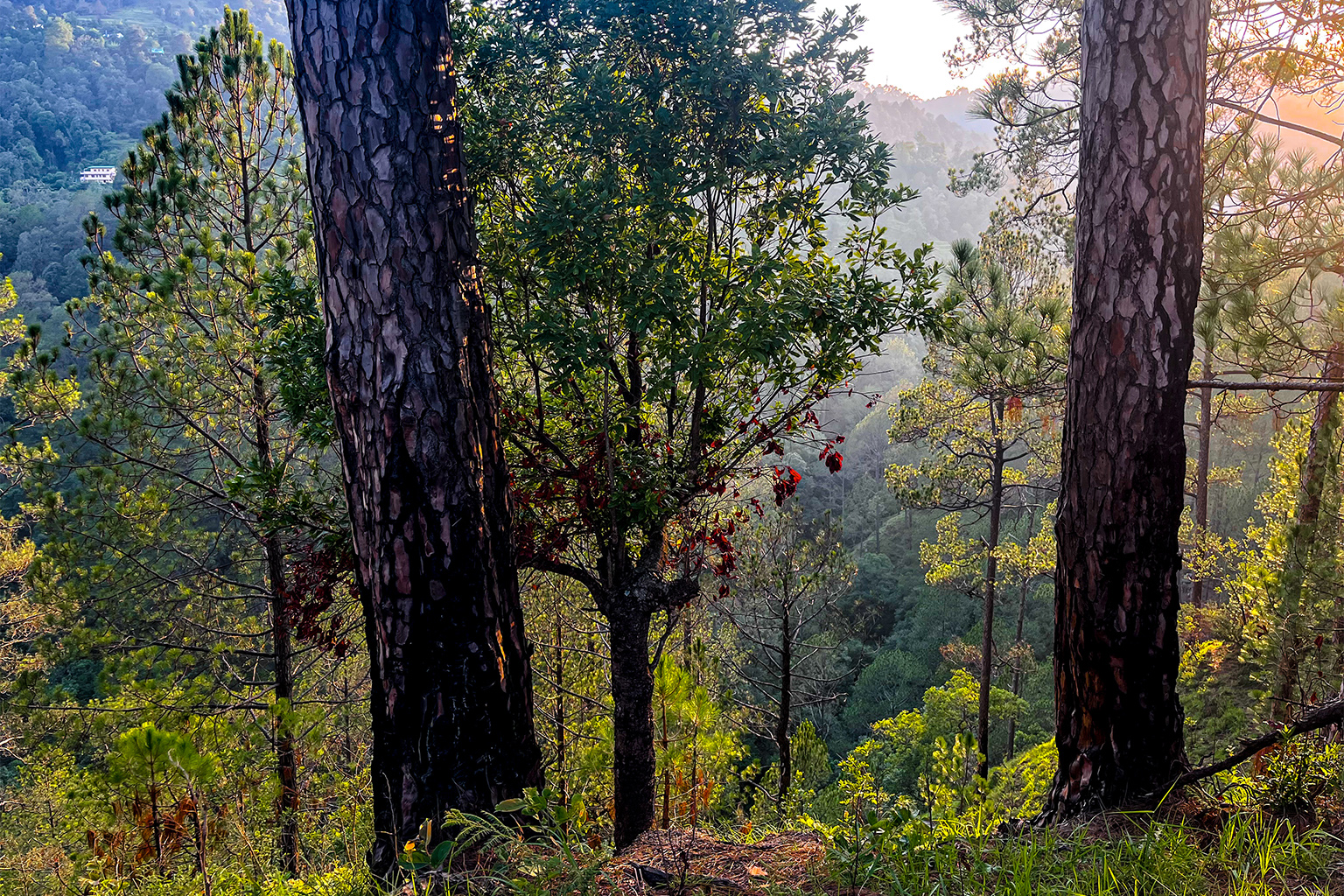
In the high-altitude village forests of Uttarakhand, nestled deep within the Indian Western Himalayas, a quiet ecological and humanitarian crisis is unfolding. Climate change is rewriting the rhythm of the mountains. Unprecedented winter warmth, erratic rainfall patterns, and high-altitude temperatures outpacing global averages have made this northern Indian state the most fire-prone region in the country. Yet, as blazes expand beyond their traditional seasonal boundaries—stretching across a newly lengthened, year-round fire season—the primary line of defense is not a heavily equipped government disaster response team. It is an informal, unpaid, and largely invisible brigade of local women.
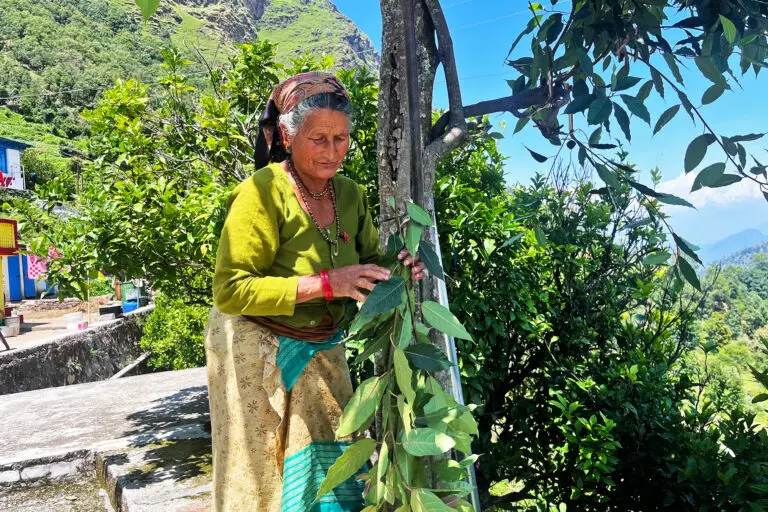
Bound by deep-rooted socioeconomic structures, the daily labor of rural women in Uttarakhand keeps them tethered to the forest. They venture into the canopy daily to forage for livestock fodder, collect firewood, and manage subsistence agriculture. Because of this, when forest fires break out, they are the first responders by default. Armed with little more than household sickles, green-leaf firebrooms (jhapas), and flammable nylon sarees, these women engage in high-risk firefighting.
Their burden is compounded by widespread male out-migration. As climate-induced shocks devastate traditional hill farming, hundreds of villages have transformed into "ghost villages" populated only by women, the elderly, and children. Despite performing the bulk of physical labor required to suppress fires, women remain excluded from formal employment, official compensation schemes, and decision-making platforms. This article examines the systemic policy disconnects, physical tolls, and shifting community resilience paradigms defining the intersection of gender, climate change, and wildfire management in the Himalayas.
Detailed Chronology: The Escalating Crisis and Everyday Frontlines
The escalation of forest fires in Uttarakhand is no longer a matter of isolated seasonal anomalies; it has evolved into a persistent systemic threat. Traditionally, the state’s wildfire season spanned a predictable 12-week window beginning in mid-March, taking advantage of dry conditions before the arrival of the monsoons. However, data from recent years reveals an alarming shift. Winter fires—once completely alien to a region defined by heavy snowfall and sub-zero temperatures—have become an escalating reality, signaling profound ecosystem-level disruption.
This crisis is experienced viscerally across every human sense. During peak months, thick trails of grey smoke choke the brilliant blue Himalayan skies, creating persistent, fog-like conditions. Soot and snow-like ash blanket village rooftops, while the air carries a suffocating, lingering smell of burning resin and timber.
"We are all coughing our lungs out; during that time, our eyes are bloodshot, irritated by all the smoke, and it’s hard to breathe in the thick air. Even after days of fire, the firewood smell lingers," recounts Tulsi Devi of Ayarpani village in the Almora district.
First Responders Born Out of Convention
According to Kavya Pandey, a researcher at the Centre for Wildlife Studies in Bangalore who specializes in the socio-ecological dynamics of women and forest fires in Uttarakhand, traditional gender roles dictate this dynamic. Because caregiving and household resource collection are relegated to women, their daily labor routine places them inside the forest for hours at a time.
When a fire breaks out, the immediate response mechanism is entirely community-driven and informal.
"If a woman sees fire anywhere, and she does not have a phone, she calls out to others by ululating or whistling, and all the women go together to snuff the fire," explains Kamla Devi, head of the van panchayat (community-managed forest council) in Marhmanley village.
This gendered labor division contrasts sharply with the formal institutional framework. While the state forest department hires seasonal fire watchers—roles almost exclusively given to men—women are routinely summoned to assist during emergencies without financial compensation. When night-time fires occur, men occasionally accompany women to deter predatory wildlife like leopards, but the active firefighting force remains overwhelmingly female.
The Phenomenon of "Ghost Villages"
The intensity of women’s frontline labor is amplified by large-scale male out-migration. Decades of erratic weather, water scarcity, crop destruction from extreme weather events, and failed agricultural yields have pushed men out of the hills and into urban centers in search of wage labor. This migration pattern has left hundreds of Uttarakhand villages depopulated.
Marhmanley embodies this demographic shift. The village has lost the majority of its working-age men, leaving behind an aging demographic of women, children, and grandparents.
"With many migrating, fewer people are left to protect the village. The women who remain often have young children to look after, so they cannot leave," Kamla notes.
Despite these vulnerabilities, women run toward the flames across generations. Septuagenarian Lila Devi regularly picks up her sickle to join firefighting lines. As Kamla remarks with a laugh, "Amma might look old, but she still runs like a goat on a hill."
Supporting Context & Metrics: Ecology, Economy, and Risk
The ecological stakes for Uttarakhand’s rural communities are immense. Forests cover roughly 71% of the state’s total geographical area, serving as the literal life support system for mountain settlements. They provide drinking water watersheds, vital timber, and critical fodder for livestock. Because male migration has crippled traditional crop farming, cattle rearing remains one of the few viable pathways for rural women to generate household income.
"Forests are our everything. With active fires, we cannot even take our animals to graze. They stay tied in their sheds for days," says Asha Devi of Bhetuli village.
The Physical Expense of Primitive Firefighting
When fires sweep across the rugged terrain, women deploy in human chains, spacing themselves strategically along the fire’s perimeter to prevent embers and burning pine cones from cascading down slopes. Armed only with domestic sickles, they harvest green branches to construct jhapas—makeshift firebrooms used to beat down surface flames.
When confronting high-intensity fires, teams of women must labor to clear firelines, pulling away dry grass, pine needles, and twigs to deprive the blaze of fuel while physically pushing the fire backward toward already-scorched ground.
The personal cost of this labor is profound:
Physical Injuries: Sprained ankles, lacerations from rocks and thorns, and severe falls down steep hillsides are common.
Health Hazards: Inhalation of dense smoke leads to chronic respiratory distress, bloodshot and irritated eyes, and long-term pulmonary conditions.
Inadequate Protective Gear: Despite guidelines recommending personal protective equipment (PPE), local women almost universally lack access. They frequently fight fires wearing highly flammable synthetic nylon sarees and, in moments of absolute urgency, run barefoot into burning forests.
Nighttime Vulnerabilities: Fires do not respect daylight. Women must maintain overnight vigils to protect homes and dried grass stacks stored near dwellings. Asha recounts a night in November when a sudden fire broke out while her son slept; she was forced to battle the flames alone, losing two crucial stacks of winter animal feed in the process.
Personal Traumas: The Binsar Aftermath
The human toll of these blazes extends deep into family structures. In June 2024, Meena Bhoj of Almora spotted a fire at 10 p.m. threatening harvested pine needles meant for animal bedding. Alongside three other women and her brother-in-law, she scaled a dark hill to extinguish it. Navigating the steep descent with a single flashlight to avoid leopards, Meena tripped and fell face-first into a ditch.
She suffered a severe chest laceration, a chipped tooth, and a badly swollen face that prevented her from eating for days, eventually requiring minor chest surgery. Yet, this injury was eclipsed by a concurrent catastrophe. Meena’s husband, Bhuvan Bhoj, was employed as a seasonal fire watcher with the forest department. The day after Meena’s accident, Bhuvan was among the few who miraculously survived the devastating Binsar fire tragedy, which claimed the lives of six forestry workers.
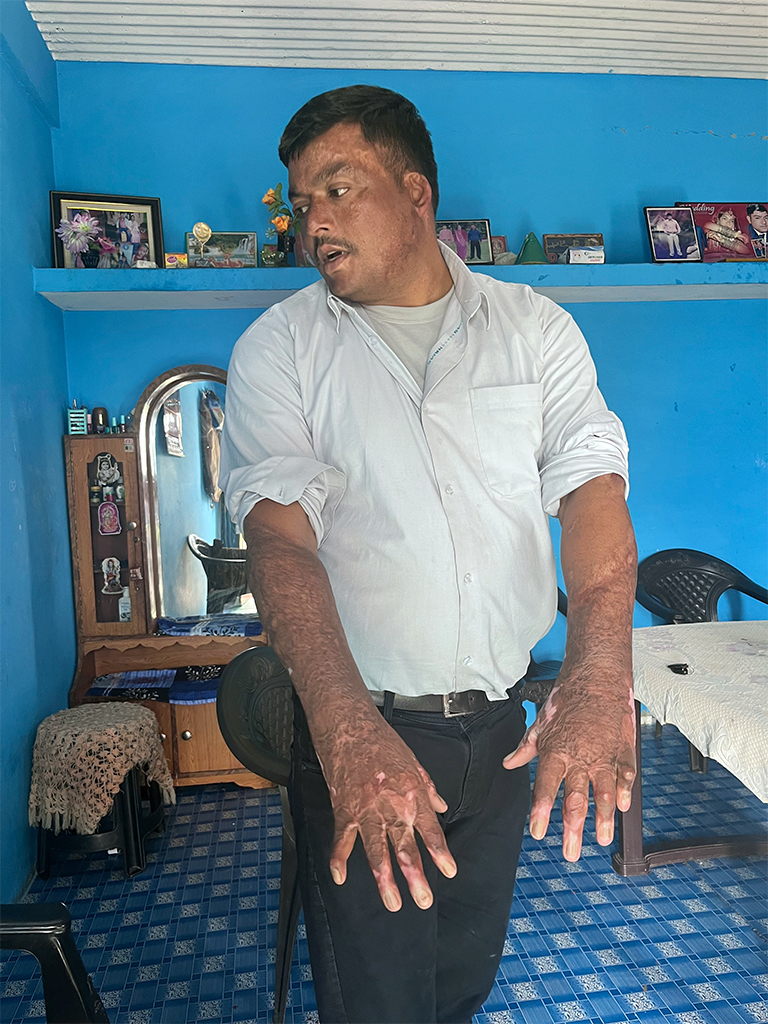
Today, Bhuvan endures chronic pain and disability from severe burns on his hands, requiring multiple reconstructive surgeries.
"I am now disabled because of my injury; with these injuries, I cannot take up any job either," Bhuvan states.
Meena remains trapped in a cycle of trauma, plagued by severe anxiety whenever her husband leaves for work.
"I am scared of fire, but I am not scared for me; I am scared for him. I am constantly anxious when he goes to work. I call him multiple times a day to remind him not to get close to the fire."
Official Statements and Policy Disconnect
The widening chasm between institutional mandates and ground realities has eroded community trust in state interventions. A prime driver of this disillusionment is the unfulfilled promise of government compensation. Despite a public announcement by Uttarakhand’s chief minister promising ₹10 lakh ($10,500) to families affected by tragedies like the Binsar fire, victims like Bhuvan Bhoj have yet to receive their disbursements.
This bureaucratic failure has triggered localized pushback.
"Now we just [extinguish] fires near our house, and we let the forest burn. Why should we risk our lives? Look what happened to Bhuvan and his family; did they get any compensation?" asks Chameli Devi, a 60-year-old resident living near Meena.
The Institutional Bottleneck
Local forestry officials acknowledge the severity of the crisis. Manoj Sanwal, a forest ranger in Binsar, stresses that the department is severely overburdened and underfunded. While national policies dictate that state disaster response forces, police, and specialized interdepartmental teams should assist during peak fire crises, operational realities leave local forest staff and unpaid villagers to shoulder the brunt.
Paradoxically, structural policies actively exclude women from formal integration:
The Saree Barrier: Officials frequently cite safety concerns—specifically noting that traditional sarees make fieldwork and rapid movement on steep terrain hazardous—as a justification for hiring primarily male seasonal fire watchers.
Invisible Labor: Despite doing the heavy lifting of grassroots firefighting, women remain absent from formal payrolls, institutional training programs, and regional disaster management frameworks.
Proxy Leadership: While frameworks like the van panchayat mandate female representation on governing boards, systemic patriarchal structures often result in proxy leadership, where husbands sign documents and make decisions on behalf of nominally appointed female heads, as noted by Laxmi Kharayat of The Hunger Project.
Future Outlook: The Path Toward Community-Led Mitigation
Globally, the intersection of gender and wildfire management remains severely under-researched. Wildfires are traditionally conceptualized as a "masculine" domain within international forestry forums, ignoring the vital contributions of rural and Indigenous women on the frontlines—paralleling similar dynamics observed among Indigenous Dayak women in Borneo and female conservationists in Nigerian sanctuaries.
However, where women are genuinely empowered with administrative and community authority, wildfire mitigation yields remarkable results. Given that over 95% of forest fires in India are anthropogenic (human-made) stemming from unmonitored agricultural burning or negligence, grassroots vigilance is the most effective deterrent.
In Marhmanley, Kamla Devi has harnessed community organization to tackle fires at their source through proactive dialogue and strict protocols:
"We no longer let anyone start an unsupervised fire. Before, people burned brush haphazardly, but now we insist on planning. We show them where and how to set small, controlled burns."
By enforcing accountability, Kamla’s community has kept its surrounding forests free of major blazes for three consecutive years. This success demonstrates that true climate resilience and wildfire mitigation cannot rely solely on top-down satellite monitoring systems or under-resourced state departments. It must integrate, compensate, and elevate the women who have guarded the Himalayan canopy for generations.
As Kamla reflects while gazing at the verdant hills rising above her village:
"These trees give us everything we need. We are here because of them."
Article Citation
Swati Thapa (2026). Sickles, sarees and smoke: Women on the frontlines of Uttarakhand forest fires. Mongabay Conservation News. DOI: 10.66709/news-329123