

Executive Overview
As global temperatures climb and the frequency of intense heatwaves accelerates, consumer demand for breathable, lightweight apparel has surged. Enter linen—a historic textile that has re-emerged as the undisputed champion of warm-weather style. Prized for its exceptional cooling properties, moisture-wicking capabilities, and timeless aesthetic, linen is frequently lauded as an environmentally conscious alternative to resource-intensive synthetic fabrics.
However, beneath the breezy surface of this natural fiber lies a nuanced reality. While the flax plant itself is remarkably resilient, requiring minimal water and chemical intervention compared to conventional cotton, the post-harvest processing phase tells a different story. Industrial retting, dyeing, and chemical treatments can introduce environmental hazards if not managed under strict regulatory and ethical standards.
This comprehensive report examines the multifaceted lifecycle of linen—from the resilient flax stalk to the finished garment. Drawing upon rigorous sustainability metrics and independent brand assessments from ethical fashion authorities like Good On You, this feature explores why linen dresses remain a cornerstone of conscious wardrobes. Furthermore, we provide an authoritative curation of 12 ethically produced linen dresses from transparent brands—including PANGAIA, LA Relaxed, and Artknit Studios—while offering a roadmap for consumers looking to invest in durable, low-impact summer fashion.
Detailed Chronology: The Journey of Flax to Fashion
To truly understand the value of a linen garment, one must retrace its lineage. The history of linen is deeply intertwined with human civilization, yet its modern production cycle requires contemporary scrutiny.
Pre-Industrial Origins and Agricultural Resilience
For millennia, linen has been cultivated from Linum usitatissimum, commonly known as the flax plant. Historically valued for both its seeds (linseed) and its inner stalk fibers, flax is an exceptionally hardy crop. Agronomists note that flax can thrive in poor, marginal soils that are entirely unsuited for food production or cotton cultivation.
Unlike cotton, which notoriously demands massive irrigation networks and intensive pesticide applications, rain-fed flax requires a fraction of the water footprint. Furthermore, because the plant is naturally resistant to many pests, chemical pesticide inputs are significantly lower during the agricultural phase.
The Industrial Transformation: Retting and Processing
Once harvested—historically by hand, but predominantly by mechanized pulling today—the flax stalks undergo a critical processing phase known as "retting." This involves breaking down the natural pectins and gums that bind the valuable long inner fibers to the woody outer stem.
- Water and Field Retting: Traditional field retting leaves flax spread across the ground, allowing natural dew, fungi, and bacteria to break down the plant matter. Conversely, water retting submerges the stalks in rivers, ponds, or tanks. While field retting is generally considered lower-impact, poorly managed industrial water retting can lead to localized water pollution if oxygen-depleted effluent is discharged untreated into natural waterways.
- Spinning and Weaving: Following retting, the fibers are scutched (crushed) and hackled (combed) to separate the long, premium line fibers from the short tow fibers. These fibers are then spun into yarns and woven into the distinctive, textured cloth we recognize as linen.
Chemical Treatments and Finishing
While the raw agricultural phase is environmentally benign, the finishing stages—such as bleaching, softening, and dyeing—frequently employ synthetic chemicals. Conventional processing methods can rely heavily on heavy metal-based dyes, chlorine bleaches, and synthetic softeners that undermine the material’s baseline biodegradability.
Consequently, the industry has seen a growing movement toward certified organic linen. Standards such as the Global Organic Textile Standard (GOTS) ensure that both the agricultural cultivation and the chemical inputs used throughout processing meet stringent environmental and social benchmarks.
Supporting Context & Metrics: The Lifecycle and Longevity of Linen
When evaluating the sustainability credentials of any wardrobe addition, lifecycle assessment (LCA) data provides vital clarity. Linen consistently scores favorably across several key environmental indicators, provided it is sourced and processed responsibly.
Biodegradability vs. Synthetic Blends
In its purest, untreated form, 100% linen is entirely biodegradable and compostable, returning safely to the earth without shedding microplastics into marine or terrestrial ecosystems. However, this natural lifecycle is easily compromised.
[Flax Harvest] ---> [Field/Water Retting] ---> [Scutching & Spinning] ---> [Weaving (100% Pure Linen)] ---> (Fully Biodegradable)
                                                                     ---> [Chemical/Synthetic Blending] ---> (Impaired Recyclability)
Many contemporary fashion brands blend linen with synthetic fibers (such as polyester or nylon) or cellulosic rayons to mitigate linen’s natural tendency to wrinkle. While these blends may offer crease-resistant convenience, they present severe end-of-life challenges. Fiber blends are notoriously difficult—and often economically unfeasible—to recycle using current textile-to-textile recycling technologies, locking garments into a linear disposal trajectory. Therefore, experts advise consumers to seek out pure, 100% linen garments whenever possible.
Durability and Cost-Per-Wear Economics
One of linen’s most understated environmental benefits is its structural durability. Linen fibers are hollow and structurally stronger than cotton fibers; they actually become softer and more supple with each successive wash without losing structural integrity.
This longevity redefines the economics of sustainable fashion. By investing in high-quality, timeless linen dresses that endure years—or even decades—of regular wear, consumers dramatically lower their garments’ per-wear carbon and water footprints. Fast-fashion trends that encourage rapid turnover are counteracted by the inherent durability of well-crafted linen, emphasizing the importance of thoughtful, intentional purchasing behavior.
Official Industry Perspectives and Standards
As consumer greenwashing concerns mount, industry watchdogs and certification bodies are establishing clearer parameters for what constitutes a genuinely sustainable garment.
The Role of Rigorous Independent Rating Systems
Organizations like Good On You have revolutionized how shoppers evaluate ethical fashion by utilizing transparent, data-driven rating methodologies. These systems assess brands across three primary pillars:
- People: Fair wages, safe working conditions, supply chain transparency, and worker empowerment.
- Planet: Carbon management, water stewardship, chemical use reduction, and waste minimization.
- Animals: The avoidance of exploitative animal-derived materials, ensuring cruelty-free alternatives where applicable.
Brands that earn top marks from these assessments typically demonstrate verifiable traceability, utilizing certified organic flax and partnering with ethical manufacturing facilities that prioritize worker welfare and environmental compliance.
Certifications to Look For
To navigate greenwashing claims, sustainable fashion advocates recommend scanning garment labels and brand transparency reports for recognized third-party certifications:
- GOTS (Global Organic Textile Standard): Ensures the organic status of textiles from harvesting through environmentally and socially responsible manufacturing.
- OEKO-TEX Standard 100: Verifies that every component of the garment has been tested for harmful substances, ensuring safety for human skin.
- Fair Trade Certified: Guarantees that the people who made the garments received fair wages and worked in safe environments.
Curated Showcase: 12 Ethical Linen Dresses for the Conscientious Wardrobe
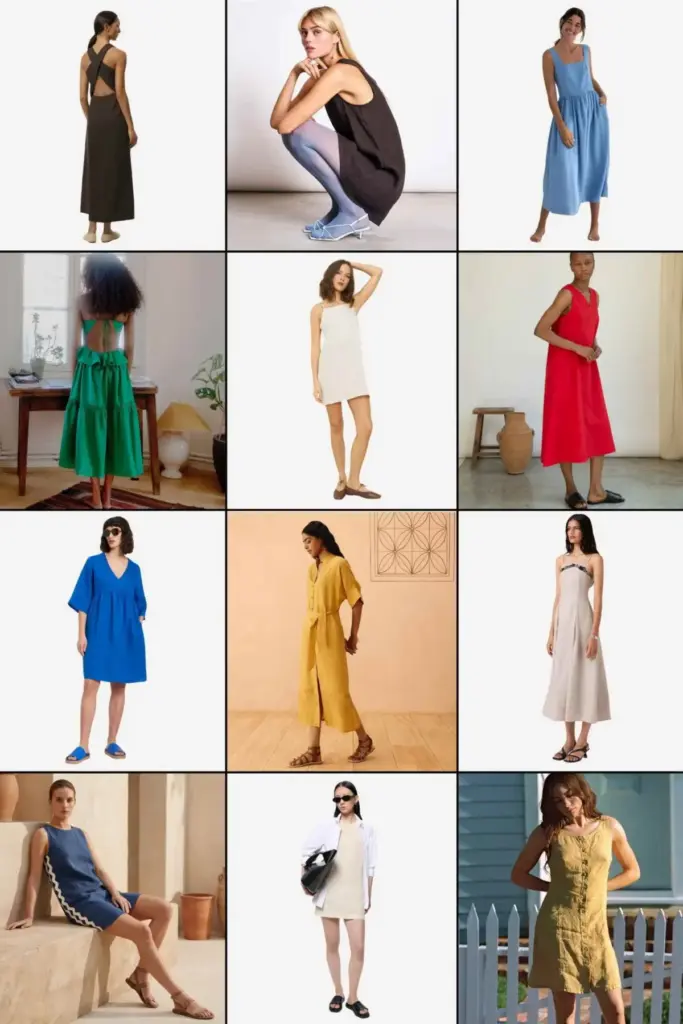
To assist consumers in navigating the market, we have curated a selection of 12 exceptional linen dresses from brands independently rated highly by Good On You for their impact, transparency, and ethical practices.
1. Artknit Studios – The Linen Twill Special Back Dress (Café Noir)
- Design Profile: A sophisticated, structured silhouette featuring unique back detailing, perfect for transitional day-to-night styling.
- Brand Ethos: Artknit Studios champions made-to-order manufacturing, eliminating overproduction and prioritizing traceable natural fibers.
2. JAN N JUNE – Linen Mini Dress (Salvia Mud)
- Design Profile: A contemporary, effortless mini dress that offers breathability without compromising on chic, minimalist urban aesthetics.
- Brand Ethos: Known for its transparent supply chain in Europe, JAN N JUNE utilizes eco-friendly materials and clear GOTS certifications.
3. TWOTHIRDS – Formentera Linen Dress (Denim Blue)
- Design Profile: Inspired by coastal living, this relaxed-fit dress captures marine hues and offers superior airflow for peak summer days.
- Brand Ethos: A brand deeply committed to ocean conservation, TWOTHIRDS utilizes low-impact fabrics and limits manufacturing runs to prevent excess stock.
4. OhSevenDays – Holly Linen Dress
- Design Profile: An artisanal wrap-style dress defined by clean lines, functional elegance, and comfortable everyday wearability.
- Brand Ethos: Operating on a slow-fashion model based in Istanbul, OhSevenDays creates garments using deadstock and sustainable natural fibers.
5. Whimsy + Row – Lainey Striped Linen Mini Dress
- Design Profile: Playful yet refined, this striped mini incorporates classic tailoring with the effortless drape of lightweight linen.
- Brand Ethos: Whimsy + Row produces limited batches locally in Los Angeles using deadstock fabrics and certified organic materials.
6. Beaumont Organic – Imogen May Cotton-Linen Dress (Scarlet)
- Design Profile: A vibrant, bold-hued dress combining the crispness of linen with the soft hand-feel of organic cotton.
- Brand Ethos: Focused on conscious consumerism, Beaumont Organic partners with fair-trade factories in Europe to ensure ethical labor standards.
7. Lanius – Organic Linen Dress
- Design Profile: An understated, elegantly tailored piece that highlights the natural slub texture of high-grade organic flax.
- Brand Ethos: Lanius has long been a pioneer in sustainable European fashion, strictly adhering to GOTS standards and animal welfare guidelines.
8. Sui – Golden Palm Linen Maxi Shirt Dress
- Design Profile: A versatile shirt-dress silhouette offering maxi-length coverage, combining utility-inspired button detailing with breezy elegance.
- Brand Ethos: Sui bridges traditional craft with modern sustainability, partnering with artisans across India to support heritage textile techniques.
9. The Summer House – Suhjan Embroidered Linen Dress
- Design Profile: Detailed with subtle artisanal embroidery, this beige dress balances understated luxury with conscious craftsmanship.
- Brand Ethos: Dedicated to ethical production, zero-waste initiatives, and fair wages for local artisans in India.
10. SeamsFriendly – Contrast-Detailed Linen Shift Dress
- Design Profile: A contemporary shift dress featuring striking contrast details and a flattering cut designed for diverse body types.
- Brand Ethos: Offering inclusive sizing and made-to-order options, SeamsFriendly minimizes textile waste through thoughtful production models.
11. PANGAIA – A-line Linen Dress
- Design Profile: Clean, architectural, and minimalist, this A-line dress is engineered for maximum comfort during intense summer heatwaves.
- Brand Ethos: A global leader in materials science innovation, PANGAIA consistently pushes the boundaries of bio-based, recycled, and lower-impact textiles.
12. LA Relaxed – The Linen Pinafore
- Design Profile: A versatile layering piece with a relaxed fit, ideal for pairing over tees during cooler mornings or wearing solo in peak heat.
- Brand Ethos: Based in California, LA Relaxed manufactures locally using sustainable fabrics, ensuring fair wages and a minimal carbon footprint.
Future Outlook: The Horizon of Sustainable Linen
As the global textile industry faces increasing regulatory pressure and mounting consumer scrutiny regarding climate change, the future of linen looks both promising and demanding.
Technological Innovations in Processing
Innovations in mechanical and enzymatic retting are currently underway to replace traditional, potentially polluting water-retting methods. By harnessing biotechnology, researchers are striving to make the linen manufacturing process entirely closed-loop, minimizing water discharge pollution and eliminating harsh chemical bleaching agents.
Circularity and Transparency
The mandate for transparency will only intensify. Future legislative frameworks—such as Digital Product Passports (DPPs) proposed in various international markets—will likely require brands to disclose the exact origin of their flax fibers, chemical inputs, and supply chain working conditions. For linen brands that already prioritize traceability, this shift will validate their ethical commitments; for fast-fashion imitators, it will demand radical operational reform.
Consumer Empowerment
Ultimately, the transition toward a truly sustainable wardrobe rests on informed consumer choices. By recognizing that not all linen is created equal—and by favoring 100% pure, certified organic garments from verified ethical brands—shoppers can enjoy the cooling comfort of summer’s favorite fabric while actively contributing to a regenerative, circular fashion economy.
Editorial Note: All featured brands have been independently evaluated through the rigorous Good On You ratings system. Purchasing through affiliate links supports ongoing independent journalism dedicated to people, planet, and animal welfare.



